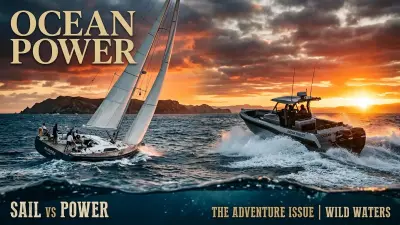
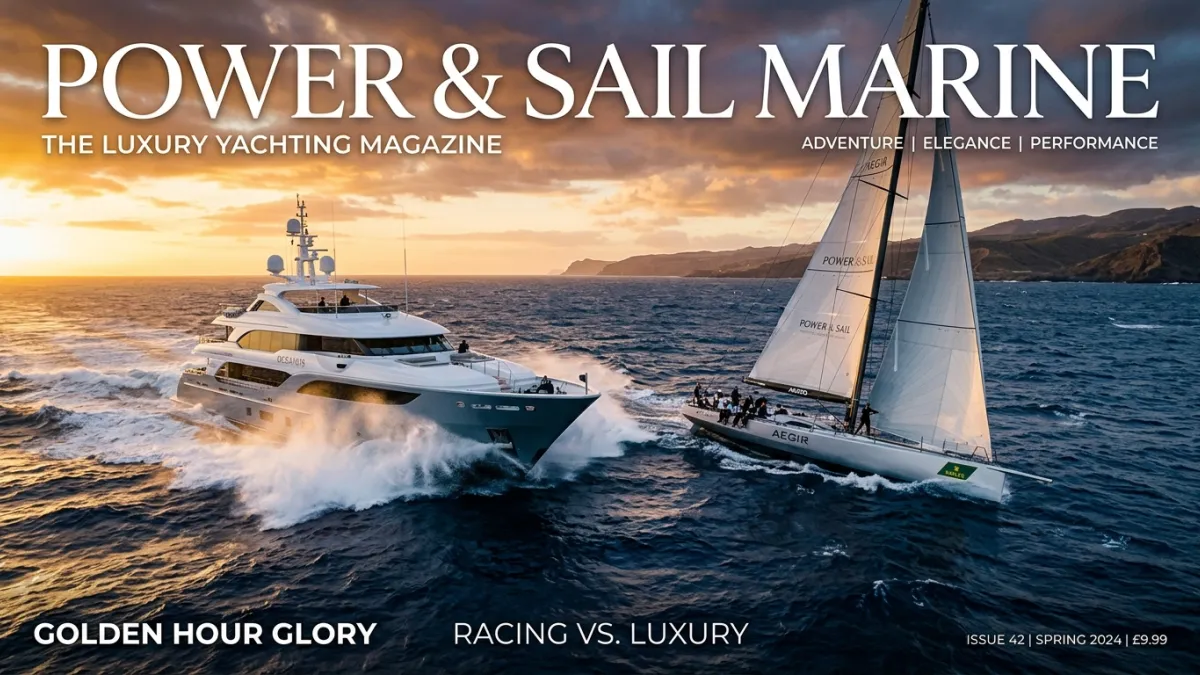
Quick answer: Choose a powerboat if your priority is reaching destinations quickly, entertaining large groups on a single level, or navigating shallow waters with predictable schedules. Opt for a sailboat if you view the journey itself as the primary reward, want virtually unlimited range on a budget, and enjoy the physical, tactile challenge of trimming sails and working with nature.
Understanding the Mechanical and Hydrodynamic Divide
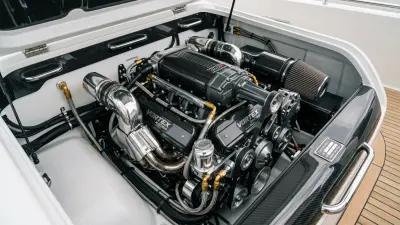
To appreciate how these vessels perform, you first need to look below the waterline. Most production powerboats—such as a Boston Whaler 280 Vanguard or a Sea Ray Sundancer 320—utilize planing or semi-displacement hull shapes. These designs rely on raw horsepower to lift the hull partially out of the water, dramatically reducing hydrodynamic drag and allowing speeds ranging from 20 to over 40 knots. A typical twin 300 hp Yamaha outboard configuration will push a 30-foot powerboat across coastal sounds effortlessly, but it does so by burning anywhere from 18 to 35 gallons of gasoline per hour at a comfortable cruising speed. Sailboats, on the other hand, almost universally operate as displacement hulls. Whether you are looking at a classic monohull like a Catalina 34 or a modern cruising sloop like a Beneteau Oceanis 38.1, the vessel sits down in the water column and is bound by a physical speed barrier known as theoretical hull speed (calculated roughly as 1.34 times the square root of the waterline length in feet). A 35-foot sailboat will comfortable cruise between 6.5 and 7.5 knots regardless of whether you have a 1,000-square-foot sail area deployed or are running its small 30 hp Yanmar auxiliary diesel engine. The physical forces acting on these hulls create vastly different stability profiles. Sailboats rely on ballast ratios—where 30% to 45% of the boat’s total displacement is concentrated in a deep lead or iron keel hanging 5 to 7 feet below the surface—to generate a righting moment when the wind heels the boat over. Powerboats generate initial stability through a wide beam and flat stern sections, giving them a level ride at anchor, though they lack the ultimate self-righting capabilities of a deep-keeled monohull sailboat in extreme offshore conditions.On-the-water tip: New sailors often panic when a monohull heels over to 20 degrees under a sudden gust. Remember that as the boat heels, the deep lead keel acts like a pendulum; the farther the boat leans, the harder the keel works to push it right side up. In contrast, powerboats stay flat initially, but if a massive beam sea catches you off guard, the motion is sharp, snap-like, and far less forgiving to unprepared passengers.
Direct Comparison: Performance, Layout, and Demands
Evaluating these craft side by side helps clarify how design choices translate to real-world ownership experience. While both vessel types must meet strict U.S. Coast Guard safety equipment requirements—including carrying approved PFDs, flares, throwable devices, and an EPIRB for offshore passages—the physical demands placed on the skipper could not be more different.| Operational Feature | Power Marine Boats | Sail Marine Boats |
|---|---|---|
| Average Cruising Speed | 18 – 30+ knots | 5 – 8 knots |
| Average Fuel Consumption | 12 – 40+ GPH (at speed) | 0.5 – 1.5 GPH (auxiliary engine only) |
| Typical Draft Requirement | 2 – 3.5 feet (drives trimmed up) | 4.5 – 7.5 feet (monohull draft keel) |
| Primary Maintenance Focus | Engine service, impellers, manifolds, outdrives | Standing/running rigging, sails, winches, chainplates |
| Physical Operational Effort | Low (electronic throttles, joystick docking) | Moderate to High (winching, sail hoisting, line handling) |
| Interior Volume per Foot | High (no mast supports, wider beam forward) | Moderate (compression posts, narrow bow sections) |
Financial Reality: Acquisition vs. Ongoing Maintenance
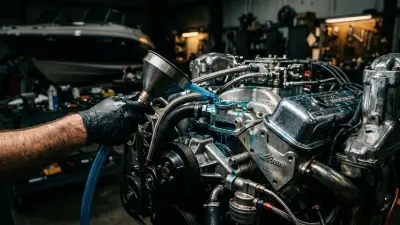
When calculating the total cost of ownership, many first-time buyers mistakenly focus strictly on the initial purchase price. The long-term operating budgets of power and sail craft diverge dramatically over time due to their distinct mechanical components and consumables. Powerboat economics are heavily weighted toward fuel consumption and engine mechanical maintenance. If you plan to run a 32-foot twin-engine powerboat for 100 hours a season, you might easily spend $4,000 to $8,000 annually just on marine gasoline or diesel fuel. Furthermore, high-strung marine outboard or stern-drive engines demand strict 100-hour service intervals, annual lower-unit gear oil changes, heat exchanger flushes, and periodic riser and manifold replacements that require skilled marine mechanics. Sailboats trade high fuel bills for rigging and canvas upkeep. A sailor running their auxiliary diesel for 100 hours might burn less than $400 in fuel all year. However, sails degrade under solar ultraviolet radiation and mechanical stretch; a quality Dacron or laminated mainsail and genoa set for a 35-foot boat can run anywhere from $5,000 to $12,000 and typically needs replacement every 7 to 10 years. Additionally, marine insurance underwriters often mandate that standing rigging (the stainless steel wire shrouds and stays holding up the mast) be completely replaced every decade, an expense that can easily run $4,000 to $8,000 depending on the rig complexity.Selecting the Ideal Craft for Your Boating Goals
Matching your vessel to your actual geographic location and available leisure time is essential. If your free time is limited to a few hours on a Sunday afternoon, a powerboat allows you to drop the slip lines, push the electronic throttles forward, and be at a secluded beach 15 miles away in under thirty minutes. Shallow bay waters—like those found around Florida’s Gulf Coast or the Great South Bay of Long Island—are natural havens for power craft with shallow drafts that can easily slip over sandbars. Conversely, if you find solace in the process of navigation, seamanship, and quiet passage-making, a sailboat transforms the journey into the main attraction. Long-distance cruisers planning to explore remote island chains often favor sailboats because wind energy is free and abundant. Equipment like solar panels, wind generators, and watermakers allow a well-found sailboat to remain self-sufficient at anchor for weeks at a time without needing to dock for fuel. Before placing a deposit on any vessel, take time to charter both types of craft through local outfits or take formal instruction via the American Sailing Association (ASA) or US Powerboating. If your heart is set on quiet, zero-emission travel and mastering a traditional maritime craft, seek out a well-maintained 30- to 35-foot monohull from established builders like Jeanneau, Beneteau, or Hunter. If your priorities center on speed, effortless docking with modern joystick control, and hosting family gatherings on open, sunny decks, focus your search on a quality 26- to 32-foot dual-console or express power cruiser powered by modern four-stroke outboards.Frequently Asked Questions
Is it easier to learn to operate a powerboat or a sailboat?
Learning the basics of operating a powerboat is generally much faster, as controlling speed and direction relies on familiar mechanical throttle and steering inputs. Mastering a sailboat requires a deeper understanding of wind direction, aerodynamic sail trim, line handling, and how physical forces interact with the boat's keel, which usually takes formal coursework and significantly more hours on the water.Which type of boat is safer in severe offshore weather?
Both vessel types are built to high safety standards when rated as CE Category A (Ocean). However, a ballasted monohull sailboat possesses inherent self-righting capabilities due to its heavy keel, allowing it to capsize and return upright automatically. Powerboats rely more heavily on active stabilization, wide hull form stability, and favorable weather windows to avoid heavy sea states.Can you convert a sailboat to act strictly as a powerboat?
While you can run a sailboat under its auxiliary engine without raising the sails, it makes for an inefficient powerboat. Sailboats have deep keels that create substantial underwater drag, limiting them to slow displacement speeds regardless of how much engine power you apply. Running a sailboat under engine alone will consume very little fuel, but you will still be traveling at 6 to 8 knots.Do powerboats or sailboats hold their resale value better?
Resale value depends heavily on brand reputation, structural condition, and engine maintenance history rather than propulsion type alone. High-end powerboats with modern four-stroke engines hold high market demand for fast day-tripping, while iconic, well-cared-for cruising sailboats retain value exceptionally well among long-distance sailors seeking proven blue-water hulls.Sources
- American Boat & Yacht Council (ABYC) – Standards and Technical Information Reports for Small Craft
- United States Coast Guard (USCG) – Auxiliary Boating Safety & Equipment Guidelines
- BoatUS Technical Library – Marine Engine Maintenance and Rigging Inspection Protocols