


Beyond the Basics: Why Advanced Navigation is Non-Negotiable for Motor Yachts
There was a time, not so long ago, when a compass, paper charts, and a good pair of binoculars were the pinnacle of motor yacht navigation. Those days, while romantic, are firmly in the rearview mirror. Today, the helm of a modern motor yacht is a sophisticated command center, brimming with technology designed to make your voyages safer, more efficient, and infinitely more enjoyable. But what exactly constitutes “advanced” navigation, and why should you be investing in it?
Table Of Content
- Beyond the Basics: Why Advanced Navigation is Non-Negotiable for Motor Yachts
- The Core Pillars of a Modern Motor Yacht Navigation Suite
- GPS/Chartplotters: Your Digital Roadmap to the World
- Radar: Seeing Through the Veil of Night and Fog
- Autopilots: Your Tireless Co-Pilot
- AIS (Automatic Identification System): Know Who’s Around
- Depth Sounders & Sonar: Unveiling the Underwater World
- The Power of Integration: Beyond Standalone Systems
- Making Your Choice: Key Considerations for Motor Yacht Buyers
- Your Cruising Grounds and Usage Style
- Integration and Compatibility
- User Interface and Ergonomics
- Budget and Future-Proofing
- Navigating Towards the Future with Confidence
Honestly, it boils down to peace of mind and performance. Whether you’re planning a coastal cruise, an offshore passage, or simply navigating a busy harbor, having cutting-edge marine electronics isn’t just a luxury; it’s a fundamental requirement. From dodging unexpected squalls to identifying submerged hazards, your navigation system is your eyes, ears, and often, your most reliable crew member. Based on my experience, skippers who embrace these technologies not only experience fewer surprises but also genuinely get more out of their time on the water.
This guide isn’t about the rudimentary basics. Instead, we’re diving deep into the sophisticated systems that elevate your boating experience, giving you the confidence to explore further and navigate smarter. So, let’s chart a course through the world of advanced marine electronics.
The Core Pillars of a Modern Motor Yacht Navigation Suite
When we talk about advanced navigation, we’re really discussing a collection of highly specialized tools that work together. Think of it like an orchestra, where each instrument plays a crucial role in the overall harmony. Understanding these individual components is the first step in building a truly capable helm.
GPS/Chartplotters: Your Digital Roadmap to the World
The heart of any modern yacht GPS system is the chartplotter. Far beyond simply telling you where you are, today’s chartplotters combine highly accurate GPS data with detailed electronic charts. You get real-time position, speed, course, and can plan routes with incredible precision, mark waypoints, and even overlay satellite imagery. The best systems offer high-resolution screens, intuitive interfaces, and lightning-fast processing, ensuring seamless chart redraws even when zooming in and out rapidly.
Key features to look for:
- High-resolution, sunlight-readable multi-touch displays.
- Compatibility with various chart formats (C-MAP, Navionics, Garmin BlueChart).
- Fast processing for smooth panning and zooming.
- Integration capabilities for radar, sonar, and other sensors.
Radar: Seeing Through the Veil of Night and Fog
No piece of equipment screams “advanced” quite like marine radar. It’s your most vital tool for situational awareness, especially in low visibility. Modern radars, particularly solid-state models, offer incredible clarity, range, and target discrimination. They can detect other vessels, landmasses, aids to navigation, and even weather patterns long before your eyes can. Overlaying radar images directly onto your chartplotter is a game-changer, providing a single, comprehensive view of your surroundings.
Consider these radar advancements:
- Solid-state/Broadband Radar: Instant-on, low power consumption, superior close-range target detection.
- Doppler/Motion Detection: Highlights moving targets in different colors, making them instantly identifiable.
- Bird Mode/Weather Mode: Optimized settings for specific environmental conditions.
Autopilots: Your Tireless Co-Pilot
Imagine cruising for hours, staying precisely on course without ever touching the wheel. That’s the magic of an advanced autopilot. These systems integrate with your GPS to maintain a set course, follow a pre-programmed route, or even execute complex maneuvering patterns. For long passages, they reduce fatigue immensely, allowing you to focus on navigation, safety, or simply enjoying the journey. Modern autopilots boast sophisticated algorithms that learn your boat’s characteristics, providing smoother, more efficient steering.
What makes a great autopilot?
- Precise course-holding, even in rough seas.
- Integration with chartplotters for route following.
- Dedicated control head with clear display and simple controls.
- Remote control options for ultimate convenience.
AIS (Automatic Identification System): Know Who’s Around
AIS is like having a digital lookout that never blinks. It broadcasts your vessel’s position, speed, and course, while simultaneously receiving the same information from other AIS-equipped vessels within range. This data is then displayed on your chartplotter, often with collision-avoidance alarms. It’s especially invaluable in busy shipping lanes or fog-bound waters, giving you a clear picture of vessel traffic and potential close-quarters situations. There are two classes: Class A (commercial vessels) and Class B (recreational vessels), with Class B transceivers being perfect for motor yachts.
Depth Sounders & Sonar: Unveiling the Underwater World
Knowing what’s beneath your hull is just as important as knowing what’s ahead. Advanced depth sounders and sonar systems provide incredibly detailed views of the seabed, helping you avoid grounding and find prime fishing spots. Technologies like CHIRP sonar offer superior target separation and clarity, while side-scan and 3D sonar can literally paint a picture of underwater structures and fish schools to the sides and below your boat. This is crucial for navigating unfamiliar anchorages or shallow areas.
The Power of Integration: Beyond Standalone Systems
So far we’ve covered the individual components. Now, let’s get to the really critical point: the synergy that happens when these systems talk to each other. The true power of integrated helm systems lies in their ability to share data seamlessly across a network, creating a unified and exceptionally powerful command center.
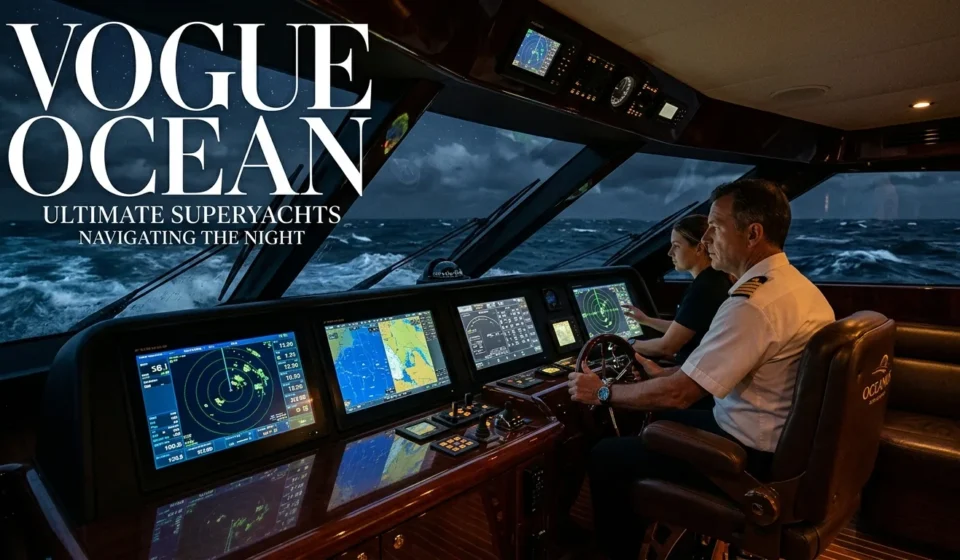
Imagine this situation: You’re navigating a narrow, unfamiliar channel at night. Visibility is poor, and a thick fog bank is rolling in. On your primary multi-function display (MFD), you see your precise position on the electronic chart, overlaid with real-time radar images showing several large freighters moving in the distance. The AIS targets of these vessels are also clearly displayed, showing their names, courses, and speeds, along with calculated closest point of approach (CPA) warnings. Your autopilot, linked to the chartplotter, is holding your precise course, while the sonar is painting a detailed picture of the bottom contour, highlighting a small, unexpected shoal just off your port bow. This level of integrated awareness is what advanced navigation delivers – a holistic view that standalone systems simply can’t match.
Modern yachts utilize networking protocols like NMEA 2000 and marine Ethernet to connect everything from engine sensors and fuel flow meters to autopilots, radar, and sonar modules. This allows any piece of data to be displayed on any compatible screen, giving you incredible flexibility and redundancy. A primary MFD can show a radar overlay, while a secondary display offers a full-screen chart, and a third monitors engine parameters. This truly elevates your control and understanding of your vessel and its environment.
Making Your Choice: Key Considerations for Motor Yacht Buyers
With so many options on the market, choosing the right advanced navigation system can feel overwhelming. But by focusing on a few key areas, you can make an informed decision that perfectly suits your motor yacht and your cruising style.
Your Cruising Grounds and Usage Style
Are you a weekend warrior sticking to familiar coastal waters, or do you dream of long-distance offshore passages? Your primary cruising grounds and how you intend to use your boat will heavily influence your needs. A robust radar and redundant systems are more critical for offshore adventurers, while a highly detailed chartplotter with excellent shallow-water sonar might be paramount for exploring intricate inlets. Honestly, don’t overbuy for features you’ll never use, but definitely don’t underbuy for safety where it matters.
Integration and Compatibility
This is where brand ecosystems come into play. Major manufacturers like Garmin, Raymarine, Simrad, and Furuno offer comprehensive suites where all components – MFDs, radar, sonar, autopilot, VHF – are designed to work together seamlessly. While mixing brands is possible with NMEA 2000, sticking with a single manufacturer for core systems often simplifies installation, support, and overall user experience. I believe a cohesive system is a happier system in the long run.
User Interface and Ergonomics
A powerful system is useless if it’s difficult to operate. Look for intuitive interfaces, responsive touchscreens, and physical controls that are easy to use even in rough seas. Consider the layout of your helm: Will the chosen displays fit comfortably? Are they positioned for optimal viewing from your primary helm position? Spend time interacting with different systems at boat shows or dealerships to get a feel for their usability.
Budget and Future-Proofing
Advanced navigation systems are a significant investment. Establish a realistic budget, but also think about future-proofing. Can the system be easily expanded with new modules (e.g., thermal cameras, entertainment systems) down the line? Does the manufacturer have a good track record for software updates and new product development? Investing in quality now often saves money and headaches later.
Navigating Towards the Future with Confidence
The pace of innovation in yacht technology is astounding, and advanced navigation systems are at the forefront. Equipping your motor yacht with the right tools not only enhances your boating experience but, more importantly, significantly boosts your safety and confidence on the water. From the clarity of digital charts to the watchful eye of radar and AIS, these systems are your allies against the unpredictable nature of the sea.
Take the time to research, compare, and perhaps even consult with an experienced marine electronics installer or broker. Your journey on the water should be as enjoyable and stress-free as possible, and a well-chosen, integrated navigation system is your best companion for achieving that. So go ahead, explore those horizons with the peace of mind that comes from a truly advanced helm!