

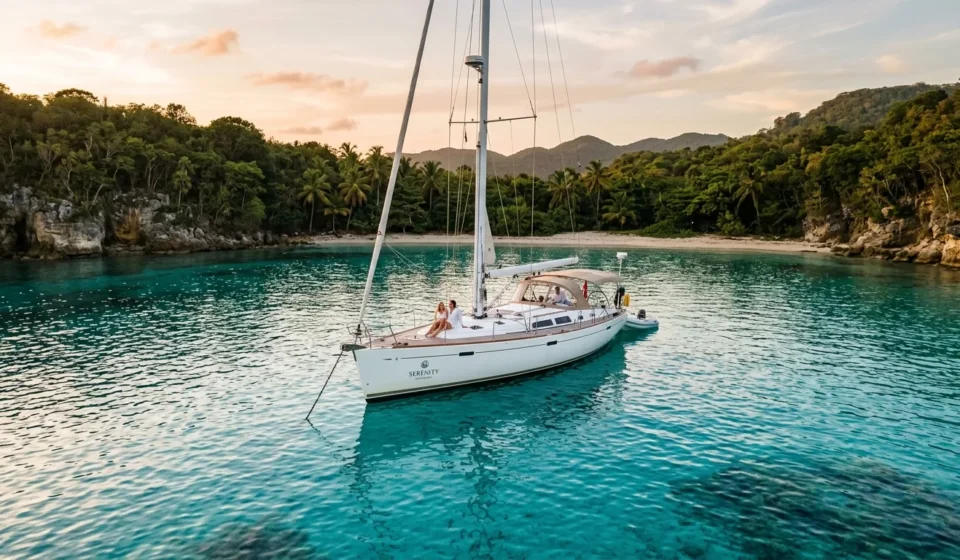

There’s a unique feeling of freedom that comes with dropping anchor in a secluded cove. The engine goes silent, the sails are furled, and your sailboat becomes your private island, gently swaying with the rhythm of the water. It’s pure bliss. But this serenity hinges entirely on one critical skill: knowing how to anchor your sailboat properly. Honestly, anchoring might seem simple on the surface, but mastering it is an art, a science, and a fundamental safety practice for any sailor. A poorly set anchor can quickly turn a peaceful evening into a nightmare, dragging you into danger or, at best, forcing a stressful re-anchoring in the dark.
Table Of Content
- The Essential Gear: Your Anchor & Rode
- Choosing the Right Anchor for Your Sailboat
- Understanding Your Rode: Chain, Warp, and Scope
- Mastering the Drop: How to Set Your Anchor Perfectly
- Pre-Drop Checklist and Site Selection
- The Approach and Deployment
- Confirming the Set and Monitoring
- Advanced Techniques & Troubleshooting
- Handling Crowded Anchorages and Challenging Conditions
- When Things Go Wrong: Dealing with a Fouled Anchor
- Safety First: Staying Secure on the Hook
- Anchor Watch and Weather Awareness
Having spent decades on the water, I’ve seen my share of anchoring triumphs and, regrettably, some spectacular failures. Trust me, you want to be on the triumph side! This guide is designed to equip you with the knowledge and confidence to anchor your sailboat like a seasoned pro, ensuring you and your vessel stay safe and sound, no matter where the adventure takes you. Let’s dive in.
The Essential Gear: Your Anchor & Rode
Before you even think about dropping anchor, you need to understand the tools of the trade. Your anchor system is your sailboat’s most vital piece of safety equipment after your life raft, and it deserves careful consideration. It’s not just about having an anchor; it’s about having the right anchor and the right rode for your boat and the conditions you expect to encounter.
Choosing the Right Anchor for Your Sailboat
Anchors come in various designs, each with its strengths and weaknesses depending on the seabed type. While many modern anchors are designed to perform well in a variety of bottom conditions, understanding the main types is crucial. Plow anchors (like CQR or Delta) are renowned for their holding power in mud and sand, digging in deep and resetting easily with tide or wind shifts. Claw anchors (like the Bruce) are also excellent all-rounders, particularly good in rocky bottoms due to their robust design.
Then there are the scoop anchors (like Rocna or Spade), which are relatively newer designs that have gained immense popularity for their exceptional holding power and quick setting in almost any bottom type, often outperforming older designs. For sailboats, I believe investing in a high-quality, modern scoop anchor is one of the best upgrades you can make to your anchoring system. Don’t forget a secondary, lighter anchor, perhaps a fluke anchor (like a Danforth), which is fantastic in soft mud but less versatile, making it a good choice for a stern anchor or backup.
Understanding Your Rode: Chain, Warp, and Scope
Your anchor rode is the line connecting your anchor to your boat. Most serious Cruising Sailboats opt for an all-chain rode for their primary anchor. Why? Chain is heavy, which creates a lower angle of pull on the anchor, helping it dig in better and absorb shock loads from waves and wind. It’s also incredibly chafe-resistant against rocky bottoms. However, chain is heavy, requires a robust windlass, and takes up significant space.
A chain-and-warp combination rode is a common alternative, offering a good balance of weight and elasticity. Typically, this involves 30-50 feet of chain directly attached to the anchor, followed by nylon rope. The chain provides the crucial weight and chafe protection near the anchor, while the nylon rope offers elasticity to absorb shock. But what would you do in extremely strong winds? Scope is paramount, referring to the ratio of the length of your deployed rode to the depth of the water (plus the height of your bow roller above the water). A good rule of thumb for safe anchoring in calm conditions is a 5:1 scope (e.g., 50 feet of rode for 10 feet of water depth plus 2 feet to the bow roller), increasing to 7:1 or even 10:1 in heavy weather or crowded anchorages. More scope equals better holding power, plain and simple.
Mastering the Drop: How to Set Your Anchor Perfectly
Having the best gear means nothing if you don’t know how to use it. Setting your anchor correctly is where skill and practice truly come into play. This isn’t a race; it’s a deliberate, controlled maneuver.
Pre-Drop Checklist and Site Selection
Before approaching your chosen spot, take a moment to assess the environment. Check your charts for water depth, seabed type, and any underwater obstructions. Look around for potential swing room, considering other boats, navigation hazards, and how your boat might swing with wind shifts or tidal changes. Is there enough room for your boat plus the length of your rode to swing 360 degrees? Also, make sure your anchor is clear, ready to deploy, and the rode is not tangled. The bitter end of your rode should always be securely fastened to your boat – you’d be surprised how often this gets overlooked!
The Approach and Deployment
Approach your desired anchoring spot slowly, heading directly into the wind or current (whichever is stronger). When you’re directly over the spot where you want your anchor to dig in</strong;, stop the boat. Then, let the anchor drop freely until it hits the bottom. Do not just drop it and let the boat drift back. Instead, as the anchor is on the bottom, begin to slowly reverse your boat, letting out rode as you go. The idea is to lay the rode out in a straight line on the seabed. This helps prevent tangles and ensures the anchor is pulled in the right direction to set.
&p>For example, imagine this situation: you’re aiming for a depth of 15 feet in a sandy bottom, and you’ve decided on a 7:1 scope for extra security. That means you need to deploy about 105 feet of rode (15 feet water + 3 feet freeboard x 7). As you slowly reverse, count off the rode you’re deploying. Once you’ve laid out the desired amount, snub the rode gently, allowing the anchor to dig into the seabed. You’ll feel the boat resist as the anchor sets. Increase reverse thrust gradually to really test the set, observing a fixed point on shore or using your GPS anchor alarm to confirm you’re not dragging.
Confirming the Set and Monitoring
Once you’ve tested the anchor, turn off the engine and take a moment to observe. Check your surroundings again. Are you swinging clear of other boats or hazards? Set your anchor alarm on your GPS or chartplotter. This invaluable tool will alert you if your boat moves outside a predefined radius, indicating a potential drag. Throughout your stay, periodically check your position, especially if the wind or current changes significantly. A visual check of the surrounding landscape against fixed points is often the best confirmation.
Advanced Techniques & Troubleshooting
Even with perfect technique, conditions can be challenging. Knowing how to adapt and troubleshoot is key to becoming a truly professional anchorer.
Handling Crowded Anchorages and Challenging Conditions
Crowded anchorages require extra vigilance and communication. Try to anchor in line with other boats, maintaining ample swing room. If you find yourself in a particularly tight spot, a second anchor deployed off the stern can restrict your swing, but be aware this limits your ability to re-orient to wind or current shifts. It’s a trade-off. In strong winds or currents, consider deploying a kellet (a weight attached to the rode) to help create a lower angle of pull on the anchor, improving holding power.
When Things Go Wrong: Dealing with a Fouled Anchor
It happens to the best of us: you try to retrieve your anchor, and it’s stuck. Perhaps it’s hooked on a rock, a sunken log, or even someone else’s discarded anchor. First, try motoring slowly in a circle around the anchor, keeping the rode taut. Often, this change in angle will free it. If that doesn’t work, try letting out more chain, then motoring slowly over the anchor, pulling it from the opposite direction. If you have a tripping line attachment point on your anchor, you might have deployed a separate line to it, which can be used to pull the anchor out backward. As a last resort, if safe to do so, a dive mask and snorkel can help you assess the situation visually. Always carry a sharp knife on deck for emergencies, especially if your anchor line is nylon and you need to cut it.
Safety First: Staying Secure on the Hook
Anchoring isn’t a “set it and forget it” operation. Constant awareness and preparation are crucial for ensuring your boat remains safely anchored.
Anchor Watch and Weather Awareness
Even with modern electronics, an anchor watch is your best defense against dragging. This means checking your position regularly, especially overnight or during significant weather changes. If you’re alone, your anchor alarm is your best friend, but don’t rely on it exclusively. Before anchoring, always check the weather forecast for the duration of your stay. Pay close attention to wind shifts, squalls, and approaching fronts. A sudden shift in wind direction can put immense strain on your anchor, potentially causing it to drag, even if it was well set initially. In my experience, a good mariner always has an exit strategy, even when at anchor. Where would you go if your anchor dragged?
Make sure your anchor rode is properly secured and protected from chafe where it passes over the bow roller or through a fairlead. Use chafe guards if necessary. Keep a keen eye on other boats in the anchorage. Are they well-anchored? Are they swinging differently than you? These observations can give you an early warning of potential issues. A little vigilance goes a long way in preventing problems.
Mastering sailboat anchoring techniques is a journey, not a destination. Every anchorage offers a new lesson, and every successful set builds confidence. By understanding your gear, practicing meticulous deployment, and staying vigilant, you’ll transform from a nervous novice into an anchoring expert. The peace of mind that comes from knowing your vessel is secure is priceless, allowing you to truly relax and enjoy the incredible beauty and freedom that Sail & Power & Boats & Motor Yachts has to offer. So, go forth, drop that anchor with confidence, and savor the tranquility of your own private slice of paradise.