


Understanding Sailboat Rigging: The Heartbeat of Your Sailboat
Ever stood on the dock, admiring a sailboat, and wondered how all those wires and ropes magically work together to harness the wind? It’s a symphony of engineering and physics, all designed to get you moving across the water. For anyone who loves the idea of sailing, or perhaps already owns a boat and wants to truly understand its inner workings, grasping the concept of rigging is absolutely fundamental. It’s not just about aesthetics; it’s about performance, safety, and ultimately, your enjoyment on the water. So, let’s pull back the curtain and explore the fascinating world above your deck.
Table Of Content
Think of your sailboat’s rigging as its skeletal and muscular system. The mast is the backbone, the stays are the strong ligaments holding it upright, and the running gear? Those are the muscles, tirelessly working to control the sails and propel you forward. Without a solid understanding of these components, you’re missing a huge piece of the sailing puzzle. And honestly, knowing how everything works will make you a more confident, capable, and safer sailor.
The Mighty Mast and Its Spars: The Backbone of Your Vessel
At the very core of your sailboat’s rigging is the mast. This towering vertical pole is the primary support for your sails, acting as the foundation for the entire rig. Masts come in various materials, from traditional wood to modern aluminum and carbon fiber, each chosen for its strength-to-weight ratio and flexibility characteristics. Its robust construction is crucial, as it bears immense loads from the wind pressing against the sails.
Masts are typically either deck-stepped or keel-stepped. A deck-stepped mast rests on the cabin top, usually supported by a compression post directly below it, which transfers the load to the keel. A keel-stepped mast, on the other hand, passes through the cabin top and extends down to the boat’s keel, offering greater structural integrity and often a slightly lower center of gravity, which can improve stability. In my opinion, keel-stepped masts always feel a bit more robust, though they can be trickier to un-step for maintenance.
Beyond the mast itself, you have other critical spars. The boom, which extends horizontally from the mast, is what the bottom edge of your mainsail (the foot) attaches to, allowing you to control the sail’s angle. Then there are spreaders, which are short struts extending horizontally from the mast to provide wider support for the shrouds, increasing the mast’s stability. Some boats also feature a spinnaker pole, a spar used to extend the clew of a spinnaker sail away from the boat, ensuring it catches maximum wind. Each of these spars plays a vital role in shaping and presenting your sails to the wind.
The Silent Strength: Standing Rigging
Now, let’s talk about the silent heroes of the rigging: the standing rigging. These are the fixed wires or rods that provide structural support to the mast, ensuring it remains upright and stable against the forces of wind and waves. Unlike the ropes you pull, these are not adjusted during sailing, hence the “standing” in their name. Their strength and integrity are paramount for your safety and the longevity of your mast.
The main components of standing rigging include the shrouds, forestay, and backstay. Shrouds run from the mast down to chainplates on the sides of the hull, providing lateral support. Often, you’ll find upper shrouds (from the masthead) and lower shrouds (from lower down the mast), sometimes with intermediate shrouds too, especially on taller rigs. The forestay runs from the top of the mast to the bow of the boat, supporting the mast from forward and often serving as the attachment point for your headsail (jib or genoa). The backstay, conversely, runs from the top of the mast to the stern, providing aft support and allowing you to fine-tune mast bend and forestay tension.
But what would happen if just one of these crucial components failed? Imagine this situation: you’re enjoying a beautiful afternoon sail, a gentle breeze filling your sails, when suddenly, a shroud snaps due to unseen corrosion. Without that lateral support, your mast could immediately become unstable, potentially bending or even breaking and falling overboard. This isn’t just a minor inconvenience; it’s a major safety hazard, highlighting why regular inspection of your standing rigging is non-negotiable. Every part of this system works in harmony, and a failure in one can cascade into serious trouble.
The Working Hands: Running Rigging
So far, we’ve covered the static elements. Now let’s get to the really critical point: the running rigging. These are the dynamic ropes and lines that you actively use to hoist, lower, trim, and control your sails and other spars. They are the “muscles” that allow you to shape the wind’s power, dictating your speed and direction. Understanding each line’s purpose is key to effective and enjoyable sailing.
Key components include halyards, which are used to hoist (raise) your sails, and sheets, which control the angle of the sails relative to the wind and the boat. For example, the main halyard raises the mainsail, and the mainsheet controls its trim. Similarly, the jib halyard raises the jib, and the jib sheets trim it. Other essential lines include the vang (or kick-strake), which pulls the boom down to control mainsail twist, and various outhauls and downhauls that adjust sail tension along the boom and luff, respectively. You might also have control lines for reefing systems, ensuring you can reduce sail area safely in stronger winds.
Based on my experience, the quality and condition of your running rigging can make or break a sailing trip. I once helped a friend who had neglected his sheets for too long. They were stiff, sun-damaged, and constantly catching in the blocks. Trimming sails became a frustrating, strength-sapping ordeal instead of a smooth, responsive adjustment. Upgrading to good quality, low-stretch lines, properly sized for the boat, makes an incredible difference in how easily and efficiently you can handle your sails. It’s an investment that truly pays off in comfort and performance.
Keeping It All Shipshape: Maintenance and Inspection
Understanding the components is one thing; keeping them in top condition is another entirely. Rigging is constantly exposed to harsh marine environments – UV radiation, salt spray, extreme temperatures, and dynamic loads. Regular and meticulous maintenance and inspection are not just recommendations; they are absolutely essential for safety and the longevity of your entire rig. Neglecting these checks can lead to costly repairs or, far worse, dangerous failures.
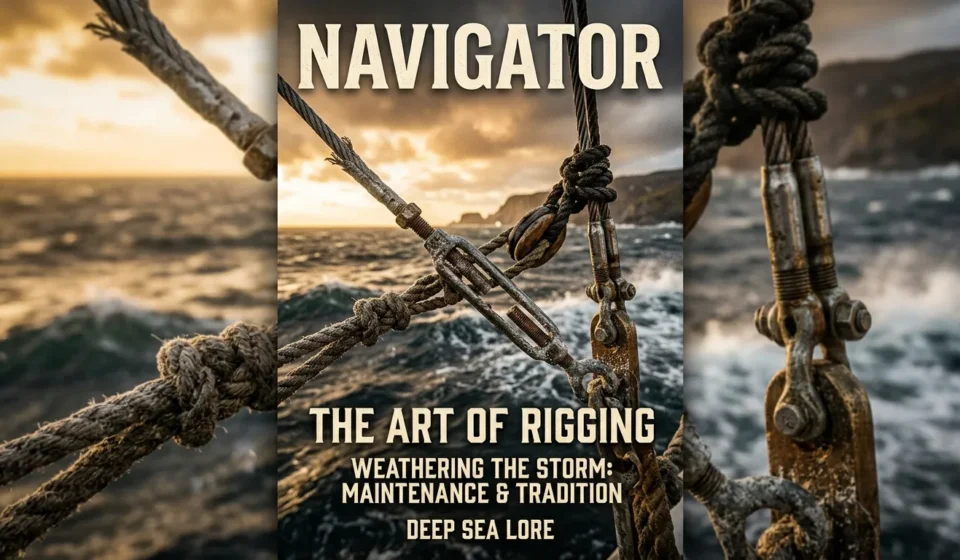
What should you be looking for? For standing rigging, inspect terminals for any signs of corrosion, especially crevice corrosion, which can be insidious and hard to spot until it’s too late. Check for broken strands in wires, bent cotter pins, or any deformation in turnbuckles. For running rigging, look for chafe, fraying, discoloration from UV damage, and excessive stiffness or stretch. Pay close attention to points where lines run through blocks or over sheaves, as these are common wear areas. Are your blocks running freely, or are they seized with salt? Are your shackles secure?
Honestly, a thorough pre-season inspection is a must, and weekly visual checks during the sailing season are highly recommended. A post-season inspection allows you to address any issues before winter storage. For example, imagine missing a tiny crack in a shroud’s swage fitting during a quick glance. That small crack could propagate under load, leading to a catastrophic failure offshore. If you’re ever unsure, don’t hesitate to consult a professional rigger. Their trained eye can spot potential problems that might elude even an experienced boat owner. Investing in professional advice can save you a fortune in the long run and, more importantly, keep you safe.
Your Rigging: Your Connection to the Wind
There you have it – a comprehensive look at the intricate world of sailboat rigging. From the towering mast that anchors it all, through the steadfast standing rigging that provides unwavering support, to the dynamic running gear that puts the wind in your hands, every single component plays a crucial role. Each part is interconnected, working in unison to transform the invisible force of the wind into exhilarating motion.
By understanding these systems, you’re not just gaining knowledge; you’re building a deeper connection with your sailboat and enhancing your confidence on the water. So, next time you step aboard, take a moment to look up. Appreciate the engineering, the materials, and the sheer cleverness that allows you to harness the elements. Stay vigilant with your inspections, learn the names of your lines, and embrace the continuous journey of becoming a more skilled and knowledgeable sailor. Happy sailing, and may your rigging always be strong!