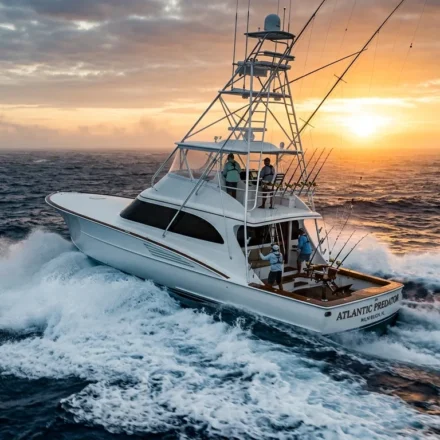


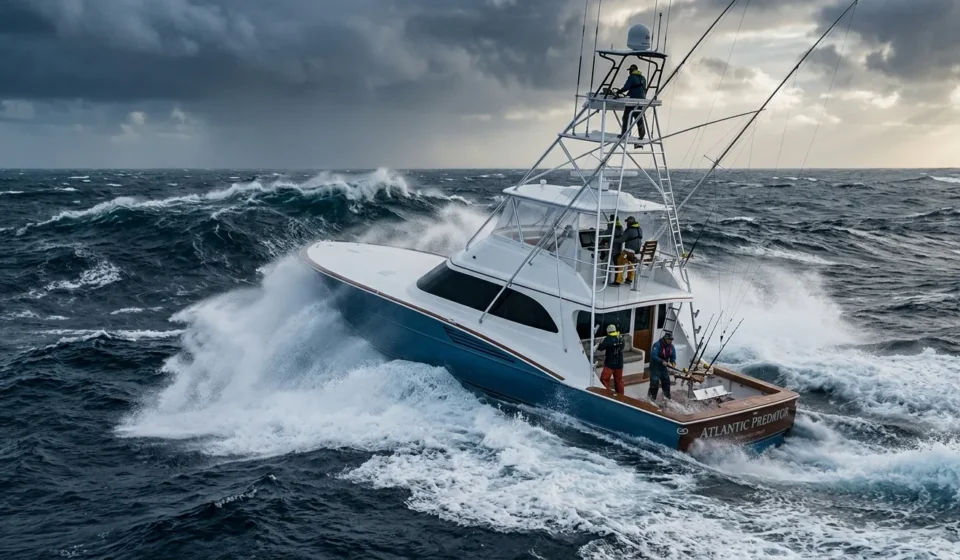

There’s a call that echoes from beyond the horizon, a whisper of immense power and primal challenge that draws anglers like a siren song. It’s the call of offshore big game fishing – an pursuit that takes you far from the comforts of land, into the deep blue where true giants roam. If you’ve ever dreamt of battling a magnificent marlin, wrestling a powerful tuna, or outsmarting a elusive swordfish, then you’re in the right place. This isn’t just fishing; it’s an expedition, a test of skill, patience, and sheer will.
Table Of Content
- The Hunt Begins: Understanding Your Quarry & Their Haunts
- Knowing Your Target Species
- Reading the Ocean: Where the Big Ones Hide
- Arming for Battle: Essential Gear and Rigging
- Rods, Reels, and Lines: Power & Precision
- Baits and Lures: Tempting the Titans
- Terminal Tackle: The Crucial Connection
- Strategies for Success: Mastering Offshore Techniques
- Trolling: Covering Ground, Finding Fish
- Chunking & Drifting: Luring Them In
- Deep Dropping: Targeting the Abyss
- Safety First: Preparing for the Unexpected
- Vessel Preparedness: Your Offshore Lifeline
- Crew & Communication: Teamwork Makes the Dream Work
- Fighting the Fish & Ethical Considerations
For decades, I’ve had the privilege of seeing countless sunrises paint the ocean gold, rods bent double, and the exhilarating splash of a massive fish breaking the surface. It’s an experience that truly gets into your blood. But what does it really take to head out there and successfully target these magnificent creatures? It’s more than just a big boat and a stout rod; it’s about understanding the ocean, your quarry, and yourself. Let’s dive into the fascinating world of deep sea fishing and equip you for your next grand adventure.
The Hunt Begins: Understanding Your Quarry & Their Haunts
Before you even think about dropping a line, the first step in successful big game fishing is understanding what you’re chasing. These aren’t your typical inshore species; they’re apex predators, often migratory, and demand respect. Each big game fish has its own personality, its preferred diet, and its tell-tale habits.
Knowing Your Target Species
Are you after the acrobatic leaps of a white marlin, the brute strength of a bluefin tuna, or the deep-dwelling mystery of a swordfish? Marlin fishing often involves chasing billfish like Blue Marlin, White Marlin, and Sailfish, known for their incredible speed and aerial displays. Tuna fishing targets species such as Bluefin, Yellowfin, and Bigeye, which are often found in large schools and provide a prolonged, powerful fight. And then there’s the broadbill swordfish, a nocturnal hunter of the deep. Knowing your target helps you choose the right gear and technique.
Reading the Ocean: Where the Big Ones Hide
The ocean is vast, but it’s not a uniform blue desert. It has highways, rest stops, and feeding grounds for fish. Big game fish are often found around underwater structure like seamounts, canyons, and ledges, which create upwellings and concentrate baitfish. Current lines, temperature breaks, and weed lines are also critical indicators. Offshore fishing success hinges on reading these subtle signs. Look for diving birds, which often signal baitfish being driven to the surface by predators below. Even floating debris can attract small baitfish, which in turn attract bigger fish. Honestly, it’s like being a detective on the high seas.
Arming for Battle: Essential Gear and Rigging
You wouldn’t bring a butter knife to a sword fight, and the same goes for deep sea fishing. The gear needs to be robust, reliable, and perfectly matched to the challenge. This isn’t the place to cut corners, as a single weak link can turn a dream catch into a heartbreaking loss.
Rods, Reels, and Lines: Power & Precision
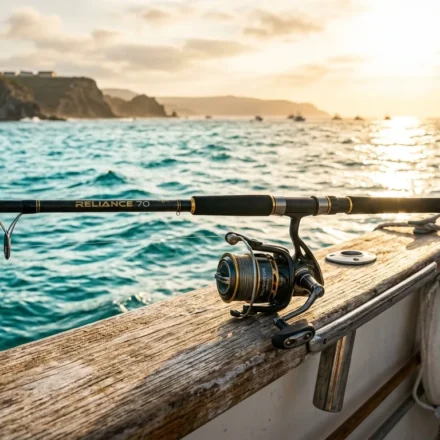
For big game, you’re looking at heavy-duty conventional reels, often spooled with hundreds of yards of monofilament or braided line, ranging from 50 lb to 130 lb test or even higher. Rods are typically stand-up or chair rods, designed to absorb immense pressure. For example, imagine this situation: you’ve hooked into a 600-pound bluefin. Your rod bends into a U-shape, the reel screams, and your muscles burn. Without the right gear, that fish is gone in seconds. Saltwater fishing demands durability against corrosive elements and brutal fights.
Baits and Lures: Tempting the Titans
Live bait, like mackerel, bonito, or goggle-eyes, are often irresistible to big predators. They’re rigged to swim naturally and present an easy meal. Dead baits, such as ballyhoo or mullet, are also highly effective, especially when trolled with skirts or chuggers. Artificial lures, ranging from colorful plastic skirts to huge poppers and stickbaits, can mimic wounded baitfish and provoke aggressive strikes. The key is to match the hatch – use baits that are natural to the area and time of year.
Terminal Tackle: The Crucial Connection
This is where many battles are won or lost. Leaders, hooks, swivels, and crimps must be top-notch. Fishing techniques for big game often require heavy monofilament or fluorocarbon leaders, or even wire leaders for toothy critters. Hooks need to be razor-sharp and strong enough not to straighten under extreme pressure. Pay attention to detail here; a poorly tied knot or a cheap swivel is an open invitation for disaster. Based on my experience, checking your terminal tackle meticulously before each trip is non-negotiable.
Strategies for Success: Mastering Offshore Techniques
So, you’ve got your boat, your gear, and a good understanding of the ocean. Now it’s time to put it all together and actively target these incredible fish. There are several proven fishing techniques for offshore big game, each with its own nuances and ideal scenarios.
Trolling: Covering Ground, Finding Fish
Trolling is perhaps the most iconic method for offshore fishing. It involves dragging multiple lines behind the boat at a steady speed, typically between 5 to 9 knots. This allows you to cover vast areas and present a spread of baits or lures that mimic a school of baitfish. Outriggers are often used to spread lines wider, reducing tangles and covering more water. Different lure depths and patterns can be achieved using planer boards, downriggers, or simply varying the length of line deployed.
Chunking & Drifting: Luring Them In
When targeting tuna, especially, chunking is incredibly effective. This involves drifting with the current and consistently tossing small pieces of bait (chunks) into the water to create a scent trail and draw fish closer to the boat. Your baited lines are then set to drift naturally with the current alongside the chunks. It requires patience and a keen eye, as strikes can be subtle. This method creates a feeding frenzy and can be absolutely exhilarating when a school of hungry tuna finds your boat.
Deep Dropping: Targeting the Abyss
For species like swordfish, which inhabit incredible depths during the day, deep dropping is the name of the game. This technique involves using electric reels to deploy baits hundreds, sometimes thousands, of feet down. Specialized rigs with glow sticks and heavy weights are used to reach the dark, cold depths where these magnificent fish lurk. It’s a different kind of challenge, requiring precise boat positioning and an understanding of deep-water currents.
Safety First: Preparing for the Unexpected
As a seasoned boater and broker, I can’t stress this enough: safety is paramount when venturing offshore. The ocean is an incredible playground, but it demands respect. Proper preparation isn’t just a good idea; it’s essential for a successful and safe trip, especially when you’re miles from shore on your Sail & Power & Boats & Motor Yachts.
Vessel Preparedness: Your Offshore Lifeline
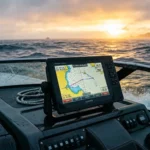
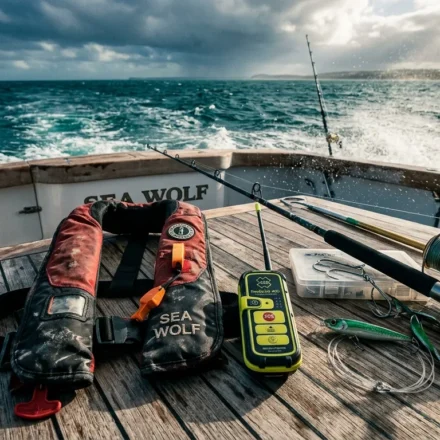
Before you leave the dock, ensure your vessel is in pristine condition. Check all safety gear: EPIRB, life raft, flares, VHF radio, satellite phone, first aid kit, and sufficient fresh water and fuel. Dual engines are a huge plus for deep sea fishing as backup is crucial. Make sure your navigation systems are updated and understand how to use them, even if relying on a captain. A well-maintained boat is your first line of defense against the unexpected.
Crew & Communication: Teamwork Makes the Dream Work
Big game fishing is rarely a solo sport. You need a competent crew who knows their roles, whether it’s clearing lines, gaffing a fish, or operating the boat during a fight. Clear communication is vital. Establish hand signals or verbal cues for different situations. What would you do if a fish spools half your line in seconds, and another line gets tangled? Having a well-drilled crew can turn chaos into controlled action.
Fighting the Fish & Ethical Considerations
Once hooked, the battle begins. Proper fighting technique, whether from a fighting chair or stand-up, conserves energy and increases your chances of landing the fish. Keep the pressure on, pump and reel, and be ready for sudden runs. But also, be mindful of conservation. Many anglers practice catch and release for billfish, ensuring these magnificent creatures can continue to thrive. If you do keep a fish, understand local regulations and harvest responsibly. I’ve always believed that the true victory isn’t just landing the fish, but doing so respectfully and sustainably.
Venturing out into the vast blue to chase giants is an experience unlike any other. It challenges you, rewards you, and connects you to the raw power of nature. From the meticulous preparation of your gear to the thrilling moment of a strike, every element of offshore big game fishing contributes to an unforgettable story. Remember to always prioritize safety, respect the ocean, and embrace the journey as much as the catch.
Are you ready to cast off and chase those giants? The horizon awaits, full of potential and adventure. Tight lines, my friends!