

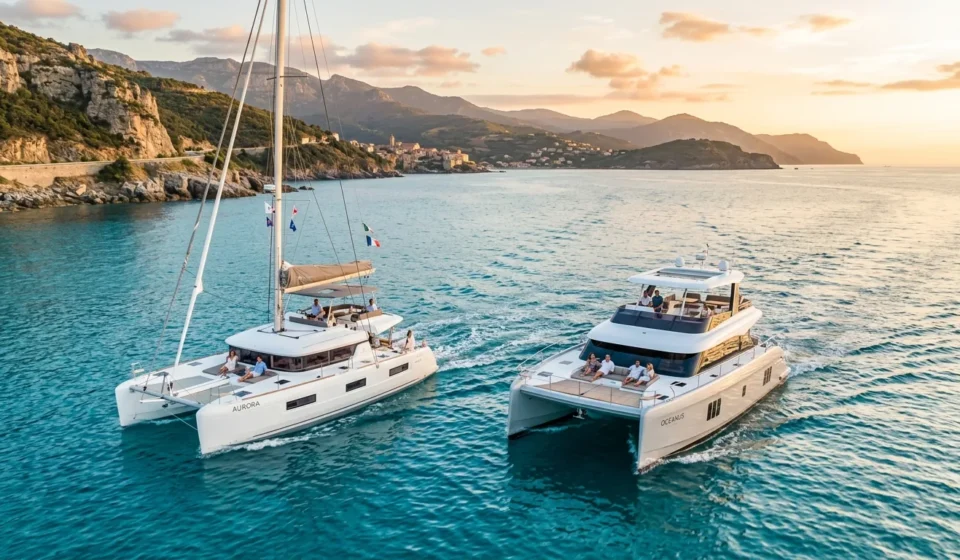

Ah, the call of the open water! If you’re dreaming of charting your own course, exploring hidden coves, or simply enjoying the tranquility of life afloat, chances are a catamaran has crossed your mind. These twin-hulled marvels have truly revolutionized cruising, offering unmatched stability, space, and shallow-draft access to those dreamy spots. But here’s the big question that often keeps future owners up at night: should you opt for a power catamaran or a sailing catamaran for your ultimate cruising adventure?
Table Of Content
- The Core Experience: Wind Power vs. Engine Power
- Power Catamarans: Speed, Space, and Effortless Motion
- Sailing Catamarans: The Call of the Wind and Efficiency
- Comfort & Livability Onboard: Your Home on the Water
- Interior Layout & Deck Space
- Motion at Sea & Stability
- Ownership Considerations: Beyond the Initial Purchase
- Cost of Ownership: Fuel, Maintenance, and Dockage
- Maintenance & Systems Complexity
- Making Your Choice: Which Catamaran is Your Ideal Cruising Partner?
It’s a fantastic dilemma to have, honestly. Both types offer incredible benefits, but they deliver entirely different experiences. As someone who’s spent decades helping folks like you navigate these waters, I can tell you there’s no single “right” answer. It all comes down to your priorities, your cruising style, and what truly makes your heart sing when you’re out on the water. Let’s break down the key differences so you can make an informed decision for your marine lifestyle.
The Core Experience: Wind Power vs. Engine Power
This is where the fundamental divergence lies, influencing everything from your daily routine on board to your long-term cruising plans. Understanding this core difference is the first step in your boat comparison journey.
Power Catamarans: Speed, Space, and Effortless Motion
Imagine this situation: You’ve got a tight weather window, a long stretch of coastline to cover, and you want to get to that next anchorage before sunset. A power catamaran shines here. With twin engines, they offer impressive speeds, often cruising comfortably in the 15-20 knot range, and can even hit higher top speeds. This means you can cover serious distances quickly, outrunning squalls or simply maximizing your time in a particular destination. They’re also incredibly easy to maneuver in tight spaces, thanks to those independent engines, making dockings and anchorages less stressful.
One of the biggest draws for many is the sheer volume. Without the need for masts, rigging, or large sail lockers, power cats tend to boast even more expansive interior living spaces than their sailing counterparts. Think larger salons, bigger galleys, and often more generous flybridges for entertaining. Plus, the absence of sails flapping and lines creaking makes for a remarkably quiet ride when the engines are off, or a more controlled hum when they’re on, offering a different kind of tranquility.
- Pros: Higher speeds, greater range in less time, immense interior volume, easy maneuvering, less complex rigging.
- Cons: Higher fuel consumption, reliance on engines for propulsion, potential for “hobby-horsing” in certain sea states.
Sailing Catamarans: The Call of the Wind and Efficiency
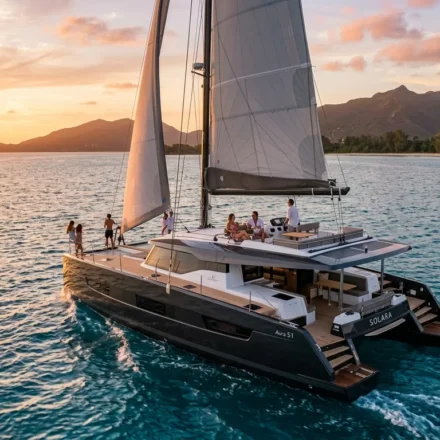
Now, picture a different scene: a gentle breeze filling the sails, the engines off, and nothing but the whisper of water against the hulls and the occasional cry of a seabird. This is the magic of a sailing catamaran. For many, the joy of harnessing the wind for propulsion is the very essence of cruising. It’s an inherently more fuel-efficient way to travel, drastically reducing your carbon footprint and your budget at the fuel dock. If you’re planning extensive offshore cruising or a circumnavigation, the ability to largely rely on nature’s power is a massive advantage.
While not as fast as power cats under engine, a well-designed sailing catamaran can achieve impressive speeds and angles to the wind. The motion under sail is often incredibly comfortable, a smooth glide rather than a chop. And honestly, there’s a primal satisfaction that comes from mastering the wind and waves with just sails and a rudder. The connection to the marine environment feels more profound.
- Pros: Fuel efficiency, quiet operation under sail, strong connection to nature, excellent stability under sail, self-sufficiency for long passages.
- Cons: Slower passage times (wind dependent), more complex rigging and sail handling, potential for “motoring” in light winds.
Comfort & Livability Onboard: Your Home on the Water
Regardless of how you power it, a catamaran is designed to be a comfortable home away from home. But the differences in propulsion naturally lead to variations in layout, space utilization, and even how the boat feels at sea.
Interior Layout & Deck Space
As I mentioned, power cats generally win on interior volume. Without the mast compression post and associated rigging, designers have more freedom to create vast, open salons and galleys. They often feature larger flybridges that become incredible social hubs, complete with wet bars, dining areas, and sun pads. This makes them fantastic for entertaining larger groups or for families who value maximum living space.
Sailing catamarans, while still incredibly spacious compared to monohulls, often have their living areas slightly more integrated with the deck, featuring larger cockpits for sail handling and outdoor living. The salon might be a touch smaller to accommodate the mast base, but they still offer panoramic views and comfortable accommodations. The deck space is often cleverly designed to balance relaxation with practicalities like winches and line management. Both types offer excellent privacy with cabins typically separated in the hulls, but the sheer scale of a power cat’s interior can be a game-changer for some.
Motion at Sea & Stability
Catamarans are renowned for their stability, and both power and sailing versions benefit from this. They don’t heel like monohulls, which dramatically reduces seasickness for many. However, their motion differs. A power catamaran, especially in a head sea, can sometimes exhibit a “hobby-horsing” motion – pitching up and down on the waves due to its shorter waterline length relative to its beam and often lighter displacement. It’s not necessarily uncomfortable, but it’s different from the smoother, more stately motion of a heavier displacement vessel.
A sailing catamaran, particularly when under sail, tends to have a very gentle, stable motion. The sails act as stabilizers, dampening roll, and their longer hulls often mitigate the hobby-horsing effect. When motoring in choppy conditions, they will still be very stable, though you might feel the waves more directly than under sail. For those who prioritize a very gentle ride in most conditions, the sailing cat often has a slight edge here, especially on long passages.
Ownership Considerations: Beyond the Initial Purchase
Buying the boat is just the beginning, isn’t it? As a seasoned broker, I’ve seen countless clients overlook the long-term implications. Understanding the costs and complexities of yacht ownership is crucial for a happy cruising life.
Cost of Ownership: Fuel, Maintenance, and Dockage
Here’s where the scales can tip significantly. A power catamaran, with its higher speeds and typically larger engines, will consume substantially more fuel than a sailing catamaran. If you plan to cover thousands of miles annually, those fuel bills can add up quickly. Maintenance also differs; power cats usually have two large engines requiring regular servicing, but no complex rigging to inspect or sails to repair or replace. Their systems tend to be more focused on propulsion and electrical loads.
A sailing catamaran will have significantly lower fuel costs, especially if you’re a keen sailor. However, you’ll have the added expenses of sail maintenance, repair, or replacement, as well as rigging inspections and potential refits. The engines are typically smaller, so their running costs are lower. Dockage is another consideration for both: catamarans, with their wide beams, often incur higher marina fees than comparably sized monohulls. However, power catamarans often have even wider beams for their length, which can sometimes push them into a higher price bracket for slips.
Maintenance & Systems Complexity
Honestly, both types of multihull yachts are sophisticated vessels requiring diligent maintenance. However, the nature of that maintenance differs. A power cat will have a more complex engine room, with larger engines, more extensive fuel systems, and potentially more intricate electrical systems to support air conditioning, water makers, and other amenities. Servicing these engines correctly is paramount.
A sailing cat, while having smaller engines, introduces the complexity of the mast, standing and running rigging, sails, winches, and associated hardware. There’s a learning curve to understanding sail trim and efficient sailing. In my opinion, while both require attention, the skills required for maintaining a sailing catamaran are more diverse, encompassing both mechanical and rigging expertise. However, many sailing enthusiasts enjoy the hands-on aspect of sail management.
Making Your Choice: Which Catamaran is Your Ideal Cruising Partner?
So, after all this, which catamaran is calling your name? The choice for your ideal cruising partner truly boils down to your personal priorities and vision for life on the water. Do you value speed, expansive living space, and the ability to outrun weather systems, even if it means higher fuel bills? A power catamaran might be your perfect match. They are fantastic for coastal hopping, exploring archipelagos, or for those who simply want to spend more time at anchor and less time traveling.
Are you drawn to the romance of sailing, the efficiency of wind power, and the quiet rhythm of a life dictated by nature’s breath? Then a sailing catamaran is likely your ultimate vessel. They offer an incredible sense of self-sufficiency, making them ideal for long-distance offshore cruising and truly immersive marine experiences. For more insights into specific models and their unique features, make sure to check out the detailed boat comparisons right here on Sail & Power & Boats & Motor Yachts!
Ultimately, both provide the unparalleled stability, shallow draft, and spaciousness that makes multihulls so beloved for cruising. Take the time to consider what truly drives your cruising dream. Charter both types if you can, talk to owners, and imagine yourself living on each. The right catamaran is out there, waiting to take you on adventures you’ll never forget. What kind of journey will yours be?