Choosing the Right Power Boat Trailer: Your Ultimate Guide for Safe Hauling
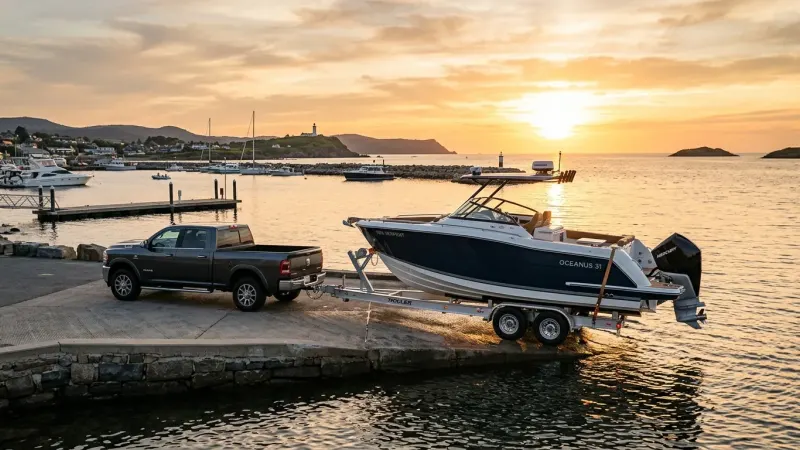
So, you’ve found the perfect power boat, ready for adventures on the water. That’s fantastic! But before you can launch her, there’s a critical piece of equipment many new (and even some experienced!) boat owners overlook: the trailer. It’s not just an afterthought; it’s the foundation for safe transport and the protection of your considerable investment. Believe me, a mismatched or inadequate trailer can turn a fun day on the water into a roadside nightmare.
Table Of Content
- Why the Right Trailer Matters More Than You Think
- The Critical Numbers: Matching Trailer to Boat
- Boat Weight & Capacity: Don’t Guess, Verify!
- Boat Length & Overhang
- Hull Type & Support: Bunks vs. Rollers
- Key Trailer Features and Components You Can’t Ignore
- Braking Systems: Non-Negotiable for Safety
- Frame Construction & Materials
- Axles, Suspension & Tires
- Coupler & Hitch
- Lighting & Wiring
- Freshwater vs. Saltwater Use
- Loading & Unloading Features
- Maintenance Made Easier
- Ready to Hit the Road (and Water!)
Honestly, after decades in this business, I’ve seen more heartache, damage, and unnecessary stress from improper trailer choices than almost anything else. You wouldn’t put a racehorse in a flimsy paddock, would you? The same principle applies here. Your power boat deserves a trailer that’s up to the task, not just legally, but practically and safely. That’s why we’re diving deep today into how to choose the right power boat trailer – a guide that will save you headaches, heartaches, and potentially, serious money.
Why the Right Trailer Matters More Than You Think
Think about it for a moment: your trailer isn’t just a dolly to get your boat from point A to point B. It’s a dynamic piece of equipment that endures varying road conditions, significant weight, and often, the corrosive elements of the marine environment. A poorly chosen trailer can lead to structural damage to your boat, dangerous sway on the highway, tire blowouts, brake failures, and even complete detachment. Imagine this situation: you’re cruising down the highway, dreaming of a relaxing weekend, when suddenly your trailer starts to fishtail because it’s too light for your boat’s weight or improperly balanced. Not exactly a fun scenario, is it?
Beyond the immediate safety concerns, an unsuitable trailer can lead to long-term wear and tear on your boat’s hull and systems. Improper bunk or roller placement can create stress points, causing gelcoat cracks or even hull deformation over time. Plus, let’s not forget the legal implications. Overloaded trailers or those with faulty lights can lead to hefty fines and insurance complications. Investing in the correct trailer from the start is truly an act of foresight and responsibility.
The Critical Numbers: Matching Trailer to Boat
This is where the rubber meets the road, quite literally. The single most important aspect of choosing a trailer is ensuring it’s appropriately sized and rated for your specific boat. Forget aesthetics for a moment; we need to talk about hard numbers.
Boat Weight & Capacity: Don’t Guess, Verify!
Every trailer has a Gross Vehicle Weight Rating (GVWR) – the maximum weight it can safely carry, including its own weight. Your boat’s “dry weight” is just the beginning. You need to account for a fully fueled tank, water in any onboard tanks, all your gear, fishing tackle, safety equipment, and anything else you store on the boat. Add about 10-15% to your boat’s stated dry weight to get a realistic loaded weight. Now, make sure the trailer’s GVWR exceeds this total loaded weight by at least 15-20%. A little buffer is always a good idea.
I once had a client who bought a trailer just barely rated for his boat’s dry weight. He thought he was saving money. On his second trip, a tire blew out, and he was lucky it didn’t cause a major accident. It turned out he’d loaded up with a full fuel tank, a cooler full of ice, and a week’s worth of supplies. The trailer was severely overloaded. Don’t make that mistake! Always know your boat’s true loaded weight.
Boat Length & Overhang
The trailer needs to be long enough to properly support your boat. This means the stern shouldn’t hang off excessively, and the bow should reach the winch post without being jammed against it. Proper length ensures the boat’s weight is distributed correctly over the trailer’s axles, contributing to stable towing and preventing excessive tongue weight (too much weight on your tow vehicle’s hitch) or insufficient tongue weight (which can cause dangerous sway). Aim for the boat to be supported from bow eye to just shy of the transom.
Hull Type & Support: Bunks vs. Rollers
This is another crucial decision. Most power boats are best suited for bunk trailers. Bunks offer continuous support along the hull, distributing weight evenly and minimizing stress points. They are generally better for long-term storage and over-the-road transport. Rollers, while making launching and retrieving easier, concentrate weight on smaller areas and can potentially dimple or damage fiberglass hulls over time, especially with heavier boats. However, for very shallow ramps or frequent launching, rollers can be beneficial for lighter boats.
Ensure the bunks or rollers are adjustable to perfectly cradle your specific hull shape. A good trailer will allow you to fine-tune these supports to match your V-hull, flat bottom, or catamaran precisely. Improper support here is a recipe for hull damage.
Key Trailer Features and Components You Can’t Ignore
Once you’ve got the basic fit sorted, it’s time to delve into the nitty-gritty of the trailer’s construction and components. These details significantly impact safety, durability, and your overall experience.
Braking Systems: Non-Negotiable for Safety
If your boat and trailer combination exceeds a certain weight (which varies by state, but is generally around 1,500-3,000 lbs), brakes are not just recommended; they’re legally required. Even if not legally mandated, brakes are essential for safety with any sizable boat. Surge brakes (hydraulic) are common for boat trailers, activating when your tow vehicle slows. Electric over hydraulic systems offer more precise control and can be adjusted from the tow vehicle. Always check your local regulations and err on the side of caution.
Frame Construction & Materials
Trailer frames are typically made from galvanized steel or aluminum. Galvanized steel is robust and cost-effective, offering good corrosion resistance, especially if hot-dipped. Aluminum trailers are lighter, making them easier to tow and often more resistant to saltwater corrosion, though they typically come with a higher price tag. The choice often comes down to your budget, the weight of your boat, and where you’ll be trailering and storing it. A robust frame is crucial for longevity and safety.
Axles, Suspension & Tires
Single-axle trailers are fine for lighter boats, but heavier vessels demand tandem or even triple axles for better weight distribution and added safety in case of a tire failure. Suspension systems (leaf spring or torsion) absorb road shock, protecting your boat. Torsion axles generally offer a smoother ride and independent suspension for each wheel. Finally, don’t skimp on tires! Boat trailer tires (ST for Special Trailer) are designed for heavy loads and prolonged sitting. Always check their pressure before every trip and replace them when they show signs of age, regardless of tread wear.
Coupler & Hitch
Ensure the trailer’s coupler matches your tow vehicle’s hitch ball size and that both are rated for the combined weight of your boat and trailer. Safety chains are also non-negotiable; they’re your last line of defense if the coupler fails.
Lighting & Wiring
All trailers need functioning brake, turn signal, and running lights. For boat trailers, waterproof LED lights are a significant upgrade, offering brighter illumination and far greater longevity than incandescent bulbs, especially with repeated dunking in the water. Check the wiring harness for corrosion and proper insulation.
&h2>Beyond the Basics: Smart Choices for Longevity and Ease of Use
So far we’ve covered the really critical points for safety and compatibility. Now let’s get to some features that make life easier and extend the life of your trailer and boat.
Freshwater vs. Saltwater Use
If you’re primarily launching in saltwater, corrosion resistance is paramount. Aluminum trailers are a superior choice here, and if you opt for steel, ensure it’s hot-dipped galvanized, not just painted. Stainless steel hardware, sealed brakes, and oil bath hubs are also excellent upgrades for saltwater environments to fight off rust and prolong component life. Freshwater users have a bit more leeway, but good corrosion protection is always a plus.
Loading & Unloading Features
Consider features that streamline your launch and retrieval process. Guide poles at the rear of the trailer are invaluable for guiding your boat onto the bunks, especially in windy conditions or strong currents. A quality winch (manual or electric) with a sturdy strap and hook is essential. Adjustable bunks are also key, allowing you to perfectly cradle your boat’s unique hull shape.
Maintenance Made Easier
Look for trailers with easily accessible grease zerks on wheel bearings for simple lubrication. Bearing buddies or similar systems are great for keeping water out and grease in. A readily available spare tire, mounted on the trailer, is a must-have. And choose a trailer where the lighting system is either fully submersible and sealed or easily detachable for maintenance.
&h2>Pre-Trip Checks and On-Road Safety: Your Trailer’s Best Friend
Even the best trailer needs a little TLC and a thorough check before hitting the road. This isn’t just a suggestion; it’s a vital part of safe boating.
- Tires: Check pressure (don’t forget the spare!), look for cracks, bulges, or excessive wear. Kick them to ensure they feel firm.
- Lights: Connect your trailer to your tow vehicle and test all lights: running lights, brake lights, and turn signals. A non-functioning light is a ticket waiting to happen, and more importantly, a safety hazard.
- Coupler & Safety Chains: Ensure the coupler is securely latched onto the hitch ball and the safety chains are properly crossed and attached to your tow vehicle.
- Tie-downs: Your boat needs to be secured at the bow (to the winch post), the stern, and often mid-ship. Never rely solely on the winch strap! Additional straps prevent your boat from bouncing or shifting on the bunks. But what if your boat shifts or even bounces out of its cradle at highway speeds? It’s a terrifying thought.
- Wheel Bearings: After driving a short distance, gently touch the hubs. If they’re excessively hot, it could indicate a bearing issue. Get it checked out before a long trip.
I always tell my clients, a few minutes spent on these checks before you leave can save you hours (or worse!) on the side of the road. Don’t rush it. It’s an integral part of preparing for your boating adventure.
Ready to Hit the Road (and Water!)
Choosing the right power boat trailer is a significant decision, one that directly impacts your safety, your boat’s longevity, and your peace of mind. It’s not about finding the cheapest option; it’s about finding the right fit for your boat and your boating lifestyle. Take your time, do your research, and don’t hesitate to ask questions. A reputable trailer dealer or boat broker (like yours truly!) can help guide you through the specifics for your particular vessel.
By following this guide, you’ll be well-equipped to select a trailer that not only meets all the necessary requirements but also provides dependable, stress-free transport for your prized power boat. Happy trailering, and even happier boating! We here at Sail & Power & Boats & Motor Yachts are always here to help you enjoy every aspect of life on the water.