


Let’s be honest, when you think about your power boat’s performance, what’s the first thing that comes to mind? The engine, right? Maybe the hull design or the trim tabs. But I’ve seen countless boaters overlook one of the single most critical components for getting the absolute best out of their vessel: the propeller. That spinning piece of metal at the back of your boat isn’t just there to push water; it’s the sophisticated translator between your engine’s power and your boat’s movement through the water. Get it wrong, and you’re leaving performance, efficiency, and enjoyment on the table. Get it right, and you’ll feel like you have a whole new boat. So, let’s dive into the fascinating world of propellers and how to achieve propeller perfection for your power boat.
Table Of Content
- Understanding the Anatomy of a Propeller: Pitch, Diameter, and Blades
- Pitch: The “Gearing” of Your Boat
- Diameter: Moving the Water
- Number of Blades: The Trade-offs
- Signs You Have the Wrong Propeller
- The Art of Propeller Matching: Your Boat, Your Style
- Your Boat’s Specifications: Engine, Gear Ratio, Hull Type
- The WOT RPM Test: Your Best Friend
- Beyond the Basics: Materials and Fine-Tuning
- Material Matters: Aluminum vs. Stainless Steel
- Cupping and Rake: Subtle but Significant</h3< These are advanced design elements. Cupping refers to a small, curved lip on the trailing edge of the propeller blade. This curl helps the prop bite into the water better, reducing ventilation (when air gets sucked into the prop), increasing stern lift, improving hole shot, and holding plane at lower speeds. Rake is the angle of the blade relative to the propeller hub. Positive rake provides more stern lift, which can improve top speed and allow the engine to be mounted higher. Negative rake is less common but can improve bow lift. These subtle design features are why two props with the same pitch and diameter can perform quite differently. Vented Props: For That Quick Start
Understanding the Anatomy of a Propeller: Pitch, Diameter, and Blades
Before we can choose the right prop, we need to speak the language. Think of a propeller like a gear in your car. It determines how effectively your engine’s horsepower is transferred to the water. There are three primary specifications that define almost every propeller, and understanding them is foundational to making an informed choice.
Pitch: The “Gearing” of Your Boat
First up is propeller pitch. In simple terms, pitch is the theoretical distance, in inches, that a propeller would move forward in one revolution if it were moving through a soft solid, like a screw through wood. A prop with a 21-inch pitch, for example, would theoretically move 21 inches forward in one rotation. Higher pitch means more “gear,” allowing for higher top speeds but requiring more power to get there, potentially slowing your acceleration. Lower pitch is like a lower gear, giving you better acceleration and easier planing, but sacrificing some top-end speed.
It’s a delicate balance, wouldn’t you agree? Too much pitch, and your engine will struggle to reach its optimal RPM range, feeling sluggish. Too little pitch, and your engine will over-rev, hitting the rev limiter too easily, wasting fuel and potentially damaging the engine. Based on my experience, this is often where most boaters make their first mistake.
Diameter: Moving the Water
Next, we have propeller diameter, which is simply the measurement across the circle made by the blade tips as the prop spins. Diameter impacts how much water your propeller can grab and push. A larger diameter prop generally provides more thrust, which is great for moving heavy loads, getting up on plane, or handling rough seas. However, there’s a limit; too large a diameter will create excessive drag and prevent your engine from reaching optimal RPMs.
Think of it like this: a larger diameter is like having wider tires on a car – more grip, but potentially more rolling resistance. Most engine manufacturers specify a range of acceptable diameters for their outdrives or gearcases, so you typically work within those limits and fine-tune with pitch.
Number of Blades: The Trade-offs
Propellers typically come with three, four, or sometimes five blades. Each configuration has its pros and cons. Three-blade props are the most common, offering a good balance of speed and efficiency, often delivering higher top-end speeds. Four-blade props generally offer better acceleration, a stronger mid-range, better handling in rough water, and less vibration, but might sacrifice a little top-end speed and fuel efficiency. For heavy boats, boats used for watersports, or those needing a strong hole shot, four blades can be a game-changer.
And then there are five-blade props, which are less common for recreational power boats but excel in specialized applications like high-performance bass boats, where maximum stern lift and excellent grip are paramount. Each added blade increases the surface area in the water, which can reduce slippage and improve handling, but also increases drag.
Signs You Have the Wrong Propeller
So far, we’ve covered the basics. Now let’s get to the really critical point: How do you know if your current prop is holding you back? Honestly, many boaters operate for years without realizing their propeller isn’t optimized. But the signs are usually there if you know what to look for. One of the most obvious indicators is your engine’s Wide Open Throttle (WOT) RPM.
Every engine manufacturer provides a recommended WOT RPM range for their engines. If your engine is consistently running above this range, your prop’s pitch is likely too low (under-propped). This means your engine is over-revving, working harder than it should, burning more fuel, and potentially shortening its lifespan without giving you any extra speed. Conversely, if your engine can’t reach the recommended WOT RPM range, your prop’s pitch is too high (over-propped). The engine is lugging, struggling to push that high gear, leading to poor acceleration, slow planing, and strain on the engine.
For example, imagine this situation: You’re out on the lake with your family, trying to get a waterskier up. You push the throttle, the engine screams, but the boat takes ages to get on plane, and the skier is practically being dragged. Or perhaps you notice excessive vibration, especially at certain RPMs, or your fuel consumption seems higher than it should be. These are all red flags screaming, “Check your prop!” Based on my experience, often a simple prop change can solve these issues without touching the engine itself.
The Art of Propeller Matching: Your Boat, Your Style
Choosing the right propeller isn’t just about avoiding problems; it’s about optimizing your boat for your specific usage and desired performance. What kind of boater are you? A speedy thrill-seeker, a laid-back cruiser, a dedicated angler, or someone who loves pulling tubers and skiers? Your boating style heavily dictates your prop choice.
Your Boat’s Specifications: Engine, Gear Ratio, Hull Type
Before you even think about buying a new prop, you need to know your boat inside and out. What’s your engine make and model? What’s its maximum recommended WOT RPM range? What’s the gear ratio of your outdrive or transmission? What’s your boat’s typical loaded weight, including passengers, fuel, and gear? Even your hull type – deep-V, flat-bottom, catamaran – plays a role. These aren’t just details; they are the foundation upon which your prop selection is built. Always consult your engine manual for its specific WOT RPM range, it’s truly your bible here.
&h3>Your Boating Style: Cruising, Watersports, Fishing, Speed
Now, let’s marry your boat’s specs with your lifestyle. If you primarily use your boat for watersports like wakeboarding or skiing, you’ll want a prop that prioritizes acceleration and strong low-end thrust. This often means a lower pitch and potentially a four-blade prop. If you’re a cruiser who enjoys long, efficient runs, a prop that helps your engine maintain optimal RPMs at cruising speed, potentially with a slightly higher pitch for better fuel economy, might be ideal. For speed demons chasing every last knot, a higher pitch three-blade prop is often the choice, provided the engine can still hit its WOT range.
Fishermen who need to slowly troll for hours might even consider a dedicated trolling prop or a prop with specific characteristics for very low-speed maneuverability. To be fair, there isn’t one “perfect” prop for everyone, but there’s definitely a perfect prop for you.
The WOT RPM Test: Your Best Friend
I can’t stress this enough: the WOT RPM test is the most crucial step in prop selection. With your boat loaded as you would typically use it (full fuel, normal passenger load, gear), take it out on the water. Run at wide open throttle for a minute or two and note the maximum RPM your engine achieves. Compare this to your engine’s recommended WOT RPM range. If you’re under the range, you need to decrease pitch (typically by 1-2 inches). If you’re over the range, you need to increase pitch. A general rule of thumb is that a 1-inch change in pitch will result in a 150-200 RPM change at WOT. It’s an iterative process, but it’s the only way to truly dial in your prop.
Beyond the Basics: Materials and Fine-Tuning
While pitch, diameter, and blade count are the big three, there are other considerations that can further refine your choice. These might seem like minor details, but they can make a noticeable difference in performance and durability.
Material Matters: Aluminum vs. Stainless Steel
The two most common prop materials are aluminum and stainless steel. Aluminum props are more affordable and are standard on many smaller boats and outboards. They’re good all-around performers, and their softer nature means they’ll often bend or break upon impact, potentially saving your lower unit from more severe damage. However, they can flex under load, leading to less efficient performance.
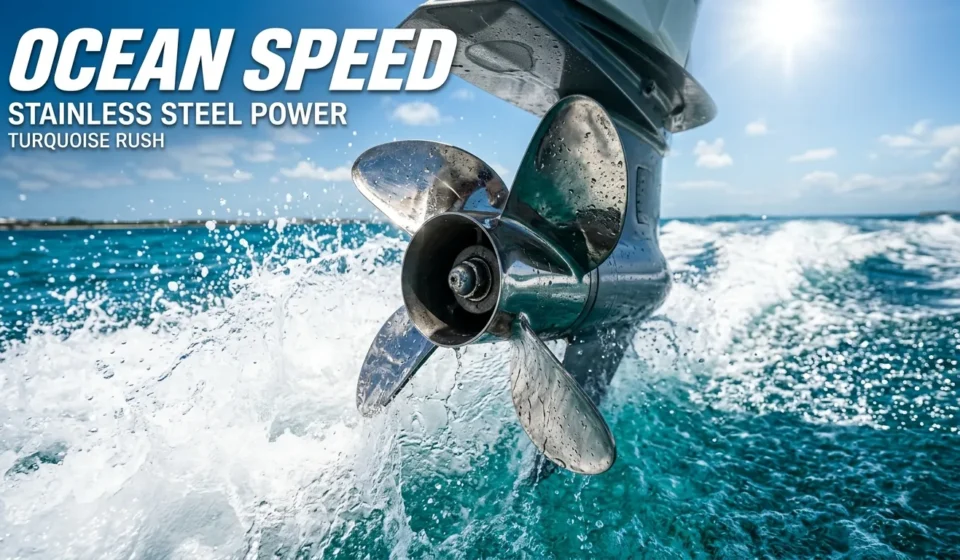
Stainless steel props are significantly more durable, more resistant to damage, and due to their rigidity, they flex less and maintain their shape under load. This translates to better performance, often allowing for higher speeds and better fuel economy. They also allow for more advanced designs like cupping and rake. The downside? They’re more expensive, and if you hit something hard, the prop might survive, but the shock could transfer to your lower unit, causing more costly repairs. I believe the investment in stainless steel is often worth it for boats over 150 HP, especially if you spend a lot of time on the water.
Cupping and Rake: Subtle but Significant</h3<
These are advanced design elements. Cupping refers to a small, curved lip on the trailing edge of the propeller blade. This curl helps the prop bite into the water better, reducing ventilation (when air gets sucked into the prop), increasing stern lift, improving hole shot, and holding plane at lower speeds. Rake is the angle of the blade relative to the propeller hub. Positive rake provides more stern lift, which can improve top speed and allow the engine to be mounted higher. Negative rake is less common but can improve bow lift. These subtle design features are why two props with the same pitch and diameter can perform quite differently.
Vented Props: For That Quick Start
Some propellers feature small vent holes in the hub. These vents allow exhaust gases to flow over the propeller blades at low speeds, essentially “slipping” the prop. This temporary cavitation helps the engine rev up faster, providing a quicker hole shot, especially beneficial for watersports. Once the boat gets up to speed, water pressure closes the vents, and the prop operates normally. It’s a clever way to get the best of both worlds – quick acceleration and efficient top-end.
Choosing the right propeller for your power boat truly is a journey of understanding, testing, and fine-tuning. It’s an investment that pays dividends in fuel efficiency, engine longevity, and overall boating enjoyment. Don’t let that critical connection between your engine and the water be an afterthought. Take the time to understand your prop, test its performance, and don’t hesitate to consult with marine mechanics or experienced pros at places like Sail & Power & Boats & Motor Yachts for personalized advice. Happy boating, and may your prop always be perfectly pitched!