

Inboard vs. Sterndrive 2026: Choosing the Perfect Engine for Your Ski & Wakeboard Boat

For anyone passionate about slicing through glassy water on skis or launching off a massive wake on a board, the heart of your vessel – its engine – is absolutely critical. It’s not just about raw power; it’s about how that power is delivered, how it shapes the water, and how it impacts your entire boating experience. Today, we’re diving deep into two of the most popular choices for watersports enthusiasts: the traditional inboard engine and the versatile sterndrive.
Table Of Content
- Understanding Your Power Options: The Basics
- What is an Inboard Engine?
- What is a Sterndrive Engine?
- Performance and Handling on the Water
- Maintenance, Durability, and Longevity
- Cost Considerations: Initial Purchase and Ongoing Ownership
- Inboard vs. Sterndrive: A Quick Comparison Table
- My Recommendation: Which Engine for Your Watersports Lifestyle?
- Frequently Asked Questions
- Are inboard ski boats safer?
- Can sterndrives wakeboard well?
- Which is easier to maintain?
You’re looking for that perfect pull, that ideal wake, and a boat that handles like a dream. But which engine configuration truly delivers on those promises for your specific needs? Let’s explore the ins and outs, giving you all the facts you need to make an informed decision for your next, or current, watersports machine.
Understanding Your Power Options: The Basics
Before we weigh the pros and cons, let’s establish a clear understanding of what each engine type entails. Both inboards and sterndrives place the engine itself *inside* the boat, which is a key distinction from outboards, where the entire engine hangs off the transom. However, their methods of transferring power to the water are quite different, and these differences are what truly shape their characteristics on the water.
What is an Inboard Engine?
When we talk about an inboard engine in the context of ski and wakeboard boats, we’re typically referring to one of two setups: direct drive or V-drive. In a direct drive inboard, the engine is usually mounted midship, pointing towards the stern. A long shaft extends directly from the transmission, through the bottom of the hull via a stuffing box, and connects to the propeller. This setup places the propeller well under the boat, usually ahead of the rudder, which is fantastic for tracking and safety.
Then there’s the V-drive inboard, which is increasingly common in modern wakeboard boats. Here, the engine is mounted further aft in the boat, sometimes even reversed, with the transmission facing forward. The power then goes through a V-drive gearbox, which redirects the power back towards the stern, allowing the propeller shaft to exit the hull much like a direct drive. The main advantage here is freeing up cockpit space towards the bow, making for larger passenger areas, which is a big plus for social wakeboarding sessions. Regardless of direct or V-drive, the defining characteristic is that the prop is integral to the hull, beneath the boat.
What is a Sterndrive Engine?
A sterndrive engine, often called an I/O (Inboard/Outboard), is essentially a hybrid. The engine itself, typically a car-based block marinized for use on water, sits inside the boat, much like an inboard. However, instead of a shaft going straight out the bottom, the power is transferred through the transom to an “outdrive” unit. This outdrive unit is essentially the lower unit of an outboard motor, complete with a propeller (or often dual propellers), and it sits outside the boat’s transom.
This configuration offers a unique blend of benefits. Because the outdrive can be trimmed up and down, much like an outboard, it provides excellent versatility. You can trim it up for shallow water navigation or beaching, and adjust it for optimal performance, speed, and even some wake shaping. It’s a popular choice for runabouts and sport boats that might engage in a variety of activities beyond just watersports, providing a good all-around package.
Performance and Handling on the Water
Now, let’s talk about what really matters when you hit the water: how these engines perform. For ski and wakeboard boats, the interaction between the propeller, rudder, and hull is finely tuned, and the engine configuration plays a starring role in this aquatic ballet.
Dedicated watersports boats, especially those designed for serious wakeboarding or slalom skiing, predominantly feature inboard engines. Why? Because the propeller is fixed beneath the boat, it’s always pushing water directly astern, providing an incredibly consistent and straight pull for skiers and boarders. This fixed prop location, combined with a dedicated rudder, gives these boats superior tracking ability. Imagine you’re doing a slalom run, cutting hard outside the wake; an inboard will hold its line beautifully, preventing the boat from being pulled off course. For wakeboarders, this means a solid, consistent pull off the tower, making tricks easier to land.
The wake itself is another major differentiator. Inboard boats, particularly those with V-drives and designed with specific hull shapes and ballast systems, are engineered to produce massive, well-defined wakes for wakeboarding, or incredibly flat, clean wakes for slalom skiing. The prop’s position under the hull contributes to this clean wake by minimizing turbulence immediately behind the boat. Sterndrives, while capable of producing a decent wake, generally don’t offer the same level of tunability or the perfect, sculpted shape that a dedicated inboard can achieve. Their exposed outdrive can sometimes create a slightly “dirtier” or less symmetrical wake, which can be a minor annoyance for serious enthusiasts. However, for recreational wakeboarding or tubing, the sterndrive wake is more than adequate.
When it comes to close-quarters maneuvering and docking, there’s a noticeable difference. Inboard boats, with their fixed propeller and separate rudder, can be a bit more challenging to dock for beginners. The prop provides thrust, but steering is entirely via the rudder, which only works effectively when the boat has forward momentum. Trying to back up can be particularly tricky, as the boat tends to walk sideways due to prop rotation. Sterndrives, on the other hand, steer by pivoting the entire outdrive unit, essentially vectoring the thrust. This makes them incredibly maneuverable at low speeds, almost like an outboard. Docking a sterndrive is generally more intuitive and forgiving, especially in tight marinas or when dealing with currents and wind. This is definitely something to consider if you’re not an experienced boat handler.
Maintenance, Durability, and Longevity
Beyond performance, the practicalities of ownership – specifically maintenance and durability – play a huge role in your long-term satisfaction. No one wants to spend more time in the repair shop than on the water, right?
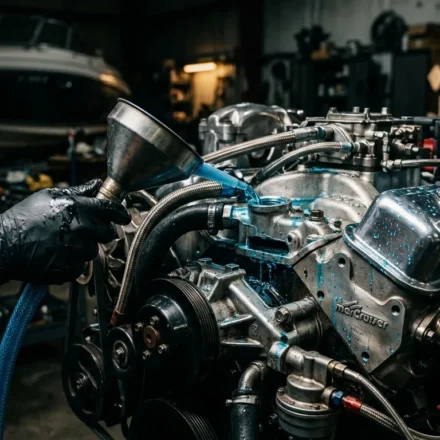
Access for routine boat maintenance tends to favor inboard engines in many respects. The engine is typically mounted in a dedicated engine compartment, often under a large sun pad or a removable hatch, providing relatively good access to components like the oil filter, fuel filter, spark plugs, and belts. While some engine compartments can be tight, the core components are generally accessible. The drive system itself is relatively simple: a shaft, a strut, a prop, and a rudder. Maintenance mostly involves checking the stuffing box, greasing the rudder shaft, and inspecting the prop. It’s a straightforward system that has proven its reliability over decades.
The sterndrive, however, presents a different maintenance picture. While the engine itself is inside and generally accessible, the outdrive unit outside the transom adds a layer of complexity. This unit contains universal joints, bellows (rubber boots that seal water out), shift cables, and hydraulic lines, all exposed to the marine environment. These components require more frequent inspection and maintenance, particularly the bellows, which can degrade over time and lead to serious water intrusion if neglected. Sterndrive maintenance often involves pulling the boat out of the water to inspect and service the outdrive, which can be a more involved and costly process than typical inboard upkeep.
Durability and vulnerability are also key considerations. With an inboard engine, the propeller is tucked well under the hull, offering significant protection from underwater debris, shallow bottoms, and accidental contact with swimmers. This inherent protection greatly reduces the risk of prop damage. However, if you do hit something hard enough to damage the prop or shaft, repairs can be complex, sometimes requiring alignment checks or even shaft replacement. For sterndrives, the outdrive unit and its exposed propeller are more vulnerable. Hitting submerged objects is a common cause of damage, which can range from a bent prop to a cracked gearcase or even transom damage. On the flip side, the ability to trim the drive up can sometimes help you avoid shallow hazards altogether. It’s a trade-off.
Cost Considerations: Initial Purchase and Ongoing Ownership
Let’s be honest, the budget always plays a role. When you’re looking at the sticker price and then considering the long-term expenses, there are some clear differences between these two propulsion systems.
Generally speaking, a sterndrive boat often comes with a lower initial purchase price compared to a similarly sized, comparably equipped inboard ski or wakeboard boat. This is partly due to the manufacturing complexity and specialized components often found in dedicated watersports inboards, especially those with advanced wake-shaping technology and ballast systems. If you’re looking to get on the water for less initial outlay and versatility is a priority, a sterndrive might be more appealing. However, remember that “cheaper” isn’t always “better” in the long run.
When it comes to ongoing boat maintenance costs, this is where the picture can get a little nuanced. While inboards have fewer exposed moving parts in the drive system, repairs for serious issues like shaft or strut damage can be expensive due to the labor involved in accessing and replacing those components. Annual maintenance on an inboard typically involves fluid changes, filter replacements, and checking the packing gland or shaft seal. Sterndrives, as mentioned, have more components exposed to the elements that require regular inspection and replacement, such as bellows, trim seals, and gimble bearings. These items add up over time, and a full sterndrive service, often recommended every few years, can be a significant expense. Based on my experience in the industry, I’ve seen sterndrives accrue higher routine maintenance bills over their lifespan compared to well-maintained inboards.
Fuel efficiency can vary greatly depending on engine size, hull design, and how you drive. However, sterndrives, with their ability to trim the drive unit, can sometimes achieve slightly better fuel economy at certain cruising speeds by optimizing the propeller angle for less drag. Inboard boats, particularly those weighted down with ballast for wakeboarding, are not typically known for their stellar fuel efficiency, as their primary goal is to displace water and create a large wake, which requires significant horsepower and fuel burn. For casual cruising, a sterndrive might offer a slight edge in economy, but for serious watersports, both types of boats will consume a fair amount of fuel.
Inboard vs. Sterndrive: A Quick Comparison Table
Let’s put it all together in a handy chart so you can quickly compare the key aspects:
| Feature | Inboard Engine (Direct/V-Drive) | Sterndrive Engine (I/O) |
|---|---|---|
| Typical Placement | Engine inside, prop under hull. | Engine inside, outdrive unit on transom. |
| Wake Quality (Watersports) | Excellent, highly customizable (slalom flat, wakeboard large/clean). | Good, versatile, but often not as clean/sculpted as dedicated inboards. |
| Maneuverability | Good forward tracking, trickier in reverse/tight spaces. | Excellent at low speeds, intuitive steering with prop thrust. |
| Propeller Safety | Propeller tucked under hull, safer for swimmers/boarders. | Exposed propeller at transom, similar to outboard. |
| Shallow Water Access | Limited, fixed depth, prop more vulnerable to shallow impacts. | Excellent, outdrive can be trimmed up to reduce draft. |
| Maintenance Complexity | Generally simpler drive system, good engine access. | More complex outdrive unit (bellows, U-joints, seals), often requires haul-out. |
| Vulnerability to Damage | Prop protected, but shaft/strut damage costly if hit hard. | Outdrive unit vulnerable to impacts, can cause significant damage. |
| Initial Cost | Often higher for dedicated watersports models. | Generally lower, offering good value for versatility. |
My Recommendation: Which Engine for Your Watersports Lifestyle?
So, after breaking down the specifics, which engine setup is right for your ski and wakeboard boat? Honestly, there’s no single “best” answer that fits everyone. It truly depends on your priorities, your budget, and how you plan to use your boat most of the time. Let me add something here: the best choice for your buddy might not be the best for you, and that’s perfectly okay.
An inboard engine, particularly a V-drive, is undeniably the champion for serious watersports enthusiasts. If your primary goal is to generate the perfect wake for wakeboarding and wakesurfing, or to provide an incredibly smooth, consistent pull for slalom skiing, then an inboard is your go-to. The safety aspect of the tucked-away propeller is also a huge consideration, especially if you have kids or frequent swimmers around the boat. If you’re willing to invest a bit more upfront and appreciate the superior tracking and precise wake shaping, this is where you’ll find the most satisfaction. Imagine this situation: you’re out on a busy lake with friends, and someone falls close to the boat. With an inboard, you have a bit more peace of mind knowing that prop is well underneath, out of immediate reach.
However, a sterndrive absolutely shines when versatility is at the top of your list. If your boating adventures involve a mix of watersports, casual cruising, maybe some fishing, and frequently navigating shallow waters or beaching, then a sterndrive offers unmatched flexibility. Its superior low-speed maneuverability makes docking much less stressful, which is a big plus for many boaters. While its wake might not be as perfectly sculpted as a dedicated inboard, it’s more than capable of providing plenty of fun for recreational skiing, wakeboarding, and tubing. To be fair, many families find the sterndrive boat to be the ideal compromise, offering a balance of performance and practicality for a wide range of activities.
Frequently Asked Questions
Are inboard ski boats safer?
Yes, generally, inboard ski boats are considered safer for watersports activities because their propeller is located well underneath the hull, away from swimmers and fallen riders. This design significantly reduces the risk of accidental propeller contact compared to sterndrives or outboards where the prop is exposed at the transom.
Can sterndrives wakeboard well?
Absolutely, sterndrives can wakeboard well for most recreational users. While they might not produce the same highly sculpted, massive wakes as dedicated inboard wake boats with extensive ballast systems, they can still create a fun and rideable wake suitable for learning tricks and enjoying the sport.
Which is easier to maintain?
This depends on what you define as “easier.” The drive system of an inboard is simpler with fewer exposed moving parts, leading to potentially lower routine service costs for the drive itself. However, sterndrives require more frequent inspection and replacement of external components like bellows and universal joints, which can be more complex and costly over time. Engine access can be similar for both.
Ultimately, the choice between an inboard engine and a sterndrive for your ski and wakeboard boat comes down to understanding your priorities. Do you prioritize ultimate wake performance and safety for dedicated watersports, or do you value versatility, shallow water access, and easier docking? Weigh these factors carefully, perhaps even test drive both types if possible, and you’ll find the perfect match for your life on the water. Happy boating, and I look forward to seeing you out there on Sail & Power & Boats & Motor Yachts!