

The Ultimate Guide to Power Boat Winterization 2026: Protecting Your Investment Off-Season

As the days shorten, the air turns crisp, and the boating season draws to a close, there’s one critical task that stands between your beloved power boat and the harsh realities of winter: winterization. Trust me, neglecting this crucial step isn’t just a minor oversight; it’s an open invitation for costly damage, frustrating delays, and a whole lot of heartache come spring. Think of it as putting your boat into a well-deserved, protected hibernation.
Table Of Content
- Why Winterization Isn’t Optional: The Cost of Neglect
- Step-by-Step Power Boat Winterization: A Comprehensive Checklist
- 1. Engine Preservation: The Heart of Your Power Boat
- 2. Freshwater & Sanitation Systems: Avoiding the Freeze
- 3. Hull, Deck, & Interior Protection: Safeguarding Your Vessel’s Skin
- 4. Battery & Electronics: Keeping the Juices Flowing
- 5. Storage Options & Best Practices
- What to Watch Out For & Common Mistakes
- 1. Using Automotive Antifreeze
- 2. Not Fully Draining Water Systems
- 3. Neglecting Fuel Stabilization
- 4. Forgetting the Bilge Pump
- 5. Skipping the Stern Drive or Outboard Lower Unit
- 6. Inadequate Ventilation
- Frequently Asked Questions
- What is marine antifreeze?
- Can I skip winterizing my boat?
- How long does winterization take?
- Should I remove my boat batteries?
- When should I winterize my power boat?
Here at Sail & Power & Boats & Motor Yachts, we understand that your boat isn’t just a vessel; it’s an investment, a source of joy, and a gateway to incredible memories. That’s why preparing it for the off-season properly is paramount. It’s not just about draining a few lines; it’s a comprehensive process that safeguards every system from the elements. So, let’s roll up our sleeves and dive deep into how you can protect your power boat, ensuring it emerges from winter ready to shine.
Why Winterization Isn’t Optional: The Cost of Neglect
Honestly, I’ve seen firsthand what happens when boat owners cut corners on winterization. It’s rarely pretty. The primary culprit? Water. When water freezes, it expands by about 9%. Now, imagine that expansion happening inside your engine block, your freshwater lines, or your cooling system. What you get is a cracked block, burst hoses, or a damaged water pump – repairs that can easily run into thousands of dollars, far exceeding the cost of proper winterization supplies or even professional service.
But freezing isn’t the only concern. The off-season also brings issues like fuel degradation, especially with ethanol-blended fuels, which can separate and cause significant engine problems. Then there’s corrosion, especially in saltwater environments, which can silently eat away at vital components if not properly addressed. And let’s not forget about pests – mice, rats, and insects love to make cozy homes in boats left unprotected, chewing through wires and upholstery. Proper boat winterization isn’t just a recommendation; it’s an essential part of responsible ownership, preserving your vessel’s lifespan and resale value.
Based on my decades in this industry, I believe that an ounce of prevention in the fall is worth a pound of cure in the spring. Taking the time now to do things right will save you immense stress, money, and precious time when you’re itching to hit the water again. It truly makes a difference between a smooth launch and a springtime full of unexpected repairs.

Step-by-Step Power Boat Winterization: A Comprehensive Checklist
Let’s get down to the practical steps. This isn’t just a list; it’s a carefully designed sequence to ensure no critical area is overlooked. Remember, meticulousness here pays dividends.
1. Engine Preservation: The Heart of Your Power Boat
Your engine is the beating heart of your power boat, and it demands the most attention during off-season care. Ignoring it is like playing Russian roulette with your wallet.
- Change the Oil and Filter: Old engine oil contains corrosive acids and contaminants that can damage internal components over months of storage. Change it now, while it’s warm and circulates easily, along with a fresh filter. This ensures clean, new oil protects your engine from the very start of storage.
- Stabilize Your Fuel System: This is non-negotiable. Fill your fuel tank completely to minimize condensation, which can lead to water in your fuel. Add a high-quality fuel stabilizer according to the manufacturer’s directions, then run the engine for 10-15 minutes to ensure the treated fuel circulates through the entire system, including the fuel lines, filters, and carburetor or injectors. If you have a diesel engine, consider a biocide to prevent microbial growth.
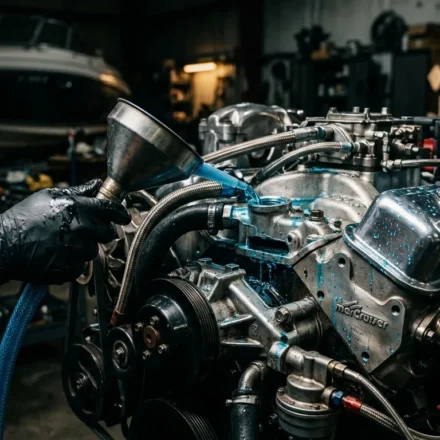
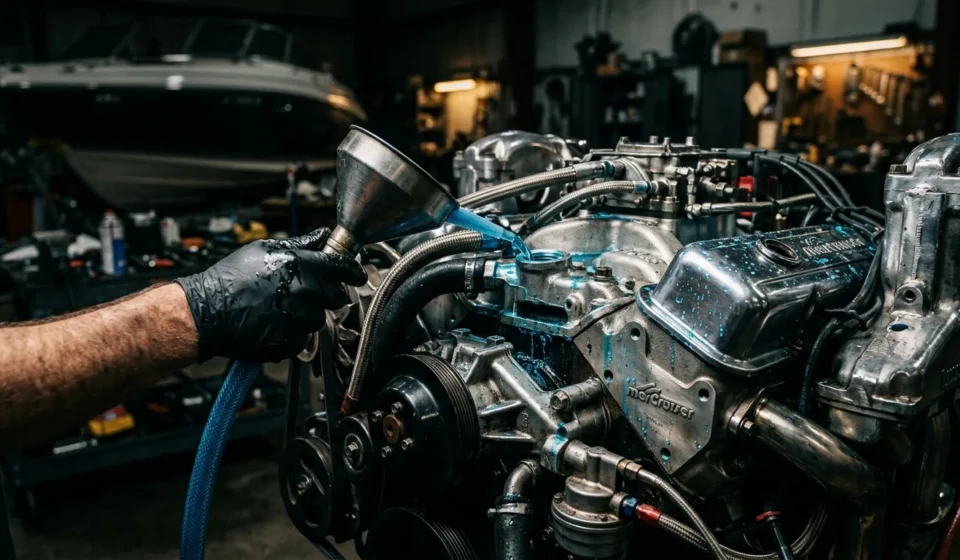
- Flush the Cooling System and Add Antifreeze: For raw-water-cooled engines, disconnect the raw water intake and flush with fresh water until clear. Then, run non-toxic marine antifreeze (propylene glycol-based, NEVER automotive antifreeze!) through the system until it exits the exhaust. For closed-cooling systems, ensure the coolant mixture is at the proper concentration for your climate and top off if necessary.
- Fog the Engine: This protects the internal cylinder walls and piston rings from rust and corrosion. Remove spark plugs, spray fogging oil into each cylinder, then briefly crank the engine (without starting it) to distribute the oil. Replace spark plugs. For outboards, refer to your owner’s manual for specific fogging instructions.
- Change Gear Lube (Outboards/Stern Drives): Drain the lower unit gear lube. Check for any milky appearance, which indicates water intrusion (a sign of a bad seal that needs repair). Refill with fresh gear lube.
- Inspect Belts, Hoses, and Impeller: Look for cracks, fraying, or leaks. Replace anything questionable now rather than facing breakdowns next season. For outboards, it’s often a good practice to change the water pump impeller annually or every other year, depending on use.
2. Freshwater & Sanitation Systems: Avoiding the Freeze
These systems are just as vulnerable to freezing damage as your engine, maybe even more so because they are often overlooked. A burst water line can be a nightmare to fix.
- Drain All Water: Completely drain your freshwater tank, hot water heater, and all lines. Open all faucets (hot and cold), showerheads, and pump out the water from your fresh water pump.
- Introduce Non-Toxic Antifreeze: Once drained, bypass your hot water heater (or drain it and leave it open) and pump marine antifreeze through the system until it runs pink from every faucet and showerhead. Don’t forget the transom shower if you have one!
- Head System Care: Pump out your holding tank completely. Flush the toilet with fresh water, then pump marine antifreeze through the head and discharge lines, cycling it through the toilet until it’s visible in the bowl and through the pump. This protects the pump, valves, and lines.
3. Hull, Deck, & Interior Protection: Safeguarding Your Vessel’s Skin
Beyond the mechanicals, your boat’s aesthetic and structural integrity need attention.
Start with a thorough cleaning. Remove all dirt, grime, barnacles, and scum from the hull. Waxing the hull before storage adds a protective layer against environmental contaminants and UV damage. On the deck, remove all loose gear, cushions, electronics, and valuables. Clean the deck thoroughly, and if possible, apply a non-skid protectant. For the interior, clean all surfaces, vacuum, and remove any food items or perishables that could attract pests. Prop open locker doors and drawers to allow for air circulation and prevent mildew. For example, imagine this situation: you skip cleaning the fridge and forget a half-eaten sandwich. Come spring, you’ll be dealing with a biohazard and a boat full of unwelcome guests!
4. Battery & Electronics: Keeping the Juices Flowing
Batteries can be severely damaged by cold temperatures if not properly cared for.
Disconnect and fully charge all batteries. If possible, remove them from the boat and store them in a cool, dry place where they can be periodically trickle charged throughout the winter. If they must remain on board, ensure they are fully charged and disconnected. Clean battery terminals to prevent corrosion. As for sensitive electronics like GPS units, fish finders, or stereos, it’s best to remove them and store them indoors in a climate-controlled environment. Why risk exposing them to extreme cold and dampness when a few minutes of removal can save you a potential replacement?
5. Storage Options & Best Practices
How and where you store your boat makes a big difference in its winter health.
Whether you opt for indoor heated storage, outdoor storage with shrink wrap, or a simple boat cover, ensure your boat storage method provides adequate ventilation while keeping moisture and pests out. If storing outdoors, ensure the boat is properly supported on a trailer or sturdy blocks and stands to prevent hull distortion. Make sure any cover is taut to prevent snow and ice accumulation and allow for air circulation to prevent mildew. Remove the drain plug if the boat is on the hard so any collected water can escape. Don’t forget about the trailer itself; check tire pressure, lubricate bearings, and ensure lights are working.
Here’s a quick overview of marine antifreeze types:
| Antifreeze Type | Primary Component | Protection Level (Typical) | Toxicity | Key Advantage |
|---|---|---|---|---|
| Propylene Glycol (PG) | Propylene Glycol | -50°F to -100°F (burst) | Non-toxic | Environmentally friendly, safe for potable water systems. |
| Ethanol-Based (PG+Ethanol) | Propylene Glycol + Ethanol | -50°F to -200°F (burst) | Low toxicity (flammable) | More robust freeze protection, but flammable and can affect rubber components over time. |
| Automotive (Ethylene Glycol) | Ethylene Glycol | -30°F to -70°F (burst) | Highly Toxic | NEVER USE IN MARINE FRESHWATER SYSTEMS OR RAW WATER ENGINE SYSTEMS. |
As you can see, propylene glycol is generally the safest and most recommended option for your boat’s potable water and raw water systems. Always read the label!
What to Watch Out For & Common Mistakes
Even with the best intentions, it’s easy to make mistakes during power boat winterization. Here are some of the most common pitfalls I’ve observed:
1. Using Automotive Antifreeze
This is a big one. Automotive antifreeze (ethylene glycol) is highly toxic and should NEVER be used in any marine system that might come into contact with the environment or potable water. It’s for your car’s closed cooling system, not your boat’s raw water or freshwater systems. Always opt for marine-grade, non-toxic propylene glycol antifreeze.
2. Not Fully Draining Water Systems
Leaving even a small pocket of water in a hose, pump, or tank can lead to a burst. Be diligent in draining every single line, hot water heater, and water pump. Cycle antifreeze through until you see it come out of all outlets.
3. Neglecting Fuel Stabilization
Ethanol-blended fuels can separate over time, leading to phase separation where water and ethanol sink to the bottom of the tank, causing corrosion and engine issues. Failing to add fuel stabilizer and run the engine to circulate it is a recipe for a sluggish start and potential fuel system damage next season.
4. Forgetting the Bilge Pump
If your boat is stored outdoors, even with a cover, water can find its way in. A functioning bilge pump (with a fully charged battery or shore power) can prevent serious flooding, but if you’ve disconnected the batteries or removed them, ensure your cover is impeccable and inspect regularly.
5. Skipping the Stern Drive or Outboard Lower Unit
These components are exposed to water and are susceptible to freeze damage if water is left inside. Ensure you drain the gear lube and check for water, then refill. For stern drives, trim the drive down to allow water to drain from the exhaust passages.
6. Inadequate Ventilation
While a good cover protects from elements, it can also trap moisture, leading to mildew, mold, and corrosion. Ensure there’s adequate airflow. Many covers and shrink-wrap jobs include vents for this very purpose.
Frequently Asked Questions
What is marine antifreeze?
Marine antifreeze is a non-toxic, propylene glycol-based solution specifically formulated to prevent freezing in marine plumbing and engine raw water systems. It’s safe for discharge into waterways, unlike automotive antifreeze.
Can I skip winterizing my boat?
Skipping winterization is highly discouraged, especially in climates where temperatures drop below freezing. It risks severe and costly damage to your engine, plumbing, and other systems from expanding ice.
How long does winterization take?
The time required varies by boat size and complexity, but for a typical power boat, a thorough DIY winterization can take anywhere from 4 to 8 hours. Professional services are usually quicker but come at a cost.
Should I remove my boat batteries?
Yes, it’s generally recommended to remove your boat batteries, clean their terminals, fully charge them, and store them in a cool, dry place. Periodically charging them with a trickle charger over winter will prolong their life.
When should I winterize my power boat?
You should winterize your power boat before the first hard freeze is expected in your area. Don’t wait until the last minute; plan to complete the process once you’re done boating for the season.
There you have it – a comprehensive roadmap to protecting your power boat investment through the colder months. It might seem like a lot of work, but trust me, the peace of mind knowing your vessel is safe and sound, ready for a seamless spring launch, is absolutely priceless. Don’t let winter catch you off guard. Take the time, follow these steps, and ensure your boat is well-prepared for its off-season slumber. Your future self, and your wallet, will thank you when those warm boating days return!