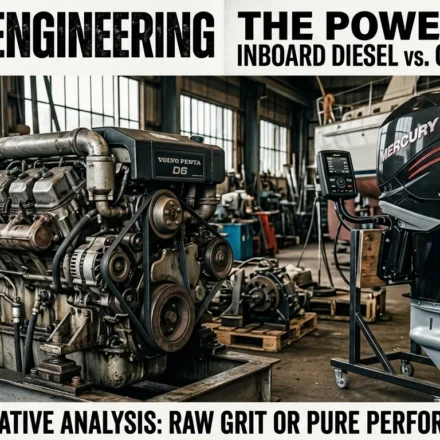



Stepping into the world of powerboats, or even upgrading your current vessel, brings you face-to-face with a fundamental decision: what kind of engine configuration will power your adventures? It’s not just about horsepower; it’s about the entire boating experience, from performance and space to maintenance and resale value. This choice defines the very character of your boat, impacting everything you do on the water.
Table Of Content
- Understanding the Basics: What’s the Difference?
- Outboard Engines: The External Advantage
- Outboard Pros and Cons: A Quick Look
- Inboard Engines: The Heart of the Vessel
- Inboard Pros and Cons: What You Need to Know
- Beyond the Engine Bay: Key Considerations for Your Choice
- Maintenance and Marine Engine Longevity
- Boat Performance and Handling
- Cost Implications: Initial Purchase to Resale
- Vibration and Noise
- Comparison Chart: Outboard vs. Inboard
- The Verdict: Matching the Engine to Your Boating Life
- Frequently Asked Questions
- Which engine type is more fuel-efficient?
- Are outboards better for saltwater?
- Which configuration is safer?
- What about resale value?
For decades, I’ve seen countless boaters grapple with this very question. There’s a lot of passion on both sides, and honestly, no single “right” answer for everyone. What works beautifully for a shallow-water fisherman might be a complete nightmare for a long-distance cruiser. So, let’s peel back the layers and truly understand the core differences between outboard engines and inboard engines, helping you determine which is the right power boat configuration for you.
Understanding the Basics: What’s the Difference?
Before we dive into the nitty-gritty, let’s establish what we’re actually talking about. When we say “outboard engines,” we’re referring to self-contained units that are mounted on the outside of the boat’s transom. These units typically include the engine, gearbox, and propeller, all in one streamlined package. They pivot to steer and can be tilted up out of the water, a feature that offers several distinct advantages we’ll explore shortly.
On the other hand, “inboard engines” are, as the name suggests, installed inside the boat’s hull. This category is a bit broader, encompassing a few different types. You have traditional direct-drive or V-drive inboards, where the engine is typically mounted lower and forward in the hull, connecting to a propeller shaft that exits through the bottom of the boat. Then there are stern drive (or inboard/outboard – I/O) systems, which combine an inboard engine with an outboard-like lower unit, allowing for trim and tilt capabilities similar to an outboard. For the sake of this comparison, when I refer to “inboard,” I’ll often be referring to the engine itself being internal, while distinguishing stern drives when their unique features are relevant.
The distinction between these two primary power boat configurations isn’t merely cosmetic; it profoundly impacts everything from the vessel’s center of gravity and handling to how you use and maintain your boat. Think of it like choosing between a vehicle with an engine under the hood versus one with a rear-mounted engine – different design philosophies lead to different operational characteristics.
Outboard Engines: The External Advantage
Outboards have seen a tremendous resurgence in popularity over the last couple of decades, especially with advancements in four-stroke technology making them quieter, more fuel-efficient, and incredibly reliable. There’s a good reason why you see so many boats, from small fishing skiffs to large center consoles and even some larger cruisers, sporting multiple outboards on their transoms.
One of the most immediate benefits of an outboard engine is the space utilization it offers. With the engine entirely outside the hull, the entire internal volume of the boat can be dedicated to passenger seating, storage, or a cabin. This is a game-changer for smaller boats where every inch counts, but it’s equally valuable in larger vessels, allowing for more expansive living areas or bigger fish boxes. Imagine a center console fishing boat: no engine box interrupting the deck, just pure, unadulterated fishing space. Pretty appealing, right?
Maintenance and repair accessibility is another huge plus. If you need to work on an outboard, you can often tilt it up, making components much easier to reach. If a major repair is needed, the entire unit can be relatively easily removed and replaced, often by a specialized marine mechanic. This modularity can sometimes translate to quicker service times. Plus, for those operating in shallow waters, the ability to tilt the engine completely out of the water is invaluable, reducing the risk of propeller damage and allowing you to beach your boat without worry. In my experience, this feature alone has saved many a prop and lower unit from costly repairs.
Outboard Pros and Cons: A Quick Look
Let’s break down some of the key advantages and disadvantages based on what I’ve observed over the years:
- Pros:
- Maximum Interior Space: Engine is outside the hull, freeing up valuable interior real estate.
- Shallow Water Access: Can be trimmed or tilted completely out of the water, protecting the prop and allowing access to skinny water.
- Easier Maintenance Access: Components are generally more accessible for routine checks and minor repairs.
- Simpler Installation/Replacement: Easier to replace the entire unit if needed.
- Better Performance-to-Weight Ratio: Often provide excellent acceleration and top-end speed for their weight.
- Maneuverability: Individual outboards can be controlled independently (with multiple engines), offering exceptional low-speed maneuverability.
- Redundancy: Multiple outboards offer built-in redundancy – if one fails, you can often limp home on the others.
- Cons:
- Transom Weight: All that weight is at the very stern, which can affect the boat’s trim and handling, especially in rough seas.
- Noise: While modern outboards are much quieter, they are still generally perceived as noisier than equivalent inboards, especially at higher RPMs, as the engine is exposed.
- Fuel Storage: Fuel tanks are still inside the boat, and the exposed fuel lines can be a consideration.
- Vulnerability: Exposed to the elements and potential damage from docks or other vessels.
- Theft Risk: More susceptible to theft due to their external mounting and modular design.
- Aesthetics: Some traditionalists prefer the cleaner transom look of an inboard boat.
Inboard Engines: The Heart of the Vessel
For many traditionalists and those seeking a particular type of power boat configuration, the inboard engine remains the gold standard. These engines are tucked away, deep within the hull, offering a different set of benefits and characteristics. Think of the classic cruiser, the robust sportfisher, or the dedicated wakeboard boat – they often rely on inboard power.
One of the most significant advantages of an inboard system is the weight distribution. With the engine mounted low and centrally in the hull, it contributes to a lower center of gravity, often leading to a more stable and comfortable ride, particularly in choppy conditions. This central weight can make a boat feel more planted and less prone to pounding. Moreover, the propeller and running gear are generally more protected, less exposed to impact from floating debris or shallow bottoms compared to an outboard’s lower unit.
Inboards, especially those with direct-drive systems, are often praised for their smoothness and quiet operation. The engine is enclosed within an engine compartment, which often includes sound insulation, significantly dampening engine noise and vibration. This translates to a more peaceful cruising experience, allowing for easier conversation and enjoyment of the marine environment. Honestly, the difference in ambient noise at the helm can be quite noticeable, particularly on longer passages.
Inboard Pros and Cons: What You Need to Know
Here’s what I’ve learned about the strengths and weaknesses of inboard engine systems:
- Pros:
- Better Weight Distribution: Lower, more central center of gravity leads to a smoother, more stable ride.
- Quieter Operation: Enclosed engine compartments often mean significantly less noise and vibration at the helm.
- Protected Running Gear: Propeller and shaft are less exposed to damage from impacts.
- Cleaner Transom: No engines cluttering the stern, allowing for larger swim platforms or clear access to the water.
- Longevity: Often perceived to have longer lifespans due to heavier-duty components and less exposure to elements.
- Fuel Efficiency: Many inboard diesel options offer superior fuel efficiency for long-range cruising.
- Aesthetics: Often preferred for the sleek, uncluttered lines of larger yachts and cruisers.
- Cons:
- Interior Space Compromise: Engine compartment takes up valuable interior space, often limiting cabin size or creating an engine box on deck.
- Challenging Maintenance Access: Working on an inboard can be a contortionist’s act; components are often harder to reach in cramped engine bays.
- Shallow Water Limitations: Propeller and rudder are fixed below the hull, limiting shallow water access and increasing damage risk.
- More Complex Installation: Engine alignment, shaft seals, and thru-hull fittings require more intricate installation.
- Maneuverability (Traditional Inboards): Can be less nimble at low speeds than outboards, especially single-engine setups, due to fixed props and rudders. Stern drives mitigate this.
- Winterization: Can be more involved, especially for raw water-cooled systems, requiring careful attention to prevent freezing.
Beyond the Engine Bay: Key Considerations for Your Choice
So far, we’ve touched on some of the direct pros and cons. Now let’s get to the really critical points that influence your decision – the practicalities of ownership and usage. This is where the rubber meets the road, or more accurately, where the prop meets the water!
Maintenance and Marine Engine Longevity
This is a big one for any boat owner. For outboard engines, routine maintenance like oil changes (for four-strokes), spark plug replacement, and fuel filter swaps are often quite straightforward due to their accessibility. Tilting the engine up allows easy access to the lower unit for gear lube changes and prop inspection. However, because they are exposed, they can be more susceptible to saltwater corrosion if not meticulously flushed and cared for. Based on my experience, neglecting routine flushing is a common mistake that significantly shortens an outboard’s life. Winterization for outboards is generally simpler as well, often involving fogging and draining.
With inboard engines, while the engine itself is protected from the elements, access can be a real challenge. Imagine this situation: you’re trying to diagnose a belt squeal or change an oil filter in a cramped engine compartment, perhaps on a hot day, performing acrobatic maneuvers just to reach a component. It’s not always a pleasant task! That said, inboards, particularly diesel versions, are often built for longer running hours and perceived to have greater marine engine longevity if maintained well. Their closed cooling systems (common in many inboards) can also offer better corrosion protection than raw water-cooled outboards. Stern drives, being a hybrid, share some of the maintenance characteristics of both – the engine is internal, but the lower unit requires similar attention to an outboard.
Boat Performance and Handling
When it comes to boat performance, outboards generally excel in acceleration and top-end speed, often feeling more nimble and responsive, especially with multiple engines where vectoring thrust is possible. Their trim capabilities allow for fine-tuning the boat’s running attitude, which can be critical for achieving optimal speed and fuel efficiency. However, the weight at the stern can sometimes lead to porpoising or a “stern-heavy” feel in certain conditions.
Inboards, with their centralized weight, tend to offer a more stable and smoother ride, particularly important in rough seas or for heavier boats. Traditional direct-drive inboards, with their fixed props and rudders, can be less agile at very low speeds, requiring a bit more skill to dock in tight quarters. Stern drives, however, bridge this gap, offering excellent maneuverability due to their steerable lower units and trim/tilt capabilities, often combining the best of both worlds in terms of handling and efficiency curves.
Cost Implications: Initial Purchase to Resale
The cost comparison is multifaceted. Initially, a boat rigged with multiple large outboards can often have a higher sticker price than a similarly sized boat with an inboard or stern drive. Outboards themselves can be quite expensive, especially the high-horsepower models. However, when it comes to boat engine maintenance costs, outboards might sometimes be quicker and thus cheaper for specific tasks due to accessibility, but specialized parts can be pricey. Resale value is strong for both, but modern, well-maintained outboards often hold their value exceptionally well due to their popularity and perceived ease of upgrade.
Inboards, while potentially offering a lower initial purchase price for the engine itself, can incur higher labor costs for maintenance due to accessibility issues. Their fuel efficiency, especially with diesel options, can offset some running costs over the long term. Diesel inboards, in particular, are known for their long-term reliability and fuel economy, making them attractive for long-range cruisers. To be fair, propeller and shaft repairs for direct-drive inboards can be more involved than simply replacing an outboard’s lower unit prop.
Vibration and Noise
This comes down to personal preference for many. As I mentioned, inboard engines, nestled deep within the hull and often surrounded by insulation, are generally much quieter. You can have conversations at normal volume even at cruising speeds. Outboards, being exposed, will inevitably produce more ambient noise, though modern four-stroke outboards have made incredible strides in reducing this. For those who prioritize a serene boating experience, an inboard often wins this round.
Comparison Chart: Outboard vs. Inboard
Here’s a snapshot of how they stack up across various crucial aspects:
| Feature | Outboard Engines | Inboard Engines (including Stern Drive) |
|---|---|---|
| Interior Space | Excellent – frees up transom/cockpit | Good to Fair – engine compartment uses space |
| Shallow Water Access | Excellent – can tilt completely up | Fair to Poor – prop/rudder fixed below hull (stern drives better) |
| Maintenance Ease | Good – accessible, can be lifted/removed | Fair to Poor – often cramped access, complex for internal components |
| Initial Cost (Engine only) | Moderate to High (especially multi-engine) | Moderate (often lower than equivalent outboards) |
| Running Gear Protection | Fair – lower unit exposed | Good to Excellent – prop/shaft more protected within hull shadow |
| Noise/Vibration | Fair – generally louder, more exposed vibration | Excellent – quieter due to enclosure, less vibration |
| Weight Distribution | Stern-heavy | Low and central – good stability |
| Performance | Excellent acceleration, top speed, nimble | Smooth ride, good torque, stern drives offer good all-around |
| Theft Risk | Higher due to external mounting and ease of removal | Lower due to internal mounting |
The Verdict: Matching the Engine to Your Boating Life
Ultimately, there’s no universally “better” engine; it’s all about finding the power boat configuration that aligns with your specific boating lifestyle, priorities, and budget. What kind of boater are you?
Outboards are often the clear winner for:
- Anglers and Watersports Enthusiasts: Those who need maximum deck space, shallow water access for fishing, or nimble performance for towing wakeboarders and skiers. The ability to trim the engine up to avoid hitting logs or sandbars is a massive advantage.
- Boaters Who Prioritize Interior Room: If a spacious cockpit or cabin is paramount on a smaller to mid-sized vessel, outboards free up valuable internal volume.
- DIY-Friendly Owners: If you enjoy doing your own routine marine engine maintenance, outboards often offer easier access to common service points.
- Those Who Value Redundancy: With multiple outboards, you have peace of mind knowing you have backup power.
Inboards (including stern drives) tend to be the better choice for:
- Cruisers and Overnight Boaters: If you’re spending long hours on the water, especially in open seas, the smoother, quieter ride and potentially better fuel efficiency (especially with diesel) of an inboard can significantly enhance comfort.
- Traditionalists and Aesthetics Lovers: Many appreciate the clean lines of a boat with an uncluttered transom and a large swim platform.
- Heavy-Duty Users: Larger sportfishing boats and commercial vessels often favor the robust nature and protected running gear of traditional inboards.
- Wakeboard and Wakesurf Boats: Specific inboard configurations (V-drive, direct-drive) are designed to produce ideal wakes for these activities, placing the prop safely under the boat.
My advice? Consider not just the initial purchase, but the entire ownership experience. Think about where you’ll boat, how often, what kind of activities you’ll pursue, and your comfort level with boat engine maintenance. Are you often navigating skinny water, or are you primarily offshore? Do you crave speed and open deck space, or a quiet, stable platform for long cruises?
Ultimately, this decision is a personal one, and it significantly shapes your relationship with your vessel. Spend time on different boats, talk to other owners, and if you’re seriously considering a purchase, a good marine surveyor can offer invaluable insights into the condition and suitability of either power boat configuration. The perfect engine is out there, waiting to power your next great aquatic adventure!
Frequently Asked Questions
Which engine type is more fuel-efficient?
Modern four-stroke outboards have become incredibly fuel-efficient, especially at cruising speeds. However, for long-range cruising, especially on larger vessels, diesel inboard engines often offer superior fuel economy due to the inherent efficiency of diesel fuel and engine design, making them a popular choice for serious cruisers and commercial applications.
Are outboards better for saltwater?
Both engine types are designed for saltwater use, but outboards require diligent freshwater flushing after each use to prevent corrosion due to their external exposure. Inboards, especially those with closed cooling systems, can offer better internal corrosion protection, but their external components (like the exhaust manifold) still require attention.
Which configuration is safer?
Each has unique safety considerations. Outboards offer redundancy with multiple engines and the ability to tilt the prop out of the water. Inboards, with their props tucked under the hull, generally pose less risk of accidental contact with swimmers, especially important for watersports boats where people are frequently in and out of the water near the transom.
What about resale value?
Both outboard engines and inboard engines can hold good resale value if well-maintained. Modern, efficient outboards are currently very popular and often command strong prices. Inboards, particularly diesel models in larger cruisers, also maintain value due to their reliability and longevity.
Choosing your engine type is a significant commitment, but with a clear understanding of what each power boat configuration brings to the table, you’ll be well-equipped to make the best decision for your boating future. Fair winds and following seas!