


Steering a modern motor yacht out onto the open water is an experience unlike any other. There’s a certain thrill to feeling the power beneath you, knowing you can reach distant horizons with confidence. But as yachting technology continually leaps forward, the days of relying solely on a paper chart and a compass are long gone, especially for those venturing beyond casual day trips. Today, your vessel’s brain—its navigation system—is perhaps the most critical component for safety, efficiency, and sheer enjoyment. Without a truly advanced setup, you’re simply not getting the most out of your beautiful machine.
Table Of Content
- Why Advanced Navigation is No Longer a Luxury, But a Necessity
- Core Components of a Modern Motor Yacht Navigation System
- Multifunction Displays (MFDs) – The Brains of the Operation
- Radar & Solid-State Technology
- Autopilots & Integrated Steering Systems
- Advanced GPS/GNSS Receivers & Chartplotters
- AIS (Automatic Identification System)
- Sonar & Forward-Looking Sonar (FLS)
- Weather Integration & Satellite Communications
- Seamless Integration: The Power of a Unified System
- What to Consider When Buying Your Advanced Navigation System
- Your Cruising Style & Yacht Size
- Budget & Scalability
- User Interface & Ergonomics
- Brand Reputation & Support
- Installation & Calibration
- Comparison of Key Advanced Navigation Features
- Common Mistakes to Avoid When Upgrading Your Navigation Suite
- Frequently Asked Questions
- What is an integrated bridge system?
- Is Forward-Looking Sonar (FLS) worth it?
- How often should I update my navigation software?
For decades, I’ve seen firsthand how marine electronics have transformed, from bulky single-function units to sleek, integrated command centers. This evolution isn’t just about bells and whistles; it’s about providing unprecedented situational awareness, making navigation simpler, safer, and far more intuitive. If you’re considering an upgrade or outfitting a new build, understanding the sophisticated capabilities available in advanced navigation systems for motor yachts is absolutely essential. Let’s explore what truly separates the cutting-edge from the commonplace.
Why Advanced Navigation is No Longer a Luxury, But a Necessity
Honestly, I can’t stress this enough: what was once considered a high-end luxury in motor yacht navigation is now a fundamental requirement for anyone serious about cruising. Think about it: our roads have advanced GPS, collision avoidance, and real-time traffic updates. Why should your yacht, a significantly larger investment often operating in far more dynamic and less predictable environments, be any different? Modern navigation systems aren’t just about telling you where you are; they’re about predicting hazards, optimizing routes, and ensuring a smooth, stress-free passage no matter the conditions.
The complexity of today’s waterways, coupled with the desire for longer cruising ranges and exploration into less-charted territories, demands more than basic tools. Imagine trying to navigate a narrow, fog-shrouded channel, or making a night passage through an area with unlit obstructions. Advanced navigation systems provide layers of information that integrate seamlessly, painting a complete picture of your surroundings. This holistic view enhances safety for everyone aboard and protects your substantial investment from avoidable mishaps. From my perspective, it’s simply a non-negotiable aspect of responsible yacht ownership in 2026.
Beyond safety, there’s the undeniable advantage of efficiency. Optimized routing, real-time current and wind data, and precise autopilot integration can save significant fuel and reduce wear and tear on your engines. For long-range cruisers, these efficiencies add up dramatically over time, making an investment in top-tier marine electronics pay dividends. Plus, let’s be fair, a well-equipped helm with state-of-the-art displays just looks impressive, reflecting the sophistication of the vessel itself. It’s about confidence, control, and maximizing every moment on the water.
Core Components of a Modern Motor Yacht Navigation System
Building a robust navigation suite for your motor yacht involves several key technologies that work in concert. Think of it as an orchestra, where each instrument plays a vital role, but the true magic happens when they’re all in perfect harmony. Here’s a look at the essential players:
Multifunction Displays (MFDs) – The Brains of the Operation
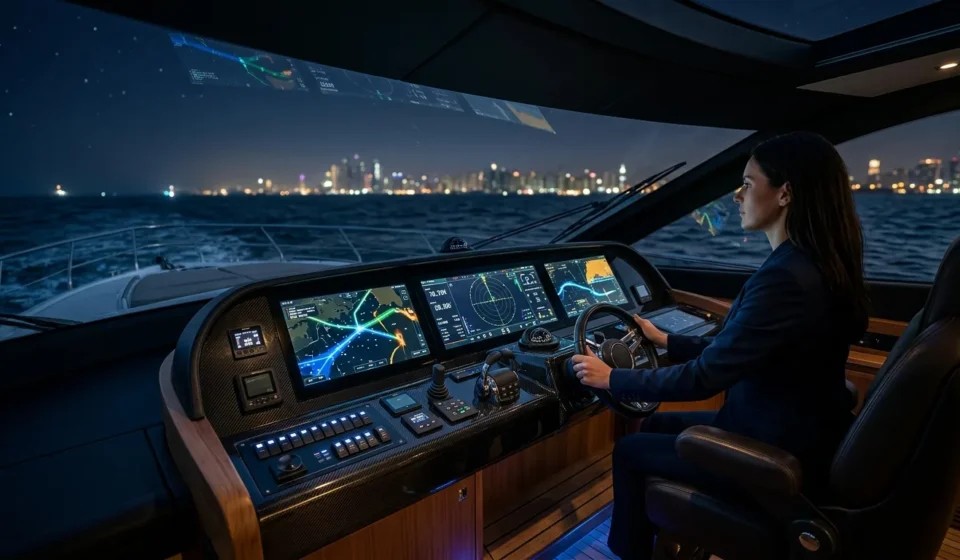
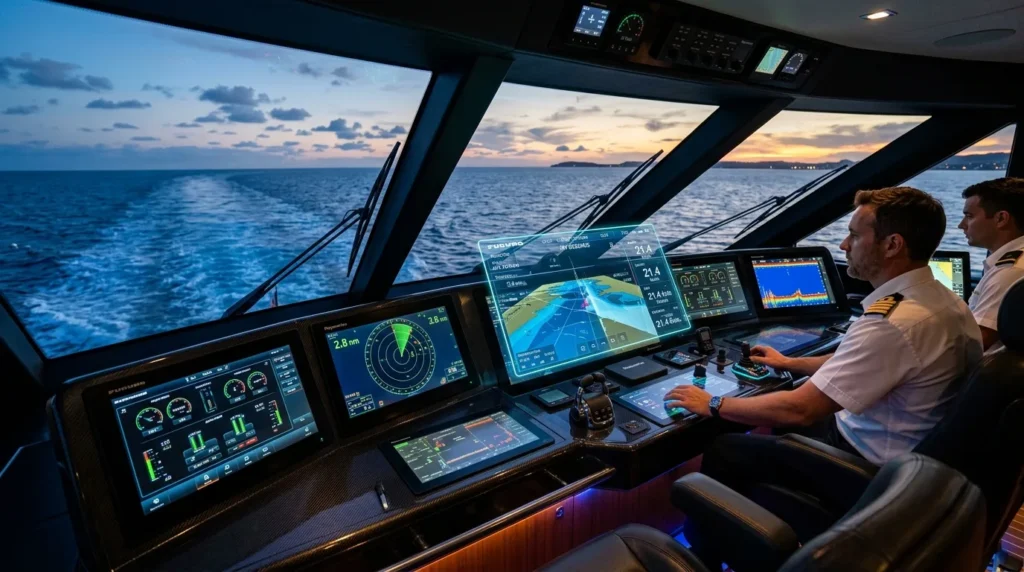
At the heart of any modern motor yacht navigation system are the multifunction displays (MFDs). These aren’t just screens; they are powerful marine computers, acting as the central interface for almost every piece of information you need. Gone are the days of a dozen small, dedicated displays cluttering the helm. Today’s MFDs offer large, high-resolution touchscreens, often 12 inches or more, that can display charts, radar, sonar, engine data, cameras, and more, all simultaneously or with a simple swipe. The best systems allow for complete customization of screen layouts to suit your specific needs, whether you’re navigating a busy harbor or cruising offshore.
The processing power behind these units has exploded, allowing for faster chart redraws, seamless radar overlays, and smooth integration of multiple data sources. When you’re looking at MFDs, consider their brightness for daylight visibility, their responsiveness to touch or control inputs, and their overall ruggedness. After all, they’ll be exposed to the elements. I’ve seen some incredible advancements in user interfaces that make complex data surprisingly intuitive to access and understand.
Radar & Solid-State Technology
Radar is your eyes in the dark, fog, or heavy rain, and modern radar systems have come a very long way. Traditional magnetron radars are still around, but solid-state radar, particularly Doppler radar, has become the gold standard. These units offer instant-on operation, lower power consumption, and incredible target discrimination, even at close range. Features like bird mode for finding fishing grounds or enhanced target tracking for collision avoidance are standard on many high-end systems.
Doppler technology is particularly exciting because it can highlight moving targets in different colors based on whether they are approaching or moving away, giving you a critical heads-up on potential collision threats. This technology, when overlaid on your chart plotter, paints an incredibly clear picture of your surroundings, making close-quarters maneuvering or navigating through heavy traffic much safer. It’s a game-changer for situational awareness.
Autopilots & Integrated Steering Systems
A good autopilot is no longer just for maintaining a course; it’s an intelligent system that can integrate with your chart plotter to steer complex routes, execute turns with precision, and even maintain station using GPS. Modern autopilots are highly sophisticated, often featuring adaptive algorithms that learn your boat’s characteristics and the sea state to provide smoother, more efficient steering. Many can be controlled directly from your MFD or even wirelessly from a tablet or smartwatch.
For larger yachts, the autopilot often forms part of a fully integrated steering system, incorporating rudder feedback, hydraulic pumps, and even dynamic positioning capabilities. This level of integration ensures that your yacht holds its course with minimal effort, reducing fatigue on long passages and freeing you to monitor other critical navigation data. Trust me, a reliable autopilot is like having an extra pair of hands on deck.
Advanced GPS/GNSS Receivers & Chartplotters
While basic GPS is ubiquitous, advanced GPS/GNSS receivers go a step further. They can tap into multiple satellite constellations (like GLONASS, Galileo, and BeiDou, not just GPS) for enhanced accuracy and reliability, especially in challenging environments like canyons or harbors with tall buildings. When paired with sophisticated navigation software and high-resolution digital charts, these systems offer incredibly detailed information.
You’ll find features like 3D chart views, satellite photo overlays, auto-routing based on your vessel’s draft and air clearance, and detailed tidal and current data. Some systems even offer vector charts that reveal more detail as you zoom in, including intricate harbor layouts and marina information. The precision here allows for incredibly tight maneuvering and confident navigation even in unfamiliar waters.
AIS (Automatic Identification System)
AIS is a brilliant collision avoidance tool that every serious motor yacht should have. It broadcasts your vessel’s identity, position, course, and speed to other AIS-equipped vessels and receives the same information from them. This data is then overlaid directly onto your chart plotter or radar screen. Unlike radar, which only shows a target, AIS tells you *who* that target is, how fast they’re going, and in what direction. It’s indispensable for navigating busy shipping lanes or coastal areas.
Receiving AIS data from commercial vessels, passenger ships, and other yachts gives you an invaluable heads-up, allowing you to assess potential collision courses well in advance. Class A AIS (required for commercial vessels) and Class B AIS (for recreational vessels) provide slightly different levels of broadcast power and update rates, but both are incredibly effective for enhancing situational awareness and making informed decisions to avoid close encounters. It’s like having every boat around you shout out its intentions.
Sonar & Forward-Looking Sonar (FLS)
Traditional sonar shows you what’s directly beneath your keel, but forward-looking sonar (FLS) adds an entirely new dimension of safety. FLS technology literally lets you “see” what’s ahead and to the sides of your boat, mapping the seabed and identifying underwater obstacles like rocks, reefs, or even submerged containers, long before you reach them. This is particularly invaluable when cruising in poorly charted areas, entering unfamiliar anchorages, or navigating shallow waters.
For example, imagine this situation: You’re approaching a beautiful, remote cove that isn’t perfectly charted. With FLS, you can slowly motor in, watching a real-time 3D rendering of the bottom ahead, pinpointing a clear path to a safe anchoring spot, or identifying any hidden dangers like a shallow coral head. It removes a significant amount of the guesswork and anxiety from exploring new places. While still a premium feature, FLS is quickly becoming a favorite for cautious cruisers.
Weather Integration & Satellite Communications
For anyone venturing offshore, real-time weather information and reliable communication are paramount. Modern advanced navigation systems integrate seamlessly with satellite weather services, delivering forecasts, radar imagery, and sea state predictions directly to your MFD. This allows you to plan routes that avoid storms, minimize discomfort, and ensure safety.
Furthermore, robust satellite communications (Satcom) systems are no longer just for calling home. They provide high-speed internet for downloading critical weather files, updating charts, accessing remote diagnostic support, and maintaining contact with shore-based resources. These systems are crucial for safety alerts, crew welfare, and the ability to work or stay connected while far from land. Having global connectivity is a massive peace of mind, in my opinion.
Seamless Integration: The Power of a Unified System
So far we’ve covered the individual stars of the show. Now let’s get to the really critical point: the power isn’t just in having these components, but in how beautifully they communicate and work together as an integrated bridge system. This is where modern navigation truly shines. Instead of disparate devices each showing a piece of the puzzle, a fully integrated system ties everything together. Data from your GPS, radar, autopilot, engine sensors, depth sounder, and even entertainment systems flows through a common network, typically using standards like NMEA 2000 or high-speed Ethernet.
This seamless flow allows for incredible functionality: your radar image can be overlaid directly on your electronic chart, showing real-time targets in context. Your autopilot can follow a route you just plotted on your MFD with precise accuracy. Engine data can be displayed alongside navigation information. But what happens when one component talks a different language, or when you mix and match systems without careful planning? You end up with a fragmented setup that’s less reliable and harder to use.
Based on my experience, a truly integrated system is more than the sum of its parts. It provides redundancy, simplifies operation, and enhances situational awareness exponentially. For example, imagine trying to navigate a tricky passage at night, with limited visibility and a strong current. If your radar, chart plotter, and AIS are all on separate screens with different controls, you’re constantly looking around, trying to piece together information. With a unified system, all that critical data is presented on one or two large, clear displays, allowing for quicker, more informed decisions. This cohesive approach is what elevates good navigation to truly advanced navigation.
What to Consider When Buying Your Advanced Navigation System
Choosing the right yacht electronics upgrade or a completely new system involves more than just picking the flashiest screens. It’s about tailoring the technology to your specific boating lifestyle and vessel. Here’s what I advise my clients to think about:
Your Cruising Style & Yacht Size
Are you a weekend coastal cruiser, a serious offshore angler, or a long-range explorer planning transoceanic voyages? Your typical cruising grounds and the duration of your trips will dictate the level of sophistication you need. A smaller day-cruiser might be well-served by a single MFD with basic radar and GPS, while a 60-foot motor yacht heading for remote destinations will require multiple redundant MFDs, dual radars, FLS, comprehensive weather integration, and robust satellite communications. Don’t overbuy for your needs, but certainly don’t undersell yourself on critical safety features.
Budget & Scalability
Let’s be realistic, advanced navigation systems are a significant investment. Establish a clear budget, but also think about future-proofing. Can the system you choose be expanded later with additional screens, sensors, or modules? Opting for a reputable brand with a strong ecosystem of compatible devices often means you can start with essential components and add more sophisticated features as your needs or budget evolve. Proprietary systems sometimes lock you in, but they often offer the tightest integration. Open-standard systems might allow more flexibility for mixing brands, but require careful compatibility checks.
User Interface & Ergonomics
This is huge. You’re going to be interacting with these systems constantly. Are the menus intuitive? Is the touchscreen responsive, even with wet hands? Can you operate key functions with gloves on if necessary? Consider the layout of your helm: where will the MFDs be positioned? Will they be easily viewable from all necessary operating positions? A beautifully powerful system that’s a nightmare to use is just frustrating. Test different brands if you can; you’ll quickly find what feels natural to you. An easy-to-use interface reduces stress and significantly improves your ability to react quickly in critical situations.
Brand Reputation & Support
When you’re miles offshore, the last thing you want is a critical navigation component failing. Stick with established brands known for reliability and excellent customer support. Companies like Garmin, Raymarine, Simrad, Furuno, and B&G have decades of experience in the marine sector. Research their warranty policies, availability of service centers, and the reputation of their technical support. A strong dealer network is also vital for installation and any post-purchase assistance you might need.
Installation & Calibration
I cannot emphasize this enough: professional installation is paramount. These aren’t plug-and-play devices. An experienced marine electronics technician will ensure all components are correctly wired, properly networked (especially with complex NMEA 2000 setups), and expertly calibrated. This includes things like compass compensation for your autopilot, radar alignment, and transducer placement for optimal sonar performance. A shoddy installation can lead to intermittent failures, inaccurate data, and endless headaches. Don’t cut corners here; it’s an investment in your safety and the reliability of your system.
Comparison of Key Advanced Navigation Features
To give you a clearer picture, here’s a quick comparison of some common features you’ll find:
| Feature Category | Standard Navigation | Advanced Navigation System (2026) |
|---|---|---|
| MFD Screens | Single, smaller (7-9″), basic charting/depth | Multiple large (12″+), high-res, multi-touch, full integration |
| Radar | Magnetron, basic target ID | Solid-state Doppler, bird mode, MARPA, superior close-range |
| Sonar | Traditional 2D depth finder | CHIRP, StructureScan, SideScan, 3D bottom mapping, FLS |
| Autopilot | Basic course holding | Adaptive algorithms, smart routing, remote control, station keeping |
| Connectivity | Limited NMEA 0183/Ethernet | Full NMEA 2000, high-speed Ethernet, Wi-Fi, Bluetooth |
| Weather/Comms | VHF radio only | Integrated satellite weather, high-speed Satcom, 5G cellular |
Common Mistakes to Avoid When Upgrading Your Navigation Suite
As much as I love talking about all the cool tech, I’ve also seen my fair share of avoidable mistakes. Here are a few that pop up regularly:
- Underestimating Complexity: Thinking you can just swap out old gear for new without understanding the networking or calibration involved. Modern systems are highly interconnected.
- Buying Mismatched Components: Trying to force incompatible brands or generations of equipment together. While standards like NMEA 2000 help, true integration often works best within a single manufacturer’s ecosystem or with carefully selected third-party components.
- Neglecting Professional Installation: As mentioned, this is critical. A DIY approach without deep expertise often leads to frustrating glitches or worse, safety issues.
- Skipping Training: You’ve invested a small fortune in this incredible technology, so take the time to learn how to use it! Many manufacturers and dealers offer training courses, or you can hire a captain for a few hours to walk you through the specifics of your new system. Knowing your system inside and out can be a lifesaver.
- Not Planning for Redundancy: While integrated systems are powerful, having some level of redundancy—perhaps a separate, smaller MFD or even a tablet with marine charts—is smart, especially for offshore cruising.
Here are some key features I always look for in a high-end MFD:
- High-bright, optically bonded display for excellent sunlight readability.
- Intuitive user interface with customizable screen layouts.
- Fast processor for quick chart redraws and seamless transitions.
- Robust networking capabilities (NMEA 2000, Ethernet) for integration.
- Built-in Wi-Fi and Bluetooth for remote control and updates.
- Support for multiple sonar types (CHIRP, StructureScan, FLS).
- Compatibility with a wide range of digital charts.
- Waterproof rating suitable for marine environments.
Frequently Asked Questions
What is an integrated bridge system?
An integrated bridge system combines all navigation, communication, and control systems into a cohesive network. This allows all data to be displayed on central multifunction displays, enhancing situational awareness and simplifying operation for the yacht owner.
Is Forward-Looking Sonar (FLS) worth it?
Absolutely, especially for exploring unfamiliar waters, shallow areas, or cruising at night. FLS provides an unprecedented view of underwater obstacles ahead of your vessel, significantly improving safety and reducing the risk of groundings.
How often should I update my navigation software?
It’s generally a good practice to update your navigation software and charts at least once a year. Updates often include critical bug fixes, performance enhancements, and the latest chart data, ensuring your system operates at its best and most accurately.
Investing in advanced navigation systems for your motor yacht isn’t just about buying new gadgets; it’s about investing in safety, efficiency, and the sheer joy of confident exploration. The technology available today is truly remarkable, transforming the way we experience the water. Take the time to understand your options, plan carefully, and work with experienced professionals. When you do, you’ll unlock a new level of capability and enjoyment aboard your motor yacht, letting you conquer the horizon with unparalleled confidence for years to come.