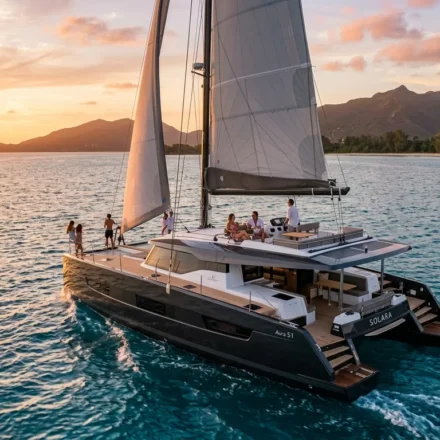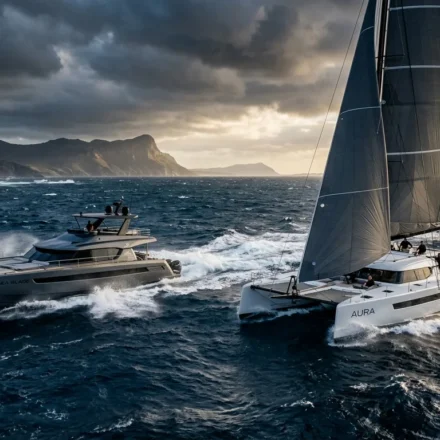



There’s nothing quite like the feeling of cruising on a catamaran, slicing through the water with stability and space that monohulls can only dream of. But let’s be honest, for many, that blissful feeling can turn into a knot in the stomach when it’s time to pull into a packed marina, especially in those notoriously tight Mediterranean or Caribbean spots. That broad beam, those twin hulls – they can feel like a liability when you’re trying to thread a needle between multi-million dollar yachts.
Table Of Content
- The Catamaran Advantage (and Challenge) in Docking
- Essential Pre-Docking Preparations: Don’t Rush It!
- The Core Technique: Mastering Twin Engine Control
- The “Throttle-Steering” Principle
- Pivoting in Place (The 360-Degree Spin)
- Approaching the Slip: Slow and Steady Wins the Race
- Using Spring Lines for Precision
- What to Watch Out For: The Marina’s Hidden Traps
- Common Docking Mistakes to Avoid
- Advanced Tips for Tricky Situations
- Frequently Asked Questions
- Is docking a catamaran harder than a monohull?
- How do I handle strong crosswinds when docking?
- What’s the best way to practice catamaran docking?
I’ve been in this business for decades, seen countless boats, and docked more than my share, from tiny dinghies to superyachts. And I can tell you, while a catamaran might look intimidating to dock, it actually possesses some incredible advantages that, once mastered, make it a true joy to maneuver. It’s all about understanding those advantages and using them to your benefit. So, let’s talk about mastering the art of catamaran docking, even in the snuggest of tight marinas.
The Catamaran Advantage (and Challenge) in Docking
Many novice sailors and powerboaters alike assume that a catamaran is inherently harder to dock due to its width. While that wide stance can indeed be a challenge in narrow fairways or when judging distances in a crowded slip, it’s also a double-edged sword that offers a unique superpower: independent twin engines. Unlike a monohull that relies on a single prop and rudder (or a bow thruster as an aid), your catamaran has two separate propulsion units, each with its own throttle and gear. This is your secret weapon.
Think of it like this: instead of steering with a wheel and using forward/reverse, you’re essentially steering with your throttles. You can spin the boat on its own axis, move sideways, or adjust your angle with incredible precision, all without touching the helm. This twin engine control is what truly sets multihull boat maneuvering apart. It allows for a level of control that, frankly, many monohull captains envy. But what happens when that broad beam becomes a liability in a snug slip with a crosswind? That’s where preparation and technique come in.
Honestly, the biggest challenge isn’t the width itself, but rather the increased windage compared to a monohull of similar length. Those high freeboards and wide decks catch a lot of wind, and a stiff breeze can push you around surprisingly quickly. This is why understanding wind and current, and having a plan, is paramount. Based on my experience, the moment you start rushing or panicking, that’s when things tend to go awry. Keep calm, use your tools, and trust the process.
Essential Pre-Docking Preparations: Don’t Rush It!
Before you even think about entering the marina fairway, a little preparation goes a long way. This isn’t just good practice; it’s a non-negotiable step for safe and stress-free docking. Why rush something that requires patience and precision? Take a few extra minutes outside the marina entrance to get everything shipshape.
- Fenders Out: Get your fenders deployed on both sides, at appropriate heights. It’s often smart to have a couple extra handy, just in case you need to adjust or protect a specific point. Don’t be shy; more fenders are better than fewer.
- Lines Ready: Have your bow, stern, and at least two spring lines (forward and aft) run through their fairleads and cleated off on deck. Leave a loop on the dock end so your crew can easily step ashore and secure them. Color-coding them or having a system helps.
- Crew Briefing: This is critical. Everyone on board should know their role. Who is handling which line? Who is fending off? What are the hand signals for “more line,” “less line,” “stop,” “push off”? For example, imagine this situation: you’re approaching a stern-to dock, the wind is picking up, and your crew is fumbling with a cleat. A clear briefing beforehand can prevent that moment of chaos and potential embarrassment (or worse, damage).
- Observe & Visualize: Before you commit, do a pass or two if possible, or at least stand on deck and observe the conditions inside the marina. Where is the wind coming from? What’s the current doing? Identify your slip, and visualize your approach. What obstacles are in the way? Are there any shallow spots?
- Engine Check: Briefly put each engine into forward and reverse to ensure they’re responding correctly. Check for any alarms. You don’t want surprises when you’re 10 feet from the dock.
This pre-check list isn’t just about efficiency; it’s about building confidence and ensuring safety. When you know everyone is prepared and the boat is ready, you can focus entirely on the multihull handling itself.
The Core Technique: Mastering Twin Engine Control
Now, let’s get to the real magic: using your twin engines. This is the heart of effective catamaran control.
The “Throttle-Steering” Principle
The fundamental concept is that you steer the boat by varying the thrust from your two engines. Think of your throttles as steering wheels. To turn to starboard, you put the port engine in forward and/or the starboard engine in reverse. To turn to port, you do the opposite. The greater the difference in thrust between the two engines, the faster you’ll turn. The beauty of a catamaran is its ability to pivot almost in place, something a monohull simply cannot do without a bow thruster or significant forward motion.
Keep your engine RPMs low. We’re talking idle or just above. A little thrust goes a long way, especially in tight quarters. Too much speed is the enemy of good docking. If you get into trouble, simply put both engines in neutral and reassess. There’s no shame in backing off and restarting your approach.
Pivoting in Place (The 360-Degree Spin)
This is arguably the most impressive trick in the catamaran docking playbook. To spin your catamaran clockwise, put the starboard engine in reverse and the port engine in forward. To spin counter-clockwise, reverse the port engine and put the starboard engine in forward. Adjust the throttle settings to control the speed of the spin. You’ll find that with a little practice, you can spin your boat around in its own length, making it incredibly easy to orient yourself for an approach or to turn around in a narrow basin.
Approaching the Slip: Slow and Steady Wins the Race
When approaching your slip, aim to have the wind or current on your bow if possible, as it gives you more control. If you have to take it on the beam, be prepared to use more aggressive throttle inputs. Your approach should be as slow as possible, barely making way. Remember, if you hit something slowly, the damage is minimal. If you hit it fast, it’s a whole different story. Use short bursts of power, alternating between engines, to maintain your heading and control your speed. Don’t be afraid to use reverse on one or both engines to scrub off speed.
Using Spring Lines for Precision
Spring lines are your best friends for nudging the boat exactly where you want it, especially for a side-to docking. Here’s a quick look at how they work:
| Line Type | Purpose | Docking Scenario | How it’s Used (Catamaran Specific) |
|---|---|---|---|
| Bow Line | Secures the bow to the dock, prevents forward movement. | Bow-to, side-to docking | Once bow is secured, can be used to pull the bow closer to the dock. |
| Stern Line | Secures the stern to the dock, prevents aft movement. | Stern-to, side-to docking | Once stern is secured, can be used to pull the stern closer to the dock. |
| Forward Spring Line | Attached from a mid-bow cleat to an aft dock cleat. Prevents forward motion, can pivot stern. | Side-to docking, especially useful for pivoting. | Secure this first. Apply a little forward thrust with the engine closest to the dock. The boat will pivot around this line, bringing the stern in. |
| Aft Spring Line | Attached from a mid-stern cleat to a forward dock cleat. Prevents aft motion, can pivot bow. | Side-to docking, especially useful for pivoting. | Secure this first. Apply a little reverse thrust with the engine closest to the dock. The boat will pivot around this line, bringing the bow in. |
In a side-to docking, getting one spring line on early, especially the forward spring, can allow you to bring the rest of the boat alongside using minimal engine power and incredible control. This is a pro-level technique that really highlights the versatility of catamaran docking tips.
What to Watch Out For: The Marina’s Hidden Traps
Even with excellent multihull handling skills, marinas can throw curveballs. Staying vigilant is key.
The most obvious culprits are wind and current. These forces are amplified on a catamaran due to its design. Always factor them into your approach. If the wind is pushing you off the dock, approach at a slightly steeper angle. If it’s pushing you on, be prepared to use prop wash against the hull or even a short burst of engine power to fend off. Current can be even trickier, especially in river marinas or tidal basins. Always try to approach against the current if possible, as it gives you more steerage and control over your speed. If you can’t, use short, powerful bursts to maintain control, letting the current do some of the work.
Other boats and obstacles are another big one. Marinas are often tightly packed. Always know where the boats around your slip are, how much swing they have, and if there are any unusual projections (bowsprits, tenders, swim platforms). And don’t forget the dock itself! Sometimes cleats are placed oddly, or there are unexpected utility boxes. Always do a quick visual check of your target slip before committing. I’ve personally seen a beautiful catamaran get a nasty scrape from a neglected ladder on a dock. It pays to be observant.
Finally, shallow spots can be a real concern, particularly for deeper-drafting sailing catamarans. Many older marinas weren’t designed for the wider beam of modern catamarans, and while the main fairways are dredged, the very edges of some slips can be shallower. If you’re unsure, check your charts or ask the marina staff. Better safe than sorry when you have two hulls to consider.
Common Docking Mistakes to Avoid
Even the most experienced captains make mistakes, but some are more common than others when it comes to catamaran docking.
The cardinal sin? Too much speed. I cannot stress this enough. Speed equals loss of control and increased potential for damage. If you feel like you’re going too fast, put both engines in neutral and let the boat drift, then restart your approach. Another common blunder is not briefing your crew adequately. A confused crew is a liability. Make sure everyone knows their role and the signals. If they’re new, give them simple tasks and praise their efforts.
Many people also tend to forget about wind and current until it’s too late. These forces are dynamic, always shifting. Don’t assume they’ll be the same as they were 10 minutes ago. Keep observing, keep adjusting. A related mistake is over-relying on a bow thruster (if your catamaran has one). While helpful, bow thrusters are not a substitute for proper twin-engine technique. They are aids, not crutches. They’re also often noisy and drain battery power quickly.
And finally, panicking and freezing at the helm. It happens to the best of us. But on a catamaran, with your incredible maneuverability, you usually have options. If you feel overwhelmed, abort the approach, get back into open water, collect yourself, and try again. There’s absolutely no shame in that. In my opinion, it’s a sign of a good captain.
Advanced Tips for Tricky Situations
Once you’ve mastered the basics, you’ll start encountering situations that require a bit more finesse. Here are a few docking tips for those moments.
Strong Crosswinds: This is where your twin engines really shine. If the wind is pushing your starboard side towards the dock, you’ll need to apply more forward thrust on your port engine and/or reverse on your starboard engine to maintain your course. Approach at a slightly steeper angle, allowing the wind to push you, but actively counteracting it. Get a spring line on as quickly as possible – often the windward spring line first – to help pivot the boat and hold it against the breeze. You might even use the downwind engine to create a powerful prop wash that pushes water against the hull, helping to hold you off the dock.
Stern-to Docking (Med Mooring): This is common in many European marinas. The key here is to control your stern’s approach while keeping the bow straight. Come to a near stop well away from the dock, then slowly back in using your twin engines to steer. If you need to bring the bow around, remember the pivot technique. Often, you’ll drop an anchor off the bow as you back in, then tension the anchor rode once your stern lines are secured to keep the boat off the dock. If mooring lines are provided, they typically come from buoys or the opposite dock, which your crew will retrieve while you maintain position. This requires good communication and coordination!
Using Your Crew Effectively: Beyond simply handling lines, a good crew member acts as an extra pair of eyes and ears. They can report distances, warn of obstacles, or even use a boat hook to gently fend off. Teach them to use a boat hook not just for pushing, but also for pulling the boat gently. A well-placed fender or a gentle push can make all the difference in a tight spot.
Frequently Asked Questions
Is docking a catamaran harder than a monohull?
While the wider beam can initially feel daunting, a catamaran’s independent twin engines provide superior maneuverability. Many experienced boaters find catamarans easier to dock than monohulls once they master the twin-engine control techniques, especially in calm conditions.
How do I handle strong crosswinds when docking?
Approach at a slightly steeper angle into the wind, using more power on the downwind engine and reverse on the upwind engine to maintain your desired track. Get a spring line (often the upwind one) secured as quickly as possible to help control the boat’s pivot and hold it against the wind.
What’s the best way to practice catamaran docking?
Start in open water with no obstacles. Practice pivoting, moving sideways, and approaching imaginary docks using only your throttles. Once comfortable, move to an empty slip on a calm day. Gradually introduce light winds and currents, always starting slow and having an escape plan.
So there you have it, folks. Docking a catamaran in those snug marinas isn’t about brute force or luck; it’s about understanding your vessel, leveraging its unique advantages, and applying smart, controlled techniques. It takes practice, yes, but I believe that once you master these catamaran docking principles, you’ll feel a surge of confidence every time you approach a crowded harbor. You’ll be one of those captains making it look effortless, turning heads on the dock for all the right reasons. Get out there, practice safe boating, and enjoy the incredible freedom your catamaran offers, even when the slips get tight!