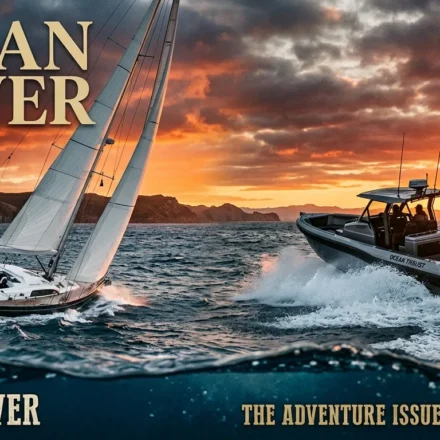



There’s a certain magic that happens when you hoist your sails, feeling the wind fill them, and your boat comes alive, gliding across the water. It’s a connection to nature that few experiences can rival. But have you ever stopped to truly consider the incredible engineering and design behind those canvases that propel you? Choosing the right sailboat sails for your vessel isn’t just about picking a pretty fabric; it’s about optimizing performance, ensuring safety, and ultimately, enhancing your entire experience on the water.
Table Of Content
- The Heart of Your Sailboat: Why Sail Choice Matters So Much
- Getting to Know Your Primary Powerhouses: Main & Headsails
- The Mighty Mainsail
- Headsails: Your Forward Drive
- Jibs: The Workhorses
- Genoas: The Powerhouses
- Specialty Sails: Unlocking Performance and Versatility
- Spinnakers: For Downwind Thrills
- Storm Sails: When the Going Gets Tough
- Sail Materials and Construction: Beyond Just the Cut
- Matching Sails to Your Sailing Style: Cruising vs. Racing
- For the Cruising Sailor
- For the Racing Enthusiast
- What to Watch Out For When Building Your Sail Inventory
- Common Mistakes Sailors Make When Choosing Sails
- Underestimating the Impact of Sail Shape
- Over-Complicating the Inventory Too Soon
- Neglecting Proper Sail Maintenance
- Buying on Price Alone
- Frequently Asked Questions
- How many sails do I really need?
- What’s the most versatile sail for a cruiser?
- When should I replace my sailboat sails?
As someone who’s spent decades around boats of all shapes and sizes, from small dinghies to grand luxury yachts, I can tell you that your sail inventory is truly the heart of your sailboat. It’s the engine, the transmission, and often, the soul of your journey. So, let’s dive deep into the fascinating world of sail types and arm you with the knowledge to make the best choices for your sailing adventures.
The Heart of Your Sailboat: Why Sail Choice Matters So Much
Think about it: without the right sails, your beautiful sailboat is just, well, a boat. The sails are what harness the invisible power of the wind, converting it into forward motion, speed, and responsiveness. They dictate how well your boat points into the wind, how fast it moves downwind, and how comfortable your ride will be in various conditions. Honestly, a well-chosen set of sails can transform a mediocre sailing experience into an extraordinary one, while a mismatched set can lead to frustration and even danger.
For me, the decision-making process around sails always starts with understanding your primary sailing goals. Are you a weekend cruiser who enjoys leisurely trips with family, prioritizing ease of handling and durability? Or perhaps you’re a competitive racer, constantly looking for that extra knot of speed and the ability to fine-tune your boat for specific wind angles? Maybe you’re somewhere in between, doing a bit of everything. Your answer to these questions will be the compass guiding your sail choosing guide journey.
Over the years, I’ve seen countless sailors make the mistake of either underestimating the importance of good sails or overspending on sails that don’t match their actual usage. It’s a balance, a nuanced decision that involves considering your boat’s design, your typical sailing grounds, and your personal skill level. But don’t worry, we’ll walk through all of it together. By the end of this guide, you’ll have a much clearer picture of what sails you need and why.
Getting to Know Your Primary Powerhouses: Main & Headsails
Every modern sloop-rigged sailboat, which is what most recreational sailors own, relies on two fundamental categories of sails: the main sail and the headsail (often a jib or genoa). These are your bread and butter, your go-to sails for nearly all conditions. Let’s explore them.
The Mighty Mainsail
The main sail is arguably the most important sail on your boat, positioned on the mast, directly behind it. It’s responsible for a significant portion of your boat’s drive and also plays a crucial role in balancing the boat with the headsail. Without a properly sized and shaped mainsail, you’ll find your boat difficult to control, especially in a blow.
Mainsails come in a few common configurations. You have conventional mainsails, which are flaked and tied onto the boom, or those that furl into the mast or boom, offering immense convenience. Full-batten mainsails, which have battens running their entire width, hold their shape exceptionally well, providing excellent performance and longevity, though they can be a bit more challenging to flake. Partial-batten mainsails offer a good compromise, providing some shape support without the full rigidity. When talking about cruising, I always lean towards systems that make reefing and hoisting as easy as possible. Reefing, for those new to it, is the process of reducing the sail area to depower the boat in stronger winds – a vital safety measure!
Headsails: Your Forward Drive
Headsails are any sails set forward of the mast. They work in tandem with the mainsail to generate lift and drive. The interaction between the mainsail and headsail is critical; the airflow over the headsail accelerates as it passes through the gap between the two sails, hitting the mainsail with increased velocity, which in turn enhances the main’s efficiency. This phenomenon, known as the ‘slot effect,’ is why you can’t just slap any old sail on your bow.
Jibs: The Workhorses
The jib is a headsail that typically doesn’t overlap the mast. These are often smaller, easier to handle, and very popular on modern cruising boats, especially those with self-tacking systems. They’re excellent for higher wind conditions or when you prioritize ease of maneuvering in tight spaces. For coastal cruising, a well-built jib on a reliable furler is, in my opinion, an absolute must-have. It’s forgiving and allows for single-handed operations with much less fuss.
Genoas: The Powerhouses
A genoa is essentially an oversized jib that overlaps the mast. These sails provide significantly more sail area than a standard jib, making them fantastic for light wind conditions or when you want maximum power and speed. They come in various percentages of overlap – 135%, 150%, or even larger – indicating how much they extend past the mast. While they offer superior performance, especially upwind, they do require more active trimming during tacks and can be a bit more unwieldy in heavy air. Most cruising boats opt for a furling genoa, allowing for easy adjustment of sail area by partially rolling it in, transforming it into a smaller, more manageable sail as the wind picks up. This versatility is why many sailors, especially those on larger cruising vessels, prefer a genoa as their primary headsail.
Specialty Sails: Unlocking Performance and Versatility
Beyond your main and primary headsail, a whole world of sail types exists to optimize your performance in specific conditions or for particular sailing styles. These are the sails that truly round out a comprehensive sail inventory.
Spinnakers: For Downwind Thrills
Ah, the spinnaker! Just seeing one flying, full and colorful, is a joy. These large, balloon-like sails are designed for sailing downwind or on broad reaches. They capture a tremendous amount of air, providing exhilarating speed. There are two main types:
- Symmetrical Spinnakers: These are traditionally set with a spinnaker pole and require more crew coordination to gybe and trim. They are excellent for dead-downwind sailing and often preferred by racers.
- Asymmetrical Spinnakers (Code Zero/Gennaker): Set without a pole, these sails are easier to handle and are fantastic for broader reaching angles. They have one corner attached to the bow (or a bowsprit) and the other two corners acting as the tack and clew. For cruisers, an asymmetrical spinnaker, sometimes called a gennaker or a Code Zero (which is a flatter cut, often on a furler, designed for tighter angles than a traditional asymmetric), is a popular choice for adding speed and fun on downwind legs without the complexity of a pole.
There’s nothing quite like the feeling of watching your boat surge forward under a full spinnaker. For example, imagine this situation: you’ve been slogging along downwind in light air, barely making headway. You decide to hoist your asymmetrical cruising spinnaker. Suddenly, your boat accelerates, the wake boils, and your grin widens. That’s the power of the right specialty sail!
Storm Sails: When the Going Gets Tough
While we all hope for sunny days and fair winds, the sea can be unpredictable. That’s where storm sails come in. These are small, incredibly robust sails designed to be used in gale-force winds when your primary sails are too much and need to be put away.
- Storm Jib: A very small, heavily constructed headsail that flies from the inner forestay or a temporary stay. Its purpose is to provide just enough drive to maintain steerage and forward motion in severe weather, keeping the bow from being driven off course by waves.
- Trysail: A small, very strong sail that replaces the mainsail in a storm. It attaches to a separate track on the mast, avoiding the boom, which could be damaged or cause injury in extreme conditions. Both the storm jib and trysail are critical safety items, and for offshore passages or racing, they are often a mandatory part of your safety equipment. Don’t ever underestimate the importance of having these aboard if you plan any serious sailing!
Sail Materials and Construction: Beyond Just the Cut
The fabric your sails are made from has a profound impact on their performance, longevity, and cost. It’s not just about how they’re cut; it’s about what they’re made of and how they’re built.
Historically, sails were made from cotton or canvas, but modern technology has given us a plethora of advanced options. The most common material for cruising sails is Dacron (polyester). It’s durable, relatively inexpensive, and has good UV resistance. Dacron sails are typically “cross-cut,” meaning the panels run perpendicular to the leech, distributing loads well. For most cruisers, a good quality Dacron sail offers an excellent balance of performance and practicality.
For those seeking higher performance, especially in racing sails, laminate sails are the way to go. These sails are constructed by sandwiching high-tech fibers like Mylar, Kevlar, or carbon between layers of film. This construction creates sails that are lighter, have significantly less stretch, and hold their aerodynamic shape much better, especially when under load. This means better pointing ability and more speed. Laminate sails are often “radial-cut,” with panels radiating from the corners to align with the load paths, further optimizing shape retention. The downside? They are more expensive, can be more susceptible to UV damage and creasing, and generally have a shorter lifespan than Dacron, particularly for cruising applications.
Let’s break down the general characteristics of popular sail materials:
| Material | Primary Use | Stretch Resistance | Durability & Longevity | Cost (Relative) |
|---|---|---|---|---|
| Dacron (Woven Polyester) | Cruising, club racing | Moderate | Very Good (Excellent UV resistance) | Low to Moderate |
| Mylar/Pentex Laminates | Performance cruising, club/racer-cruiser | Good | Moderate (UV degrades film) | Moderate to High |
| Kevlar/Technora Laminates | Serious racing, high-performance cruising | Very Good | Moderate (UV sensitive, creasing) | High |
| Carbon Fiber Laminates | High-end racing | Excellent | Moderate (Susceptible to creasing/flex fatigue) | Very High |
Matching Sails to Your Sailing Style: Cruising vs. Racing
This is where the rubber meets the road, or perhaps more aptly, where the sail meets the wind. Your individual sailing style is the single biggest determinant in choosing your sail inventory. Let me add something here: don’t let anyone tell you there’s a “right” way to sail. It’s about what brings you joy!
For the Cruising Sailor
If your idea of a perfect day involves a gentle breeze, a calm anchorage, and a sunset cocktail, then you’re likely a cruising sailor. For you, ease of handling, durability, and a wide wind range are paramount. You want sails that are forgiving, can withstand years of UV exposure and chafe, and don’t demand constant attention. A strong, well-built Dacron mainsail with good reefing points, ideally full-battened for shape, and a furling genoa or jib is your primary setup. Consider adding an asymmetrical cruising spinnaker for those light-air downwind runs – it’s a game-changer for speed and fun without the racing fuss. For serious offshore cruisers, I strongly recommend a dedicated storm jib and trysail for safety.
For the Racing Enthusiast
Now, if the thought of shaving seconds off your elapsed time or perfectly executing a protest-free port-starboard crossing gets your heart pumping, you’re a racing sailor. Here, performance, optimal shape-holding, and light weight are king. Your sail inventory will be far more extensive and specialized. You’ll likely have multiple headsails (jibs/genoas) optimized for different wind ranges (light, medium, heavy), often made from high-tech laminates. You’ll also carry both symmetrical and asymmetrical spinnakers to cover all downwind angles. Mainsails will be full-battened, possibly with exotic materials, designed for maximum projected area and minimal stretch. Racing sails are an investment, no doubt, but the speed and precision they offer are unmatched.
What to Watch Out For When Building Your Sail Inventory
Choosing sails isn’t always straightforward. There are a few key areas where you need to exercise caution and diligence:
- Budget Blindness: While it’s tempting to go for the cheapest option, remember that sails are a long-term investment. Poorly made sails will stretch out of shape quickly, costing you more in the long run. Conversely, don’t overspend on exotic racing sails if you’re only cruising. Find the sweet spot for your needs.
- Ignoring Sailmaker Reputation: Not all sailmakers are created equal. Research their experience, read reviews, and ask for recommendations. A good sailmaker will take precise measurements of your boat and understand your sailing style before cutting a single stitch. Their expertise is invaluable.
- Used Sail Pitfalls: Buying used sails can save money, but it’s a minefield. Always inspect them thoroughly for UV damage (especially on the leech and foot), chafe, mildew, and stretched fabric. A cheap used sail with a short life left isn’t a bargain.
- Inaccurate Measurements: This is critical! Your sailmaker needs exact measurements of your mast, boom, forestay, and all relevant points. Even a few inches can make a significant difference in how a sail fits and performs.
- Lack of Sail Care Awareness: Once you have your beautiful new sails, protect them! UV exposure is their biggest enemy. Furling jibs should have a UV strip, and mainsails should always be covered when not in use. Wash them periodically, ensure they’re dry before storing, and repair small tears promptly.
Common Mistakes Sailors Make When Choosing Sails
Based on my experience over the decades, I’ve seen some recurring errors. Avoiding these can save you a lot of headache and expense.
Underestimating the Impact of Sail Shape
Many new sailors focus only on the size of the sail, not its intended shape or “draft.” A sail that is too full for the conditions will cause excessive heel and drag, while one that is too flat won’t generate enough power. Sailmakers design specific shapes for specific wind ranges and boat types. Not communicating your typical sailing conditions to your sailmaker is a common oversight.
Over-Complicating the Inventory Too Soon
It’s easy to get excited about all the different sail types available, but for a new boat owner or someone just getting into sailing, starting with a basic, high-quality main and headsail is often the best approach. Don’t feel pressured to buy a full suite of specialty sails until you understand your boat’s performance and your personal sailing preferences better. You can always add to your sail inventory later.
Neglecting Proper Sail Maintenance
This isn’t strictly about choosing sails, but it’s paramount for their longevity. Leaving sails exposed to sun and weather, failing to rinse them after saltwater use, or not making timely repairs will drastically shorten their lifespan, regardless of how well they were chosen initially. A sail left flapping in the wind can develop chafe points quickly, leading to costly repairs or premature replacement.
Buying on Price Alone
I know, I mentioned it briefly before, but it bears repeating. Good sails are an investment. If a deal seems too good to be true, it probably is. Cheap materials, poor stitching, or an incorrect cut will lead to premature stretching, poor performance, and ultimately, dissatisfaction. Invest in quality from a reputable sailmaker, and your sails will serve you well for many years.
The truth is, your sails are the wings of your boat. They deserve careful consideration, much like you would choose the right engine for a powerboat. Investing wisely here will pay dividends in enjoyment, safety, and performance on every single trip.
Frequently Asked Questions
How many sails do I really need?
For most recreational sailboats, you’ll need a mainsail and a primary headsail (a jib or genoa). This basic combination will allow you to sail in a wide range of conditions. More specialized sails like spinnakers or storm sails are additions for specific performance goals or enhanced safety in extreme weather.
What’s the most versatile sail for a cruiser?
In my opinion, for a cruising sailboat, a good quality, well-designed furling genoa is incredibly versatile. Its ability to be easily reefed (partially rolled in) allows you to adjust the sail area to suit various wind conditions without changing sails, making it very user-friendly and efficient.
When should I replace my sailboat sails?
The lifespan of sailboat sails varies greatly depending on material, usage, and care. Dacron cruising sails might last 10-15 years, while high-performance laminate racing sails could be replaced every 2-5 years. Look for signs like significant stretching, permanent wrinkles, fraying stitching, or heavy UV damage (yellowing, brittle fabric) as indicators it’s time for a replacement.
Choosing the right sails is a journey, not a destination. It’s about understanding your boat, your aspirations, and the incredible forces of nature you seek to harness. Armed with this knowledge, I hope you feel confident in making informed decisions for your vessel. May your sails always be full, and your voyages forever memorable. Happy sailing!