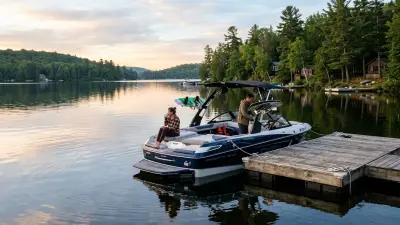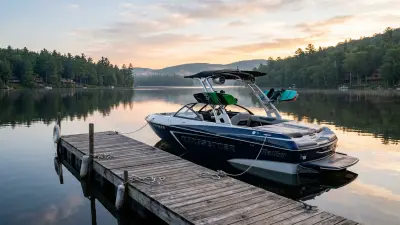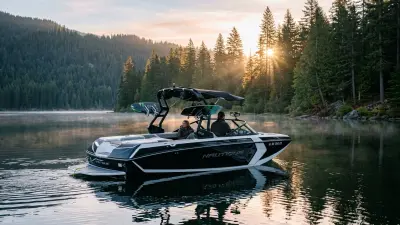
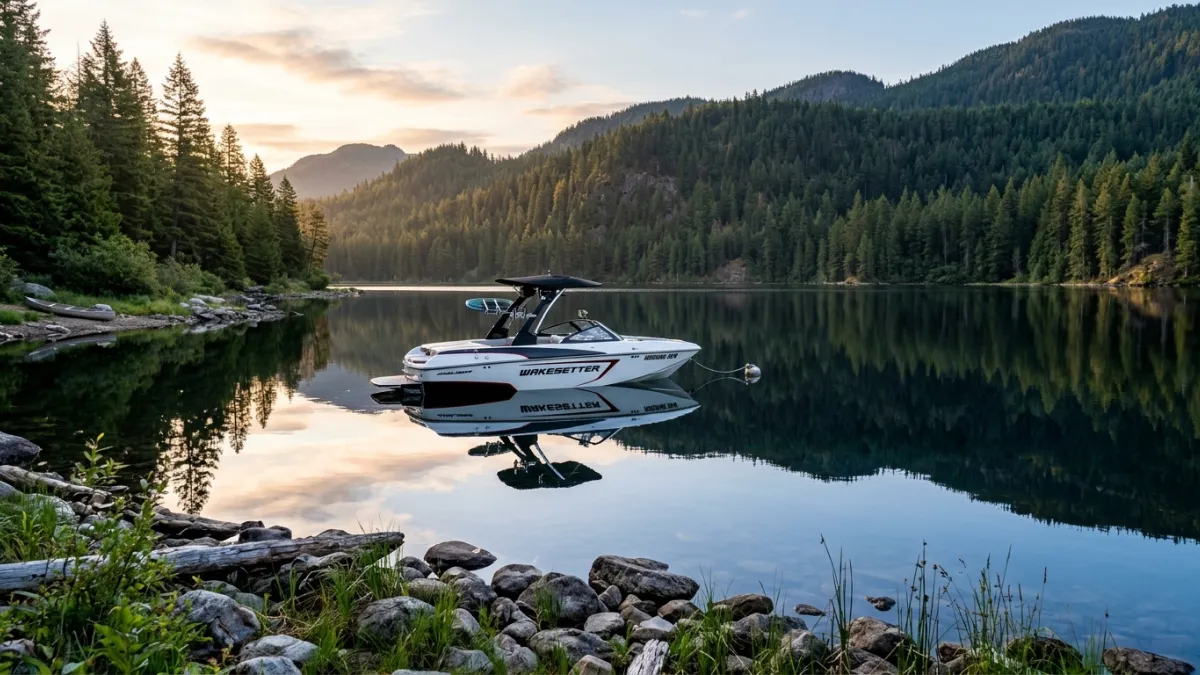
The global ski wake boat market is valued between USD 1.45 billion and USD 2.16 billion as of 2026, driven by sustained interest in wakesurfing, waterskiing, and lake tourism. Positioned as the high-performance segment of recreational boating, towboats are specialized vessels engineered with direct-drive or V-drive propulsion systems, automated ballast tanks, and hull-shaping plates to craft distinct water wakes. North America leads global demand with roughly 38% to 55% of total market revenue, while high-growth regions like Asia-Pacific are expanding rapidly. New ski boats and wake boats range from $120,000 for entry-level models to well over $250,000 for top-tier wakesurf flagship craft.
Ski Boats vs. Wake Boats: Engineering and Hull Differences
While both categories fall under the towboat umbrella, ski boats and wake boats are engineered for opposing hydrodynamic goals. A traditional tournament ski boat relies on a direct-drive inboard engine placed amidships to create a flat, minimal wake with negligible spray, allowing a slalom skier to cut across the wake smoothly at speeds around 30 to 36 mph.
In contrast, a modern wake boat utilizes a V-drive engine layout situated at the stern, shifting structural weight backward to displace more water. Combined with integrated liquid ballast tanks (holding 2,000 to 5,000 lbs of water) and automated wake-shaping tabs (such as Surf Gate or Surf Switch), wake boats deliberately create steep, tall waves designed for wakeboarding (18–22 mph) and wakesurfing (10–12 mph).
| Feature / Specification | Tournament Ski Boat | Wakesurf & Wakeboard Boat |
|---|---|---|
| Drivetrain Layout | Direct-Drive Inboard (Mid-engine) | V-Drive Inboard (Rear-engine) |
| Primary Hull Goal | Minimal displacement, flat wake | Maximum displacement, large wave |
| Typical Towing Speed | 30–36 mph (Slalom Skiing) | 10–22 mph (Wakesurfing / Wakeboarding) |
| Ballast Capacity | Minimal to None | 2,000 – 5,000+ lbs (Automated) |
| Average Passenger Capacity | 6 – 9 passengers | 12 – 18 passengers |
| New Price Range (2026) | $90,000 – $150,000 | $120,000 – $275,000+ |
Key Market Drivers and Emerging Trends
The towboat sector is undergoing rapid technological development to meet changing consumer demographics and environmental regulations. Industry market research highlights four major forces shaping current vessel designs:
- Digital Helm Integration: Modern towboats feature multi-touchscreen glass dashes that allow captains to select customized rider profiles. Pushing a button automatically adjusts ballast levels, engine RPM, cruise control speed, and wake tab deployment.
- Fiberglass Dominance and Hull Shaping: Molded fiberglass accounts for the majority of market share because composite materials allow hull designers to engineer complex running surfaces and deep-V hulls optimized for wave generation.
- Alternative Propulsion Research: Inboard engine builders (such as PCM, Ilmor, and Indmar) are refining high-torque V8 platforms while electric towboat prototypes and hybrid propulsion models continue gaining traction for noise-restricted lakes.
- Commercial and Resort Demand: In addition to private owners, commercial buyers—such as watersports academies, resort charters, and boat clubs—represent a steady sales driver.
Major Market Players and Industry Brands
The manufacturing ecosystem for ski and wake boats is highly concentrated among established marine builders. Leading manufacturers produce distinct sub-brands to target various price tiers:
Correct Craft (Nautique & Supreme)
Correct Craft operates iconic brands such as Nautique (makers of the Ski Nautique and Super Air Nautique series) alongside Supreme Boats. Nautique remains a dominant force in professional slalom skiing and luxury wakesurfing with its patented HydroGate and Nautique Surf System (NSS).
Malibu Boats & Axis Wake Research
Malibu Boats is one of the largest market volume producers worldwide. Operating both its flagship Malibu line and its entry-to-mid-tier Axis Wake Research brand, Malibu pioneered side-shifting wake technology with its Surf Gate system and Power Wedge hydrofoil.
MasterCraft Boat Company
MasterCraft stands among the most recognized names in marine towboats, building versatile craft like the ProStar (slalom focus) and X-Series wakesurf vessels. Their SurfStar software system provides real-time wave visualization for riders of varying skill levels.
Tige Boats & Centurion
Tige Boats and Correct Craft's Centurion line cater heavily to core wakesurfing enthusiasts. Centurion is widely noted for deep-draft hull designs that hold high amounts of internal ballast, while Tige utilizes TAPS 3T trim plates and convex-V hull geometry.
Financial Breakdown: New vs. Used Towboat Economics
Unlike automotive markets that experience steep initial drop-offs, towboats show distinct resale dynamics due to strong seasonal demand and high manufacturing build quality.
According to marine dealership data, a new towboat typically depreciates 10% to 15% in its first year, followed by roughly 5% annually across years three through five. This value retention makes used inventory attractive, though pre-owned buyers must carefully inspect V-drive transmissions, ballast pumps, and hull structural integrity prior to purchase.
Annual Ownership Costs to Budget
Operating a ski or wake boat involves routine marine expenses beyond the initial purchase price:
- Fuel Consumption: Heavy V-drive boats carrying ballast can burn 8 to 15 gallons per hour (GPH) of premium gasoline during active wakesurfing sessions.
- Routine Maintenance: Annual engine oil changes, impeller replacements, V-drive fluid services, and winterization average $800 to $1,800 annually depending on localized shop rates.
- Storage and Mooring: Lakefront slips, dry-stack storage, or indoor winter storage range from $1,500 to over $6,000 per year depending on geographic region.
- Insurance Premiums: Marine agreed-value insurance policies typically run between $900 and $2,200 annually based on vessel value and horse-power rating.
How to Select the Right Boat for Your Waterway
Choosing between a specialized tournament ski boat and a broad-beam wake boat depends on your primary watersports discipline and lake size. Buyers on smaller, shallow bodies of water often benefit from the lighter draft and precise tracking of a direct-drive ski boat. Conversely, families seeking multi-rider days out, comfortable cockpit seating, and high-energy wakesurf waves will find V-drive wakeboard boats to be the most versatile investment.
Frequently Asked Questions
Can you slalom ski behind a modern wake boat?
Yes, but it is not optimal for competitive slalom. A wake boat's heavy displacement creates a wider, taller wake at skiing speeds, which can disrupt smooth edge-to-edge transitions. Disengaging ballast and lowering wake plates helps flatten the wake for recreational skiers.
What engine horsepower is standard for a wake boat?
Most modern 21 to 25-foot wake boats require marinized V8 engines delivering between 350 hp and 600 hp. The extra horsepower and low-end torque are essential for getting heavy, ballast-laden hulls up on plane quickly.
Why are inboard engines preferred over sterndrives for wakesurfing?
Safety is the primary factor. Inboard engines position the propeller tucked underneath the boat hull, several feet forward of the transom. Sterndrive (I/O) engines place the propeller directly behind the swim platform, posing a severe injury risk to a wakesurfer riding close behind the stern.