Ever glance at a passing vessel, notice those prominent letters and numbers on its bow, and wonder what they all mean? They’re far more than just random characters; boat registration numbers are your vessel's unique fingerprint, a crucial identifier that ties your boat to you and ensures its legality on the water. Understanding them, and more importantly, your specific state's rules, is paramount for any boat owner.
More Than Just Numbers: Why Your Boat's ID Matters
From a seasoned captain’s perspective, these numbers are the cornerstone of responsible boat ownership. They serve several critical functions, making them indispensable for safety, security, and legal compliance. First and foremost, they are a legal requirement in nearly every state for any motorized vessel, and often for sailboats over a certain length. Failing to properly register and display these numbers can lead to frustrating encounters with marine patrol, hefty fines, and even the impounding of your vessel. Believe me, that’s a headache no one wants, especially when you’re out trying to enjoy a beautiful day on the water.
Beyond the legalities, those vessel identification numbers play a vital role in marine safety. Imagine a scenario: a vessel is adrift, or worse, involved in an accident. The registration number is the fastest, most reliable way for authorities like the Coast Guard or local marine law enforcement to identify the owner, access emergency contact information, and even track down past ownership details. This information can be critical in search and rescue operations, helping to quickly determine who might be in distress and where their home port might be. It’s peace of mind, really, knowing that your boat is part of a traceable system designed to keep everyone safer.
Furthermore, registration numbers help to deter theft and aid in recovery should your boat ever be stolen. A registered vessel is a documented vessel, making it much harder for criminals to resell or conceal. The unique combination of letters and numbers, alongside your Hull Identification Number (HIN), creates a comprehensive profile for your boat that is readily accessible to law enforcement agencies across the country. In my many years in the boating industry, I've seen countless cases where clear, properly displayed registration was the key to reuniting an owner with their stolen pride and joy.

Decoding the Anatomy of a State Registration Number
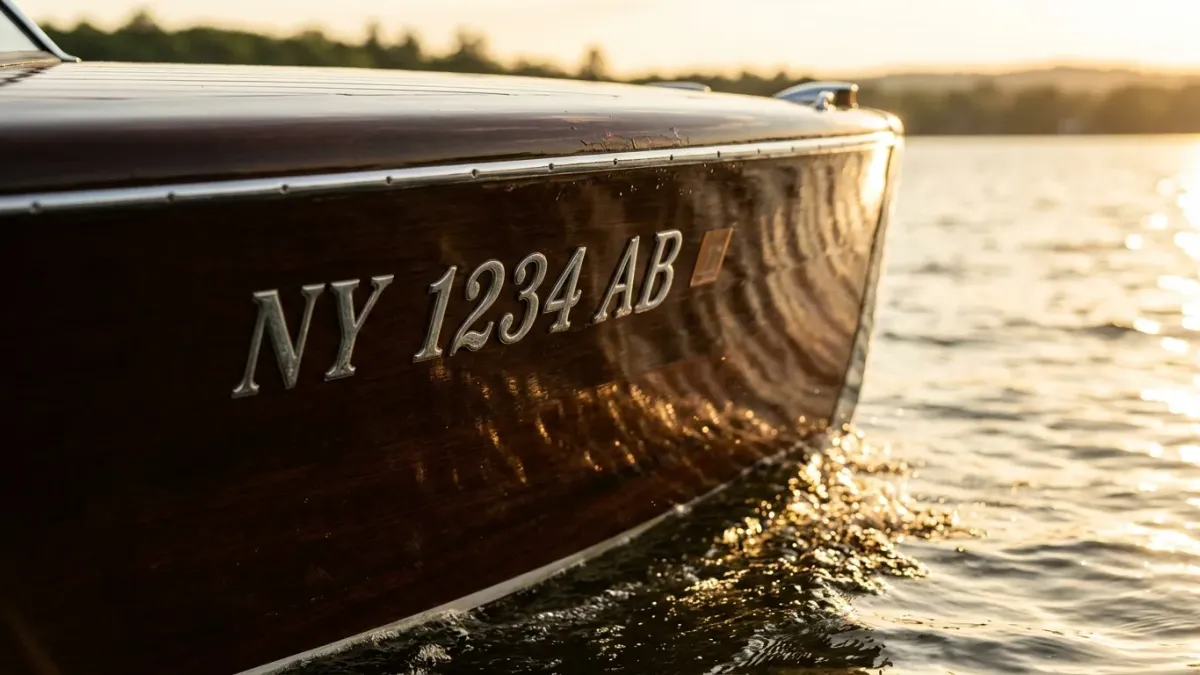
When you look at a set of boat registration numbers, you might think it's just a random string. But there's a very specific, logical structure behind them. While boating regulations can vary state-by-state, the fundamental format of a state boat registration number follows a generally accepted pattern that makes them universally recognizable. Typically, you'll see a two-letter state code, followed by a series of numbers, and then usually two more letters. This sequence isn't arbitrary; each part serves a distinct purpose.
Let's break down a typical format, say, "FL 1234 AB". The first two letters, "FL" in this example, are always the state code indicating where the vessel is registered. This is pretty straightforward – "NY" for New York, "CA" for California, and so on. Following the state code is a series of numbers, typically four or five digits, which form the unique identifier for your specific vessel within that state. This is the core numerical sequence that distinguishes your boat from every other registered boat in that state. Finally, you’ll usually find a two-letter suffix, like "AB". These suffix letters are often used by the state's registration agency to manage their numbering system, allowing them to issue more unique numbers once they've cycled through all the numerical combinations for an earlier suffix. It's an efficient way to expand the pool of available unique IDs.
Here’s a quick look at the typical components you'll find:
| Component | Description | Example (FL 1234 AB) |
|---|---|---|
| State Code | Two-letter abbreviation of the registering state. | FL (Florida) |
| Unique Numbers | A series of 4-5 digits, unique to the vessel within that state. | 1234 |
| Suffix Letters | Two letters used for administrative cycling of numbers. | AB |
Where Do These Numbers Come From? The Registration Process
So, how do you get these critical numbers for your own boat? The state boat registration process, while having common threads, can vary in specifics from state to state. Generally, it involves visiting your state’s Department of Motor Vehicles (DMV), Department of Natural Resources (DNR), or equivalent agency responsible for boat and vessel registration. You’ll need to provide proof of ownership, which typically means a bill of sale, a manufacturer’s statement of origin (for new boats), or a previous title or registration certificate if you're buying a used vessel. Don’t forget your personal identification, either!
Once you’ve submitted the necessary paperwork and paid the required fees, the state will issue your unique boat registration numbers and a registration renewal decal. This decal, which often displays the expiration year, must be affixed to your boat within a certain proximity to the registration numbers, usually on the port side. The numbers themselves must then be prominently displayed on both sides of the forward half of your vessel, typically the bow. There are strict guidelines for the size, color, and legibility of these numbers, which we'll delve into a bit later. It’s not just about having them; it’s about having them right.
The registration renewal process is equally important. Most states require renewal every one to three years. You'll typically receive a renewal notice in the mail, but it's ultimately your responsibility to ensure your registration is current. Missing a renewal date is an all-too-common mistake that can lead to fines. My advice? Set a reminder on your calendar or phone well in advance, because honestly, forgetting about it is easier than you think when you're caught up in the joys of boating season. Keep all your registration documents on board when operating your vessel, as marine law enforcement will certainly ask for them during routine checks.
The Federal Layer: USCG Documentation vs. State Registration
While most recreational boats fall under state boat registration, there's another level of identification for larger vessels: USCG documentation. This is a federal registration process handled by the U.S. Coast Guard for eligible vessels. It provides conclusive evidence of nationality, facilitates easier foreign port entries, and can simplify financing arrangements with lenders. Typically, vessels weighing five net tons or more, and engaged in commercial activities, or used for pleasure, are eligible. Most boats over 25 feet in length often meet this tonnage requirement, but it’s not a strict length rule, so always check your vessel's specific tonnage.
The key distinction here is that USCG documentation replaces the need for state registration numbers on the bow. Instead, documented vessels display their official name and hailing port on the stern, and the official number (a unique seven-digit identifier) is permanently marked on a visible interior structural part of the hull. This system offers some significant advantages, especially for larger yachts or those planning international voyages. It can also provide certain legal protections and simplify transactions for vessels used as collateral.
However, choosing USCG documentation doesn't entirely exempt you from state requirements. While you won't need the bow numbers, nearly every state still requires documented vessels to display a state-issued registration renewal decal or sticker, indicating that state use taxes have been paid. This is a critical point that many new owners overlook. You still need to comply with your state's particular regulations regarding decals, even if your vessel is federally documented. So, how do you know which path is right for your vessel? For smaller, non-commercial boats, state registration is usually sufficient. For larger vessels, especially those crossing international borders or with significant financing, USCG documentation is often the preferred and more beneficial route. It’s always wise to discuss this with your broker or an expert in marine law, based on my experience.
State-by-State Variations: What You Absolutely Need to Know
Here’s where it gets a little nuanced. While the general principles of boat registration numbers and vessel identification are consistent across the U.S., the devil, as they say, is in the details, particularly when it comes to state-specific requirements. Each state's Department of Natural Resources, DMV, or equivalent agency sets its own precise rules, and understanding these is crucial to avoid issues. These variations mostly revolve around three key areas: how you display your numbers, which vessels are exempt, and the frequency of your registration renewal.
Regarding displaying numbers, most states mandate that the numbers be block letters at least three inches high, contrasting sharply with the color of the hull. They must be permanently attached (decals are fine, hand-painted is fine, just no temporary signs) and read from left to right on both sides of the bow. However, some states might have additional rules for certain vessel types or sizes. For example, a state might require a space or hyphen between the state code and the numbers, and between the numbers and the suffix letters (e.g., FL-1234-AB). Some states are very particular about the specific font style, while others are more lenient. Always consult your state's boating handbook or website to ensure perfect compliance. Honestly, it’s easier to spend 15 minutes checking online than to deal with a citation on the water.
Exemptions also vary significantly. While non-motorized vessels like canoes, kayaks, and paddleboards are generally exempt in many states, some states require them to be registered if they exceed a certain length or are used in specific waters. Similarly, tenders or dinghies to a documented vessel are often exempt from individual state registration numbers if they are clearly marked as tenders to the mother ship and only used for transportation between the mother ship and shore. Vessels only operating on private waters, or those registered in another state and only temporarily visiting, typically have a grace period, but this period varies. Imagine you're cruising down the intercoastal waterway from Florida to Georgia; you generally have 60 to 90 days before you'd need to consider re-registering in the new state, but it’s vital to confirm this timeframe for each state you plan to visit extensively. Never assume; always verify!
Common Mistakes That Can Cost You Time (and Fines!)
- Improper Display: This is probably the most frequent violation. Numbers that are too small, not contrasting enough, peeling, obscured, or not spaced correctly are all red flags. Remember, they need to be easily readable from a reasonable distance by law enforcement.
- Expired Registration: Forgetting to renew your state boat registration or decal is an easy oversight, especially if you only boat seasonally. An expired decal is as good as no registration in the eyes of the law.
- Not Transferring Ownership: When buying or selling a used boat, failing to promptly transfer the registration and title into the new owner's name can create legal headaches for both parties. This often includes specific timelines, so don't delay.
- Assuming Exemptions: Just because your friend's kayak doesn't need registration doesn't mean yours is exempt, especially if it has a trolling motor. Always check your state-specific requirements based on your vessel type and propulsion.
- Neglecting the HIN: While not the bow numbers, your Hull Identification Number (HIN) is also crucial. Ensure it’s legible and matches your registration documents. It's like your boat's VIN.
What to Watch Out For When Buying or Selling a Vessel
When you’re in the exciting phase of either acquiring a new-to-you boat or sending your beloved vessel off to a new owner, pay extra close attention to the boat registration numbers and associated paperwork. As a yacht broker, I’ve seen transactions fall through or become complicated due to issues with registration. For buyers, always verify that the vessel's current registration is valid and matches the seller's documentation and the Hull Identification Number (HIN) on the boat itself. A mismatch could indicate a stolen vessel, a previous error, or other red flags. Request the previous owner's registration certificate and title as part of your due diligence.
Furthermore, be aware of any temporary operating permits. If you've just bought a boat, many states offer a short-term permit to allow you to operate it while waiting for your new permanent registration and numbers. Understand the duration of this permit and carry it on board at all times. For sellers, ensuring the title and state boat registration are properly transferred out of your name is crucial to avoid any future liability for the vessel. Don't just hand over the keys and assume the new owner will handle everything; follow up and ensure the transfer is complete according to your state's regulations.
Frequently Asked Questions
Do all boats need registration?
Most motorized vessels, including sailboats with auxiliary engines, require state boat registration. Non-motorized vessels like canoes and kayaks are often exempt, but state-specific requirements can vary. Always check your local Department of Natural Resources or DMV website.
What is a Hull Identification Number (HIN)?
The Hull Identification Number (HIN) is a 12-character serial number unique to each boat, usually found on the transom. It's like a car's VIN, indicating manufacturer, model year, and serial number. It's crucial for vessel identification, theft recovery, and recalls.
How often do I renew registration?
Registration renewal periods vary by state, typically every one to three years. You'll usually receive a reminder, but it's the owner's responsibility to ensure the registration is current. An expired registration can result in fines and legal issues.
Can I use my boat in another state?
Yes, generally your state boat registration is valid in other states for a limited period, usually 60 to 90 days. If you plan to use your boat in another state for an extended time, you may need to apply for state-specific requirements or reciprocal registration.
Understanding boat registration numbers might seem like a dry topic compared to discussing engine performance or sail trim, but it’s an absolutely fundamental aspect of responsible boating. It's your ticket to legal operation, a crucial layer of safety, and a key identifier in the vast maritime world. Take the time to understand your state's rules, display your numbers correctly, and keep your documentation current. Doing so ensures you spend more time enjoying the open water and less time dealing with avoidable bureaucratic headaches. Happy boating, and may your numbers always be clear and current!