


There’s nothing quite like the freedom of being out on the water, feeling the spray, and charting your own course. But even the most seasoned sailor or powerboater knows that true freedom comes with preparedness. And when it comes to finding your way safely and confidently, a reliable marine GPS isn’t just a gadget; it’s an absolute necessity.
Table Of Content
- Why a Dedicated Marine GPS is Your Navigational Lifeline
- Chartplotters, Handhelds, and MFDs: Understanding Your Options
- The Workhorse: Dedicated Chartplotters
- The Backup or Small Boat Friend: Handheld GPS Units
- The Integrated Powerhouse: Multi-Function Displays (MFDs)
- Key Features to Look For in Your First Marine GPS
- Installation, Power, and Staying Updated
- Making Your Final Decision and Embracing the Journey
If you’re new to boating or finally upgrading from paper charts and a compass, choosing your first marine GPS can feel a bit overwhelming. There are so many options, so many features! But don’t you worry. As someone who’s spent decades around boats and marine electronics, I’m here to walk you through it. Think of me as your personal guide to navigating the world of essential navigation electronics, ensuring you make the right choice for your adventures.
Why a Dedicated Marine GPS is Your Navigational Lifeline
You might be thinking, “Can’t I just use my phone or a tablet app?” And to be fair, phone apps have come a long way. They’re fantastic for planning and as a backup. But when you’re out on the open water, exposed to the elements, and relying on precise data for safety, a dedicated marine GPS, often called a chartplotter, is in a league of its own. Honestly, it’s not a luxury; it’s a fundamental piece of safety equipment.
Here’s why: first off, **reliability**. Marine GPS units are built to withstand the harsh marine environment – salt, spray, sun, and vibration. Your smartphone, on the other hand, is a delicate piece of electronics that can overheat in direct sun, drown in a splash, or simply run out of battery at the most inconvenient moment. A dedicated unit has a robust, waterproof casing and is typically hardwired into your boat’s power system, ensuring it’s always ready when you are.
Beyond durability, consider **accuracy and integration**. Marine GPS units often boast more powerful internal antennas, or the option for external ones, providing superior signal reception and pinpoint accuracy. They’re also designed to seamlessly integrate with other crucial marine electronics on your boat – think depth sounders, radar, AIS (Automatic Identification System), and even your autopilot. This creates a cohesive navigation station that offers a much richer, safer picture of your surroundings than any standalone phone app ever could. Imagine this situation: you’re navigating a tricky channel entrance just before dusk, visibility is dropping, and suddenly your phone battery dies. Panic, right? With a dedicated marine GPS, hardwired and purpose-built, that scenario becomes far less likely, giving you peace of mind when it matters most.
Chartplotters, Handhelds, and MFDs: Understanding Your Options
When we talk about a marine GPS, we’re generally talking about one of three main types, each suited for different needs. For your first unit, understanding these distinctions is key.
The Workhorse: Dedicated Chartplotters
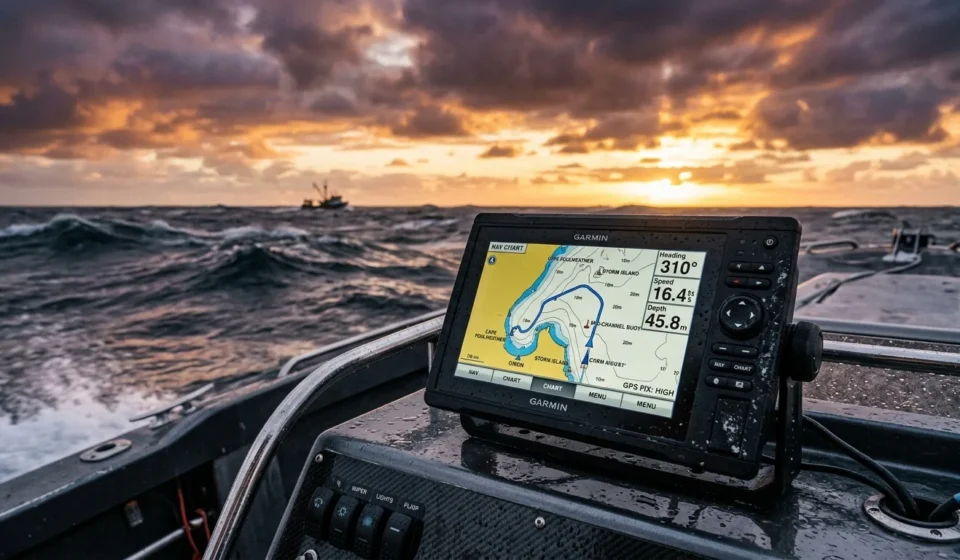
This is probably what most people envision. A dedicated chartplotter is a unit whose primary function is displaying electronic navigation charts and your position on them. They come in various screen sizes, from compact 5-inch displays perfect for smaller boats or limited helm space, up to expansive 16-inch or larger screens for serious cruisers and offshore vessels. For a first-time buyer, a unit in the 7 to 9-inch range often hits the sweet spot, offering good visibility without overwhelming your budget or helm.
The Backup or Small Boat Friend: Handheld GPS Units
These are portable, battery-powered units. While they lack the large screen and integration capabilities of a chartplotter, they are incredibly valuable as a backup or for very small boats like dinghies, kayaks, or open runabouts where permanent installation isn’t feasible. They’re waterproof, rugged, and can be a lifesaver if your main system goes down. I always recommend having one onboard, even if it’s just a basic model, as a secondary source of navigation.
The Integrated Powerhouse: Multi-Function Displays (MFDs)
An MFD combines the chartplotter function with other capabilities like radar, sonar (fishfinder), engine monitoring, and even entertainment controls, all on one screen. While incredibly powerful and efficient, they are generally a more advanced and expensive option, often chosen by experienced boaters looking to consolidate their electronics package. For your very first marine GPS, a dedicated chartplotter is usually the more practical and budget-friendly starting point, allowing you to get comfortable with the core navigation features before considering advanced integrations.
Key Features to Look For in Your First Marine GPS
Alright, so you’ve got a handle on the types. Now, let’s dive into the nitty-gritty of what features truly matter for your first purchase. This is where you really start tailoring the unit to your specific boating style.
- Screen Size and Visibility: This is paramount. Can you easily see the screen from the helm in bright sunlight or at night? Glare reduction and backlighting are crucial. As I mentioned, 7-9 inches is a great starting point for most recreational boats.
- Chart Compatibility and Coverage: Most units come preloaded with basic charts, but you’ll want to confirm the specific mapping software (e.g., Navionics, C-MAP) it uses and that it covers your cruising grounds in detail. Also, check for the cost and frequency of chart updates. Up-to-date charts are vital for safety!
- Ease of Use: A complicated interface will lead to frustration, especially when you’re trying to quickly check something in choppy conditions. Look for intuitive menus, responsive touchscreens (if applicable), and physical buttons that are easy to press even with wet hands.
- Sonar/Fishfinder Capabilities: Many chartplotters now come bundled with a transducer for basic sonar, which is incredibly useful. Not only for finding fish, but more importantly, for displaying water depth and identifying underwater hazards. Don’t skimp on this if you can help it; knowing the depth beneath your keel is a game-changer for safe navigation.
- Connectivity (NMEA 2000/0183): Even for your first GPS, having NMEA 2000 (or the older NMEA 0183) compatibility is smart. This industry standard allows your GPS to talk to other devices like a VHF radio with DSC (Digital Selective Calling) for distress calls, an autopilot, or engine gauges. It future-proofs your system and enhances safety.
- Mounting Options: Does it come with a sturdy bracket mount that can be installed safely on your helm? Or do you prefer a flush-mount look? Consider where it will be placed and ensure it’s easily viewable and accessible.
- GPS Antenna: Most modern units have excellent internal antennas. For boats with hardtops or cabins that might obstruct the signal, consider a unit that allows for an external antenna connection.
Installation, Power, and Staying Updated
Once you’ve picked your unit, the journey isn’t over. Proper installation and ongoing maintenance are just as critical for reliable performance. A fantastic marine GPS is only as good as its setup.
Powering your unit is straightforward but important. Most chartplotters are 12V DC and need to be wired directly to your boat’s electrical system, ideally to a dedicated circuit breaker. Ensure you use the correct gauge wire and proper connections to avoid voltage drops or intermittent power. If you’re not comfortable with marine electrical work, please, call a professional. It’s an investment in safety.
Mounting your display should prioritize visibility and security. The unit needs to be within easy view of the helm and securely fastened to withstand rough seas. You don’t want your new GPS flying across the cockpit in a swell! And if your unit includes a sonar transducer, its placement on the hull is crucial for accurate readings. Again, this might be a job for an experienced installer.
Finally, remember to **keep your charts and software updated**. Marine environments change – sandbars shift, new hazards emerge, and channels are re-dredged. Most manufacturers offer subscription services for chart updates. Software updates for the unit itself often improve performance, fix bugs, and sometimes even add new features. I can’t stress this enough: current information is paramount for safe navigation. Don’t let your valuable electronics become obsolete because you forgot to download the latest updates.
Making Your Final Decision and Embracing the Journey
Choosing your first marine GPS is a personal decision, reflecting your unique boating style and budget. Are you a weekend angler, a coastal cruiser, or planning longer passages? Your answer will guide your choices in screen size, features, and integration. Don’t feel pressured to buy the most expensive unit out there, but also, don’t compromise on essential safety features for the sake of a few dollars. This is an investment in your safety and enjoyment on the water.
Based on my experience, I believe the best approach for a first-timer is to find a reputable brand (Garmin, Raymarine, Simrad, Lowrance are all excellent choices) that offers a chartplotter in your preferred screen size with integrated sonar and NMEA 2000 connectivity. Get familiar with its operation in calm waters and at the dock before heading out on a serious trip. Practice makes perfect, and confidence with your electronics will make every voyage more enjoyable. And remember, while your new GPS is a marvel of modern technology, it’s always wise to keep a paper chart as a backup, just in case. After all, the sea sometimes has a way of reminding us who’s boss. Happy boating, and may your courses always be true!