

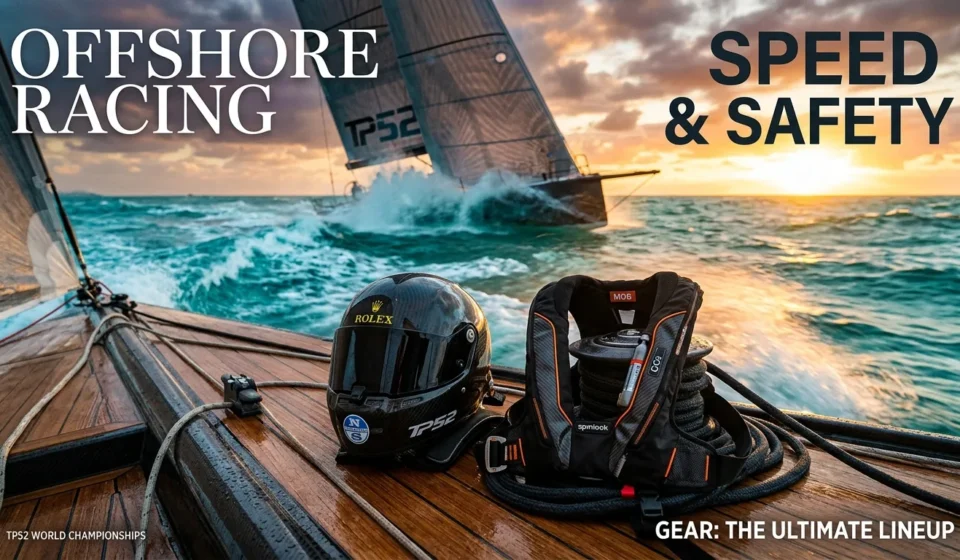

You’ve trimmed your sails to perfection, your crew is a well-oiled machine, and the starting gun is moments away. There’s nothing quite like the adrenaline rush of a race, is there? We all chase that feeling of speed and precision, pushing our boats and ourselves to the limit. But let me tell you, based on my decades in this incredible industry, the fastest boat across the finish line is often the one that made it there safely. Speed is exhilarating, but safety is non-negotiable.
Table Of Content
- Personal Safety Gear: Your First Line of Defense
- PFDs, Harnesses, and Tethers
- Head Protection and Personal Tools
- Onboard Safety Equipment: The Boat’s Arsenal
- Emergency Signaling and Rescue
- Fire, First Aid, and Damage Control
- Communication & Navigation: Staying Connected and On Course
- Reliable Communication Systems
- Navigation and Position Keeping
- Repair & Emergency Preparedness: When Things Go Wrong
- Tools, Spares, and Seamanship
Whether you’re doing a quick beer can race inshore or tackling a grueling offshore classic, the risks are real. From an unexpected squall to gear failure, things can go sideways faster than you can say “man overboard.” That’s why having the right safety gear, and knowing how to use it, isn’t just a recommendation – it’s a vital part of your competitive edge. So, let’s dive into the essential safety gear every race boat needs, beyond just the basic regulatory requirements.
Personal Safety Gear: Your First Line of Defense
When we talk about safety, it always starts with the individual. Each crew member is a valuable asset, and their personal protection is paramount. This isn’t just about adhering to race rules; it’s about making sure everyone comes home safely.
PFDs, Harnesses, and Tethers
- Personal Flotation Devices (PFDs): Forget those bulky orange life vests. Modern racing PFDs are slim, comfortable, and often automatically inflate. For inshore racing, a Type III or V manual/auto-inflate vest is great, allowing freedom of movement. For offshore, you absolutely need a Type V offshore PFD, often integrated with a harness. Make sure they fit well and are regularly inspected.
- Safety Harnesses and Tethers: If you’re racing offshore, or even in challenging conditions inshore, you need to be clipped in. A good harness (often integrated with a PFD) and a strong, double-ended tether are crucial. There are various tether lengths; choose one that allows you to work without excessive slack but keeps you secure. Remember, a tether is useless if you’re not using it!
Honestly, I’ve seen too many situations where someone almost went overboard because they thought they were “too good” or “too quick” to clip in. It takes mere seconds, and it could save a life. What’s more important than that?
Head Protection and Personal Tools
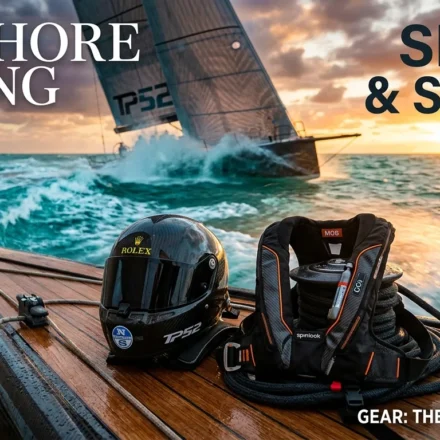
- Head Protection: Helmets aren’t just for bicycle riders anymore. On a fast-moving race boat, especially down below or during aggressive maneuvers, booms swing, lines snap, and gear shifts. A lightweight, impact-resistant helmet can prevent serious injury. It’s becoming more common, and I believe it’s a smart choice for foredeck crew and helmsmen alike.
- Personal Knives: Every crew member should carry a sharp, reliable knife, easily accessible and designed for marine use (corrosion-resistant, blunt tip often preferred). Imagine a sheet getting fouled around someone, or needing to quickly cut away a line. You don’t want to be fumbling around.
- Personal Locator Beacons (PLBs): For offshore racing, a PLB attached to your PFD is a game-changer. If you go overboard, it transmits your exact location via satellite, dramatically increasing your chances of rescue. It’s a small device with immense power.

Onboard Safety Equipment: The Boat’s Arsenal
Beyond what each person wears, the boat itself needs to be equipped for any eventuality. Think of it as a comprehensive emergency toolkit, ready for deployment at a moment’s notice. This is where your preparedness truly shines.
Emergency Signaling and Rescue
- EPIRB/SART: An Emergency Position Indicating Radio Beacon (EPIRB) is essential for offshore races, broadcasting your boat’s identity and location in a distress situation. For radar-equipped vessels nearby, a Search and Rescue Transponder (SART) provides a clear target on their screens. Register them properly!
- Flares and Visual Signals: A well-stocked kit of distress flares (handheld, parachute, smoke) is mandatory. But don’t forget other visual signals like a highly reflective flag or a bright strobe light. Practice deploying them in a non-emergency situation so you know how.
- Life Raft: For offshore racing, a properly serviced and easily deployable life raft is critical. Know its capacity and ensure it’s accessible. This isn’t just a requirement; it’s your ultimate insurance policy in a worst-case scenario.
For example, imagine this situation: you’re 50 miles offshore, the wind suddenly pipes up to 40 knots, and you hit something submerged. There’s a gash in the hull. Your EPIRB is the first thing you grab after the damage control kit, and you better know exactly where it is and how to activate it. Seconds count in these scenarios.
Fire, First Aid, and Damage Control
- Fire Extinguishers: Multiple, easily accessible, and regularly inspected fire extinguishers (ABC dry chemical for general use, CO2 for electrical fires) are a must. Make sure everyone knows where they are and how to use them.
- Comprehensive First Aid Kit: This isn’t your average band-aid box. A racing first aid kit should be extensive, including trauma dressings, splints, pain relief, motion sickness medication, and any prescription meds for crew members. Consider taking a marine first aid course to know how to effectively use everything in it.
- Damage Control Kit: This should include wooden bungs, leak-stopping patches, repair tape, and even quick-drying epoxy. A collision or impact could breach your hull or damage a critical component; being able to mitigate damage immediately can prevent a minor incident from becoming a catastrophe.
Communication & Navigation: Staying Connected and On Course
So far we’ve covered personal and onboard gear. Now let’s get to the really critical point: being able to call for help and know where you are. In a race, you’re often pushing limits, which means sometimes you might find yourself in less-than-ideal circumstances far from shore or assistance. Effective communication and accurate navigation are your lifelines.
Reliable Communication Systems
- VHF Radio (Fixed and Handheld): A fixed mounted VHF radio is standard, but a waterproof, floating handheld VHF is an absolute must-have backup. It’s invaluable if the main power goes out or if you need to communicate from a dinghy or even a life raft. Ensure it has DSC (Digital Selective Calling) capabilities for direct distress calls.
- Satellite Phone/Communication Device: For offshore racing, a sat phone or an equivalent satellite messaging device offers reliable communication beyond VHF range. These are crucial for routine check-ins with shore support, receiving weather updates, and, of course, making emergency calls.
Having multiple ways to communicate is key. What if your main battery bank goes down? What if your mast-mounted antenna is damaged? Always have a backup, or even a backup for the backup. It’s simple common sense when you’re out there, miles from anywhere.
Navigation and Position Keeping
- GPS/Chartplotter with Backup: While your primary GPS-enabled chartplotter is essential for race navigation, always have a secondary system. This could be a handheld GPS, a tablet with navigation software, or even paper charts and a compass for extreme redundancy. Knowing your position accurately is fundamental to getting help to you, or getting yourself to safety.
- Radar Reflector: Especially for smaller race boats, a radar reflector increases your visibility to larger vessels, reducing the risk of collision, particularly in poor visibility or at night.
- Horn/Whistle: A simple air horn or whistle is effective for signaling other boats, especially in fog or low visibility. Don’t underestimate the power of an audible signal.
Repair & Emergency Preparedness: When Things Go Wrong
Even with the best gear, things can break. Race boats are high-stress environments for equipment, and failures happen. Being prepared to handle minor repairs or mitigate major issues can make all the difference in staying in the race or safely retiring.
Tools, Spares, and Seamanship
- Comprehensive Toolkit: Wrenches, screwdrivers, pliers, vice grips, a hacksaw, zip ties, electrical tape, duct tape (of course!), and multi-tools are just a start. Think about what typically fails on your boat – shackles, blocks, electrical connections – and have the tools to fix it.
- Spare Parts: Carry spare shackles, blocks, hanks, sail repair tape, a few feet of commonly used line, and even spare bulbs or fuses. A small bag of these can save a race.
- Emergency Steering: If your primary steering fails (cable snaps, rudder stock breaks), how will you steer? Most race boats have an emergency tiller or a plan for jury-rigging steering. Practice using it!
- Ground Tackle (Anchor and Rode): Even if you’re racing, an appropriately sized anchor with sufficient chain and rode is a crucial safety item. It can stop your drift if you lose power or rigging, or allow you to wait out a storm in a protected spot.
Beyond the physical gear, the most important “equipment” is your crew’s knowledge and training. Regular drills for man overboard, fire, de-masting, and damage control are absolutely vital. A well-drilled crew can turn a potential disaster into a manageable incident. To be fair, no amount of gear can replace good seamanship.
At Sail & Power & Boats & Motor Yachts, we often talk about the joy and freedom of being on the water. For competitive sailors, that joy comes with the added thrill of pushing boundaries. But with that comes responsibility. By equipping your race boat and crew with the essential safety gear we’ve discussed, you’re not just complying with rules; you’re investing in your crew’s well-being and, ultimately, your chances of success.
Don’t wait for an incident to realize you’re missing something critical. Take the time now to review your safety inventory, conduct those drills, and ensure everyone on board knows their role in an emergency. Safe racing isn’t just about finishing first; it’s about finishing safely, every single time. Get out there, be competitive, and most importantly, stay safe!