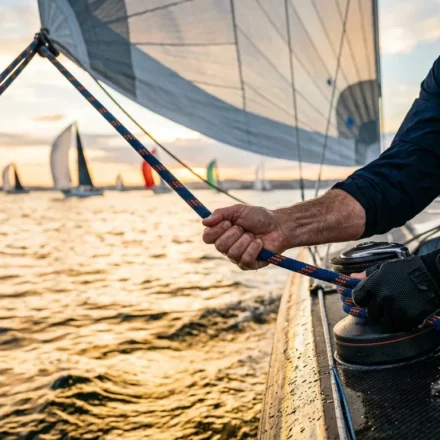


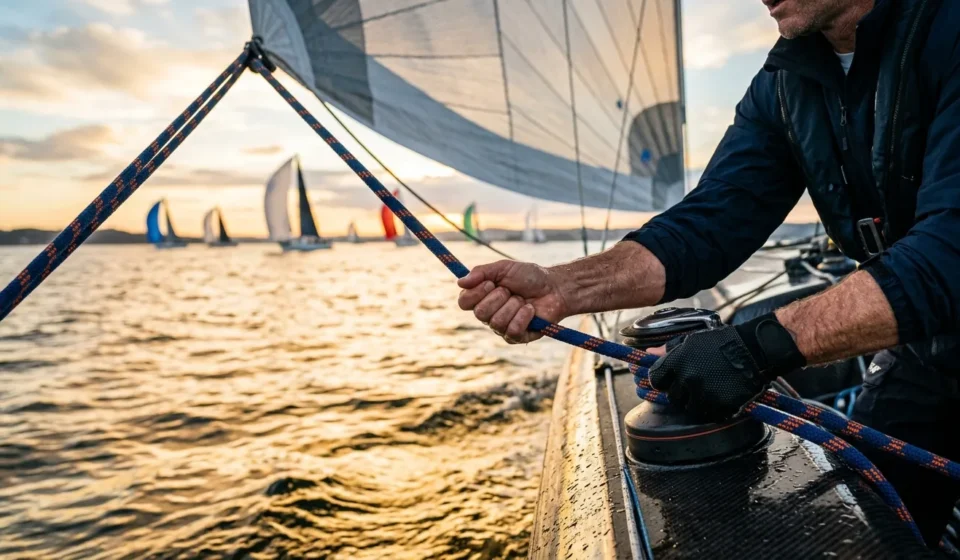

So, you’ve enjoyed casual sails, felt the wind in your face, and mastered the basics of handling your boat. But now, you’ve watched those sleek sailboats jostling for position around the marks, heard the shouts, and felt that itch. That competitive spark that says, “I want in on that!” Welcome, my friend, to the exhilarating world of inshore sailboat racing. It’s a game of chess on water, a dance with the wind, and honestly, one of the most rewarding experiences you can have.
Table Of Content
- The Starting Gun: Winning Before You Even Cross the Line
- Mastering the Starting Line
- The Importance of Clear Air
- Reading the Wind & Water: Your Invisible Navigator
- Understanding Wind Shifts
- Currents: The Unseen Force
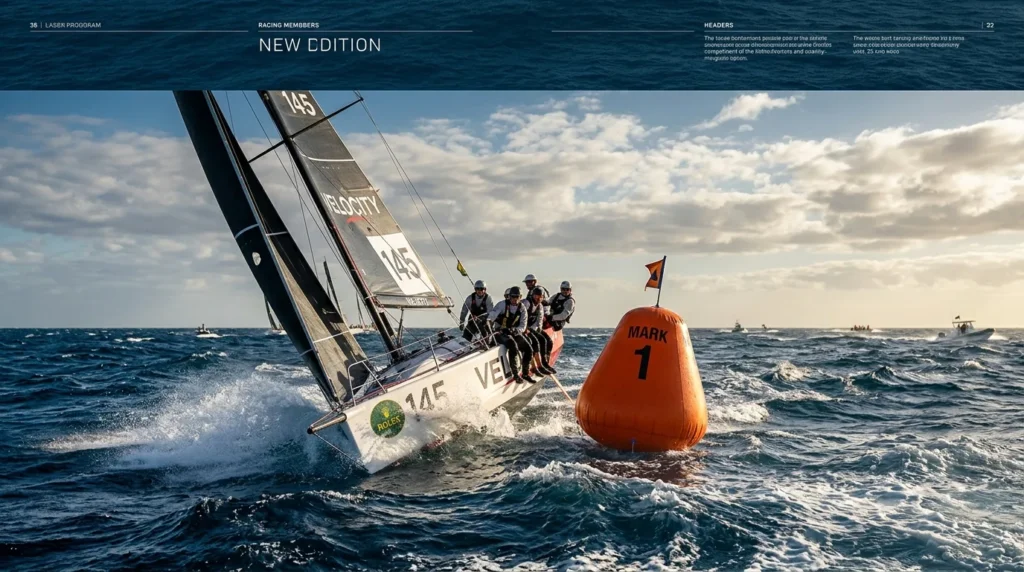
- Navigating the Course: Mark Rounding Mastery
- Upwind Strategy: Tacking
- Downwind Strategy: Gybing
- Opponent Awareness: Racing Beyond Your Boat
- Covering and Clear Air
- Rules of the Road: Right-of-Way
- Beyond the Finish Line: Practice & Passion
Don’t be intimidated by the seasoned racers. Everyone starts somewhere. What might seem like chaotic maneuvering is actually a finely tuned strategy. And that’s exactly what we’re going to dive into today: a practical, no-nonsense guide to getting you from simply floating to skillfully competing. We’ll cover the core tactics that will not only get you around the course but also give you a real shot at impressing your fellow sailors, and maybe even snagging a podium finish. Let’s get started on your journey from buoys to glory!

The Starting Gun: Winning Before You Even Cross the Line
Ask any experienced racer, and they’ll tell you: the start is absolutely critical. A good start can set you up for success, while a bad one can leave you playing catch-up for the entire race. It’s not just about being first over the line; it’s about being first cleanly over the line, with speed and in clear air. This is where your first tactical decisions really kick in.
Mastering the Starting Line
The starting line is typically between a committee boat and an orange buoy. Before the race, take a few minutes to scope out the line. Sail its length in both directions. Is one end favored by the wind, meaning you can point higher or sail faster from that end? Often, one end will be “hotter” or “lifted,” giving you an advantage. This small reconnaissance mission can pay huge dividends.
Your goal is to hit the line at full speed, on time, and with plenty of room to maneuver. Sounds simple, right? It’s anything but! I remember one race where I thought I had the perfect timing, only for a sudden gust to push me over early. Talk about a walk of shame! To avoid this, practice your timing. Use a watch to count down from the prep signal (usually 5 minutes or 1 minute). As you get closer, focus on maintaining boat speed without going over early. Don’t be afraid to slow down a little, even stop, if you’re too fast, then accelerate hard in the final seconds.
The Importance of Clear Air
Once you’re over the line, your immediate priority is clear air. What’s clear air? It’s undisturbed wind flowing over your sails. If you’re directly behind another boat, you’re in their “dirty air” – turbulent wind that significantly reduces your boat speed and ability to point high. It’s like driving behind a big truck on the highway; you feel the buffeting.
Always strive to position yourself to windward (upwind) and slightly ahead of other boats, or to leeward (downwind) but far enough away to avoid their wind shadow. Getting clear air often means making a tactical decision to tack or gybe early in the race, even if it feels like you’re deviating from the direct path. Trust me, the speed advantage is worth it.

Reading the Wind & Water: Your Invisible Navigator
Unlike a road race, the “track” in sailboat racing is constantly shifting. The wind isn’t static, and currents can play a huge role. Learning to read these elements is arguably the most powerful tool in your tactical arsenal.
Understanding Wind Shifts
Wind shifts are your best friend or your worst enemy. A lift is when the wind shifts towards your bow, allowing you to point higher. A header is when it shifts away from your bow, forcing you to point lower. The trick is to identify these shifts and use them to your advantage.
- Look for telltales: These small ribbons on your sails and shrouds are your primary indicators.
- Observe the water: Darker patches often indicate stronger wind or gusts. Ripples can show direction.
- Watch other boats: Are they suddenly pointing higher or lower? Are their sails luffing or filling differently?
- Check the shore: Flags, smoke, or even trees can give clues about wind direction.
The general rule of thumb for upwind legs is: if you get a header, tack. If you get a lift, stay on your current tack until you get a header. This allows you to sail the shortest distance while maintaining the highest possible speed. Based on my experience, consistently playing the shifts can make a difference of minutes over a longer course, and that’s huge in a tight race.
Currents: The Unseen Force
Don’t forget about current, especially in tidal waters or rivers. Current can either help or hinder you. A current flowing with you downwind can give you an incredible boost, while an upwind current can make you feel like you’re sailing in molasses. Before the race, try to observe the current’s direction and strength by looking at buoys, fixed markers, or even how other boats are drifting.
When sailing upwind against a current, you want to find areas with less current, often closer to shore or shallower water. When sailing with a current, you want to be in the strongest part of it. Understanding current is a subtle art, but it can be a true game-changer. For example, imagine this situation: two boats are neck and neck, but one sails slightly closer to shore, finding a pocket of reduced current, while the other struggles in the main channel. That small tactical decision can easily lead to a boat length advantage, which is often all you need!
Navigating the Course: Mark Rounding Mastery
Racing is all about getting around the marks efficiently. This is where many races are won and lost. Smooth, fast, and tactical mark roundings are crucial.
Upwind Strategy: Tacking
On an upwind leg, you’ll be tacking to make progress towards the next mark. As we discussed, you’re playing the shifts. Your goal is to approach the windward mark from a position where you can make a clean, fast tack and immediately head off on the next leg with speed. Avoid tacking directly in front of other boats, as this puts you in dirty air and forces them to change course – a move that might even draw a protest flag if you don’t give them enough room.
Always plan your tack a few boat lengths out. Anticipation is key. Don’t wait until you’re right on the mark to decide your move. Look ahead, consider other boats, and execute your tack smoothly. Speed loss during a tack is inevitable, but a well-executed tack minimizes that loss.
Downwind Strategy: Gybing
Downwind legs are often where boats spread out, but also where you can make up significant ground. Gybing is the maneuver for changing tack downwind. Similar to tacking, execute your gybes smoothly and efficiently. On a downwind leg, you’re looking for clean wind, stronger puffs, and the optimal angle to the next mark. Sometimes sailing a slightly longer course to stay in better wind, or to get to a stronger current, is faster than sailing a direct line in light air or adverse current.
When approaching a leeward mark, give yourself plenty of room. You’ll likely be sailing close to other boats, and right-of-way rules become paramount. Know when you have right-of-way and when you need to yield. It’s better to give a little room than to risk a collision or a protest!
Opponent Awareness: Racing Beyond Your Boat
Racing isn’t just about sailing your own boat well; it’s about sailing it better than everyone else. This means being acutely aware of what your competitors are doing.
Covering and Clear Air
Once you’re ahead, you might want to “cover” your closest competitors. This means positioning your boat between them and the next mark, essentially putting them in your dirty air. It’s a classic defensive tactic to maintain your lead. Conversely, if you’re behind, your primary goal is to break free into clear air and find your own path to better wind.
Don’t get fixated on just one boat. Keep an eye on the entire fleet, especially those who might be finding better wind or current further afield. A quick glance over your shoulder every minute or so can give you valuable information. After all, the race isn’t won or lost on your boat alone.
Rules of the Road: Right-of-Way
Understanding the basic Racing Rules of Sailing (RRS) is non-negotiable. While this guide isn’t meant to replace a deep dive into the rules, know the fundamental concepts: port tack gives way to starboard tack; windward boat gives way to leeward boat; and inside boat at a mark has rights (with certain limitations).
Honestly, familiarize yourself with these. Many local clubs offer rule seminars, and it’s well worth your time. Knowing the rules prevents collisions, avoids penalties, and allows you to sail confidently. As a broker, I’ve seen enough dinged hulls from racing incidents to stress the importance of understanding these rules!
Beyond the Finish Line: Practice & Passion
You’ve crossed the finish line! Hopefully, with a better understanding of tactics and a sense of accomplishment. But the learning never stops. Sailboat racing is a journey of continuous improvement.
The best way to get better? Practice, practice, practice! Join a local club, crew on different boats, and talk to more experienced sailors. Most racers are incredibly generous with their knowledge. Watch races from shore, observe what the top boats do, and debrief after every race with your crew. What went well? What could have been done differently?
In my opinion, the joy of racing isn’t just about winning; it’s about the challenge, the camaraderie, and the constant pursuit of perfecting your craft. It’s about feeling truly connected to your boat, the wind, and the water. So, take these tips, embrace the challenge, and get out there. The thrill of competitive sailing, from Buoys to Glory, awaits you!