
Ready to Race? Your Guide to Getting Started with Performance Sailing
Ahoy, fellow mariners! You’ve felt it, haven’t you? That extra surge of adrenaline when the wind picks up, the boat heels a little more, and you trim the sails just right, feeling every knot of speed coaxed from your vessel. For many of us at boatandsailboat.com, that feeling is the irresistible call of performance sailing – the thrill of racing!
Table Of Content
- Ready to Race? Your Guide to Getting Started with Performance Sailing
- Why Dive into Racing? It’s More Than Just Winning!
- What Kind of Racing Suits You?
- Is Your Boat Race-Ready?
- Essential Gear & Preparation for Your First Race
- Your First Steps into the Racing Scene
- Maintaining Your Racing Edge
- Set Your Sights on the Horizon!
Perhaps you’ve admired sleek racing machines from shore, or maybe you’ve already started dreaming of crossing a finish line first. The good news? You don’t need a cutting-edge carbon fiber speedster to get started. Most sailboats, from modest day sailers to comfortable cruisers, can join the fun. Let’s chart a course for your entry into the exhilarating world of sailboat racing!
Why Dive into Racing? It’s More Than Just Winning!
Sure, winning is a blast, but performance sailing offers so much more:
- Sharpen Your Skills: Racing forces you to understand your boat, the wind, and the water in ways casual cruising never will. Your trimming, steering, and tactical decisions will reach new heights.
- Community & Camaraderie: Join a vibrant, passionate community. You’ll make lifelong friends, share stories, and learn from seasoned sailors.
- Understand Your Boat Better: Every creak, every gust, every adjustment becomes a lesson. You’ll truly know what your boat is capable of.
- Pure Adrenaline & Fun: There’s nothing quite like the start line tension, the close quarters maneuvering, and the pure joy of a well-executed tack or gybe.
What Kind of Racing Suits You?
The world of sailboat racing is diverse:
- Club Racing: This is where most people start! Local yacht clubs organize informal, fun races on weekends. It’s a fantastic, low-pressure environment to learn the ropes.
- Regattas: These are more formal events, often multi-day, attracting boats from a wider area. They can range from competitive local events to major national championships.
- Buoy Racing: The most common format, where boats sail around a set course marked by inflatable buoys (marks). It’s all about speed, strategy, and tight maneuvers.
- Distance/Offshore Races: Longer races that can last hours or days, testing endurance and navigation skills.
To ensure fair competition, most races use a handicap system (like PHRF – Performance Handicap Racing Fleet). This system assigns a time allowance based on a boat’s design and speed potential, allowing different types of boats – from a nimble J/24 sportboat to a comfortable Beneteau Oceanis 38 cruiser – to compete on an even playing field.
Is Your Boat Race-Ready?
The short answer is: probably! Many boats, even traditional monohulls – a traditional single-hull boat design – designed for cruising, can be surprisingly competitive in club races. Here’s what to consider:
- Boat Size & Type:
- Day Sailers (under 25 ft): Boats like a Catalina 22 or even a classic J/24 are excellent for learning the fundamentals of racing due to their responsiveness.
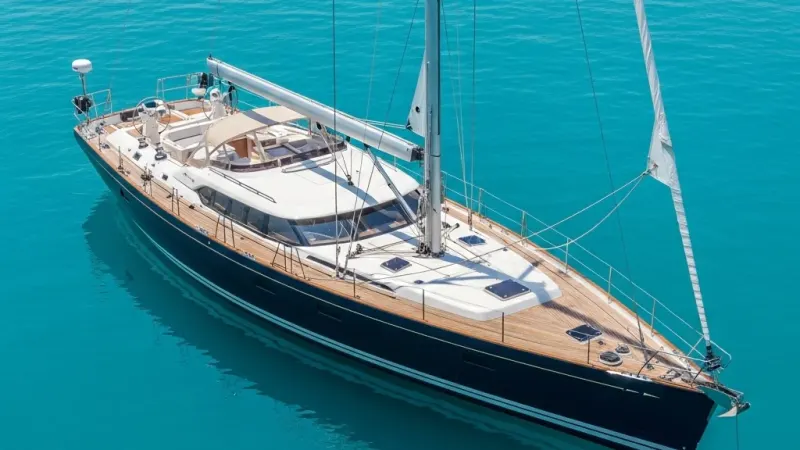
- Cruisers (30-40 ft): Many modern production cruisers like a Jeanneau Sun Odyssey 349, a Hunter 33, or various Beneteau Oceanis models are designed with a good balance of performance and comfort. Their displacement hulls – designed to move through the water by pushing it aside, rather than riding on top – are stable and predictable.
- Dedicated Racers (40+ ft): Boats from brands like X-Yachts or J/Boats are built specifically for speed, often featuring lighter construction materials like fiberglass or even carbon fiber.
- Rigging & Sails: Most racing boats feature a sloop rig – a single mast with one mainsail and one headsail (like a genoa). The Bermuda rig, with its triangular mainsail and headsail, is dominant. For performance, you’ll want sails in good condition. Consider a larger genoa (a large headsail that overlaps the mast) for light air and, eventually, a spinnaker (a large, colorful sail used for downwind speed) for an extra thrill!
- Engine & Propulsion: Your boat’s inboard diesel engine (common brands include Yanmar and Volvo Penta) or outboard motor is primarily for getting to and from the racecourse. During the race, sails do all the work! Regular engine service (every 100-200 hours, or annually) ensures reliability.
Essential Gear & Preparation for Your First Race
Before you hoist the sails for a race, a little preparation goes a long way:
- Safety First: Always have all required safety gear: properly fitting PFDs (personal flotation devices) for everyone aboard, flares, a well-stocked first-aid kit, and a working VHF radio.
- Sails in Shape: Ensure your sails are clean, free of tears, and properly trimmed. Consider a professional sail inspection. Learn proper sail care: wash with fresh water, dry thoroughly, and fold neatly before storing out of harsh UV light.
- Clean Bottom: A clean, smooth hull is crucial for speed. Ensure your anti-fouling bottom paint is in good condition, ideally after an annual haul-out and fresh paint application.
- Running Rigging: Inspect all sheets, halyards, and control lines for wear and chafe. Smooth-running lines make all the difference in quick maneuvers.
- Boat Readiness: Remove unnecessary weight and clutter. Ensure your keel and rudder are free of marine growth.
Your First Steps into the Racing Scene
- Find a Local Yacht Club: This is your gateway! Most clubs welcome new members and even offer ‘fun’ or ‘beer can’ races perfect for beginners.
- Crew Up! The absolute best way to learn is to crew for an experienced racer. Offer your time, even if it’s just trimming a sheet or grinding a winch. You’ll learn race procedures, tactics, and boat handling much faster. Many clubs have crew boards or online forums to connect skippers and crew.
- Read & Learn: Pick up books on racing rules and tactics. Online resources from organizations like US Sailing offer invaluable insights.
- Practice Makes Perfect: Practice your tacks, gybes, and sail trim with a stopwatch. Getting these fundamentals smooth will give you a huge advantage.
Maintaining Your Racing Edge
A well-maintained boat is a fast boat! Beyond routine engine service and bottom painting, focus on:
- Corrosion Prevention: Regularly check all metal fittings, especially in a saltwater environment, for signs of corrosion. Use appropriate lubricants and protective coatings.
- Rigging Inspection: Before and after each season, inspect your standing rigging (shrouds, stays) and running rigging for wear. Pay attention to chafe points.
- Sail Care: As mentioned, proper cleaning and storage are vital. Small repairs should be done promptly to prevent bigger issues.
Set Your Sights on the Horizon!
Performance sailing isn’t just about the finish line; it’s about the journey, the challenge, and the camaraderie. It’s about pushing your limits, learning new skills, and experiencing your boat in a whole new dimension. Whether you’re sailing a classic Catalina 30 or dreaming of a Lagoon catamaran for cruising, the principles of understanding the wind and water are universal.
So, what are you waiting for? Head down to your local marina, connect with a yacht club, or simply ask around for opportunities to crew. The freedom, the challenge, and the unforgettable stories of the racecourse are calling. Cast off, trim hard, and let the wind propel you into your next great adventure on the water!