


Ready to Race? Dive Into the Exciting World of performance sailing!
There’s a special kind of magic that happens when you’re out on the water, wind in your sails, pushing your vessel to its limits. For many of us, that’s the essence of sailing. But what if you could take that feeling, that connection with your boat and the elements, and add a dash of friendly competition? Welcome to the exhilarating world of performance sailing and sailboat racing!
Table Of Content
Here at boatandsailboat.com, we believe every boat owner, from the casual day cruiser to the seasoned offshore adventurer, can find joy and growth in racing. It’s not just for the pros in high-tech carbon fiber machines; it’s for anyone looking to sharpen their skills, meet like-minded enthusiasts, and experience their boat in a whole new way. Let’s get you started!
Is Your Boat Ready for the Starting Line?
You might be surprised to learn that many Cruising Sailboats, with a few tweaks, can be incredibly competitive in local club races. What kind of boat are we talking about?
- Day Sailers (under 25 ft): These smaller, nimbler boats like a Catalina 22 or a J/22 are fantastic for getting into racing. They’re responsive, easy to handle, and often have active one-design fleets where everyone races the same model, making it a true test of skill.
- Cruisers (30-40 ft): Boats like the Beneteau Oceanis series, Hunter 33, or Jeanneau Sun Odyssey are designed for comfort and ease of handling, but they also have a good turn of speed. They frequently race in handicap systems like PHRF (Performance Handicap Racing Fleet), which levels the playing field so different boat types can compete fairly based on their theoretical speed.
- Performance Cruisers/Racers (40+ ft): These vessels, often from builders like J/Boats or X-Yachts, are designed with a focus on speed and handling, while still offering cruising amenities. They represent the sweet spot for many serious amateur racers.
Most racing sailboats, especially monohulls – a traditional single-hull boat design – utilize a displacement hull, meaning they move through the water by pushing it aside, rather than riding on top (like a planing hull). Modern racing boats often feature lightweight fiberglass or even carbon fiber construction for maximum speed.
Essential Gear & Pre-Race Checks
Before you even think about hoisting sails, let’s ensure your boat is shipshape:
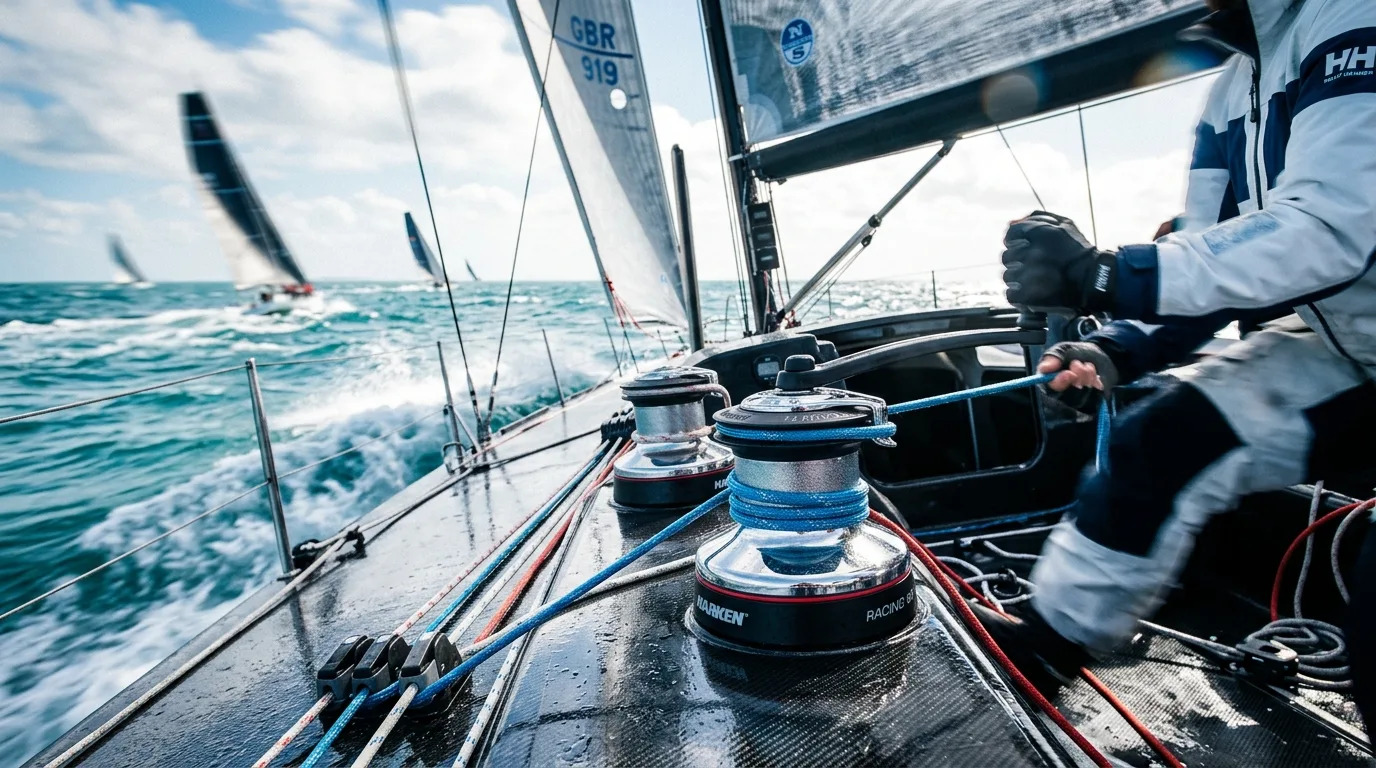
- Rigging: The vast majority of racing sailboats employ a sloop rig, meaning they have one mast and two primary sails: a mainsail and a jib/genoa. Check your standing rigging (the wires that support the mast, like shrouds and stays) for any signs of wear or corrosion. Your running rigging (ropes used to hoist and trim sails, like halyards and sheets) should be in excellent condition and run freely.
- Sails: A crisp, well-shaped set of sails is paramount. You’ll typically need a mainsail (the primary sail on the mast), a genoa (a large head-sail that overlaps the mast), and often a spinnaker (a large, balloon-like sail for downwind speed, either asymmetric or symmetric). Tired, stretched-out sails are a huge performance drain. Ensure they are clean and stored properly when not in use.
- Engine & Propulsion: While racing is all about wind power, your auxiliary engine (often an inboard diesel from brands like Yanmar or Volvo Penta, or an outboard for smaller boats) is essential for getting to and from the racecourse safely and reliably. Make sure it’s serviced according to schedule (typically every 100-200 hours).
- Safety Gear: Racing doesn’t mean compromising safety. Ensure you have all required safety gear onboard, including PFDs, flares, a first-aid kit, and a working VHF radio.
Understanding the Racecourse & Rules
Sailing races are typically sailed around a course defined by inflatable buoys or fixed marks. Most common are upwind/downwind courses. You’ll need to learn the basic Racing Rules of Sailing (RRS) – rules like port/starboard, windward/leeward, and proper passing etiquette are crucial for avoiding collisions and protests. Don’t worry, there are classes and resources to help you learn!
Racing is also a team sport. Even on smaller boats, having a good crew with defined roles (helmsperson, main trimmer, jib trimmer, bowman, tactician) makes a huge difference. The camaraderie and shared effort are truly rewarding.
Optimizing Your Boat for Speed
This is where the real fun begins. Making your boat faster involves:
- Sail Trim: This is an art and a science! Learning to adjust your mainsheet, jib sheets, vang, cunningham, and outhaul to get the perfect sail shape for varying wind conditions is key. Those little telltales on your sails? They’re your best friends.
- Weight Distribution: Keeping weight centered and low minimizes pitching and rolling. On some boats, crew “hiking out” (leaning their bodies over the side) helps counteract heel and keep the boat flat for more speed.
- Bottom Prep: A clean, smooth hull is critical. Schedule an annual haul-out and bottom paint to prevent marine growth, which creates drag. Some racers opt for specialized, slicker antifouling paints.
- General Maintenance: Beyond bottom paint, ensure your rudder and keel are smooth and free of growth. Check for any areas of potential corrosion, especially on metal fittings. Good sail care and storage will prolong their life and performance.
Taking the Plunge: Your Next Steps
- Find Your Local Yacht Club: Most yacht clubs and sailing associations organize regular club races. They are incredibly welcoming to newcomers and a fantastic resource.
- Crew for Others: This is arguably the best way to learn! Put yourself out there. Many boats are always looking for crew. You’ll gain invaluable experience on different boats and learn from seasoned racers.
- Attend a Racing Seminar or Clinic: Many clubs and sailing schools offer beginner racing clinics that cover rules, tactics, and boat handling.
- Practice, Practice, Practice: Go out and practice your tacks, gybes, and sail trim. The more comfortable you are with your boat, the better you’ll perform.
Sailboat racing is more than just a competition; it’s an intense, engaging way to connect with your boat, the elements, and a passionate community. It’s about the strategic decisions, the precision of handling, the thrill of the chase, and the shared celebration back at the dock. It’s about pushing yourself and your vessel, refining your skills, and forging unforgettable memories on the water. So, trim your sails, find your local fleet, and get ready to experience the freedom and adventure of sailing at full speed!