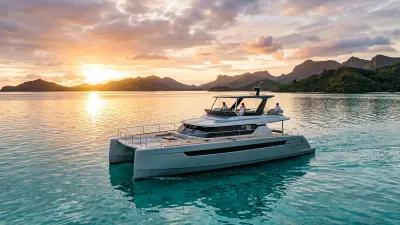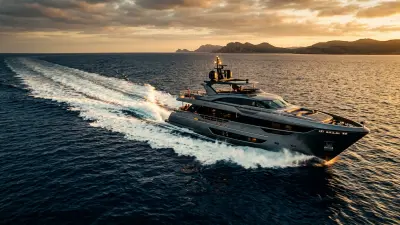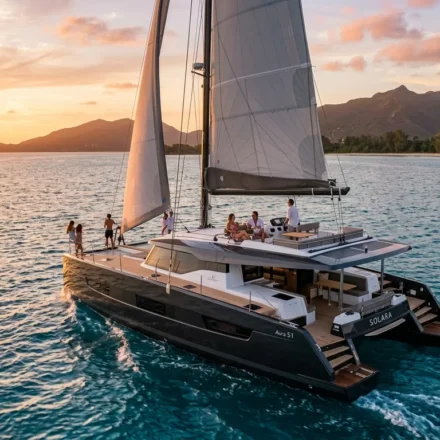


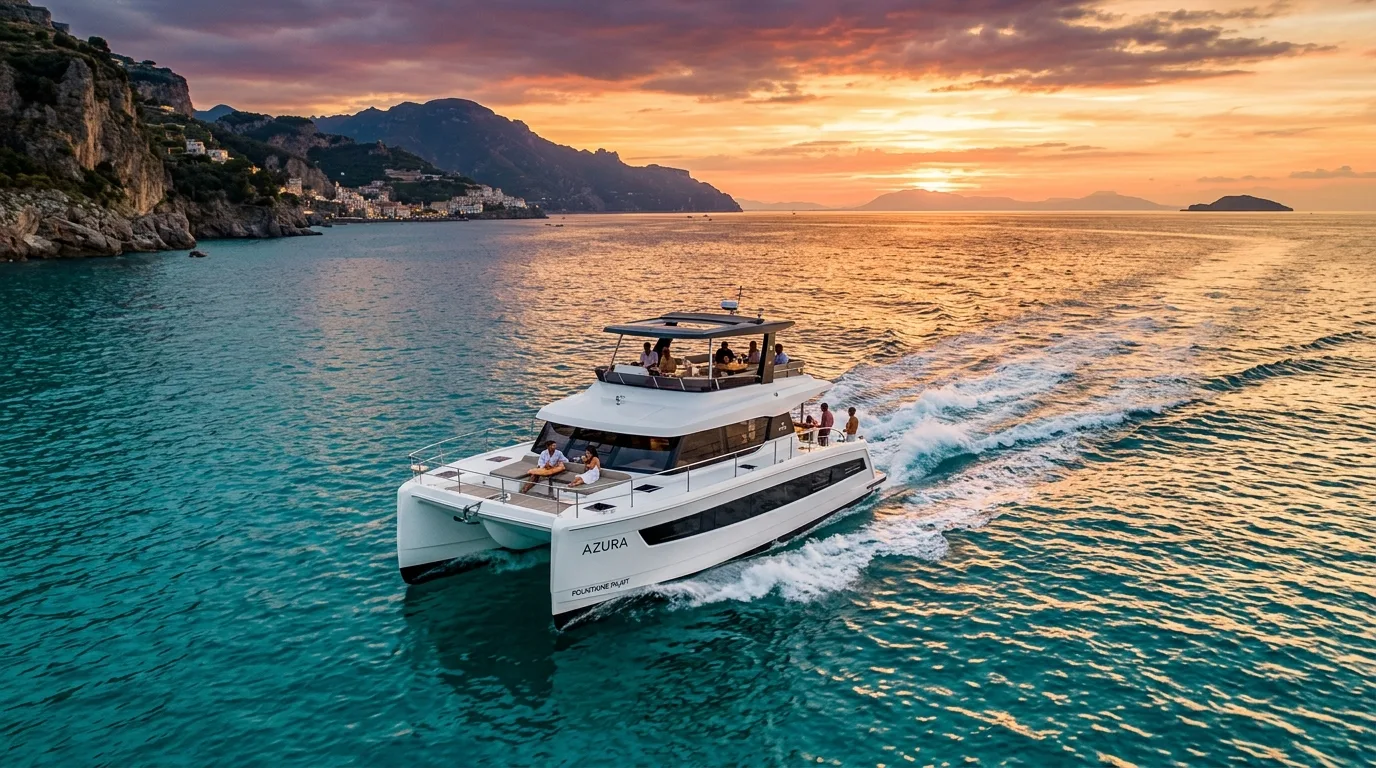

Ah, the timeless dream of cruising! It’s a vision I’ve shared with countless clients over my decades in the marine industry: waking to the gentle lull of the waves, watching sunrises paint the sky over an open sea, and dropping anchor in a secluded cove accessible only to a privileged few. For generations, the traditional monohull – a single-hull boat design – held court as the quintessential cruising vessel, celebrated for its classic lines and seaworthiness. However, as the boating world evolves, a dynamic new contender has emerged, steadily gaining popularity and redefining what comfort, stability, and efficiency truly mean on the water: the power catamaran. From my vantage point here at boatandsailboat.com, I’ve had the distinct pleasure of witnessing firsthand the incredible evolution of these twin-hulled marvels, transforming from niche vessels into mainstream cruising yachts that are capturing the hearts of mariners worldwide. Could a power catamaran be the perfect vessel to unlock your next cruising adventure?
Table Of Content
- The Transformative Appeal of Twin Hulls: Why Power Cats are Redefining Cruising
- Unmatched Stability: A Game-Changer for Comfort
- Expansive Living Spaces: Your Apartment on the Water
- Performance and Practicality: Efficiency, Range, and Access
- Impressive Fuel Efficiency & Extended Range
- Shallow Draft: Unlocking Secluded Paradises
- Superior Maneuverability & Safety
- Navigating the Market: Finding Your Perfect Power Catamaran
- Defining Your Cruising Profile
- A Spectrum of Sizes and Capabilities
- Key Considerations Before You Buy: The Whole Picture
- The Wide Beam Challenge
- Maintenance and Systems Complexity
- The Monohull vs. Multihull Debate: A Philosophical Choice
The Transformative Appeal of Twin Hulls: Why Power Cats are Redefining Cruising
A power catamaran, at its core, is a motorized vessel built upon two parallel hulls. This unique architectural approach creates an exceptionally wide and stable platform, delivering compelling advantages that address many of the common compromises faced by monohull owners. It’s more than just having two hulls; it’s about how these two hulls interact with the water and fundamentally redefine the onboard experience, offering a blend of comfort, practicality, and performance that is increasingly hard to ignore.
Over the last decade, the power catamaran market has seen explosive growth, with major manufacturers like Leopard, Aquila, Fountaine Pajot, and Lagoon expanding their model ranges significantly. This surge isn’t just a trend; it’s a testament to their practical benefits, drawing in a diverse range of boaters from families seeking comfortable getaways to seasoned adventurers planning extended voyages. Many new buyers, who previously only considered monohulls, are now discovering that the twin-hull design offers a superior solution for their cruising aspirations, making them rethink traditional boating paradigms.
Unmatched Stability: A Game-Changer for Comfort
This is often the first, and most celebrated, benefit owners rave about – and for very good reason. With two hulls widely spaced, power catamarans offer exceptional inherent stability, significantly reducing roll – that unsettling side-to-side motion – compared to monohulls. Imagine enjoying a meal, reading a book, or simply relaxing without constantly bracing yourself against pitching and rolling. This translates directly into a far more comfortable experience for everyone aboard, drastically minimizing seasickness and allowing for more restful anchorages, even in moderately choppy conditions.
I’ve had countless clients tell me how their power cat has utterly transformed their family’s enjoyment of boating. Spouses and children who previously suffered from motion sickness on monohulls are now happily spending extended time at sea, genuinely looking forward to their next trip. This enhanced stability isn’t just about comfort; it also makes everyday tasks like cooking, sleeping, or moving around the boat much safer and more pleasant, truly expanding the demographic of people who can comfortably enjoy cruising.
Expansive Living Spaces: Your Apartment on the Water
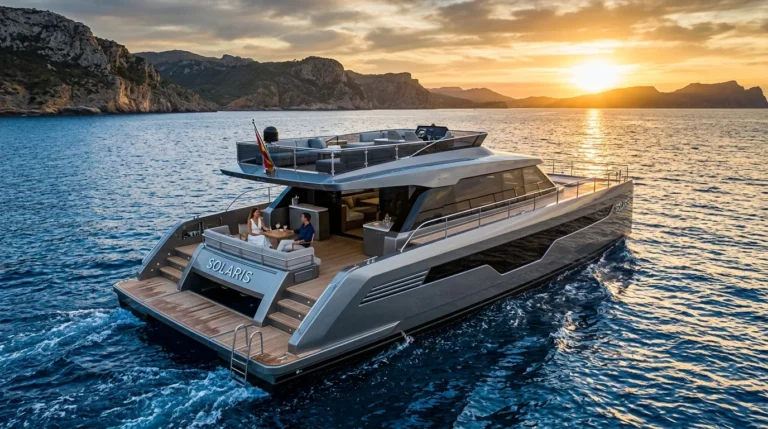
The wide beam (the boat’s maximum width) provided by two hulls translates into an incredible amount of usable living space, often consolidated onto a single level. Picture a full-beam main salon that feels less like a boat interior and more like a spacious waterfront apartment, seamlessly connecting with the aft deck through large, often retractable, sliding doors. This open-plan design fosters a fantastic indoor-outdoor flow, perfect for entertaining or simply enjoying the panoramic views from the comfort of your salon.
Beyond the main living area, this design allows for multiple private cabins, frequently with en-suite heads (marine bathrooms), ensuring privacy and comfort for all guests. Generous outdoor areas abound, from the expansive aft deck, perfect for dining or lounging, to the forward cockpit or foredeck trampoline areas for sunbathing, and frequently a vast flybridge that becomes the primary social hub with its own helm station, seating, and sometimes a wet bar. Models like an Aquila 44 Yacht or a Lagoon 630 MY truly exemplify this luxury, offering living space comparable to monohulls ten to twenty feet longer, demonstrating a remarkable efficiency of volume.
Performance and Practicality: Efficiency, Range, and Access
While space and stability are undeniable draws, modern power catamarans also deliver impressive performance and practical advantages that make them formidable long-distance cruisers and versatile adventurers. Their design principles extend far beyond just living comfort, influencing everything from fuel consumption to where you can drop anchor.
Impressive Fuel Efficiency & Extended Range
Most power catamarans feature slender, semi-displacement or full-displacement hulls designed to move *through* the water efficiently, rather than *over* it like planing hulls. This reduced wetted surface area and sleek hull form, combined with twin engines, often results in significantly better fuel economy at typical cruising speeds – typically in the 8-15 knot range – than a comparably sized planing monohull. For instance, a 50-foot power cat might achieve 0.8 to 1.2 nautical miles per gallon at 10 knots, whereas a similar-sized planing monohull might only manage 0.5 to 0.7 NM/gallon at the same speed, depending on the hull design and engine configuration.
Furthermore, the presence of twin engines (common brands include reliable Yanmar, Volvo Penta, or Caterpillar inboard diesels) provides vital redundancy for offshore passages, a critical safety factor that cannot be overstated when hundreds or even thousands of miles from shore. This efficiency not only saves on fuel costs but also allows for a greater range, opening up more distant horizons for exploration and reducing the frequency of fuel stops, which can be particularly advantageous in remote cruising grounds.
Shallow Draft: Unlocking Secluded Paradises
With their twin hulls and typically shallow appendages, power cats usually have a considerably shallower draft (the depth of water required to float the boat) than many monohulls, especially those with deep keels or propeller pockets. This single feature is a game-changer, allowing access to secluded anchorages, pristine coves, and idyllic beaches that deeper-keeled vessels simply can’t reach. Imagine tucking into a quiet, protected bay away from the crowds, exploring a shallow estuary, or anchoring just yards from a deserted white sand beach – this capability truly opens up a whole new world of exploration and adventure.
Many power catamarans, particularly those around 40-55 feet, can draw as little as 3-4 feet of water, a stark contrast to monohulls of similar length that might draw 5-8 feet or more. This shallow draft capability means you spend less time worrying about running aground and more time enjoying the hidden gems of your chosen cruising ground. From my personal experience guiding clients in the Caribbean, this access to shallow, protected waters is often cited as one of the most beloved features of their power catamarans.
Superior Maneuverability & Safety
The twin-engine configuration of a power catamaran offers unparalleled maneuverability, particularly in tight quarters. With independent control of each engine, you can essentially pivot the boat on its own axis, making docking in crowded marinas significantly easier and less stressful than with a single-engine monohull. This precision control instills confidence, even for less experienced skippers, and reduces the learning curve for handling a larger vessel.
Beyond maneuverability, the twin engines inherently provide a level of safety redundancy. In the unlikely event of an engine failure offshore, you still have a fully functional engine to get you to safety or a port for repairs. This peace of mind is invaluable, especially for those planning extended coastal cruises or offshore passages. Modern power cats also boast excellent sightlines from the helm, often elevated on a flybridge, further enhancing safety during navigation and docking.
Navigating the Market: Finding Your Perfect Power Catamaran
Just like any boat, the “right” power catamaran isn’t a one-size-fits-all proposition. It depends entirely on your dreams, your cruising style, and how you plan to use it. Understanding your specific needs and desires is the crucial first step in finding your perfect twin-hulled companion, ensuring that your investment truly aligns with your lifestyle.
Defining Your Cruising Profile
Before you even begin looking at specific models, it’s essential to ask yourself some fundamental questions. These will significantly narrow down the vast array of options available in the power catamaran market and guide you towards the most suitable designs and brands:
- What is your primary cruising ground? Coastal hopping, extended offshore passages, or international voyages?
- Who will be aboard? Just a couple, a family with children, or will you frequently entertain a large group of friends?
- How long will you typically be cruising? Day trips, weekend getaways, weeks at a time, or living aboard full-time?
- What amenities are non-negotiable? Air conditioning, a large tender, watermaker, extensive entertainment systems, dive compressor, full galley with oven?
- What is your comfort level with maintenance? Do you prefer simpler systems or are you comfortable with more complex machinery?
- What is your overall budget? This includes not just the purchase price, but also ongoing costs like fuel, marina fees, insurance, and maintenance.
Your answers to these questions will help clarify whether you need a fast coastal cruiser, a voluminous liveaboard, or a robust offshore passagemaker.
A Spectrum of Sizes and Capabilities
The power catamaran market offers a wide range of sizes and configurations, each catering to different cruising aspirations and budgets:
- Coastal & Day Cruising (Under 35 ft): These smaller power cats, often propelled by outboards, are perfect for day trips, weekend getaways, and exploring local waters. They offer excellent stability and spacious cockpits for their size, making them ideal for fishing, diving, or simply enjoying a day on the water. Brands like World Cat or small Aquilas are popular here.
- Mid-Range Cruising (35-55 ft): This is arguably the most popular segment, offering a fantastic balance of space, performance, and cost. Vessels in this range are well-suited for extended coastal cruising, island hopping, and even some offshore passages. They typically feature multiple cabins, comfortable salons, and often a flybridge. Examples include Leopard 40 Powercat, Fountaine Pajot MY 4.S, or Aquila 44.
- Long-Range & Luxury Cruising (Over 55 ft): Stepping into this category brings truly luxurious appointments, expansive living areas suitable for full-time liveaboards, and often transatlantic capabilities. These yachts are designed for serious offshore work and extended voyages, often featuring advanced systems, larger fuel capacities, and bespoke interiors. Sunreef Yachts and Lagoon’s larger models are prominent players in this high-end market.
Key Considerations Before You Buy: The Whole Picture
While the benefits of power catamarans are compelling, it’s crucial to approach any boat purchase with a complete understanding of the nuances. No vessel is perfect for every single scenario, and power cats do have specific characteristics that warrant careful consideration before you make your final decision.
The Wide Beam Challenge
The very feature that provides so much space and stability – the wide beam – can also present practical challenges. Marina slips, designed primarily for monohulls, can be more expensive for catamarans due to their wider footprint, sometimes costing 1.5 to 2 times the rate of a monohull of similar length. Finding available slips, especially in popular cruising destinations, can also be more difficult. Additionally, haul-out costs for maintenance or hurricane preparedness can be higher, as specialized slings or wider travelifts are required. Some narrow waterways or locks might also present navigational challenges, though this is less common in typical cruising grounds.
Maintenance and Systems Complexity
A power catamaran, by its nature, often has duplicate systems. This means two engines, two shafts or pod drives, two propellers, and potentially two rudders. While this offers redundancy and maneuverability, it also translates to more components to maintain, service, and potentially repair. You’re effectively maintaining two propulsion systems instead of one. The plumbing and electrical systems, while usually well-engineered, can also be more complex due to being distributed across two hulls. It’s imperative to factor in these increased maintenance considerations and potential costs when budgeting for ownership, and to ensure you have access to qualified marine technicians.
The Monohull vs. Multihull Debate: A Philosophical Choice
Ultimately, the choice between a power catamaran and a monohull cruiser often comes down to personal preference and intended use. While power cats excel in stability and space, some traditionalists still prefer the “heavier” motion of a monohull in very heavy seas, finding it more predictable, or simply appreciate the classic aesthetic and feel. Monohulls, with their deeper hulls, can also offer more storage below the waterline for provisions or larger tanks. It’s not about one being definitively “better” than the other, but rather which vessel design best aligns with your cruising style, comfort preferences, and overall boating philosophy. As an expert, I always advise clients to experience both types if possible, to truly understand the differences firsthand.
To help you weigh the options, here’s a brief comparison:
| Feature | Power Catamaran | Monohull Cruising Yacht |
|---|---|---|
| Stability | Exceptional, significantly reduced roll, very comfortable at anchor. | Good, but more prone to rolling motion, especially at anchor or in beam seas. |
| Living Space | Vast, often single-level, full-beam salon, multiple private cabins, large outdoor areas. | Typically more vertical space, narrower salon, cabins often stacked or in hull. |
| Fuel Efficiency | Generally better at cruising speeds (8-15 knots) due to slender hulls and twin engines. | Varies greatly; planing hulls less efficient at displacement speeds, displacement hulls can be efficient. |
| Shallow Draft Access | Excellent, can access secluded coves and anchor closer to beaches. | More limited, deeper keels restrict access to very shallow areas. |
| Maneuverability | Superb in tight quarters due to independent twin engines, can pivot on own axis. | Good with bow/stern thrusters, but turning radius is larger, docking can be more challenging. |
| Maintenance Complexity | More systems (two engines, drives), potentially higher service costs. | Fewer duplicated systems (one engine/drive), generally simpler propulsion maintenance. |
| Marina Costs | Potentially higher due to wider beam requiring larger/specialized slips. | Standard slip costs, generally less expensive for similar length. |
| Offshore Motion | Flatter ride in chop, but can have a “hobby-horse” motion in specific conditions. | More pronounced roll, but can cut through head seas effectively. |
From my decades of experience, the power catamaran is no longer a fringe option; it’s a mature, highly capable, and increasingly popular choice for those who prioritize stability, expansive living spaces, and efficient cruising. If your vision of the perfect cruising life involves comfortable, stable passages, luxurious living akin to a waterfront apartment, and the freedom to explore hidden, shallow-water paradises, then a power catamaran absolutely deserves to be at the top of your consideration list. It’s a compelling proposition that continues to redefine the very essence of comfortable, adventurous yachting. The next step is yours: explore, research, and perhaps even charter one to experience its unique advantages firsthand. Happy cruising!