


Your Catamaran Dream: Stability, Space, and Endless Horizons
Ahoy, fellow boating enthusiasts! As someone who’s spent decades helping people find their perfect vessel, I can tell you there’s a special kind of magic that surrounds catamarans. These elegant multihulls – boats with two parallel hulls – have soared in popularity for good reason. They offer a unique blend of stability, spaciousness, and often impressive speed that monohulls (traditional single-hull boats) simply can’t match. Whether you’re dreaming of zipping across the bay or circumnavigating the globe, there’s a catamaran out there with your name on it.
Table Of Content
- Your Catamaran Dream: Stability, Space, and Endless Horizons
- Why Choose a Catamaran?
- Matching a Catamaran to Your Lifestyle
- Catamaran Size Categories and Typical Uses
- Understanding the Anatomy of a Catamaran
- Hull and Construction Info
- Rigging and sail types (for Sailing Catamarans)
- Engine and Propulsion Basics
- Maintenance: Keeping Your Multihull Marvel Shipshape
- Your Next Steps: Making the Dream a Reality
At boatandsailboat.com, we believe a boat is more than just transportation; it’s freedom, family memories, and the thrill of new adventures. Let’s dive into the world of catamarans and help you navigate the path to finding yours.
Why Choose a Catamaran?
The allure of a catamaran lies in several key advantages:
- Stability: With two hulls, catamarans don’t heel (tilt) nearly as much as monohulls, making for a much more comfortable ride, especially for those prone to seasickness.
- Space: The wide beam (width) of a catamaran translates into incredible deck and interior volume. Think large cockpits, expansive salons, and private cabins in each hull.
- Shallow Draft: Many catamarans have daggerboards or shallow keels, allowing them to access shallower anchorages and even “beach” in some cases – a huge advantage for exploring.
- Speed: Their slender hulls often mean less wetted surface, making them efficient and fast under sail or power.
Matching a Catamaran to Your Lifestyle
Just like monohulls, catamarans come in various sizes and designs, each suited for different adventures.
Catamaran Size Categories and Typical Uses:
- Day Sailers (Under 25 ft): Think of classic beach cats like a Hobie Cat or Nacra. These are agile, thrilling, and perfect for a few hours of exhilarating sailing or a quick family outing. Easy to launch and retrieve, they’re often trailable.
- Coastal Cruisers (25-40 ft): These are your weekend warriors and comfortable vacation homes on the water. Models like a Gemini or smaller Lagoon or Leopard offer comfortable accommodations for a family, with galleys and heads (bathrooms). Ideal for exploring coastlines, island hopping, and extended trips in protected waters.
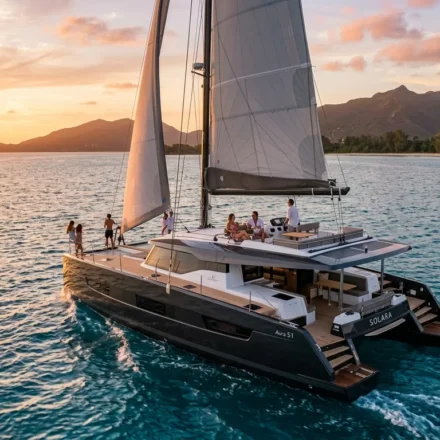
- Blue Water Cruisers (40+ ft): This is where the dream of ocean passages truly begins. Lagoon, Leopard, Fountaine Pajot, Privilege, and Catana are popular brands. These vessels are built for self-sufficiency and comfort offshore, featuring robust construction, comprehensive systems, and ample storage for long voyages. They are typically displacement hulls – designed to move through the water rather than skim on top – offering a smoother ride in rough seas.
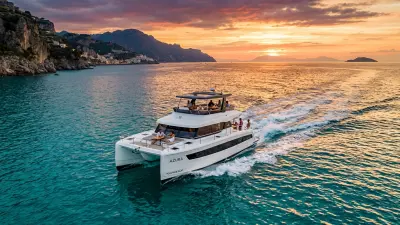
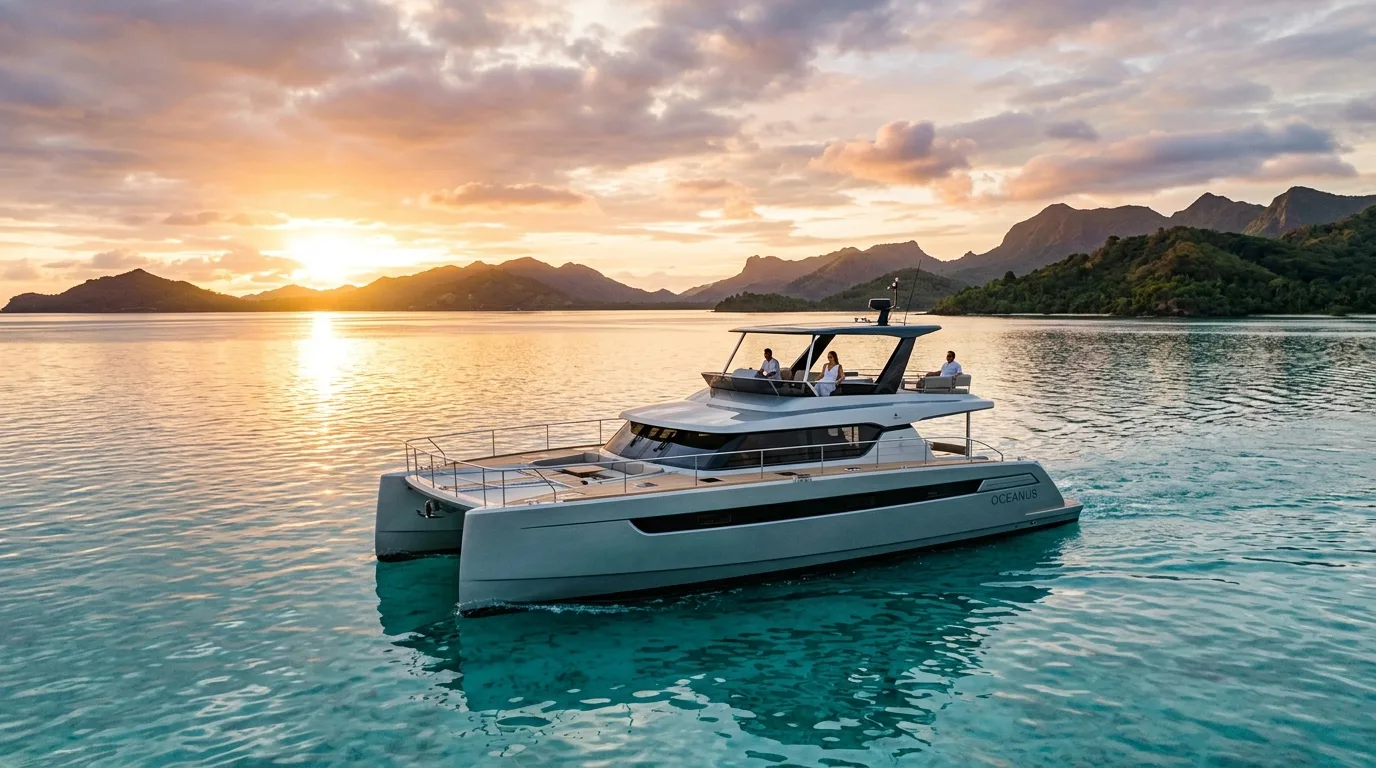
- Power Catamarans: Don’t forget their motorized siblings! Brands like Aquila or Leopard Powercats offer all the stability and space advantages without the sails, perfect for long-range cruising with greater speed.
Understanding the Anatomy of a Catamaran
Let’s break down some key components you’ll encounter:
Hull and Construction Info:
Most modern catamarans are constructed from fiberglass for its strength-to-weight ratio and ease of maintenance. High-performance models might use carbon fiber for ultimate lightness and rigidity. While aluminum and wood catamarans exist, they are less common in the cruising market. Catamarans primarily use displacement hulls, optimized for efficiency at cruising speeds, though some power cats may incorporate semi-planing elements.
Rigging and sail types (for Sailing Catamarans):
The most common rig for cruising catamarans is the sloop rig – a single mast with a mainsail and a genoa (large foresail). You might also find cutters (with two foresails for versatility) or, less commonly, ketch rigs (two masts). The Bermuda rig (or Marconi rig), with its triangular sails, is standard. For light wind performance, many owners add a spinnaker or gennaker.
Engine and Propulsion Basics:
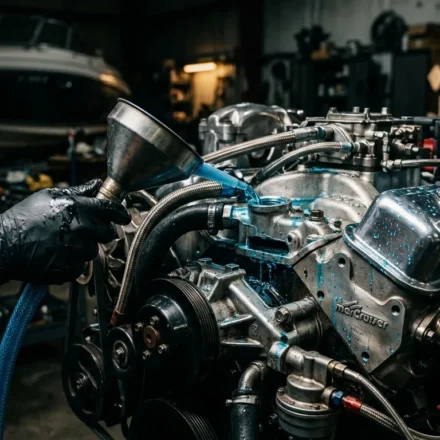
Catamarans typically feature twin inboard diesel engines, one in each hull. Common brands include Yanmar and Volvo Penta. These usually connect to the propellers via saildrives – a compact unit combining the gearbox and propeller shaft, offering good efficiency and maneuverability. Smaller catamarans might use outboard engines for simplicity and ease of maintenance.
Maintenance: Keeping Your Multihull Marvel Shipshape
With two hulls and often two engines, catamaran maintenance involves a bit more than a monohull, but it’s entirely manageable with a good schedule:
- Annual Haul-Out: Plan for an annual haul-out to inspect hulls, rudders, propellers, and apply fresh bottom paint (antifouling) to prevent marine growth.
- Engine Service: Your inboard diesel engines will need service every 100-200 hours or annually, whichever comes first. This includes oil changes, fuel filter replacement, and impeller inspection.
- Sail Care: Inspect sails regularly for chafe and UV damage. Wash and dry them thoroughly before winterizing storage in colder climates.
- Corrosion Prevention: Pay close attention to electrical connections and underwater metals, ensuring sacrificial anodes (zincs) are replaced regularly to prevent corrosion.
- Winterizing: If you live in a cold region, winterizing steps are crucial: drain water systems, add antifreeze to engines, and protect interiors from moisture.
Your Next Steps: Making the Dream a Reality
Ready to embark on your catamaran journey? Here’s how to proceed:
- Define Your Dream: Are you coastal day-tripping, weekend cruising, or dreaming of offshore passages? This will guide your size and type selection.
- Research and Explore: Visit boat shows, tour different models (like a Beneteau Oceanis or Jeanneau Sun Odyssey for monohull comparison, then look at actual Lagoon or Leopard catamarans), and talk to owners.
- Inspect Thoroughly:
If buying a used boat, a meticulous inspection is paramount. Look for signs of structural issues in the hulls and bridgedeck, inspect the condition of engines, rigging, and sails, and check all onboard systems. Always hire a qualified marine surveyor and insist on a sea trial – experience the boat on the water!
A catamaran isn’t just a boat; it’s a gateway to new experiences, stunning sunsets, and unforgettable family adventures. With the right research and a little guidance, you’ll soon be charting your own course toward freedom on the water. Happy sailing!