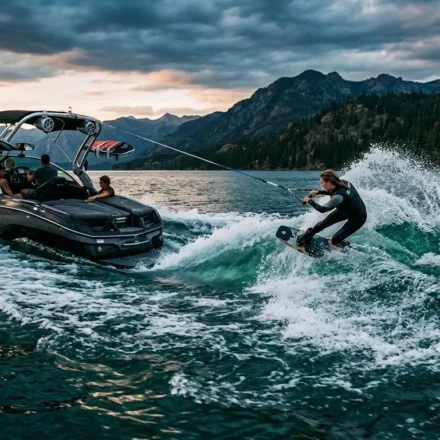


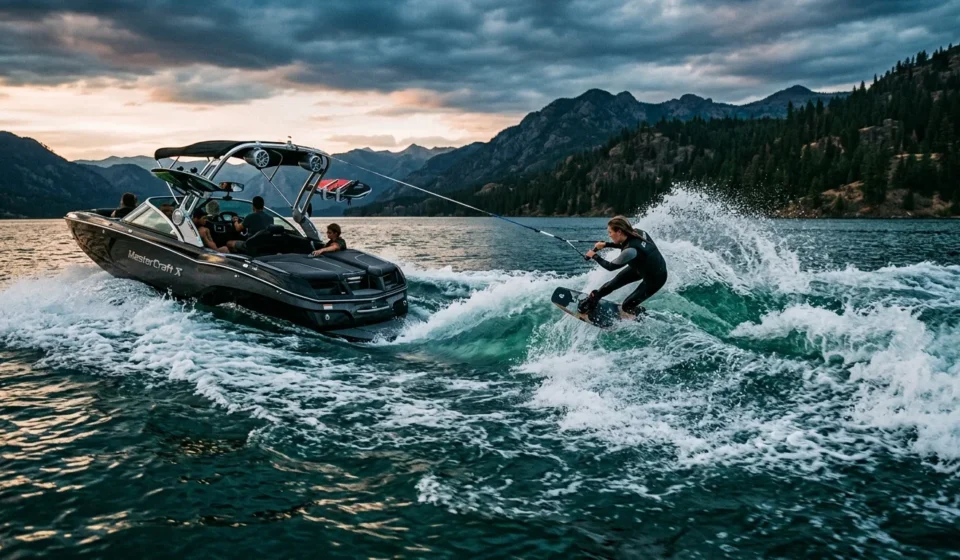

So, you’ve mastered jumping the wake, maybe even a simple surface 180, and now you’re itching for more. That feeling of soaring higher, spinning faster, and making the wake your personal playground? It’s addictive, isn’t it? As someone who’s spent decades around all sorts of boats and watersports, I can tell you there’s a world beyond the basics in wakeboarding, and it’s incredibly rewarding. This isn’t just about showing off; it’s about pushing your limits, understanding your gear, and truly connecting with the water and the powerful wake a good boat can create.
Table Of Content
- Beyond the Board: Gearing Up for Advanced Performance
- Mastering the Air: Unlocking Inverts and Big Air Tricks
- The Raley: Extending Your Air Time
- The Tantrum: Your First Invert
- Spinning into Style: Rotational Tricks and Grabs
- The Backside 180: A Stylish Rotation
- Adding Style: Grabs
- Progression, Practice, and Patience: The Road to Pro
- Ready to Take Flight?
You’re ready to move past merely crossing the wake and into the realm of truly impressive aerial maneuvers and stylish rotations. But how do you get there without just flailing around and getting frustrated? That’s exactly what we’re going to dive into today here at Sail & Power & Boats & Motor Yachts. We’ll explore the advanced wakeboarding tricks that separate the casual rider from the passionate enthusiast, and more importantly, how you can achieve them safely and effectively.
Beyond the Board: Gearing Up for Advanced Performance
Before we even talk about specific tricks, let’s make sure your setup is optimized. Think of it like this: you wouldn’t try to win a sailing race with a tattered mainsheet, would you? The same principle applies here. Your equipment plays a crucial role in giving you the confidence and capability to go big. It’s not just about having a wakeboard; it’s about having the right wakeboard and boat setup for advanced maneuvers.
First, your board. While a beginner board offers stability, an intermediate or advanced board will often have a more aggressive rocker (the curve of the board) for greater pop off the wake, and stiffer construction for better edge hold. Bindings should be snug but comfortable, providing excellent ankle support. And the rope? A shorter rope (around 65-70 feet) can give you more immediate pull and a steeper wake face, which can be advantageous for bigger air. Make sure your tow boat is throwing a consistent, clean wake – a well-tuned ballast system and speed control are your best friends here. In my opinion, a consistent wake at a steady speed (around 22-24 mph) is more important than sheer size when you’re learning advanced tricks.
Finally, let’s talk safety. You might be feeling invincible, but a good impact vest is non-negotiable. And a spotter is absolutely essential, always. Honestly, a well-communicating driver and spotter team makes all the difference, especially when you’re trying new, complex moves. They need to know what you’re attempting so they can keep an eye on you and react quickly if something goes sideways. Remember, even the pros take precautions.
Mastering the Air: Unlocking Inverts and Big Air Tricks
Okay, so you’ve got the basics down and your gear is dialed. Now, let’s get to the really critical point: launching yourself sky-high with control and style. We’re talking about the backbone of advanced wakeboarding – the air tricks and inverts. These moves require precise edge control, timing, and a healthy dose of commitment.
The Raley: Extending Your Air Time
The Raley is perhaps the quintessential advanced air trick, a classic that looks incredible. It involves launching off the wake and extending your body parallel to the water, almost like you’re flying superhero-style. The key here is a strong, progressive edge cut all the way through the wake. You want to build maximum speed and tension on the rope. As you hit the top of the wake, pop hard with your legs, keeping your lead arm straight and pulling the handle towards your hip. Then, extend your legs and arch your back, keeping your eyes on the landing spot. Imagine pushing the board away from you while holding onto the handle. The timing of the pop is everything – too early, you won’t get the height; too late, you’ll just go flat. It’s all about that powerful, continuous edge.
The Tantrum: Your First Invert
Ready to go upside down? The Tantrum is often the first invert riders learn, a backflip over the wake. It might sound terrifying, but it’s surprisingly accessible with the right technique. The setup is similar to a Raley: a strong, progressive edge cut. As you hit the wake, really drive your knees up towards your chest, tucking into a tight ball. At the same time, pull the handle in and throw your head and shoulders back over your tail. The board follows. Keep tucked, spot your landing, and extend your legs just before you touch down. The biggest mistake I see riders make is trying to throw their head back too early or not committing to the tuck. You need to rotate quickly and compactly. For example, imagine this situation: you’re approaching the wake, building speed. If you hesitate even a split second at the lip, you’ll lose the momentum needed for the full rotation. You have to commit!

Spinning into Style: Rotational Tricks and Grabs
Once you’re comfortable getting some air, adding rotation and grabs takes your riding to a whole new level of style and complexity. These moves really start to make you look like a seasoned pro out there on the water.
The Backside 180: A Stylish Rotation
You’ve probably seen riders spin, but a proper air 180, especially a backside 180 (spinning with your back to the boat first), is a thing of beauty. Again, a strong, consistent edge into the wake is crucial. As you launch, initiate the rotation with your head and shoulders, looking over your back shoulder in the direction you want to spin. Keep the board under your feet, using your knees to absorb the landing and maintain balance. The trick here is to not over-rotate; aim to land cleanly. What often helps is to start small – practice just getting the board slightly turned in the air, then gradually increase the rotation. It’s a progressive learning curve.
Adding Style: Grabs
Grabs aren’t tricks in themselves, but they add immense style and control to any air trick. A grab involves reaching down and grabbing a specific part of your board while in the air. This isn’t just for looks; it helps you pull the board closer to your body, giving you more control and often allowing for higher, more stable air. Common grabs include the Indy (grabbing the toe edge between your feet with your back hand), the Mute (grabbing the toe edge with your front hand), and the Stalefish (grabbing the heel edge with your back hand). Start by adding a simple Indy grab to your basic jump. Reach down, grab, hold for a moment, and release before landing. It’s about getting comfortable bending and extending while airborne. To be fair, some grabs are harder than others, but they all start with confidence in the air.
Progression, Practice, and Patience: The Road to Pro
Learning advanced tricks isn’t a race; it’s a journey. You’re going to fall, a lot. But every fall is a learning opportunity. The key is consistent practice and a smart approach to progression. Don’t try to learn a Tantrum and a Raley in the same afternoon. Focus on one trick until you can land it consistently.
Here are a few tips based on my experience:
- Visualization: Before you even get in the water, mentally walk through the trick. See yourself performing each step perfectly. This builds confidence and muscle memory.
- Break it Down: Most advanced tricks can be broken into smaller, more manageable steps. For example, before attempting a full Tantrum, practice simply getting a good pop and tucking your knees high.
- Film Yourself: Seriously, this is a game-changer. Watching your own riding allows you to identify what you’re doing right and where you need to adjust.
- Listen to Your Body: Don’t push through pain. Rest and recovery are just as important as practice.
- Get Coaching: If you’re serious about progression, consider a session or two with a certified wakeboarding instructor. Their eye can spot subtle issues you might not even realize.
Remember, the goal isn’t just to land the trick once; it’s to land it repeatedly and with style. That’s the mark of true mastery. And honestly, the feeling of finally stomping a trick you’ve been working on for weeks or even months is one of the most satisfying experiences you can have on the water.

Ready to Take Flight?
There you have it – a roadmap to moving beyond the basics and truly elevating your wakeboarding game. From optimizing your gear and understanding the mechanics of big air tricks like the Raley and Tantrum, to adding style with rotational moves and grabs, the world of advanced wakeboarding is waiting for you. It takes dedication, practice, and a willingness to push your limits, but the payoff is immense: incredible rides, new skills, and a deeper appreciation for this dynamic sport.
So, what are you waiting for? Get out there, try these techniques, and start carving your own path to becoming an advanced rider. And as always, share your progress and stories with us here at Sail & Power & Boats & Motor Yachts. We love to see our community growing and thriving on the water. Now go shred!