

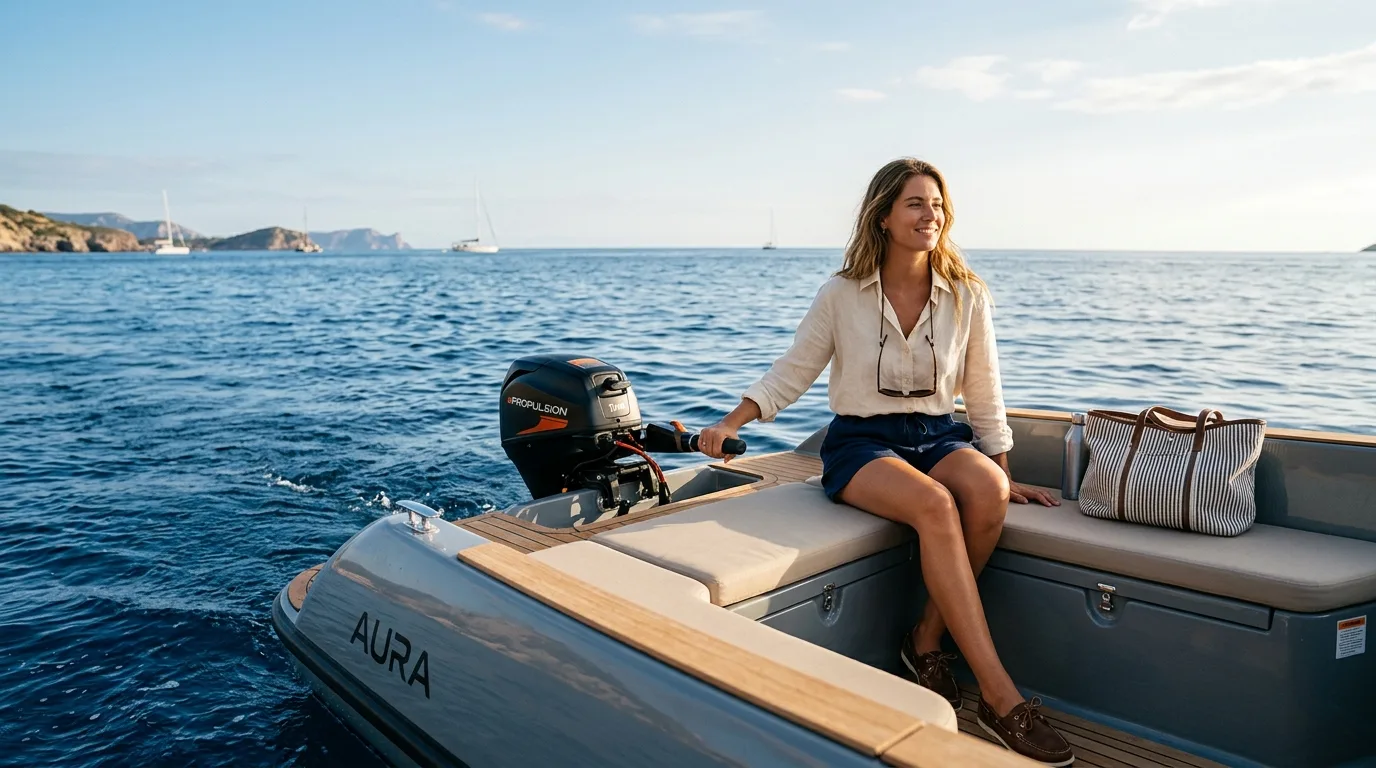

As someone who’s spent decades navigating everything from grand yachts to humble tenders, I can tell you there’s a special place in my heart for the smallest, most unassuming workhorses of the marine world: the 1 horsepower boat motor. You might wonder, “Just 1 horsepower? Is that even enough?” And for many, the answer is a resounding yes!
Table Of Content
- The Niche of 1 Horsepower Motors: Perfect Pairings
- Ideal Vessels for 1 HP Power
- Use Cases and Scenarios
- Gas vs. Electric: The 1 HP Power Debate
- The Enduring Appeal of Gas-Powered 1 HP Outboards
- The Rise of Electric 1 HP Outboards and Trolling Motors
- Navigating the Market: Choosing Your Ideal 1 HP Motor
- Key Features to Consider
- Brand Reputation and Reliability
- Understanding the 1 Horsepower Boat Motor Price
- Where to Find a 1 Horsepower Boat Motor for Sale
- Beyond the Purchase: Ownership, Maintenance, and Safety
- Essential Maintenance for Longevity
- Safe Operation Practices
- 1 HP vs. 2 HP Outboard & Trolling Motor Comparison (Revisited)
These compact power units, often light enough to carry with one hand, are not about raw speed or planing capabilities. Instead, they excel in providing reliable, efficient, and often remarkably quiet propulsion for smaller craft. Think about those moments when you just need to get across a calm lake, push a dinghy from a mooring to shore, or subtly maneuver for the perfect fishing spot. That’s precisely where a 1 HP motor shines. They represent an excellent blend of portability, affordability, and utility, making boating accessible and enjoyable without the complexity or expense of larger engines.
In this comprehensive guide, we’re going to pull back the curtain on everything you need to know about 1 horsepower boat motors. We’ll dive deep into their practical applications, dissect the crucial gas versus electric debate, help you navigate the myriad of choices and price points, and arm you with the knowledge to select, maintain, and safely operate one of these often-underestimated marine marvels. So, whether you’re a seasoned boater looking for a reliable tender motor or a newcomer eyeing your first small craft, let’s explore the powerful potential packed into just one horsepower.
The Niche of 1 Horsepower Motors: Perfect Pairings
While a 1 HP motor might sound minuscule, it’s perfectly sized for a significant segment of the boating community. Its true value lies in its ability to empower small, lightweight vessels with practical, no-fuss propulsion. Understanding where these motors truly excel is key to appreciating their design and purpose.
Ideal Vessels for 1 HP Power
- Dinghies and Tenders: This is arguably the most common and critical application. For yacht and sailboat owners, a reliable dinghy motor is essential for ferrying crew, provisions, and exploring shallow coves. A 1 HP motor offers the perfect balance of power to navigate short distances, maneuver around docks, and easily be lifted on and off the main vessel. Its lightweight nature is a huge advantage when you’re dealing with davits or simply pulling the dinghy up on a beach.
- Kayaks and Canoes: While paddling offers great exercise, sometimes you need a little assistance. A 1 HP motor can extend your range, help you fight against currents or headwinds, and provide a welcome rest from paddling. Imagine exploring a vast estuary or covering more ground on a multi-day river trip without exhausting yourself.
- Small Inflatables and Jon Boats: These vessels are often used for fishing in calm waters, exploring ponds, or as utility boats. A 1 HP motor provides ample thrust to move these light hulls efficiently, making them ideal for accessing serene fishing spots or simply enjoying a quiet cruise on a glass-smooth morning.
- Sailboat Auxiliaries: For smaller sailboats, a 1 HP motor can be a fantastic auxiliary engine. It’s often enough to provide propulsion in and out of marinas, navigate calm channels, or offer a crucial safety net if the wind completely dies. The minimalist design means it takes up little space and adds minimal weight, preserving the sailboat’s performance under sail.
Use Cases and Scenarios
Beyond the type of boat, the specific use case often dictates whether a 1 HP motor is your best bet. If your boating activities primarily involve short distances, calm conditions, and a focus on portability and simplicity, you’re likely in the sweet spot for a 1 HP unit.
For anglers, a 1 HP motor, especially an electric one, can be a game-changer. Its quiet operation allows for stealthy approaches to fish, while precise control helps maintain position in current or wind. For general recreation, it means less effort to move from one swimming spot to another or to explore a new shoreline without breaking a sweat. And for those who enjoy solitary expeditions, the reliability and ease of use offer peace of mind. I’ve personally used a small 1.5 HP (very close to 1 HP in practical terms) motor on countless dinghy runs, from picking up fresh bread in a Mediterranean village to exploring hidden mangrove tunnels. It’s truly liberating how much utility such a small engine provides.
Gas vs. Electric: The 1 HP Power Debate
When you’re considering a 1 horsepower boat motor, one of the most fundamental decisions you’ll face is choosing between a traditional gasoline-powered outboard and an increasingly popular electric motor. Both have distinct advantages and disadvantages, and the “best” choice really boils down to your specific needs, priorities, and boating environment.
The Enduring Appeal of Gas-Powered 1 HP Outboards
Gasoline 1 HP outboards are the classic choice, benefiting from decades of refinement. They offer familiar technology and a distinct set of advantages, particularly for those who prioritize range and quick refueling. Brands like Honda, Mercury, and Tohatsu are well-known for their reliability in compact gas outboards.
- Pros: Gas motors typically offer a longer range on a single tank of fuel compared to the battery life of an electric motor. Refueling is quick and easy – just pour in more gas. They generally perform well in various conditions and are less sensitive to temperature extremes than some battery technologies. The technology is tried and true, meaning parts and service are widely available.
- Cons: Gas motors are inherently noisier and produce exhaust emissions, which can be a drawback for fishing or in environmentally sensitive areas. They require more maintenance, including oil changes (for 4-stroke models), spark plug checks, and fuel system care. Fuel storage can also be a minor hassle, requiring proper containers and ventilation.
Regarding the “1 horsepower boat motor Yamaha option,” it’s important to clarify. While Yamaha is a titan in marine engines and highly respected, their smallest current outboards often start at 2 HP or 2.5 HP (like the F2.5 or F2.5B models). However, many boaters still search for a “1 horsepower Yamaha” due to the brand’s stellar reputation for reliability and smooth operation. If a direct 1 HP Yamaha model isn’t available, their 2 HP options are often considered a very close alternative, providing slightly more power while maintaining much of the portability and excellent fuel efficiency Yamaha is known for. Other reputable brands like Tohatsu or Honda might offer models closer to the true 1 HP mark if that specific power rating is a non-negotiable for you.
The Rise of Electric 1 HP Outboards and Trolling Motors
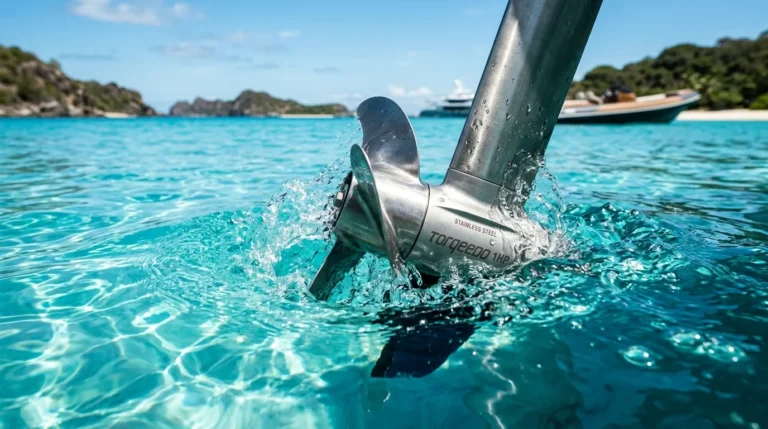
Electric motors have seen incredible advancements in recent years, making them a compelling alternative for 1 HP applications. They are particularly favored for their eco-friendly operation and quiet nature. It’s also important to distinguish between dedicated electric outboards (like those from Torqeedo) and traditional trolling motors (from brands like Minn Kota or Motorguide), though both fall under the electric umbrella.
- Pros: The most significant advantage is silent operation – perfect for sneaking up on fish or enjoying the tranquility of nature without engine noise. They produce zero emissions, making them ideal for protected lakes or environmentally conscious boaters. Electric motors offer instant torque and precise speed control, often with variable speed settings. Maintenance is minimal, typically involving only battery care and occasional propeller cleaning.
- Cons: The primary limitation is battery life and range. While modern lithium-ion batteries have improved, you’re still constrained by the capacity of your battery pack and the availability of charging points. Initial costs can be higher, especially when factoring in a quality battery and charger. Performance can sometimes be affected by colder temperatures, and the weight of the battery itself needs to be considered.
For true 1 HP electric propulsion, dedicated electric outboards like Torqeedo’s Travel series are outstanding, offering integrated batteries and advanced features. Traditional trolling motors, while often measured in pounds of thrust rather than horsepower (roughly 25-35 lbs of thrust equates to about 1 HP), are specifically designed for slow, precise maneuvering on fishing boats. They mount differently – often on the bow or transom – and excel at holding position or creeping along weed lines. The choice here largely depends on whether you need general propulsion or specialized fishing maneuverability.
Navigating the Market: Choosing Your Ideal 1 HP Motor
Selecting the “best” 1 horsepower motor isn’t a one-size-fits-all decision. It involves carefully considering your boat, your typical usage, your budget, and your preferences. Let’s break down the key factors that will guide your choice.
Key Features to Consider
- Shaft Length: This is critical! Motors come in short (around 15 inches) and long (around 20 inches) shaft lengths. The shaft length must match your boat’s transom height to ensure the propeller is submerged at the correct depth. A shaft that’s too short will cavitate, losing thrust, while one that’s too long will drag and make steering difficult. Always measure your transom from the top to the bottom of the hull’s V-shape.
- Weight and Portability: For small craft, especially dinghies or kayaks, ease of transport is paramount. Gas 1 HP outboards typically weigh between 25-35 lbs (11-16 kg). Electric motors can be lighter, but don’t forget the added weight of the battery, which can be substantial for longer run times.
- Noise Level: If you’re fishing or simply value peace and quiet, electric motors are the undisputed champions. Gas motors, even small ones, will always generate some level of mechanical noise and exhaust drone.
- Thrust vs. HP (for Electric Motors): Electric motors are often rated in pounds of thrust. As a general rule of thumb, about 25-35 pounds of thrust is roughly equivalent to 1 horsepower in terms of pushing power for small, light boats. However, thrust is a direct measure of force, while horsepower is a measure of power output. Focus on thrust ratings for electric motors and horsepower for gas engines.
- Integrated vs. External Fuel Tank/Battery: Some small gas motors have integrated fuel tanks, making them self-contained. Others require an external tank. Similarly, some electric outboards have integrated batteries (like Torqeedo), while many trolling motors require you to provide a separate marine deep-cycle battery.
- Starting Mechanism: Most 1 HP gas motors are manual pull-start. Electric motors usually have a simple on/off switch or rotary dial.
Brand Reputation and Reliability
Investing in a reputable brand often means better build quality, more readily available parts, and superior after-sales support. For gas 1 HP outboards, look at brands like Tohatsu, Honda, and Mercury. While Yamaha’s smallest offerings might be 2 HP, their reputation for reliability is so strong that their slightly larger models are still often considered by those seeking “1 horsepower boat motor Yamaha” quality.
For electric motors, Torqeedo leads the pack for integrated electric outboards, offering advanced technology and robust performance. For traditional trolling motors, Minn Kota and Motorguide are industry standards, known for their durability and wide range of features. There are also budget-friendly generic brands, especially for electric trolling motors, which can be a good entry point if your budget is tight, but be aware that their longevity and performance may not match premium brands.
Understanding the 1 Horsepower Boat Motor Price
Affordability is one of the key selling points for 1 HP motors, but prices can still vary significantly. Generally, you can expect to find a 1 horsepower boat motor price in the following ranges:
- Entry-level models (often generic electric trolling motors or basic gas models): $150 – $350
- Mid-range models (more features, better build quality, some established brands): $350 – $700
- Premium models (e.g., Torqeedo electric outboards, Honda/Tohatsu gas outboards, or a Yamaha 2 HP option): $700 – $1,500 (Note: High-end electrics with integrated lithium batteries can reach the higher end of this range or even exceed it due to battery technology costs.)
Factors influencing price include brand reputation, material durability (aluminum vs. composite components), fuel type (electric motors often have higher upfront costs due to battery requirements), warranty, and included features like battery indicators or varying shaft lengths. Remember that for electric motors, the cost of a good deep-cycle battery (if not integrated) and charger needs to be factored into your overall budget.
Where to Find a 1 Horsepower Boat Motor for Sale
Finding a 1 horsepower boat motor for sale is quite straightforward thanks to a variety of retail channels:
- Online Marketplaces: Websites like Amazon, eBay, and specialized marine retailers such as Defender Marine or West Marine offer a vast selection, often with competitive pricing and detailed specifications. This is a great place to compare models and read reviews.
- Local Marine Specialty Stores: Places like West Marine, Bass Pro Shops, or your independent local marine dealer can provide invaluable face-to-face advice, allowing you to see the motors firsthand and discuss your specific needs. They also offer installation services and parts support.
- Boat Dealerships: While they primarily sell larger vessels, many dealerships also carry a range of small outboards and accessories. If you’re buying a new small boat, you might be able to bundle a motor purchase.
- Classified Ads and Second-Hand Marketplaces: For budget-conscious buyers, platforms like Facebook Marketplace, Craigslist, or local classifieds can yield great deals on used motors. When buying second-hand, always check for signs of rust or corrosion, inspect the propeller and lower unit for damage, and if possible, test the motor in a barrel of water before purchase. Verify any remaining warranty or service history if you can.
Beyond the Purchase: Ownership, Maintenance, and Safety
Acquiring your 1 HP motor is just the beginning. To ensure longevity, reliable performance, and safe operation, a little knowledge and routine care go a long way. This isn’t just about protecting your investment; it’s about maximizing your enjoyment on the water.
Essential Maintenance for Longevity
Proper maintenance ensures your 1 HP motor is ready when you are. The specifics vary slightly between gas and electric units:
- For Gas Motors: Regular oil changes (for 4-stroke models) are crucial. Check and clean or replace spark plugs annually. Inspect the fuel lines and filter for cracks or clogs. Crucially, always flush your motor with fresh water after saltwater use to prevent corrosion – a simple hose attachment can make this easy. If storing for the off-season, proper winterization (fuel stabilizer, fogging oil, gear oil change) is vital to prevent issues next spring.
- For Electric Motors: The focus shifts to battery care. Keep your battery charged, especially during storage, and avoid deep discharges. Inspect battery terminals for corrosion and keep them clean and tight. Check the propeller regularly for fishing line or debris, which can damage the motor’s seals. Like gas motors, flushing after saltwater use is still recommended for any exposed metal components.
Regardless of type, always inspect the propeller for dings or damage, ensure mounting clamps are secure, and check the condition of any associated wiring or fuel lines before each outing. A few minutes of preventative maintenance can save you hours of frustration later on.
Safe Operation Practices
Safety should always be your top priority on the water, even with a small 1 HP motor. These principles are universal:
- Kill Switch: Always attach the kill switch lanyard to yourself or your life jacket. In case you fall overboard, this immediately stops the engine, preventing a runaway boat and potential injury.
- Propeller Safety: Never approach the propeller when the engine is running, and always be aware of its position, especially when launching or retrieving.
- Don’t Overload: 1 HP motors are designed for light loads and small boats. Respect your boat’s capacity plate and avoid overloading it with too many people or too much gear. An overloaded boat will perform poorly and can become unstable.
- Know Your Limits: These small motors are best suited for calm waters. Strong currents, heavy chop, or high winds can easily overpower a 1 HP motor, putting you at risk. Check the weather forecast before heading out.
- Carry Spares: Always carry spare fuel (in an approved container) or a spare, fully charged battery. A basic tool kit, a spare shear pin (for gas outboards), and a paddle or oars are also highly recommended.
- Local Regulations: Be aware of local boating regulations. Some areas have horsepower limits, speed restrictions, or require registration even for small motors.
1 HP vs. 2 HP Outboard & Trolling Motor Comparison (Revisited)
Let’s circle back to how a 1 HP motor stacks up against its slightly larger 2 HP sibling and dedicated trolling motors, as this often comes up in conversation.
- 1 HP vs. 2 HP Outboard: The difference might seem small, but that extra horsepower in a 2 HP motor often translates to a noticeable boost in propulsion, especially when battling a slight current or carrying an extra person. A 2 HP motor will generally get you to your destination a bit faster and handle slightly larger dinghies or more challenging conditions with more authority. If your typical trips are a bit longer, or you frequently carry a passenger or gear, the minor weight and cost increase for a 2 HP might be a worthwhile investment. For example, a Yamaha 2.5 HP will offer a bit more punch than a true 1 HP motor while still being exceptionally portable.
- 1 HP Outboard vs. Trolling Motor: This comparison is less about raw power and more about purpose. A 1 HP gas outboard is a general-purpose propulsion unit, offering longer range and versatility for varied recreational use. A trolling motor, whether bow-mounted or transom-mounted, is specifically designed for precise, quiet maneuvering for fishing. It excels at slow speeds, holding position, and navigating shallow, weedy areas without scaring fish. If your primary goal is fishing, the silent operation and pinpoint control of a trolling motor usually win out. If you need general propulsion for getting from point A to point B over longer distances or in slightly choppier conditions, a gas-powered 1 HP outboard is often more flexible.
Ultimately, the 1 horsepower boat motor is a fantastic tool for specific jobs. It embodies simplicity, efficiency, and portability, opening up a world of small-craft boating adventures without unnecessary complexity. Understanding its strengths and limitations, coupled with proper care, will ensure you get years of reliable service and enjoyment from your compact powerhouse.