


There’s an undeniable thrill that comes with finding the perfect boat. Whether it’s a sleek sailboat ready for ocean passages or a comfortable motor yacht for coastal cruising, the dream of slipping lines and heading out to sea is powerful. But before you get swept away by the romance of the open water, there’s a critical step that no savvy boat buyer should ever skip: the professional marine survey. As someone who’s spent decades around docks, boatyards, and closing tables, I can tell you this isn’t just a suggestion; it’s an absolute necessity to protect your investment, your safety, and your peace of mind.
Table Of Content
- Understanding the Marine Survey: Your Investment’s Best Defense
- Different Types of Surveys and When Each is Needed
- Pre-Purchase Survey: The Essential Due Diligence
- Condition and Valuation (C&V) Survey: For Insurance and Financing
- Appraisal Survey: Determining Market Value
- Damage Survey: Assessing Post-Incident Repairs
- The Marine Survey Process: What to Expect from Start to Finish
- Selecting the Right Surveyor: Credentials Matter
- The On-Site Inspection: Ashore and Afloat
- The Survey Report: Your Detailed Roadmap
- Interpreting the Report and Leveraging it for Your Purchase
- Understanding the Findings and Recommendations
- Negotiation Power and Contingencies
- Impact on Insurance and Financing
- Choosing the Right Surveyor and Final Thoughts
Think of buying a boat like buying a house, but with a lot more complex systems and the added challenge of an unforgiving environment – water. Just as you wouldn’t buy a home without a thorough inspection, you certainly shouldn’t buy a vessel, new or used, without a comprehensive evaluation by an independent, qualified marine surveyor. This isn’t just about identifying major flaws; it’s about understanding the true condition, value, and potential liabilities associated with your prospective purchase. Let’s dive deep into how these essential assessments work and why they are your best friend in the boat buying process.
Understanding the Marine Survey: Your Investment’s Best Defense
So, what exactly is a marine survey? In simple terms, it’s a detailed, professional inspection of a vessel to determine its overall condition, seaworthiness, and market value. It’s an exhaustive examination that goes far beyond a casual walk-through, scrutinizing every accessible component from the tip of the mast to the bottom of the keel. The surveyor acts as your unbiased expert, meticulously documenting findings that could range from minor cosmetic issues to significant structural or mechanical deficiencies. This report becomes your roadmap, revealing the true state of the boat, hidden problems, and potential future expenses.
The primary purpose of a marine survey is multi-faceted. First and foremost, it safeguards your financial investment. Boats are significant assets, and without proper due diligence, you could inherit a “money pit” that drains your wallet faster than a faulty bilge pump. Secondly, and perhaps even more critically, it’s about safety. Many serious issues, such as compromised hull integrity, faulty electrical systems, or deteriorated rigging, aren’t visible to the untrained eye but could lead to catastrophic failures on the water. A thorough survey ensures that the vessel is safe for its intended use, protecting you, your crew, and anyone else aboard. Finally, a survey is often a prerequisite for obtaining boat insurance and financing, as lenders and underwriters rely on these reports to assess risk and determine value. Without a current, satisfactory survey, you might find yourself unable to insure your new pride and joy, let alone secure a loan for it.
Different Types of Surveys and When Each is Needed
While “marine survey” is a broad term, several specific types cater to different needs throughout a boat’s life. Understanding these distinctions is crucial for knowing which survey to request and when.
Pre-Purchase Survey: The Essential Due Diligence
This is the gold standard for any boat buyer. The pre-purchase survey is the most comprehensive inspection, conducted when you are seriously considering buying a vessel. It involves a thorough examination of the hull (both in and out of the water), deck, superstructure, propulsion system, electrical systems, fuel system, steering, plumbing, rigging (if applicable), safety equipment, and general cosmetic condition. The surveyor will often conduct a sea trial to assess engine performance, steering, and overall handling under power. This detailed report gives you a complete picture of the boat’s condition, highlighting any necessary repairs, deferred maintenance, and an estimated fair market value.
Condition and Valuation (C&V) Survey: For Insurance and Financing
Often required by insurance companies and financial institutions, the C&V survey focuses on verifying the vessel’s existence, general condition, and approximate fair market value. While still thorough, it may not be as exhaustive as a pre-purchase survey, particularly regarding every single system and component. Insurance companies typically require an updated C&V survey every few years, especially for older vessels, to ensure the boat remains insurable and to accurately assess replacement costs or insurable value. If you’re renewing an insurance policy on an older boat, expect to need one of these.
Appraisal Survey: Determining Market Value
An appraisal survey is specifically focused on establishing the fair market value of a vessel. This type of survey is often needed for financing, estate settlements, divorce proceedings, or donation purposes. While the surveyor will still examine the boat’s condition to justify the valuation, the primary deliverable is a valuation report rather than a detailed list of deficiencies and recommendations for repair. It’s less about the operational readiness and more about the asset’s worth in the current market.
Damage Survey: Assessing Post-Incident Repairs
In the unfortunate event of an accident, collision, grounding, or other damage, a damage survey is conducted to assess the extent of the damage, determine the cause, and estimate the cost of repairs. This survey is typically requested by insurance companies to process claims, but an owner might also commission one to understand the full scope of an issue. The surveyor acts as an impartial expert, providing critical information for repair estimates and insurance settlements.
The Marine Survey Process: What to Expect from Start to Finish
Engaging a professional marine surveyor is a structured process designed to provide you with the most accurate and comprehensive assessment possible. Knowing what to expect at each stage can help you prepare and make the most of this vital service.
Selecting the Right Surveyor: Credentials Matter
The first and most critical step is choosing your surveyor. Do not rely on a surveyor recommended by the seller, the seller’s broker, or a repair yard that might have a vested interest. You need an independent expert. Look for surveyors accredited by reputable organizations such as the Society of Accredited Marine Surveyors (SAMS®) or the National Association of Marine Surveyors (NAMSGlobal®). These organizations require rigorous testing, continuing education, and adherence to strict ethical codes. Ask for their credentials, experience with the specific type and size of boat you’re interested in, and request a sample report. A good surveyor will be happy to discuss their process and answer your questions.
The On-Site Inspection: Ashore and Afloat
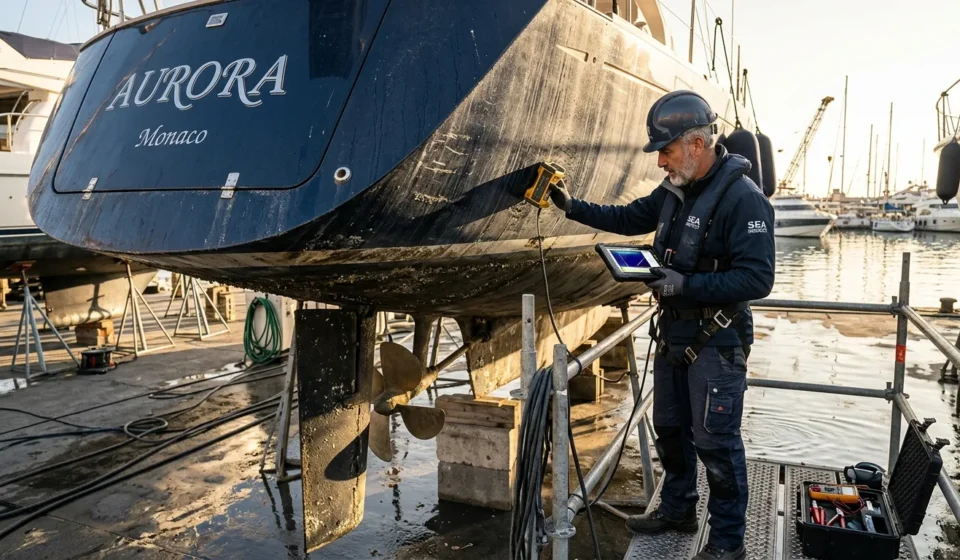
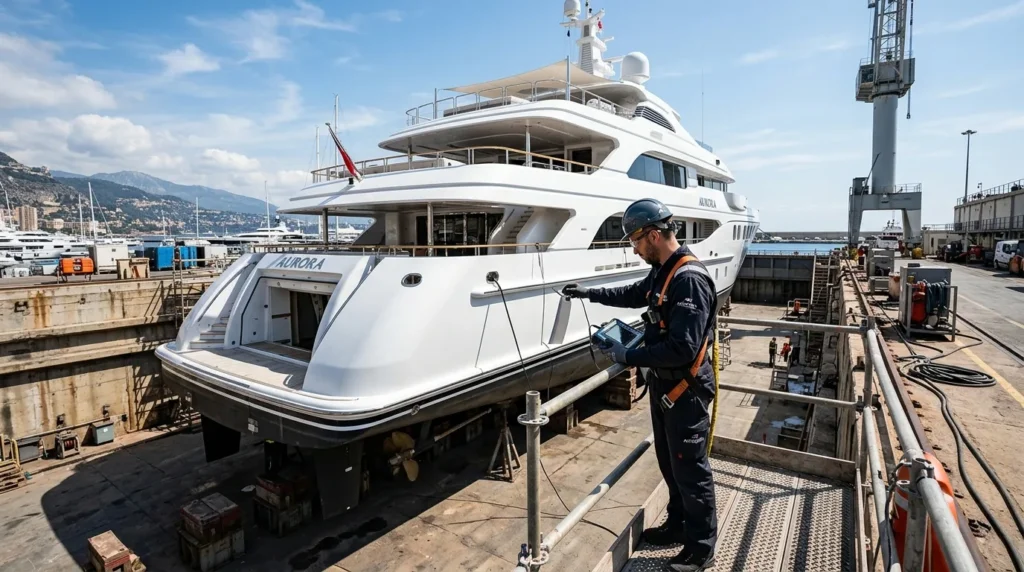
Once you’ve chosen your surveyor, they will coordinate with the seller or broker to schedule the inspection. A comprehensive pre-purchase survey typically involves two main phases: an in-water inspection and an out-of-water inspection (haul-out). During the haul-out, the surveyor can thoroughly examine the hull below the waterline for issues like osmosis blisters, delamination, impact damage, keel integrity, and the condition of the running gear (propeller, shaft, rudder). While afloat, they’ll inspect interior systems, deck, superstructure, rigging, and conduct the sea trial. During the sea trial, they’ll check engine performance, steering, navigation electronics, and overall boat handling. This phase is crucial for identifying operational issues that wouldn’t be apparent while the boat is stationary.
- Hull & Deck: Inspection for structural integrity, moisture, delamination, stress cracks, proper through-hull fittings, and deck hardware.
- Propulsion System: Engines, transmissions, shafts, propellers, and associated systems are checked for condition, leaks, proper installation, and operational performance during the sea trial. An engine oil analysis is highly recommended.
- Electrical Systems: Wiring, batteries, charging systems, navigation lights, and electronics are checked for proper installation, corrosion, and compliance with safety standards.
- Fuel System: Tanks, lines, filters, and vents are inspected for leaks, corrosion, and proper installation.
- Plumbing & Sanitation: Fresh water, wastewater, bilge pumps, and associated systems are examined for leaks, functionality, and overall condition.
- Rigging (Sailboats): Mast, boom, standing rigging (shrouds, stays), running rigging (halyards, sheets), and sails are inspected for wear, corrosion, and integrity.
- Safety Equipment: Fire extinguishers, life jackets, flares, and other safety gear are checked for presence, condition, and expiration dates.
The Survey Report: Your Detailed Roadmap
Following the inspection, the surveyor will compile a comprehensive report. This document is the heart of the survey process. It typically includes a detailed description of the vessel, a list of all inspected items, their condition, and specific recommendations for repairs or maintenance. Recommendations are often categorized by urgency (e.g., “immediate safety hazard,” “repair soon,” “monitor for future maintenance”). The report will also provide an estimated fair market value of the vessel, which is invaluable for negotiation and insurance purposes. A good report will be clear, concise, and include photographs to illustrate findings.
Interpreting the Report and Leveraging it for Your Purchase
Receiving the survey report can feel like getting a medical check-up for your boat – sometimes it reveals things you didn’t expect. But understanding how to interpret this document and what actions to take next is key to a successful boat purchase.
Understanding the Findings and Recommendations
The survey report will likely list various deficiencies, some minor, some significant. It’s important not to panic over every single item. Focus on the surveyor’s classifications. Items marked as “safety hazards” or “immediate repairs” should be your top priority. These might include compromised hull integrity, faulty steering, or non-functional safety equipment. Other items might be “deferred maintenance” – things that need attention but aren’t critical right now, like a worn bilge pump or a leaky faucet. Cosmetic issues, while potentially annoying, rarely impact safety or seaworthiness.
For example, if the report notes significant osmosis on the hull, that’s a major structural concern requiring extensive and costly repairs. On the other hand, a recommendation to service the engine’s heat exchanger or replace some worn running rigging is a common maintenance item that might be part of normal boat ownership. My own experience with a client looking at a beautiful 40-foot sailboat revealed that while the interior was immaculate, the survey uncovered severe corrosion in the keel bolts, a hidden structural flaw that would have cost tens of thousands to rectify and posed a serious safety risk. Without the survey, they would have unknowingly purchased a beautiful, but potentially dangerous, liability.
Negotiation Power and Contingencies
The survey report gives you significant leverage in negotiations. If the surveyor uncovers issues, you have several options. You can request the seller to repair the items before closing, ask for a reduction in the purchase price to cover the cost of repairs, or even walk away from the deal if the findings are too severe or the seller is unwilling to negotiate. Most boat purchase agreements include a “survey contingency” clause, allowing you to withdraw your offer without penalty if the survey reveals unacceptable conditions. This clause is your safety net, allowing you to make an informed decision and avoid purchasing a vessel with unforeseen costly problems.
Impact on Insurance and Financing
As mentioned, a satisfactory marine survey is almost always a requirement for obtaining insurance and financing. Insurance companies use the survey to assess the risk associated with insuring the vessel. If the report highlights significant safety issues or deferred maintenance, you might struggle to get coverage or face higher premiums until those issues are addressed. Similarly, lenders use the fair market value provided in the survey to determine the loan amount they are willing to offer. A boat with substantial issues might not appraise for the asking price, impacting your ability to secure the necessary financing. Always confirm with your insurance provider and lender about their specific survey requirements early in the buying process.
Choosing the Right Surveyor and Final Thoughts
Given the immense importance of a marine survey, taking the time to select the right professional is paramount. Look for a surveyor who specializes in the type of boat you are buying – a powerboat expert might not be the best choice for a complex sailing yacht. Ensure they are fully independent, meaning they have no financial ties to the seller, broker, or any repair facility. Ask for references and don’t hesitate to call them. A professional surveyor’s fee, typically ranging from $20 to $30 per foot of length overall, is a small price to pay when compared to the potential costs of undisclosed defects or safety hazards. Consider it an investment that pays dividends in peace of mind and financial protection.
Over my career, I’ve seen countless boat deals saved, and countless buyers protected, by the diligent work of a professional marine surveyor. I’ve also witnessed the heartbreak and financial ruin of those who, trying to save a few dollars, skipped this crucial step. Don’t let enthusiasm blind you to potential problems. A marine survey isn’t just a checklist; it’s a comprehensive risk assessment that empowers you to make an informed decision. It allows you to navigate the complexities of boat buying with confidence, ensuring that your dream vessel truly brings joy and adventure, not unexpected headaches and expenses. So, when you find that perfect boat, remember: make the offer, but always, always make it contingent on a satisfactory professional marine survey.