

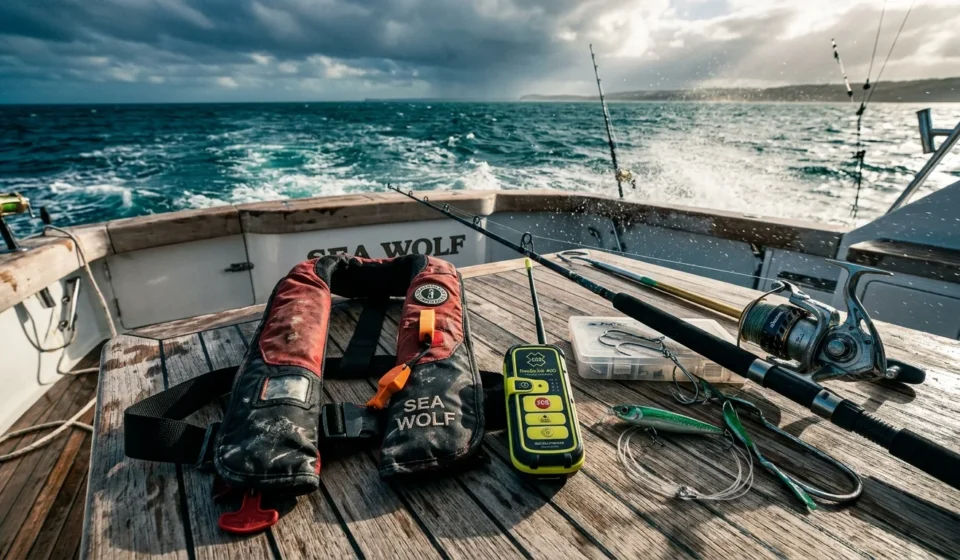

There’s nothing quite like the thrill of heading out into the open ocean, the salty air whipping past, and the promise of a big catch on the horizon. Offshore saltwater fishing offers an unparalleled sense of adventure, but with that excitement comes a serious responsibility: preparedness. As someone who’s spent decades on the water, I’ve seen firsthand how quickly conditions can change, and how vital it is to be ready for anything.
Table Of Content
- Embracing the Deep Blue: Why Offshore Safety is Non-Negotiable
- Your Offshore Ready Gear Locker: Essential Equipment Checklist
- Personal Flotation Devices (PFDs) – Not Just for Show
- Emergency Signaling & Communication – Your Lifelines
- Navigation & Electronic Aids – Knowing Your Way Home
- Mastering the Waves: Crucial Best Practices for Offshore Success
- Weather Wisdom – Respecting Mother Nature
- Float Plan & Communication Protocol – Never Go Unannounced
- Vessel Maintenance & Inspection – Prevention is Key
- Navigating the Unexpected: Emergency Preparedness & Training
- Man Overboard Procedures – Practice Makes Perfect
- Fire Safety & Damage Control – Quick Thinking Saves Lives
- Offshore Confidence: A Mindset for Every Adventure
- Continuous Learning & Drills – Stay Sharp
- The Buddy System & Crew Briefing – Teamwork on the Water
- Frequently Asked Questions
- Is an EPIRB mandatory for offshore fishing?
- How often should I check my safety gear?
- What’s the most common offshore emergency?
Embracing the Deep Blue: Why Offshore Safety is Non-Negotiable
The allure of the deep blue is undeniable, drawing anglers further and further from shore in pursuit of majestic game fish. However, the vastness of the ocean demands respect, and its challenges amplify every mile offshore. Unlike inshore fishing, help isn’t just around the corner when you’re battling big seas or an unexpected mechanical issue dozens of miles out.
Honestly, the difference between a minor inconvenience and a life-threatening situation often boils down to preparation. This isn’t about fear-mongering; it’s about empowering you with the knowledge and equipment to enjoy your passion with confidence. From the moment you leave the dock to the triumphant return, being offshore ready means you’ve thought through the possibilities and equipped yourself accordingly. It’s about ensuring your saltwater fishing safety isn’t left to chance.
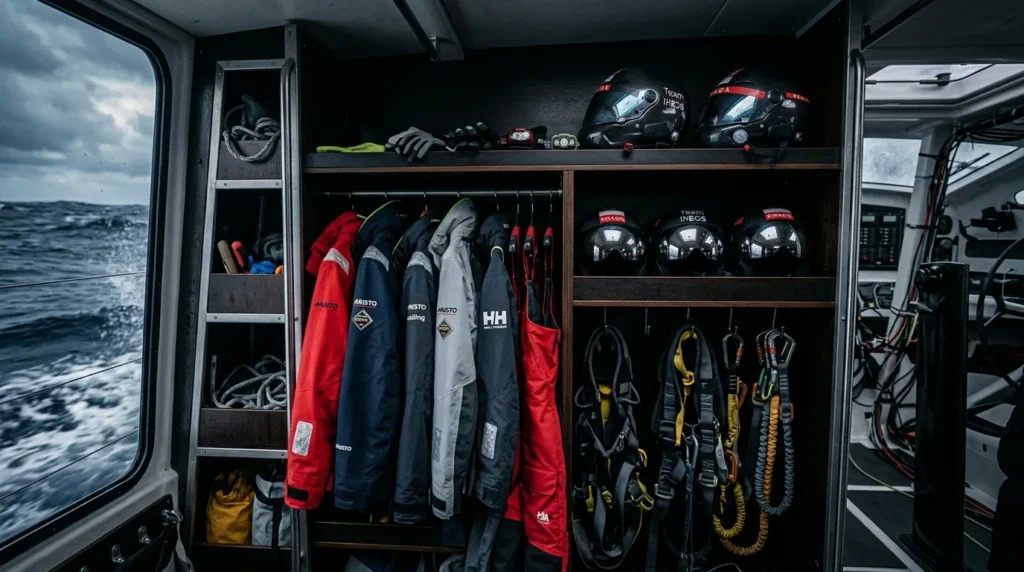
Your Offshore Ready Gear Locker: Essential Equipment Checklist
When you’re far from land, your boat and its contents become your world. Every piece of offshore fishing safety gear serves a critical purpose. Think of it as your insurance policy against the unpredictable nature of the ocean. Let’s dive into the must-haves.
Personal Flotation Devices (PFDs) – Not Just for Show
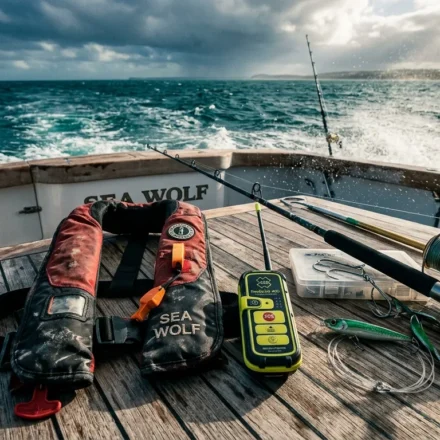
This might seem obvious, but I can’t stress enough the importance of proper PFDs. Every person on board needs one, and they need to be readily accessible and in good condition. For offshore work, I highly recommend Type I offshore vests or inflatable PFDs for adults, which offer superior buoyancy and often automatically inflate. But what good is a PFD if it’s stowed away in a locker when someone goes overboard?
Expert Note: Inflatable PFDs are comfortable for all-day wear, increasing the likelihood that your crew will actually keep them on. Just remember to check their hydrostatic release or CO2 cartridges regularly. Always have a few extra Type II or III vests on board for unexpected guests or in case an inflatable fails.
Emergency Signaling & Communication – Your Lifelines
When you’re out of cell phone range, reliable communication becomes paramount. This category is where most people skimp, and it’s a mistake you can’t afford. Imagine this situation: you’re 50 miles offshore, the engine suddenly dies, and your VHF radio’s range is limited. What would you do?
- VHF Radio: A fixed-mount VHF with DSC (Digital Selective Calling) is a minimum. Link it to your GPS for automatic position reporting in an emergency.
- EPIRB (Emergency Position Indicating Radio Beacon): This is non-negotiable for offshore. It transmits a distress signal to satellites, pinpointing your location to rescue services worldwide. Mount it where it can be easily grabbed or auto-deployed.
- Life Raft: For true offshore adventures, a properly serviced and accessible life raft is essential. Whether it’s a cannister or valise, ensure it’s sized for your crew and stored where it can be deployed quickly, not buried under tackle.
- Satellite Messenger/Phone: Devices like Garmin inReach or an Iridium satellite phone offer two-way communication and tracking, allowing you to send messages and even trigger an SOS from virtually anywhere.
- Flares & Signal Mirror: Visual signals are still critical. Carry both aerial and handheld flares, and a signal mirror for daytime use. Check expiration dates annually!
Navigation & Electronic Aids – Knowing Your Way Home
Modern marine electronics have revolutionized offshore navigation, but don’t solely rely on one system. A robust setup means redundancy.
Expert Note: Always have a backup! A handheld GPS or even paper charts and a compass can be lifesavers if your primary electronics fail due to power loss or malfunction. Knowing how to use them is key, too.
| Equipment | Primary Function | Considerations for Offshore |
|---|---|---|
| Chartplotter/MFD | GPS navigation, mapping, depth sounder | Large, high-res display; integrated radar/sonar; reliable charts. |
| Radar | Collision avoidance, weather tracking, navigation in fog | Open array for better range/resolution; MARPA capabilities. |
| Autopilot | Steering assistance, fuel efficiency, crew rest | Robust drive unit; integrates with chartplotter; remote control. |
| AIS (Automatic Identification System) | Identify commercial vessels, collision avoidance | Class B transceiver for sending/receiving. |
Mastering the Waves: Crucial Best Practices for Offshore Success
Gear is only half the equation; knowing how to use it and practicing sound judgment is the other. Offshore readiness isn’t just about what you carry, but how you prepare and behave on the water.
Weather Wisdom – Respecting Mother Nature
The ocean’s mood can swing faster than a hooked marlin. Before you even think about leaving the dock, check multiple weather sources. NOAA forecasts, marine weather apps, and even satellite imagery can give you a comprehensive picture. Don’t just look at the short-term; understand the forecast for your entire trip, including potential changes while you’re offshore. A calm morning can turn into a nasty afternoon faster than you can say “squall line.”
Expert Note: Never hesitate to postpone or turn back if the weather looks iffy. The fish will still be there tomorrow, but your safety comes first. No fish is worth risking your boat or your life.
Float Plan & Communication Protocol – Never Go Unannounced
This is a foundational piece of emergency communication and often overlooked. Always, always, *always* leave a float plan with a trusted friend or family member on shore. This document should detail your boat’s description, crew manifest, planned route, expected return time, and your contact information. Agree on a check-in schedule. If you don’t check in, they’ll know when to initiate contact or alert authorities.
Let me add something here: Make sure everyone on board knows the basics of your communication equipment and emergency procedures. In an emergency, you might not be the one able to make the call.
Vessel Maintenance & Inspection – Prevention is Key
Before any offshore trip, a thorough vessel safety check is paramount. This goes beyond just topping off the fuel. Check all fluid levels, belts, hoses, and electrical connections. Ensure your bilge pumps are working perfectly, both manual and automatic. Carry spare parts for critical components like fuel filters, impellers, and spark plugs, along with the tools to install them. A well-maintained boat is a safer boat.
For example, imagine this situation: you’re trolling, and suddenly, your engine starts sputtering. If you hadn’t checked your fuel filter and noticed it was almost clogged, you could be adrift. A little preventative maintenance goes a long way to avoid a miserable, or even dangerous, situation offshore.
Navigating the Unexpected: Emergency Preparedness & Training
Even with the best gear and practices, emergencies can happen. Your ability to react quickly and effectively will be tested. This is where training and drills come into play.
Man Overboard Procedures – Practice Makes Perfect
A man overboard situation is one of the most terrifying scenarios offshore. Does everyone on your boat know what to do? You should have a clear plan: immediate cry of “Man Overboard!”, deploying a throw ring or horseshoe buoy, pointing at the person in the water, and initiating a recovery maneuver. Practice this with your crew – even if it’s just throwing a fender over and simulating a recovery. Knowing your boat’s capabilities and your crew’s roles saves precious minutes.
Expert Note: Consider investing in personal AIS beacons for each crew member. These small devices, attached to PFDs, transmit a signal to your boat’s chartplotter and other AIS-equipped vessels, pinpointing the location of someone in the water.
Fire Safety & Damage Control – Quick Thinking Saves Lives
Fires at sea are incredibly dangerous. Ensure you have multiple fire extinguishers strategically placed and easily accessible. Know how to use them. Similarly, carry appropriate plugs and patches for through-hull fittings or hull damage. Every boat should have a proper wooden plug for every through-hull fitting. Do you know where they are on your boat? And could you quickly access them in a panic?
Offshore Confidence: A Mindset for Every Adventure
Ultimately, offshore fishing safety isn’t just about the stuff you buy; it’s about the mindset you adopt. It’s a continuous process of learning, preparing, and respecting the environment.
Continuous Learning & Drills – Stay Sharp
The marine industry evolves, and so should your knowledge. Take advanced first aid courses, marine safety seminars, or even USCG auxiliary courses. The more you know, the more confident and capable you’ll be when challenges arise. Run drills with your crew regularly, especially for critical scenarios like man overboard or abandoning ship. Familiarity breeds confidence, not complacency.
The Buddy System & Crew Briefing – Teamwork on the Water
If possible, never go offshore alone. Having at least one other capable person on board is a huge safety advantage. Before you leave the dock, conduct a thorough crew briefing. Everyone should know where the safety gear is located, how to use the VHF, and what to do in various emergency situations. A well-informed crew is your greatest asset.
Frequently Asked Questions
Is an EPIRB mandatory for offshore fishing?
While not strictly mandatory for all recreational vessels in all waters, an EPIRB is highly recommended, bordering on essential, for any offshore fishing adventure. It provides a vital last resort for distress signaling when other communications fail.
How often should I check my safety gear?
You should conduct a thorough vessel safety check before every offshore trip. Additionally, inspect all safety gear annually for wear, damage, and expiration dates, especially for flares, PFD inflator cartridges, and life raft certifications.
What’s the most common offshore emergency?
Based on my experience, mechanical failures (engine, steering) and unexpected weather changes are among the most common offshore emergencies. This underscores the importance of thorough maintenance, proper weather planning, and robust emergency communication systems.
Venturing offshore for saltwater fishing is an incredible experience, filled with moments you’ll cherish forever. By taking the time to properly equip yourself with offshore fishing safety gear and embracing these best practices, you’re not just preparing for the worst; you’re setting yourself up for the best, most confident, and ultimately, most enjoyable adventures on the water. Stay safe out there, and may your lines always be tight!