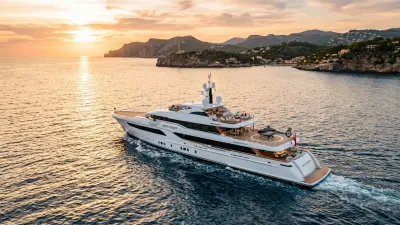
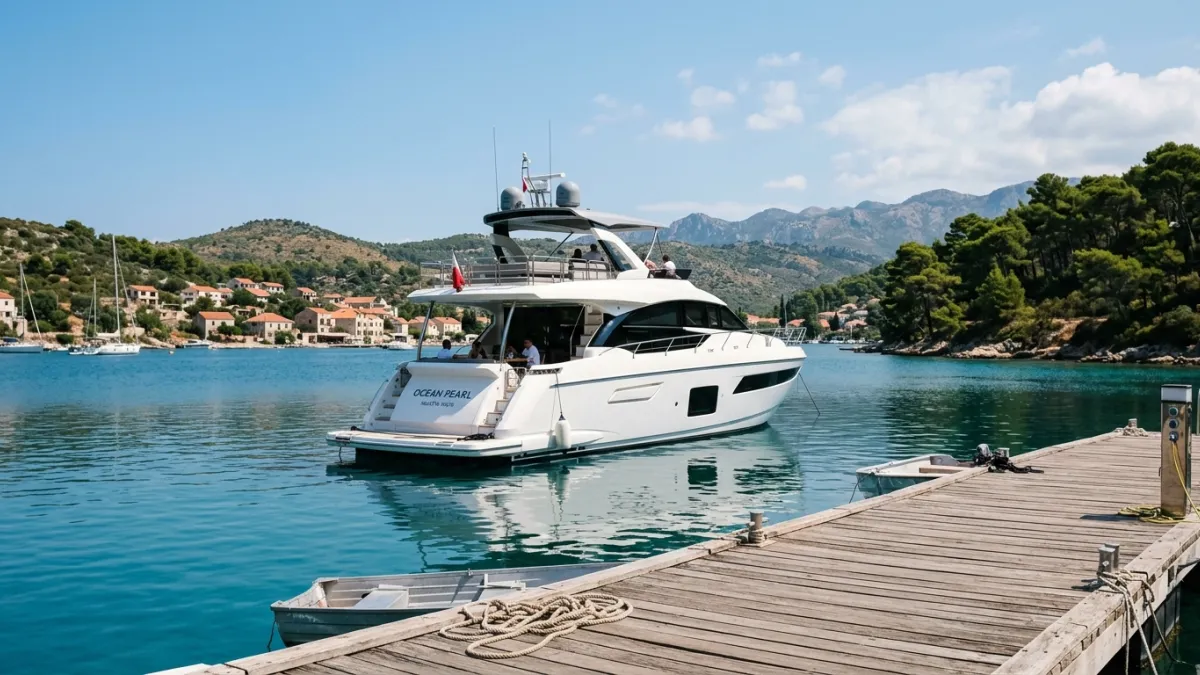
Selecting the ideal motor yacht requires matching hull geometry, engine configurations, and shipyard build quality to your specific cruising profile. A modern power vessel typically spans from 40 feet to well over 100 feet in length, operating across three distinct hull regimes: full-displacement hulls cruising at 7 to 10 knots for maximum ocean-crossing efficiency, planing hulls exceeding 28 knots for fast coastal passages, and semi-displacement hulls balancing speed (16–22 knots) with living volume. Leading European shipyards such as Azimut, Princess, and Sunseeker define the market standards for luxury, handling, and resale value.
Understanding Motor Yacht Hull Designs and Dynamics
Hull shape dictates a motor yacht's sea-keeping ability, speed range, fuel consumption, and onboard comfort. Before evaluating interior joinery or deck layouts, examining the underwater profile reveals how the vessel handles adverse sea states.
Planing Hulls
Planing hulls rely on dynamic lift generated by flat or deep-V underwater surfaces to rise above the bow wave as speed increases. At speeds above 18 to 20 knots, water resistance drops relative to weight, allowing fast coastal transit. However, entering head seas at high speed creates jarring pounding forces, requiring active trim tab management and robust hull construction.
Full Displacement Hulls
Displacement hulls slice through the water rather than riding over it. Their speed is physically governed by waterline length—calculated approximately as 1.34 times the square root of the waterline length in feet. A 60-foot displacement vessel achieves optimal fuel economy between 7 and 9 knots, consuming as little as 3 to 5 gallons of diesel per hour, enabling transoceanic ranges exceeding 2,500 nautical miles.
Semi-Displacement Hulls
Bridging the performance gap, semi-displacement hulls incorporate round bilges with flattened stern sections or hard chines. They generate moderate hydrodynamic lift to push past theoretical hull speed without requiring the massive horsepower demands of a pure planing vessel. This design suits mid-range motor yachts (50 to 85 feet) designed for extended regional cruising.
Top Motor Yacht Manufacturers Compared
The premium motor yacht sector is dominated by established yards in the UK and Italy. Each manufacturer prioritizes different aspects of naval architecture, interior finish, and marine engineering.
- Azimut Yachts (Italy): Known for bold exterior styling, carbon-fiber deck structures, and expansive salon glazing. Models like the Flybridge and S-Series emphasize open-plan Mediterranean living and social deck layouts.
- Princess Yachts (United Kingdom): Renowned for deep-V hull performance, dark timber joinery, and meticulous British build quality. The V-Class sport cruisers and Y-Class motor yachts deliver predictable seakeeping in rough weather and hold strong pre-owned resale values.
- Sunseeker (United Kingdom): Focused on aggressive styling, driver-focused helm ergonomics, and high top speeds. Popular ranges like the Predator and Manhattan deliver energetic cruising speeds of 30+ knots.
- Ferretti Yachts (Italy): Emphasizes engineering refinement, sound insulation, and user-friendly gyro stabilization. Their flybridge lineup focuses on long-range luxury with low noise and vibration levels at cruising speed.
Motor Yacht Performance & Specifications Comparison
To understand how key dimensions, propulsion systems, and hull geometries translate into real-world performance, consider the benchmark comparison table below based on standard manufacturer specifications:
| Yacht Category | Typical Length | Hull Type | Cruising Speed | Fuel Burn (Cruise) | Optimal Range |
|---|---|---|---|---|---|
| Express Sport Cruiser | 40–55 ft | Deep-V Planing | 24–28 knots | 35–50 GPH | 250–320 NM |
| Flybridge Motor Yacht | 55–75 ft | Modified Planing | 22–26 knots | 55–85 GPH | 300–400 NM |
| Long Range Trawler / Expedition | 50–80 ft | Full Displacement | 8–10 knots | 6–12 GPH | 1,800–3,500 NM |
| Tri-Deck Superyacht | 85–120 ft | Semi-Displacement | 12–16 knots | 70–120 GPH | 1,000–1,500 NM |
Essential Marine Systems to Evaluate During a Yacht Review
When inspecting or reviewing a pre-owned or new motor yacht, mechanical integrity and propulsion choices impact long-term ownership costs more than cosmetic features.
Propulsion & Drivetrain Systems
Modern power yachts utilize three main drive options:
- Traditional Straight Shafts: Simple mechanical layout with propellers mounted behind underwater brackets. Offers high reliability, straightforward maintenance, and excellent durability in debris-laden waters.
- Volvo Penta IPS (Inboard Performance System): Forward-facing dual pod drives that increase fuel efficiency by up to 20% and provide intuitive joystick maneuvering in tight marinas. Requires specialized maintenance and pod seal inspections during annual haul-outs.
- Surface Drives (e.g., Arneson): Reserved for high-speed sport yachts exceeding 40 knots. Delivers maximum top-end speed but demands experienced helm control and active trimming.
Stabilization Technologies
At anchor or underway, hull roll significantly affects guest comfort. Modern motor yachts utilize either gyroscopic stabilizers (such as Seakeeper, mounted inside the engine room, effective at zero speed) or hydraulic/electric fin stabilizers (protruding below the hull, highly effective underway with zero-speed modes available on larger units).
Pros and Cons of Motor Yacht Ownership
Pros
- High cruising speeds allow rapid travel between distant anchorages and ports.
- Expansive interior volume with multiple staterooms, en-suite heads, and climate-controlled saloons.
- Advanced automation (joystick docking, auto-trim, dynamic positioning) simplifies short-handed operation.
Cons
- High fuel consumption at planing speeds compared to sailing or displacement vessels.
- Annual operating and maintenance costs typically run 8% to 12% of the vessel's initial purchase price.
- Higher depreciation rates on complex electronic and mechanical systems.
Frequently Asked Questions
What is the average fuel consumption of a 60-foot motor yacht?
A typical 60-foot planing flybridge motor yacht powered by twin 800–1000 hp diesel engines burns approximately 50 to 70 gallons per hour (GPH) at a 22 to 25 knot cruise speed. Slowing down to displacement speeds (8–9 knots) drops fuel burn dramatically to 6–10 GPH.
Is pod propulsion (IPS) better than traditional shaft drive for a motor yacht?
IPS offers superior low-speed joystick maneuvering, faster acceleration, and up to 20% better fuel economy at cruising speeds. Shaft drives, however, are simpler to maintain, less expensive to repair after grounding, and better suited for remote cruising grounds where specialized pod service centers are unavailable.
How much does it cost to maintain a motor yacht annually?
Industry standards recommend budgeting approximately 10% of the yacht's market value annually. This budget covers insurance, slip fees, routine engine servicing, haul-out antifouling, stabilizer maintenance, and system upgrades.
Sources
- Wikipedia - Motor Yacht Overview
- Azimut Yachts Official Site
- Princess Yachts Official Site
- Sunseeker International Official Site