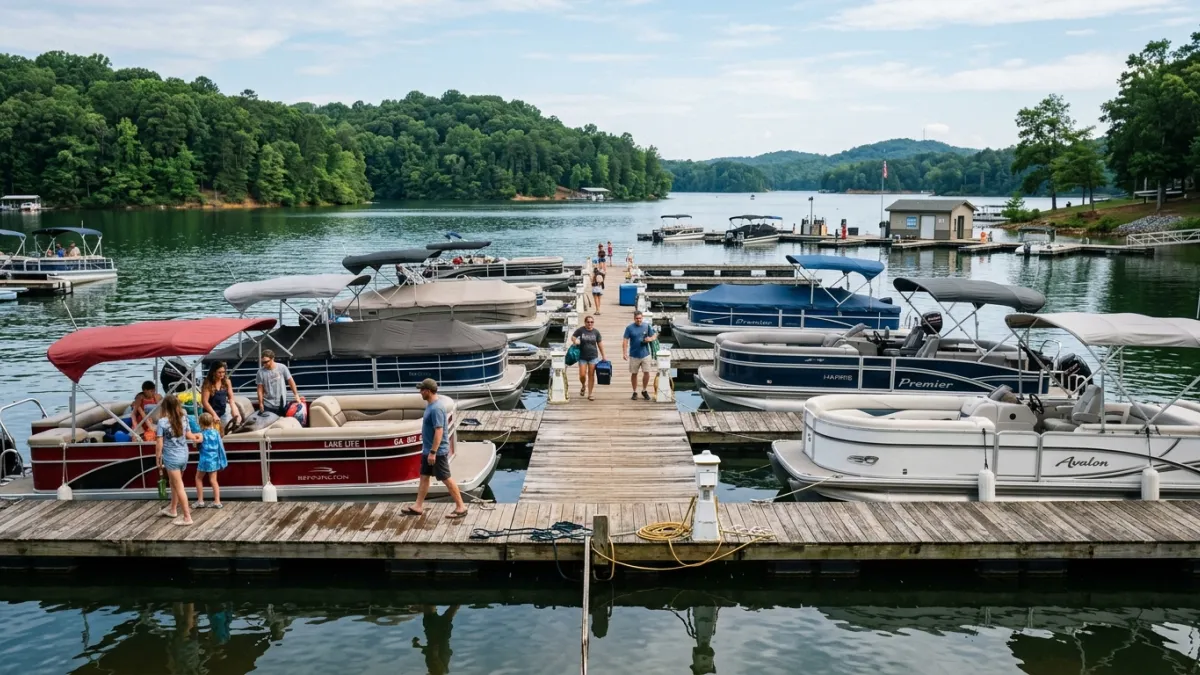
A new pontoon boat costs between $20,000 and $150,000+, with the average family buyer spending between $35,000 and $65,000 for a fully equipped mid-range model. Used pontoon boats generally range from $10,000 to $35,000 depending on age, hull condition, and outboard motor hours. Beyond the base purchase price, buyers must factor in additional initial expenses like trailers, safety gear, and registration, alongside annual ownership costs averaging $1,500 to $4,000 for insurance, maintenance, and storage.
Pontoon Boat Price Tiers Breakdown
Understanding how much a pontoon boat costs requires looking at size, deck configuration, horsepower, and tube design (twin tubes versus triple tubes/tritoons). Boat builders structure their product lines across distinct price points based on these specifications.
Entry-Level Pontoons ($18,000 – $30,000)
Entry-level pontoons typically measure between 16 and 20 feet in length and carry outboard engines ranging from 40 HP to 90 HP. These models prioritize simplicity, featuring basic vinyl seating, manual bimini tops, standard marine carpet or basic vinyl flooring, and simple dash consoles. They are ideal for calm inland lakes, casual cruising, and small families.
Mid-Range Family Pontoons ($35,000 – $65,000)
The mid-range category represents the most popular segment of the market. Measuring 20 to 24 feet, these boats feature engines between 90 HP and 150 HP. Key features include upgraded woven vinyl flooring, integrated Bluetooth sound systems, ski tow bars for water sports, table setups, and expanded lounge seating. Models configured with specialized fishing layouts—featuring livewells and rod holders—often fall into this bracket, offering an alternative to traditional fishing craft where a dedicated bass boat cost might range from $25,000 to $70,000 depending on tournament-grade specs.
Luxury and Performance Tritoons ($70,000 – $180,000+)
performance pontoons and high-end tritoons feature three aluminum hulls instead of two, allowing for larger engines rated from 200 HP up to twin 450 HP outboards. These vessels span 23 to 27+ feet and offer luxury amenities such as power-folding arches, elevated helm stations, touch-screen navigation, joystick piloting, premium multi-zone audio, refrigerated cupholders, and custom leatherette upholstery.
Pontoon Boat Price Comparison Table
| Category | Length | Engine Power | Average New Cost | Ideal Use Case |
|---|---|---|---|---|
| Compact / Starter | 16' - 19' | 25 HP - 75 HP | $18,000 - $30,000 | Small lakes, relaxed cruising, budget buyers |
| Mid-Range Family | 20' - 24' | 90 HP - 150 HP | $35,000 - $65,000 | Tubing, swimming, larger groups, coastal bays |
| High-Performance Tritoon | 23' - 27'+ | 200 HP - 400+ HP | $70,000 - $150,000+ | Waterskiing, rough water, luxury entertainment |
Key Factors Influencing Pontoon Prices
Several technical and aesthetic choices directly impact the final purchase price of a pontoon boat:
- Engine Size and Type: Outboard motors account for 30% to 50% of the total package price. Upgrading from a 90 HP outboard to a high-performance 250 HP outboard can add $12,000 to $22,000 to the total cost.
- Pontoon vs. Tritoon: Adding a center tube (tritoon package) adds structural rigidity, lifting strakes, and higher horsepower capacity. This option usually adds $5,000 to $12,000 compared to a standard twin-tube pontoon.
- Floorplan and Furniture: Dual captain's chairs, rear lounger layouts, and integrated entertainment bars require extra floor space and manufacturing labor, raising the base cost.
- Materials and Accessories: Premium marine-grade woven flooring, underwater LED lighting, power biminis, and upgraded sound systems significantly increase the final dealer invoice.
Additional Equipment and Ongoing Ownership Costs
Budgeting for a pontoon boat involves more than the sticker price on the vessel itself. Buyers should account for necessary accessories and recurring operating costs:
- Boat Trailer: A single-axle or tandem-axle pontoon trailer costs between $2,500 and $6,000 depending on structural frame material (galvanized steel vs. aluminum) and hydraulic surge or electric brakes.
- Marine Insurance: Annual boat insurance ranges from $300 to $900 annually, depending on overall vessel value, engine size, navigational waters, and owner experience.
- Dockage and Storage: Marina slip fees vary widely by region, averaging $1,500 to $5,000 per season. Dry outdoor storage or indoor heated winter storage adds $500 to $2,000 per year.
- Routine Maintenance: Annual engine servicing (oil changes, gear lube, fuel filter replacements, impeller service) and winterization typically cost between $400 and $1,200 annually.
- Safety Gear and Registration: life jackets, anchors, lines, fenders, fire extinguishers, and state vessel registration add roughly $500 to $1,000 in upfront costs.
Pros and Cons of Buying New vs. Used
Buying New
Pros: Full manufacturer warranty coverage (typically 3–10 years on deck structure and engine), custom layout choices, latest engine efficiency standards, zero hull wear.
Cons: Higher initial depreciation (15%–20% in year one), higher upfront cost.
Buying Used
Pros: Significantly lower purchase price, lower initial depreciation rate, access to higher-tier models within a fixed budget.
Cons: Potential hidden mechanical wear, outdated engine electronics, risk of aluminum corrosion or log leaks, worn vinyl upholstery requiring replacement.
Frequently Asked Questions
Is a pontoon boat cheaper than a fiberglass bowrider or bass boat?
Generally, yes. Entry to mid-level pontoons offer more deck space per dollar than traditional fiberglass bowriders or high-end bass boats. While a top-tier tournament bass boat cost can easily exceed $75,000, a spacious 22-foot family pontoon with adequate horsepower can often be purchased for $40,000 to $50,000.
How long do pontoon boats last?
Aluminum pontoon logs can last 30 to 40+ years with proper maintenance and cleaning, especially in freshwater environments. outboard engines typically provide 1,500 to 2,000 operating hours with regular service. Marine upholstery and canvas bimini tops generally require re-covering or replacement after 7 to 12 years of exposure to UV rays.
What is the most cost-effective size for a family pontoon?
A 20 to 22-foot pontoon equipped with a 90 HP to 115 HP outboard engine represents the optimal balance of price, seating capacity (8–11 passengers), fuel efficiency, and towing ease for most family buyers.