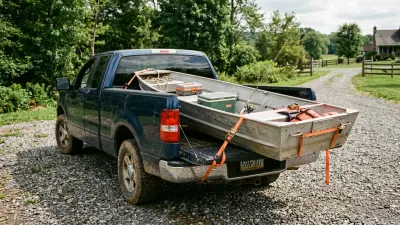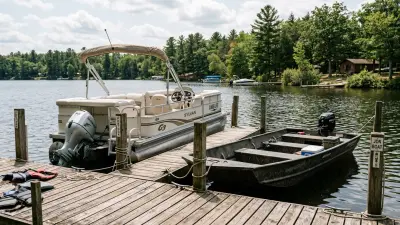
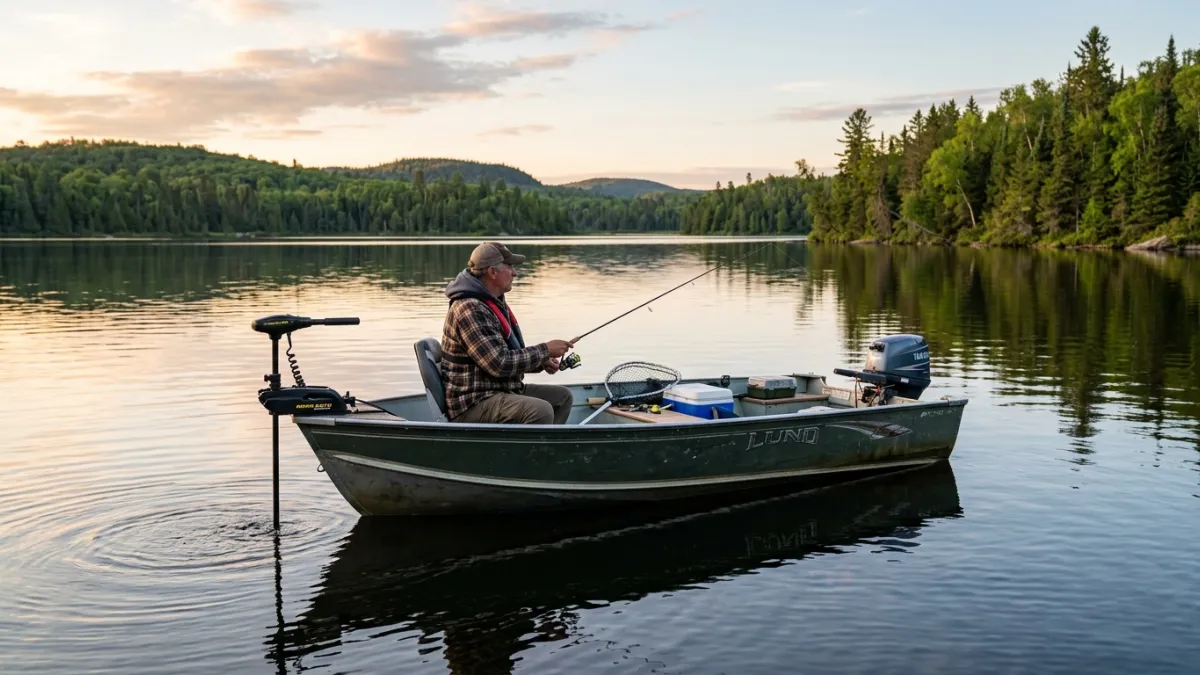
Mounting an electric trolling motor to a small dinghy, aluminum jon boat, or fishing kayak is one of the quickest ways to extend your reach on freshwater lakes and quiet coastal bays. While electric propulsion eliminates the mess and noise of gasoline outboards, it frequently creates confusion regarding legal requirements. Many anglers and recreational boaters assume that small battery-powered motors are exempt from government regulations because they produce low thrust and operate at modest speeds. However, maritime authorities evaluate vessels based on propulsion source rather than fuel type or sheer horsepower.
Quick answer: In most U.S. states, operating a small boat powered solely by an electric trolling motor does not require a formal operator's license or captain's credential, but attaching any motor immediately subjects the boat to mandatory state vessel registration and titling. However, depending on your age and state laws, you may still need to complete a mandatory boater safety education course to legally helm any motorized craft on public waters.
Distinguishing Vessel Registration from Operator Licensing
To understand maritime compliance, boat owners must separate two distinct legal concepts: licensing the boat itself and licensing the person operating it. Vessel registration acts like a vehicle license plate, registering ownership with state environmental or wildlife agencies and assigning a unique registration number with corresponding decals. Conversely, an operator's license—often referred to as a Boater Education Card, Boater Safety Certificate, or Pleasure Craft Operator Card—proves that the captain has completed approved training on navigation rules, emergency procedures, and safety gear.
For unpowered watercraft like standard kayaks, canoes, and rowboats, most state jurisdictions do not require official registration or safety certificates. The moment you clamp or bolt a 12-volt best trolling motor onto the transom or gunwale, the legal classification of the hull instantly transforms from human-powered to mechanically propelled. This mechanical designation triggers state motorboat statutes regardless of whether the motor produces 30 pounds of thrust or 115 pounds of thrust.
Failure to recognize this legal shift is one of the most common oversights among kayak anglers and freshwater enthusiasts. Marine patrol officers routinely check small motorized craft on public reservoirs and rivers. Operating an unregistered motorized vessel or failing to carry required safety credentials can lead to citations, steep administrative fines, and immediate removal from the water.
On-the-water tip: During a early-morning game warden checkpoint on a public lake, I watched three kayak anglers get cited on the spot—not for lacking an operator's license, but because they mounted 30 lb thrust trolling motors onto plastic sit-on-top kayaks without registering the hulls with the state department of motor vehicles. If it has a propeller powered by electricity or gas, treat the hull like a full-sized powerboat in the eyes of the law.
State Vessel Registration Rules for Electric Propulsion
In the United States, vessel registration is governed at the state level under guidelines oversighted by the U.S. Coast Guard (USCG). Nearly every state requires any vessel equipped with a mechanical propulsion system—gasoline, diesel, or electric—to be formally registered before entering public waterways. This includes 10-foot plastic pond prowlers, inflatable dinghies with 24V bow-mounted motors, and rigid hull inflatable boats (RIBs).
When registering a small boat converted for trolling motor use, state authorities issue a Registration Certificate and a pair of validation decals. You are legally required to display the registration numbers on both sides of the forward half of the hull (the bow) in plain block letters at least three inches high, contrasting with the color of the boat. A few states provide rare exemptions for non-mechanically propelled craft or vessels used exclusively on private, closed ponds, but navigating public rivers, state park lakes, or coastal estuaries requires full compliance.
The table below summarizes standard regulatory expectations across typical recreational craft configurations equipped with electric trolling motors:
| Vessel Type | Motor Configuration | Typical Voltage / Thrust | State Hull Registration | Boater Safety Card Required |
|---|---|---|---|---|
| Fishing Kayak (12 ft / 3.6 m) | Transom Electric Trolling Motor | 12V / 30-55 lbs thrust | Yes (Required in most states) | Depends on age & state threshold |
| Aluminum Jon Boat (14 ft / 4.2 m) | Bow-Mount Electric Trolling Motor | 24V / 70-80 lbs thrust | Yes (Required in all states) | Required in states with universal laws |
| Inflatable Tender (9 ft / 2.7 m) | Stern-Mounted Electric Drive | 12V / 40 lbs thrust | Yes (Required in most states) | Depends on age & state threshold |
| Fiberglass Bass Boat (18 ft / 5.5 m) | Electric Trolling + Outboard Gas Engine | 36V / 112 lbs thrust + 150 HP Outboard | Yes (Required in all states) | Yes (Required for major engine class) |
Operator Licensing and Boater Education Requirements
While vessel registration applies almost universally to motorized hulls, operator credentialing depends on your age, geographic location, and local state laws. Unlike a driver's license for motor vehicles, there is no federal "boating license" for recreational mariners in the U.S., short of commercial USCG Master or OUPV Six-Pack licenses. Instead, states implement Boating Safety Education certificates under National Association of State Boating Law Administrators (NASBLA) standards.
Many U.S. states set horsepower thresholds for mandatory operator education. For instance, some jurisdictions only enforce boater card requirements for operators maneuvering engines exceeding 10 horsepower (approx. 7.5 kW) or 15 horsepower. Because standard electric trolling motors produce modest thrust—equivalent to less than 2 or 3 horsepower—adult operators in these specific states may operate trolling-motor boats without taking an official boater safety exam.
However, an increasing number of states (such as Washington, Oregon, and Connecticut) along with international jurisdictions like Canada enforce universal boater education laws. In these regions, anyone operating a vessel under any form of mechanical power—including a lightweight 12V 30 lb thrust electric motor—must carry a valid boater card on board regardless of horsepower ratings. Furthermore, strict age minimums apply across nearly all states, prohibiting unsupervised minors from operating motorized craft.
Equivalency Ratings: Thrust, Voltage, and Horsepower
Electric trolling motors are rated in pounds of static thrust rather than shaft horsepower, which causes confusion when reading state boating code manuals. Understanding how electrical output translates to power output helps boat owners evaluate whether their setup approaches statutory thresholds or lake power restrictions.
A standard 12-volt trolling motor delivering 30 to 55 pounds of thrust draws roughly 30 to 50 amperes at peak draw, translating to approximately 0.5 to 0.8 electric horsepower. Mid-range 24-volt systems producing 70 to 80 pounds of thrust yield around 1.5 to 2 horsepower, while heavy-duty 36-volt systems pushing 112 to 115 pounds of thrust top out near 3 horsepower equivalent. None of these standard recreational systems approach the 10 HP limits set by states with horsepower-based licensing triggers, but they remain mechanically propelled craft under the law.
- 12-Volt Systems: Ideal for light kayaks and canoes up to 14 feet, generating 30-55 lbs thrust (< 1 HP equivalent).
- 24-Volt Systems: Best for medium jon boats and deep-v utility hulls up to 17 feet, delivering 70-80 lbs thrust (~1.5–2 HP equivalent).
- 36-Volt Systems: Engineered for heavy bass boats and bay boats over 18 feet, producing 100–112 lbs thrust (~3 HP equivalent).
- Brushless Direct-Drive Systems: Modern high-efficiency motors providing enhanced torque-to-ampere ratios while maintaining low thermal signatures.
Safety Gear Requirements for Motorized Trolling Boats
Once a boat is motorized with an electric trolling motor, it must satisfy USCG and state safety gear standards for motorized vessels. Even if you are fishing in a small 10-foot plastic craft on a quiet reservoir, removing human power as the sole means of propulsion mandates specific safety equipment on board.
Mandatory minimum equipment includes one wearable Coast Guard-approved Personal Flotation Device (PFD / Life Jacket) for each passenger on board, sized correctly and in good condition. Children under state-specified ages (typically under 12 or 13 years old) must wear their PFDs at all times while underway. Additionally, motorized craft must carry a sound-producing device such as a whistle or compressed air horn to signal intent or distress.
If operating between sunset and sunrise or during periods of restricted visibility, motorized boats—regardless of size or electric power—must display proper navigation lights. This requires a red/green combination sidelight at the bow and a 360-degree all-around white light elevated at the stern visible for at least two nautical miles. Carrying a manual bailing device, an anchor with sufficient rode, and a waterproof flashlight complete basic seaworthiness requirements.
Before launching your trolling motor setup on public waters, contact your state's department of natural resources or wildlife agency to complete your vessel registration, affix state registration decals to the bow, and complete a recognized NASBLA boater safety course to ensure full legal compliance across all waters.
Frequently Asked Questions
Do I need to register a kayak if I only use a small electric trolling motor?
Yes, in almost all state jurisdictions, adding an electric trolling motor to a kayak or canoe changes its legal status from a human-powered vessel to a motorized watercraft, which requires official state registration, titling, and bow decals.
Does a trolling motor count as a motor for horsepower-restricted lakes?
Electric trolling motors are generally permitted on horsepower-restricted or "electric-only" lakes, but the vessel itself must still follow all state motorized registration and safety equipment requirements while on the water.
Can a minor operate a boat powered by a trolling motor without supervision?
Minimum age limits vary by state, but most jurisdictions require operators under 14 to 16 years old to complete a certified boater safety education course or be directly supervised by an adult certified boater when operating any motorized vessel.
Do I need navigation lights on a small trolling motor boat?
If you operate the boat between dusk and dawn or during reduced visibility, state and USCG rules mandate proper red/green bow lights and an all-around white stern light visible from 360 degrees.
To find the perfect power source for your setup, read our review of the Best Trolling Motor.Sources
- U.S. Coast Guard Boating Safety Division
- National Association of State Boating Law Administrators (NASBLA)
- Wikipedia: Electric Trolling Motors