Equipping Your Motor Yacht for Extended Cruising: Comfort, Safety, and Self-Sufficiency
Ah, the allure of the open water! For many of us, the dream of casting off the lines and cruising to distant horizons in a motor yacht is the ultimate expression of freedom. Whether you’re planning a coastal adventure, an island-hopping escapade, or even a true bluewater passage, preparing your vessel for extended cruising is paramount. It’s about more than just having enough fuel; it’s about creating a floating home that’s safe, comfortable, and self-reliant. As a seasoned captain and broker, I’ve seen countless yachts, and I can tell you, the devil is in the details.
Table Of Content
Comfort is King on Extended Voyages
When your motor yacht becomes your home for weeks or months, comfort isn’t a luxury – it’s a necessity. Think about what makes your land-based home comfortable, then adapt it for the marine environment.
- Climate Control: A robust marine air conditioning and heating system is a game-changer, especially in varying climates. Brands like Dometic or Webasto are common and reliable.
- Fresh Water Production: A high-capacity watermaker (a desalination unit that turns saltwater into fresh water) is non-negotiable for true self-sufficiency. This frees you from constant dockside refills. Spectra and Schenker are excellent choices.
- Galley and Provisions: A well-equipped galley with ample refrigeration/freezer space (often multiple units), a reliable stove (propane or electric induction), and plenty of storage is crucial. Consider a trash compactor for extended trips.
- Power Generation: Beyond your main engines, a reliable marine generator (like those from Onan or Westerbeke) is essential to power your AC, watermaker, and galley appliances when away from shore power. Many cruisers also add solar panels for quiet, supplemental power.
- Entertainment and Connectivity: Satellite TV, robust Wi-Fi (via cellular booster or satellite internet), and a good sound system make downtime enjoyable.
For motor yachts designed for extended cruising, you’ll often find full displacement hulls – meaning they push through the water rather than riding on top – which offer a smoother, more comfortable motion in a seaway. Classic examples like the Nordhavn series or Grand Banks trawlers are renowned for their liveaboard comfort and range.
Safety First, Always
Your safety and the safety of your crew are paramount. Equipping your yacht for extended cruising means being prepared for anything the sea might throw at you.
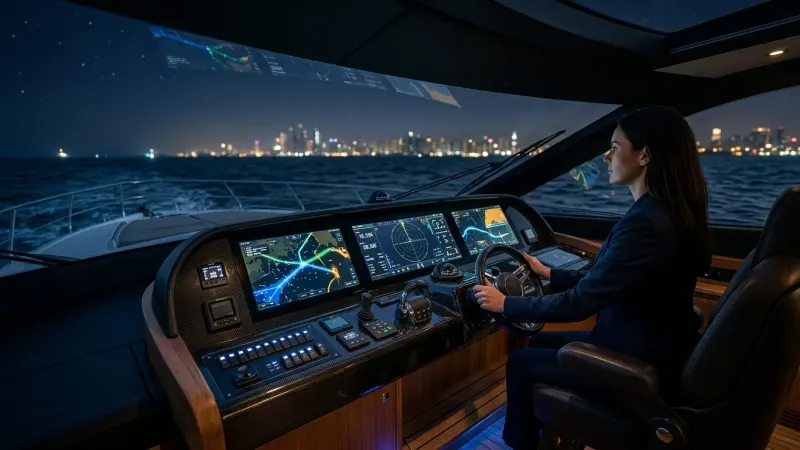
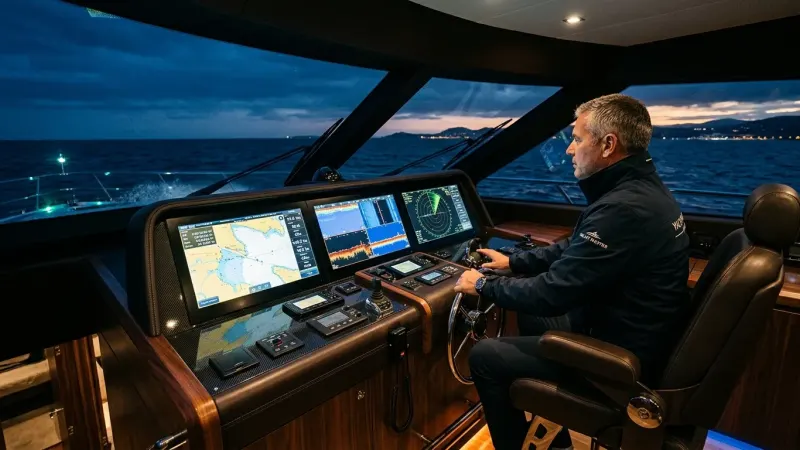
- Navigation & Communication Redundancy: Don’t rely on a single system. Have multiple chartplotters (Garmin, Raymarine, Simrad), a radar, and an AIS (Automatic Identification System) transponder for collision avoidance. Carry a handheld GPS and paper charts as backup.
- Robust Communication: A reliable VHF radio is standard, but for offshore, a satellite phone or an SSB (Single Sideband) radio is critical for long-range communication. An EPIRB (Emergency Position Indicating Radio Beacon) or PLB (Personal Locator Beacon) is a must for emergency signaling.
- Emergency Gear: A properly serviced life raft, enough USCG-approved PFDs (Personal Flotation Devices) for everyone aboard, flares, ditch bag, medical kit (stocked for remote locations), and a fixed fire suppression system in the engine room are absolute essentials.
- Engine Reliability: Many long-range motor yachts feature twin engines (often powerful inboard diesels from Yanmar or Volvo Penta) for redundancy and maneuverability. Regular maintenance, including engine service every 100-200 hours, is non-negotiable. Carry spare parts for common failure points.
- Hull Construction: For bluewater capability, look for robust construction, typically solid fiberglass or aluminum, designed to withstand significant seas.
Self-Sufficiency for Ultimate Freedom
The beauty of extended cruising is the freedom to explore remote anchorages. Self-sufficiency is the key to unlocking that freedom.
- Fuel Management: Large fuel tanks are a given, but consider a fuel polishing system to ensure clean fuel, especially when bunkering in less developed areas. Understand your yacht’s range at various RPMs.
- Water Storage: Beyond the watermaker, ample fresh water tankage is crucial.
- Power Management: A robust battery bank (many modern yachts are switching to efficient lithium-ion setups), a quality inverter, and good charging systems are fundamental.
- Comprehensive Spares & Tools: A well-organized toolkit and a carefully curated inventory of spare parts (filters, belts, impellers, hoses, electrical components) will prevent minor issues from becoming major headaches.
- Tender/Dinghy: A sturdy dinghy with a reliable outboard engine (e.g., Yamaha, Mercury) is essential for shore excursions, provisioning, and exploring shallow waters.
- Maintenance Schedule: Adhere to strict maintenance. This includes annual haul-outs for bottom paint and zinc replacement, regular engine checks, corrosion prevention, and inspection of all through-hull fittings.
Matching Your Yacht to Your Dreams
Choosing the right motor yacht starts with understanding your cruising goals. For coastal day trips or weekend getaways, a smaller cruiser (e.g., Axopar 28, Boston Whaler) might suffice. But for extended cruising, you’ll likely be looking at a larger cruiser (30-40 ft) for coastal adventures or a dedicated bluewater vessel (40+ ft) like a Kadey-Krogen or a larger Grand Banks for offshore passages. These boats typically feature displacement hulls for efficiency and range, powered by reliable inboard diesel engines.
Equipping your motor yacht for extended cruising is a significant undertaking, but it’s an investment in countless unforgettable memories. Take the time to research, plan meticulously, and don’t hesitate to consult with marine professionals for surveys and system installations. The journey begins with preparation, and the destination is the boundless horizon. Get out there and start writing your story!