Hook More Fish: Your Guide to Saltwater Lures for Any Species & Condition
If you’ve spent any time on the water chasing saltwater species, you know the feeling: that moment when the rod bends, the drag screams, and you’re locked into a battle with a powerful fish. There’s nothing quite like it, is there? But what often separates a memorable day of bending rods from a frustrating “skunk” is one critical choice: the lure you tie on. It’s not just about having a tackle box full of shiny gadgets; it’s about understanding which one tells the right story to the fish below.
Table Of Content
- The Fundamentals: Matching Lure to Species & Environment
- Understanding Your Target: Predatory Habits
- Reading the Water: Inshore vs. Offshore
- Top Lure Types & When to Use Them
- Soft Plastics: Versatility for Every Occasion
- Hard Baits (Plugs, Poppers, Stickbaits): Surface Action & Subsurface Erraticism
- Jigs: The Deep Divers
- Spoons & Trolling Lures: Flash and Speed
- Beyond the Lure: Color, Size & Action
- The Color Conundrum: Matching the Hatch or Standing Out
- Size Matters: Mimicking Prey
- Action is Key: Enticing the Strike
- Practical Scenarios & My Go-To Choices
- Inshore Flats & Estuaries
- Nearshore Reefs & Wrecks
- Offshore Pelagics
- The Takeaway: Experiment and Observe
Honestly, choosing the right saltwater fishing lures can feel like deciphering a secret code. With an overwhelming variety out there, how do you know what works best for that elusive snook hiding in the mangroves, or the tuna crashing bait offshore? That’s exactly what we’re going to demystify today. Based on my decades of experience on boats of all sizes, from small skiffs to mighty motor yachts, I’ve learned a thing or two about what makes fish bite. Let’s dive in and elevate your fishing game!
The Fundamentals: Matching Lure to Species & Environment
Before we even talk about specific lure types, we need to address the core principle: understanding your target and its habitat. You wouldn’t use a delicate trout fly for a giant bluefin tuna, right? The same logic applies across the board in saltwater. Knowing what fish you’re after and where they typically feed will drastically narrow down your options.
Understanding Your Target: Predatory Habits
Every saltwater species has its preferred diet and hunting style. Redfish, for example, are often bottom-feeders, grubbing around for crabs and shrimp in the shallows. Snook, on the other hand, are ambush predators, often lurking in structure waiting to pounce on passing baitfish. Pelagic species like tuna and mahi-mahi are open-water hunters, constantly on the move, chasing schools of bait.
So, the first question to ask yourself is: what are these fish eating? Are they targeting small baitfish, crustaceans, squid, or something else entirely? Your lure should ideally mimic that preferred prey in appearance, size, and action. This concept, often called “matching the hatch,” is perhaps the most crucial rule in lure selection.
Reading the Water: Inshore vs. Offshore
The environment itself dictates much about lure choice. Are you fishing skinny water flats, deep channels, rocky reefs, or the vast open ocean?
- Inshore fishing (flats, estuaries, mangroves): Requires lures that can be cast accurately, work in shallow water without snagging, and often mimic shrimp, crabs, or small baitfish. Think lighter tackle and more subtle presentations.
- Nearshore fishing (nearshore reefs, wrecks, surf): Might call for lures that can get down to structure, withstand strong currents, or cover a lot of water from the beach. Jigs, spoons, and larger plugs fit well here.
- Offshore fishing (deep blue water, pelagic species): This is where you bring out the big guns – heavy-duty trolling lures, large jigs, and robust hard baits designed to attract powerful, fast-swimming predators like tuna, marlin, and wahoo.
Top Lure Types & When to Use Them
Okay, we’ve talked about the big picture, but let’s dive into the specifics of which lures you should be reaching for. Over the years, certain types of saltwater fishing lures have proven their worth time and again.
Soft Plastics: Versatility for Every Occasion
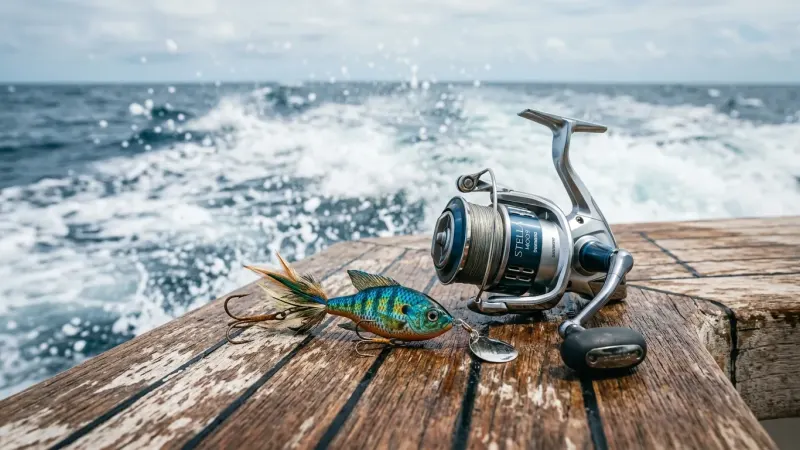
Soft plastics are, in my opinion, the most versatile lures in a saltwater angler’s arsenal. They come in an incredible array of shapes, sizes, and colors, mimicking everything from shrimp and crabs to various baitfish. Whether it’s a paddle tail swimbait, a jerk shad, or a grub, they can be rigged weedless, on a jig head, or under a popping cork.
Best scenarios: Inshore species like redfish, snook, trout, and flounder. They excel in shallow water, around structure, and when fish are finicky. Their soft texture often encourages fish to hold on longer, giving you time to set the hook.
Hard Baits (Plugs, Poppers, Stickbaits): Surface Action & Subsurface Erraticism
These are your classic “plug” style lures, made of hard plastic or wood. They break down into a few key categories:
- Poppers & Walkers (Topwater Lures): Designed to create commotion on the surface, mimicking a struggling baitfish. Poppers make a loud “bloop” sound, while walkers have a side-to-side “walk-the-dog” action.
Best scenarios: Early morning, late evening, or overcast days when fish are actively feeding on the surface. Explosive strikes on topwater lures are incredibly exciting! Think striped bass, snook, redfish, and even smaller tuna species. - Minnow Plugs & Jerkbaits: These imitate slender baitfish and are designed to suspend, float, or dive to various depths. They often have a tight wobbling action or can be “jerky” to entice strikes.
Best scenarios: Targeting predators like snook, tarpon, barracuda, and mackerel in channels, around structure, or trolled behind your boat.
Jigs: The Deep Divers
Jigs are essentially a weighted head with a hook, often dressed with hair, feathers, or a soft plastic body. They are incredibly versatile and can be fished vertically (jigging) or cast and retrieved.
Best scenarios: From small bucktail jigs for flounder and bottom fish inshore, to massive metal vertical jigs for amberjack, snapper, grouper, and tuna offshore. Their ability to quickly reach depth makes them indispensable for deep-water structure fishing.
Spoons & Trolling Lures: Flash and Speed
Spoons are simple, often metallic, curved pieces of metal that wobble and flash when retrieved, mimicking a wounded baitfish. Trolling lures encompass a broad category, often including large plugs, skirts, and artificial baits designed to be pulled behind a boat at speed.
Best scenarios: Spoons are fantastic for mackerel, bluefish, and striped bass in open water or surf. Trolling lures are the workhorses of offshore fishing, designed to cover vast expanses of water and attract pelagic species like tuna, mahi-mahi, wahoo, and billfish. The flash and erratic action of a well-trolled spread can be irresistible.
Beyond the Lure: Color, Size & Action
So far we’ve covered the main types. Now let’s get to the really critical point: fine-tuning your selection. It’s not enough to just pick a jig; you need the right jig for the conditions.
The Color Conundrum: Matching the Hatch or Standing Out
Lure color is often debated among anglers. My rule of thumb is this: on clear days and clear water, try to match the natural baitfish colors (silvers, blues, greens, whites). When the water is murky or on overcast days, brighter, more contrasting colors (chartreuse, pink, orange) can be more effective as they stand out. Sometimes, a “hot” color that doesn’t resemble anything natural will simply trigger an aggressive strike – don’t be afraid to experiment!
Size Matters: Mimicking Prey
This is where many anglers go wrong. Observe the size of the baitfish present. If the predators are gorging on tiny glass minnows, a huge lure might be ignored. Conversely, if there are large mullet around, a tiny lure will look insignificant. Always try to match the size of the predominant forage. As conditions change, so too might the size of the bait they’re targeting.
Action is Key: Enticing the Strike
The way a lure moves in the water is paramount. Does it wobble, dart, swim, or fall? A retrieve that makes your lure look like an injured or panicked baitfish is often the most effective. Pay attention to retrieve speed, pauses, and twitches. Sometimes a slow, steady retrieve is all it takes; other times, an aggressive, erratic twitch-and-pause will trigger a reaction strike.
Practical Scenarios & My Go-To Choices
Let’s put this all into practice with a few common scenarios you might encounter on your next fishing trip.
Inshore Flats & Estuaries
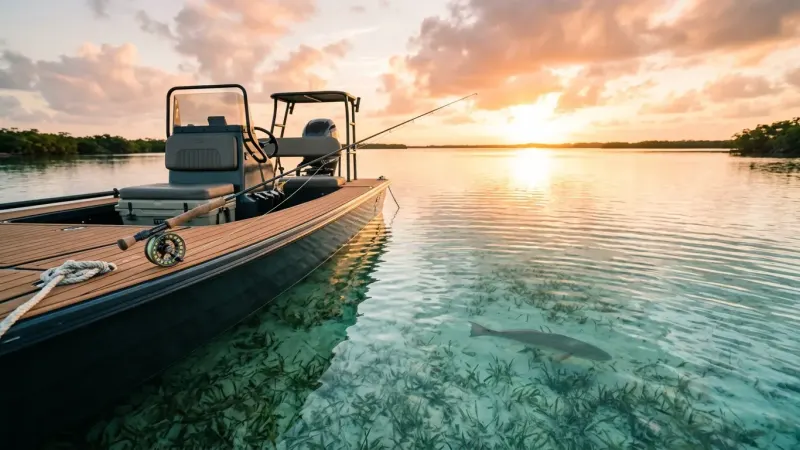
Imagine this situation: it’s a calm, sunny morning, and you’re poling your skiff across a shallow grass flat in a Florida estuary. You can see redfish tailing in the distance, grubbing for crustaceans. In this scenario, my first choice would be a weedless soft plastic shrimp imitation (like a Gulp! Shrimp) rigged on a lightweight worm hook. The goal is a subtle, natural presentation that won’t spook the fish in the clear water. If the reds are ignoring it, I might switch to a small weedless soft plastic paddle tail to mimic a small baitfish, retrieved slowly just above the grass.
Nearshore Reefs & Wrecks
You’ve motored out a few miles on your center console, and your sonar lights up with structure and fish below. You’re targeting snapper and grouper. Here, a heavy vertical jig (metal or lead head with soft plastic) is my go-to. Drop it straight down to the structure, then use a quick, erratic jigging motion to entice strikes. If the current is strong, a large bucktail jig tipped with a strip of natural bait can also be deadly.
Offshore Pelagics
You’re miles offshore, on a beautiful day, scanning for weed lines or bait schools. You spot some diving birds and breaking fish. For mahi-mahi and smaller tuna, a trolled skirted lure (often paired with ballyhoo) or a medium-sized diving hard bait is highly effective. If they’re crashing bait on the surface, don’t hesitate to cast a topwater popper or stickbait right into the frenzy – the explosive strike will be unforgettable!
To be fair, sometimes the fish just aren’t biting, no matter what you throw. But more often than not, a thoughtful approach to lure selection will make all the difference.
The Takeaway: Experiment and Observe
Ultimately, there’s no single “magic” lure for all saltwater conditions. The most successful anglers are those who observe, adapt, and aren’t afraid to experiment. Pay attention to what’s working (or not working) for you and others around you. Watch for baitfish activity, water clarity, current, and light conditions. Each piece of information is a clue, helping you choose the perfect lure from your tackle box.
So, next time you’re prepping your boat for a fishing trip, take a moment to think beyond just grabbing “a lure.” Consider the species, the environment, and the conditions. With these insights, you’ll not only choose the right saltwater fishing lures more confidently but also dramatically increase your chances of hooking that next big one. Happy fishing, and we look forward to hearing about your catches on Sail & Power & Boats & Motor Yachts!