


Monohull vs. Catamaran: Choosing Your Perfect Sailing Vessel for Adventure
Ah, the open water! The gentle sway, the wind in your hair, the endless horizon calling. For decades, the dream of owning a sailboat has captivated countless adventurers. But before you cast off, there’s a fundamental question every aspiring sailor faces: Should you choose a classic monohull or the increasingly popular catamaran? As a seasoned hand in the marine industry, I’ve helped hundreds of folks navigate this very decision. Let’s dive deep into both options to find which vessel truly speaks to your soul and your sailing dreams.
Table Of Content
The Classic Monohull: Graceful & Timeless
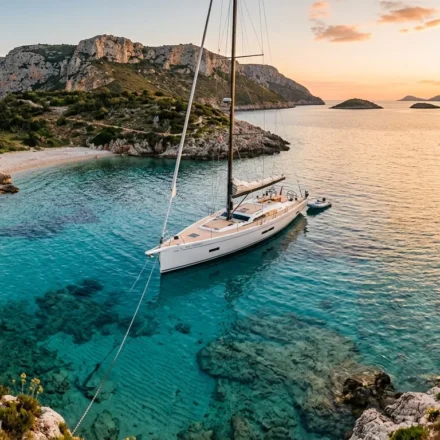
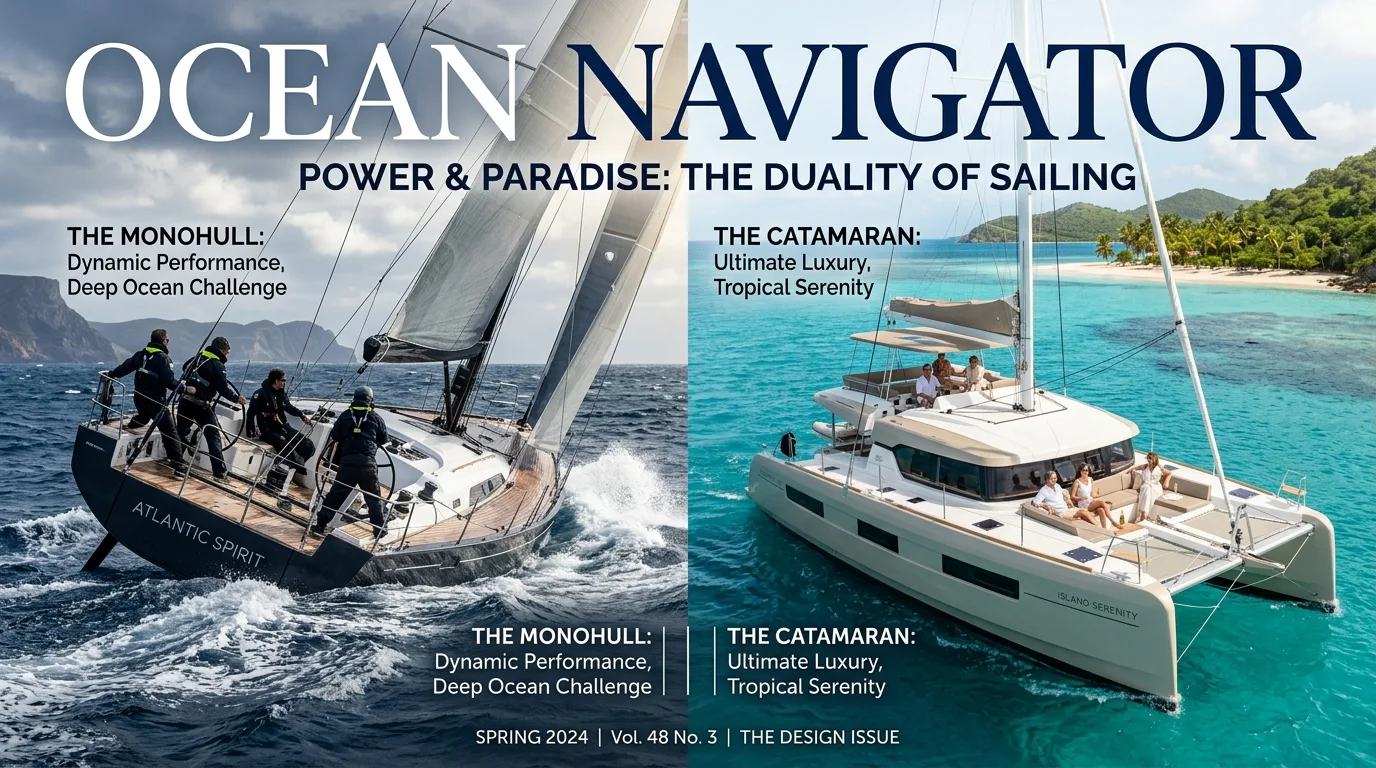
A monohull is the traditional single-hull boat design, what most people picture when they think of a sailboat. From nimble day sailers (under 25 ft) like a classic Catalina 22 to robust bluewater cruisers (40+ ft) like a Beneteau Oceanis 50, monohulls offer a quintessential sailing experience.
- The “Feel” of Sailing: Monohulls heel – they lean over in the wind. This motion is part of the traditional sailing experience for many, offering a thrilling connection to the elements. For serious racers or those who love close-hauled performance, a monohull (especially with a deep fin keel) often sails better directly into the wind.
- Space & Comfort: While smaller than a catamaran of comparable length, modern cruisers (30-40 ft) like a Hunter 33 or Jeanneau Sun Odyssey 36i offer comfortable living. They typically have a more confined interior, often featuring a traditional salon, galley, and cabins.
- Construction & Hull: Most modern monohulls feature fiberglass hulls, known for durability and ease of maintenance. They are primarily displacement hulls – meaning they move through the water rather than on top of it, providing a smoother ride in rough seas, albeit at slower speeds.
- Rigging & Propulsion: The most common rig is a sloop (one mast, one mainsail, one headsail like a genoa or jib). Ketch or cutter rigs offer more sail plan versatility. Propulsion typically comes from a single inboard diesel engine (e.g., Yanmar or Volvo Penta), often with a saildrive unit.
- Cost & Dockage: Generally, monohulls have a lower initial purchase price and often incur lower dockage fees due to their narrower beam (width).
The Stable Catamaran: Space & Comfort Afloat
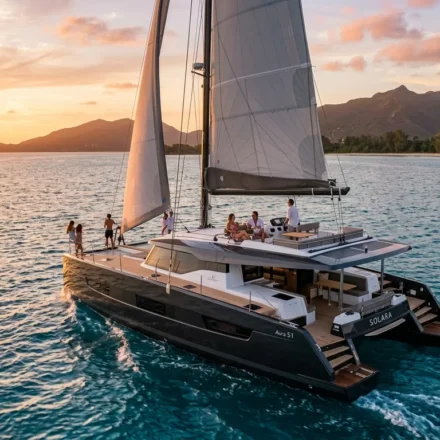
A catamaran is a multihull vessel with two parallel hulls. They’ve surged in popularity for their incredible stability and expansive living spaces, making them ideal for family adventures and coastal cruising.
- Stability & Level Sailing: Catamarans sail mostly flat, with minimal heeling. This offers unparalleled comfort for those prone to seasickness, and makes cooking, sleeping, and moving about the boat much easier, especially for families.
- Immense Space & Privacy: With two hulls and a bridging deck, catamarans, like a Lagoon 42, offer massive interior volume, often akin to a small apartment. Multiple cabins, each with private heads (bathrooms), are common, providing excellent privacy for guests or a large family.
- Shallow Draft & Speed: Catamarans typically have a much shallower draft (the depth of the boat below the waterline) than monohulls, allowing access to anchorages often unavailable to deeper keeled boats. They are also known for impressive speeds, especially on a broad reach (with the wind coming from the side-rear).
- Construction & Hull: Like monohulls, modern catamarans are predominantly fiberglass, built for strength and lightness. Their hulls are also displacement hulls.
- Rigging & Propulsion: Most cruising catamarans use a sloop rig with a mainsail and genoa or spinnaker. Crucially, they have twin inboard diesel engines (again, often Yanmar or Volvo Penta), one in each hull. This allows for incredible maneuverability in tight marinas.
- Cost & Dockage: Catamarans generally have a higher initial purchase price and their wider beam often means higher dockage fees.
Comparing the Two: Key Differences
Let’s break down the head-to-head comparison to help you align a vessel with your vision:
- Comfort & Stability: Catamaran wins. If level sailing and minimal motion are paramount, especially for guests or if you’re planning extended liveaboard periods, the catamaran is hard to beat.
- Sailing Performance: It depends. Monohulls typically excel sailing upwind (into the wind), offering a more direct course. Catamarans often need to tack (change direction) at wider angles upwind but are generally faster on a reach or run (with the wind).
- Space & Privacy: Catamaran wins hands down. For entertaining, large families, or charter operations, the catamaran’s volume is unmatched.
- Maneuverability & Docking: Catamaran often easier. Twin engines allow a catamaran to spin almost in its own length, making docking surprisingly simple. Monohulls, with their single engine and deep keel, require more skill in tight quarters.
- Cost of Ownership: Monohull generally cheaper. From initial purchase to dockage (marina fees), haul-out (lifting the boat out of the water), and bottom paint (antifouling applied annually or biennially), catamarans typically cost more due to their larger footprint and twin systems.
- Draft: Catamaran wins for shallow anchorages. Their typically shallow draft opens up countless bays and coves.
Matching Your Dream to Your Vessel
So, how do you choose? It all comes down to your sailing style and priorities:
- For the Traditionalist, Performance Seeker, or Budget-Conscious: If you love the "feel" of a boat heeling, enjoy sailing close to the wind, or are mindful of your budget, a monohull is likely your ideal choice. A Catalina 30 or Beneteau Oceanis 38 could be perfect for coastal day trips or extended cruising for a couple.
- For the Family Cruiser, Liveaboard, or Stability Seeker: If comfort, space, minimal motion, and privacy are paramount, especially for family adventures or long-term cruising, a catamaran like a Lagoon 40 or Fountaine Pajot Astrea 42 is hard to beat. They excel for entertaining and offer incredible freedom to explore shallow waters.
Actionable Steps:
- Define Your Usage: Will you be taking weekend getaways, coastal cruising, or dreaming of offshore passages?
- Consider Your Crew: Solo, a couple, or a family with young children?
- Set Your Budget: Factor in not just the purchase price, but ongoing maintenance schedules (e.g., engine service every 100-200 hours, annual haul-out and bottom paint, sail care and storage), insurance, and dockage.
- Charter Both: The absolute best way to decide is to experience both types firsthand. Spend a week on a monohull, then a week on a catamaran. Nothing beats real-world experience.
Maintenance Snapshot
While the specifics vary, remember a catamaran will have two engines to service, double the propellers, and a much larger bottom surface for antifouling paint than a monohull of similar length. Corrosion prevention is vital for both, especially in saltwater. Winterizing steps will be similar but doubled for catamarans. Sail care (washing, inspecting for UV damage, proper folding) is essential for any sailing vessel.
Your Adventure Awaits!
Ultimately, there’s no single “best” boat. There’s only the right boat for you, for your family, and for your unique sailing adventure. A boat is more than just transportation; it’s a gateway to freedom, escape, and a lifetime of cherished memories. Whether it’s the classic grace of a monohull or the spacious stability of a catamaran, the perfect vessel is out there, waiting to carry you towards sunsets on the horizon and stories waiting to be written. Take the time, do your research, and trust your gut. Your next great adventure on the water begins now!