Monohull vs. Catamaran: Choosing Your Perfect Sailing Yacht
Ah, the classic dilemma that has sparked countless marina debates and filled the dreams of aspiring boat owners: Monohull or Catamaran? Choosing your next sailing vessel isn’t just about picking a boat; it’s about defining the next chapter of your life on the water, the adventures you’ll have, and the memories you’ll create. As someone who’s spent decades around docks, selling hundreds of vessels, and advising countless dreamers, I can tell you there’s no single “best” option. It’s about finding your best fit.
Table Of Content
Let’s dive into the heart of this choice, comparing these two distinct types of sailing yachts, so you can confidently set a course toward your perfect sailing adventure.
The Enduring Appeal of the Monohull
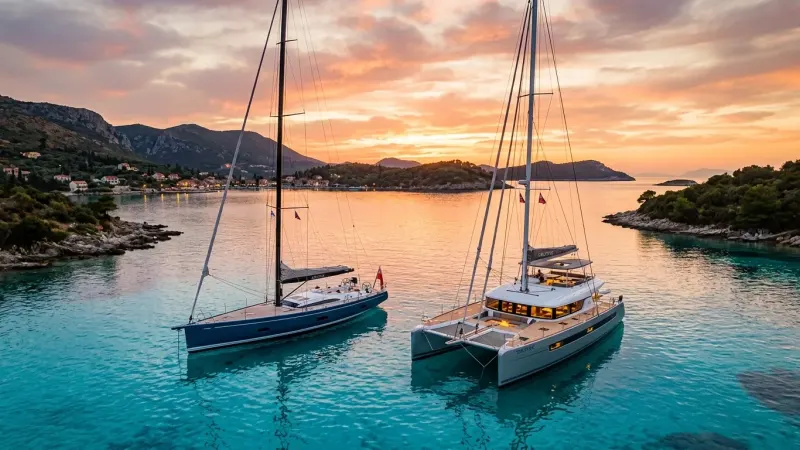
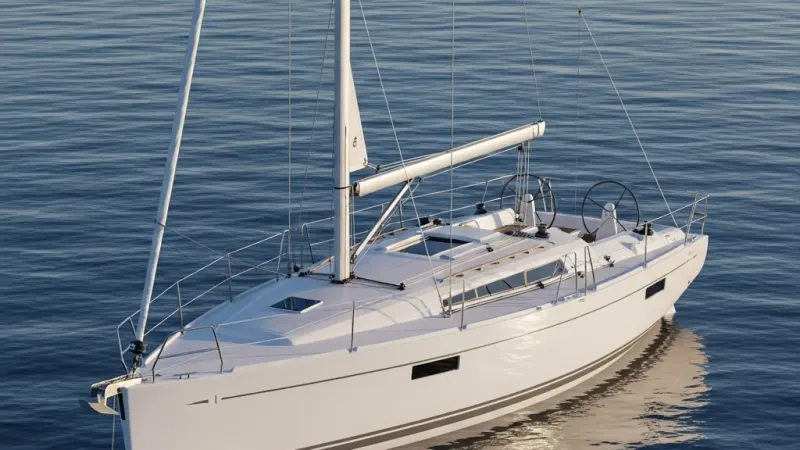
The monohull – a traditional single-hull boat design – is what most people picture when they imagine a sailboat. With their graceful lines and a powerful keel cutting through the water, they offer a classic sailing experience.
What Defines a Monohull?
- Hull Design: Most cruising monohulls feature a displacement hull, meaning they push water aside rather than riding on top of it. This design prioritizes stability and seaworthiness in various conditions. They use a ballast keel (often a fin keel or full keel) to counteract the force of the wind on the sails, allowing them to remain upright.
- Rigging: The most common rigging type is the sloop – a single mast with a mainsail and one foresail (like a genoa or jib). The Bermuda rig (or Marconi rig) is standard, featuring triangular sails.
- Engines: Typically equipped with an inboard diesel engine (common brands include Yanmar or Volvo Penta), often connected to a saildrive unit for efficient propulsion and minimal drag.
- Examples: Think of the popular Beneteau Oceanis series, the robust Catalina 30, or the comfortable Hunter 33. These are common sights in marinas worldwide, often used for coastal cruising or weekend getaways.
The Monohull Experience: Pros and Cons
- Pros:
- Sailing Feel: Many sailors love the “feel” of a monohull, the satisfying heel (tilt) as the wind fills the sails, and their ability to point higher into the wind.
- Cost: Generally more affordable to purchase and maintain than a comparable catamaran, and marina berths are often less expensive.
- Maneuverability: Their single hull and deep keel can offer better handling in tight quarters, especially when motoring, and superior upwind performance.
- Seaworthiness: Their deep V-hull and heavy keel provide excellent stability in rough seas, cutting through waves rather than bouncing over them. Many bluewater cruisers (40+ ft) favor monohulls for offshore passages.
- Cons:
- Heeling: The very thing some love, others dislike. Heeling can be uncomfortable for passengers prone to seasickness and can make cooking or moving around difficult.
- Space: Interior volume and deck space are generally more limited compared to a catamaran of similar length. Privacy can be an issue in smaller cruisers (30-40 ft).
- Draft: Their deep keel restricts access to shallow anchorages and makes beaching impossible.
The Modern Marvel: The Catamaran
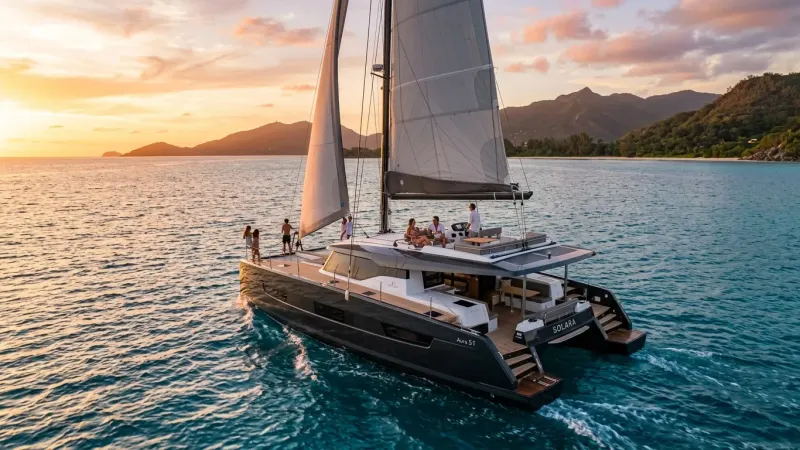
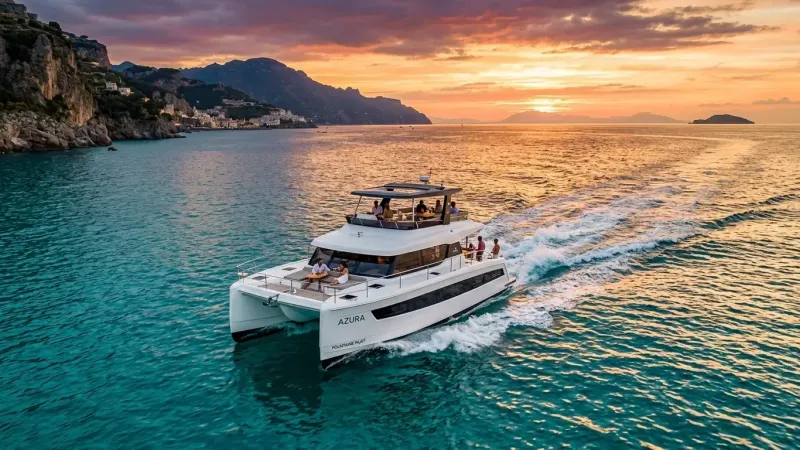
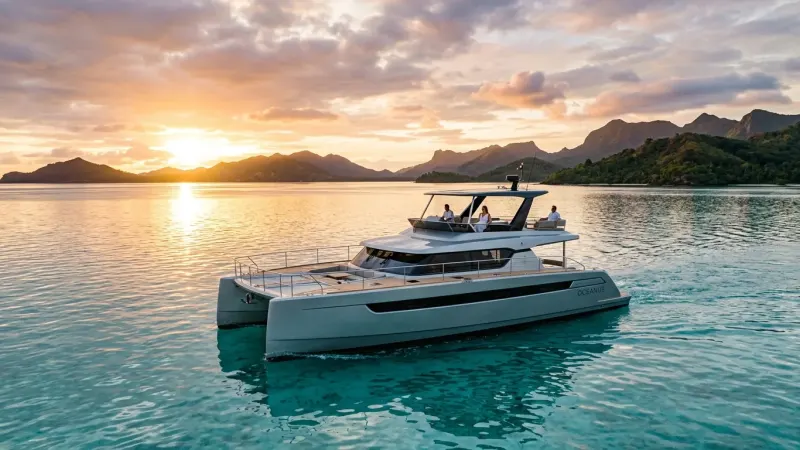
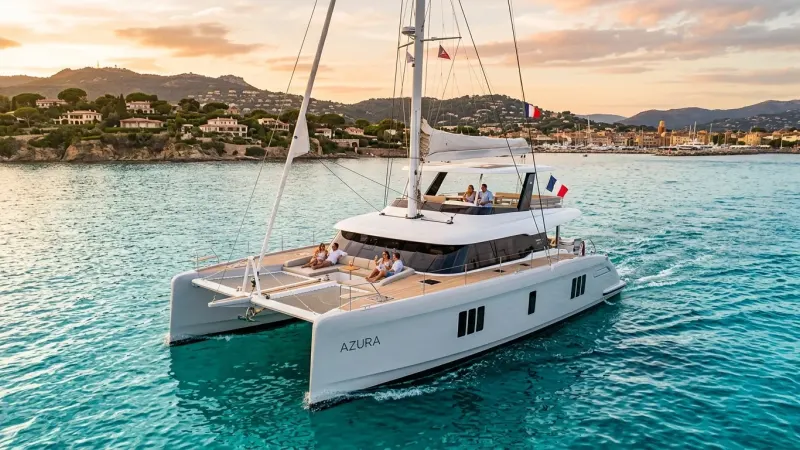
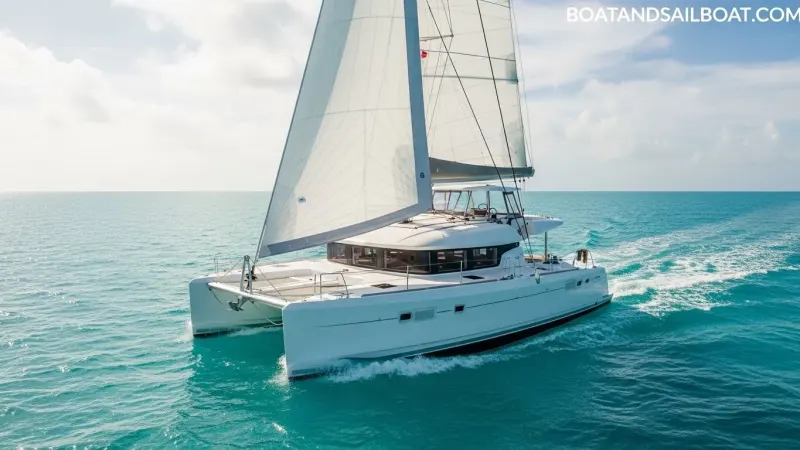
Catamarans – boats with two parallel hulls – have surged in popularity, particularly for cruising and chartering, thanks to their exceptional stability and expansive living spaces.
What Defines a Catamaran?
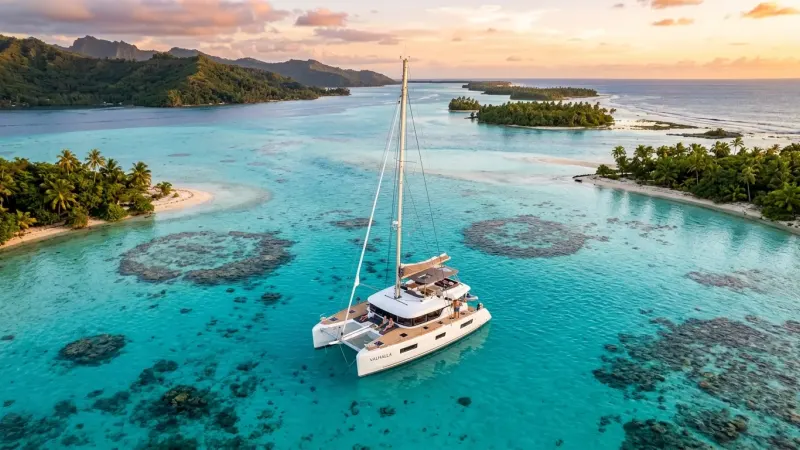
- Hull Design: Catamarans are quintessential multihulls. Their twin displacement hulls provide inherent stability, virtually eliminating heel. They typically have a shallow draft, making them ideal for exploring coves and getting closer to shore.
- Rigging: Like monohulls, most catamarans use a sloop rig with a tall mast, often with a large mainsail and a self-tacking jib or genoa. Some larger cruising cats might feature a fractional rig or even a cutter rig for sail versatility.
- Engines: Almost all catamarans are powered by twin inboard diesel engines (e.g., Yanmar, Volvo Penta), usually with saildrives. This provides excellent maneuverability and redundancy.
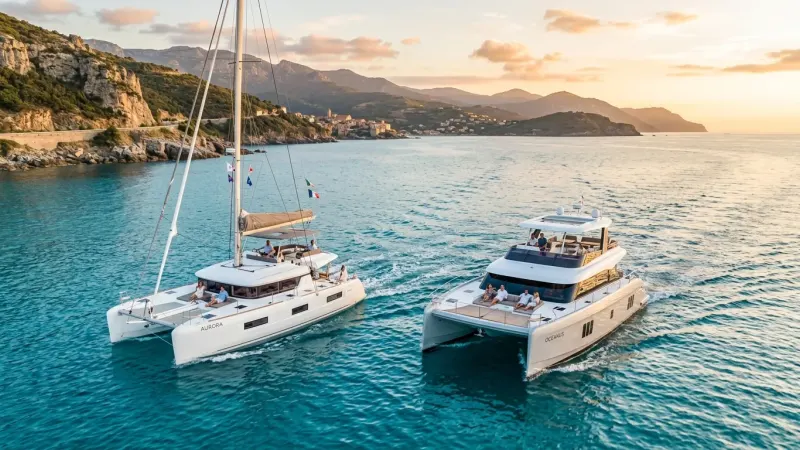
- Examples: Brands like Lagoon Catamarans and Leopard Catamarans are synonymous with cruising catamarans, offering spacious layouts perfect for family adventures or extended liveaboard dreams.
The Catamaran Experience: Pros and Cons
- Pros:
- Stability & Comfort: Minimal heel means less seasickness and a more comfortable experience underway. It’s like sailing on a stable platform, ideal for retirees dreaming of coastal cruising or families with young adventurers.
- Space & Privacy: Unmatched interior and deck space for their length, often with separate cabins in each hull, offering superior privacy. Perfect for liveaboards or group charters.
- Shallow Draft: Their twin, shallow hulls allow access to areas inaccessible to deep-keeled monohulls, opening up a world of secluded anchorages.
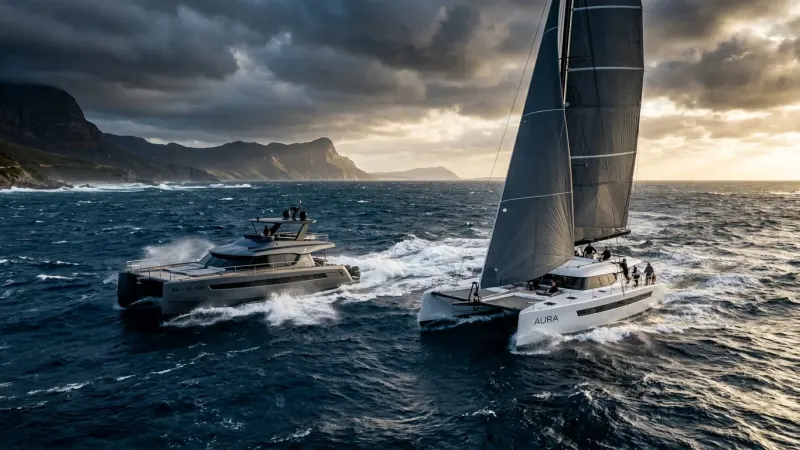
- Speed: While they don’t point as well as monohulls, catamarans can be incredibly fast, especially off-wind, making them excellent for covering ground on a passage.
- Cons:
- Cost: Significantly more expensive to purchase, insure, and often to berth in marinas due to their wider beam.
- Maneuverability: Their wide beam can be challenging in crowded marinas, though twin engines greatly assist. They can be prone to “hobby-horsing” (pitching motion) in certain sea states.
- Upwind Performance: While improving, catamarans generally don’t point as high into the wind as monohulls.
- Windage: Their large, flat profile can make them more susceptible to wind drift at anchor or in a marina.
Making Your Choice: Matching Boat to Lifestyle
So, how do you decide? It all comes back to your sailing dreams and practical needs.
Consider a Monohull if:
- You value the traditional sailing feel, enjoy the heel, and want to feel “in” the water.
- Your budget for purchase, maintenance, and marina fees is a key consideration.
- You plan for serious offshore passages or enjoy sailing upwind.
- You’re looking at a day sailer (under 25 ft) or a classic cruiser (30-40 ft) for solo or couple’s adventures.
Consider a Catamaran if:
- Stability and comfort are paramount, especially for family cruising or if you have guests prone to seasickness.
- You prioritize abundant living space, privacy, and entertaining areas.
- You want to explore shallow anchorages and enjoy a “beach house” feel on the water.
- You’re planning extended liveaboard periods or chartering with larger groups. Many bluewater vessels (40+ ft) are now catamarans for comfort.
Maintenance Matters
Regardless of your choice, proper boat maintenance is non-negotiable for safety, reliability, and preserving your investment. Both types of vessels require:
- Annual Haul-Out: For inspection, cleaning, and applying anti-fouling bottom paint to prevent marine growth.
- Engine Service: Typically every 100-200 hours or annually, whichever comes first. This includes oil changes, filter replacements, and checking belts and hoses.
- Sail Care: Regular inspection for wear, UV damage, and proper storage (especially during winterizing) will extend their life.
- Corrosion Prevention: Especially critical for metal components and engines in saltwater environments.
Catamarans will have two engines to service and a wider area to bottom paint, which can increase these costs. Monohulls might require more attention to keel bolts or rudder bearings.
Your Next Step to the Horizon
Ultimately, the choice between a monohull and a catamaran isn’t just about technical specifications; it’s about the lifestyle you envision. Is it the romantic lean of a monohull cutting through waves, or the expansive, stable platform of a catamaran offering resort-like comfort?
My best advice? Get out there and experience both! Charter different models, talk to owners at your local marina, and visit boat shows. Test how a Beneteau Oceanis 40 feels compared to a Lagoon 42. Imagine yourself anchoring in a secluded cove or navigating an offshore passage. Picture the sunsets, the family laughter, the freedom.
The perfect boat for you is the one that ignites your passion, fits your budget, and aligns with the incredible stories you’re eager to write on the water. Happy sailing!