Offshore vs. Inshore Fishing Boats: Choosing Your Ideal Battleground
Your Ideal Battleground: Offshore vs. Inshore Fishing Boats
Ah, the thrill of the chase! Whether you dream of battling a trophy marlin far out at sea or quietly stalking redfish in serene coastal flats, the heart of every angler beats to a unique rhythm. But before you cast your line, you need the right vessel beneath your feet. As someone who’s spent decades helping fellow enthusiasts find their perfect match, I can tell you that choosing between an offshore fishing boat and an inshore fishing boat is one of the most crucial decisions you’ll make. It’s not just about the boat; it’s about the adventure, the memories, and the freedom you’ll find on the water.
Table Of Content
- Your Ideal Battleground: Offshore vs. Inshore Fishing Boats
- The Call of the Deep: Offshore Fishing Boats
- Built for the Blue
- Key Features & Systems
- Maintenance for the Marathon
- Mastering the Shallows: Inshore Fishing Boats
- Agile & Accessible
- Key Features & Systems
- Keeping it Simple: Inshore Maintenance
- Offshore vs. Inshore: The Head-to-Head
- Making Your Choice: Finding Your Perfect Fishing Partner
Let’s dive deep into the characteristics, capabilities, and considerations for each, helping you pick your ideal battleground vessel.
The Call of the Deep: Offshore Fishing Boats
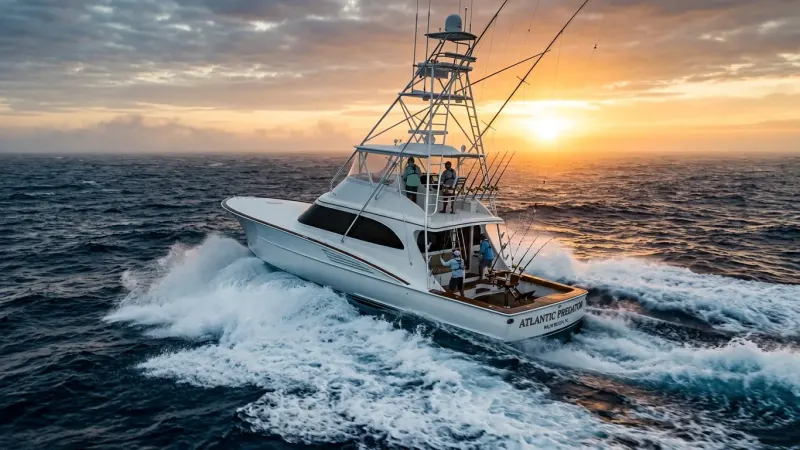
For those whose dreams extend beyond the horizon, the offshore fishing boat is your chariot. These vessels are built to tackle the vast, often unpredictable conditions of the open ocean, chasing pelagic species like tuna, marlin, and mahi-mahi.
Built for the Blue
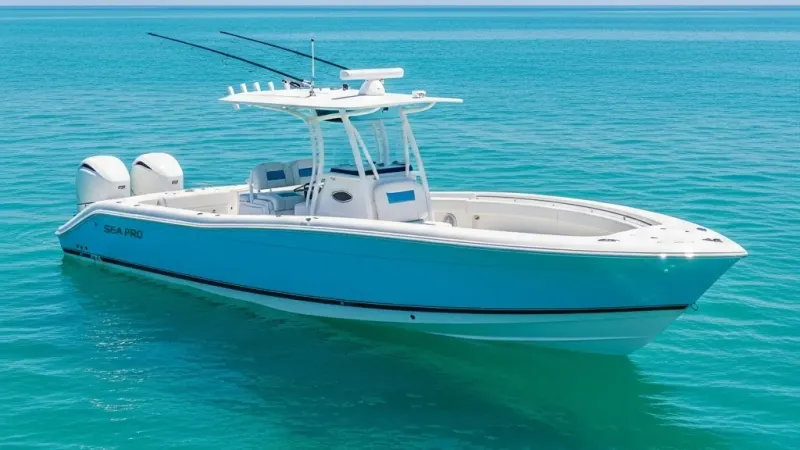
- Hull & Construction: Offshore boats predominantly feature a deep-V hull – a design where the bottom of the boat forms a sharp V-shape, especially at the bow. This allows them to cut through rough waves smoothly, providing a more comfortable and stable ride in choppy conditions. They are typically robustly constructed from thick fiberglass or heavy-gauge aluminum, designed for strength and durability in challenging environments. These are often displacement or semi-displacement hulls, prioritizing smooth passage over outright speed.
- Size & Stability: You’ll find offshore fishing boats ranging from 25 feet (often considered a smaller “day cruiser” in this category) to well over 60 feet (true “bluewater” yachts). Their larger size and beam (width) contribute significantly to stability, crucial when battling big fish or navigating swells.
- Engine & Propulsion: Power is paramount. Most offshore vessels employ powerful twin, triple, or even quad outboard engines (e.g., Yamaha, Mercury, Suzuki) for speed, range, and redundancy. Larger sportfish yachts might feature robust inboard diesel engines (like Yanmar or Volvo Penta) for immense torque and fuel efficiency over long distances.
- Fuel Capacity: Expect substantial fuel tanks to support long runs far from shore, often providing ranges of 300+ miles.
Key Features & Systems
Offshore boats are outfitted for serious fishing and comfort:
- Livewells: Large, aerated tanks to keep bait fish alive and frisky.
- Fish Boxes: Insulated, often macerated, to store your catch on ice.
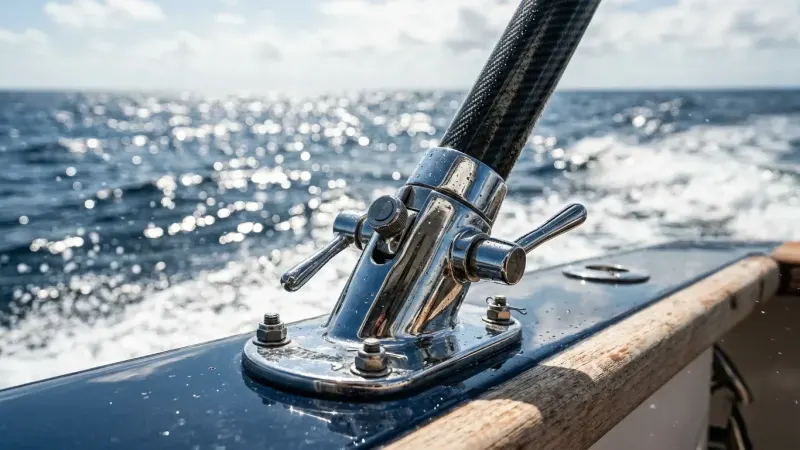
- Outriggers: Long poles that extend from the boat to spread fishing lines wider, preventing tangles and covering more water.
- Tuna Towers/Flybridges: Elevated helm stations providing a better vantage point for spotting fish and structure.
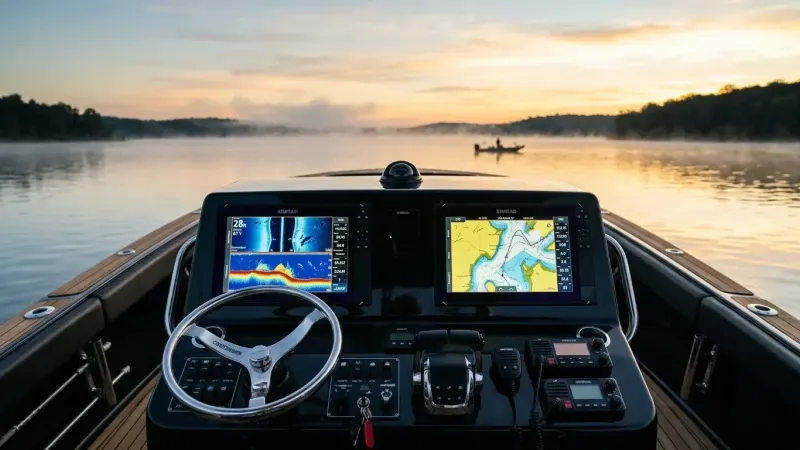
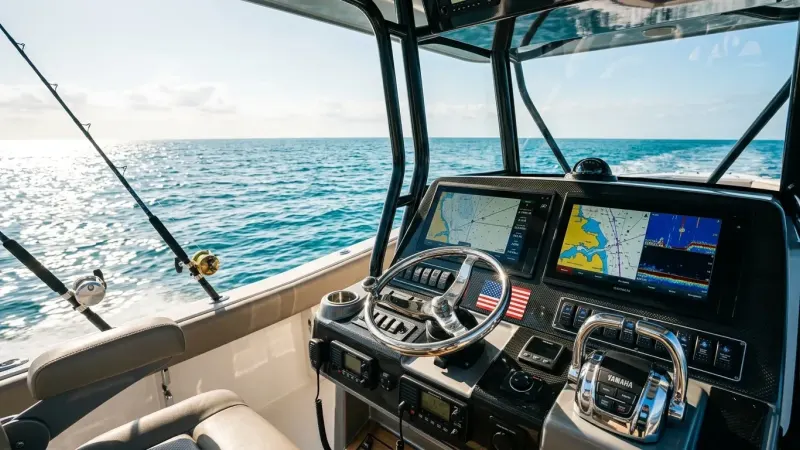
- Advanced Electronics: High-powered fishfinders (with CHIRP sonar for clearer target separation), radar for navigation and bird-spotting, robust GPS/chartplotters, and auto-pilot systems.
- Amenities: Many include enclosed heads (bathrooms), galleys, berths, and air conditioning for overnight trips.
Real Boat Examples: Grady-White Canyon series, Boston Whaler Outrage, Viking Yachts, Hatteras convertibles.
Maintenance for the Marathon
Given their complexity and exposure to harsh conditions, offshore boats require diligent maintenance:
- Annual Haul-out: Essential for bottom paint application to prevent marine growth and hull inspection.
- Engine Service: Adhere strictly to manufacturer recommendations (e.g., every 100-200 hours for outboards, per manual for diesels).
- Corrosion Prevention: Regular washdowns, anode checks, and electrical system inspections are critical.
- Systems Checks: All pumps, electronics, and plumbing systems need frequent inspection.
Mastering the Shallows: Inshore Fishing Boats
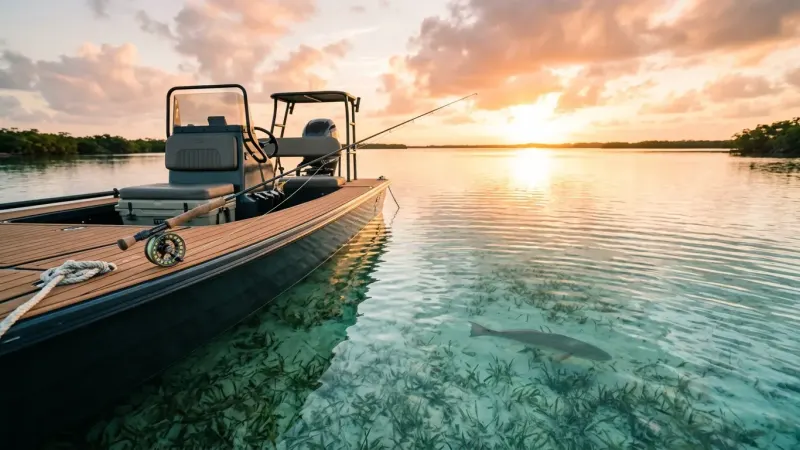
If your passion lies in exploring bays, estuaries, coastal rivers, or shallow flats, an inshore fishing boat is your perfect partner. These vessels are designed for maneuverability, shallow draft, and quick access to prime fishing grounds closer to shore.
Agile & Accessible
- Hull & Construction: Inshore boats often feature a modified-V hull, shallow-V hull, or even a nearly flat bottom, all designed to float in very little water (shallow draft) and get on plane quickly. These are classic planing hulls, built for speed and efficiency in calmer waters. Construction is typically fiberglass or lighter aluminum, prioritizing weight savings for shallow running.
- Size & Maneuverability: Ranging from 15 to 25 feet (comparable to a “day sailer” in length), these boats are compact and agile. Their smaller size makes them easy to trailer, launch, and navigate in tight spaces.
- Engine & Propulsion: Most run with a single or twin outboard engine (e.g., Yamaha, Mercury, Honda) chosen for efficiency, reliability, and ease of maintenance in saltwater.
- Fuel Capacity: Smaller tanks are common, as trips are generally shorter and closer to fuel sources.
Key Features & Systems
Inshore boats are specialized for their environment:
- Shallow Draft: The defining characteristic, allowing access to skinny water where larger boats can’t go.
- Trolling Motors: Electric motors mounted on the bow for silent, stealthy propulsion and precise positioning when sight fishing.
- Poling Platforms: Elevated platforms on the stern of “flats boats” allowing an angler to quietly pole the boat in extremely shallow water.
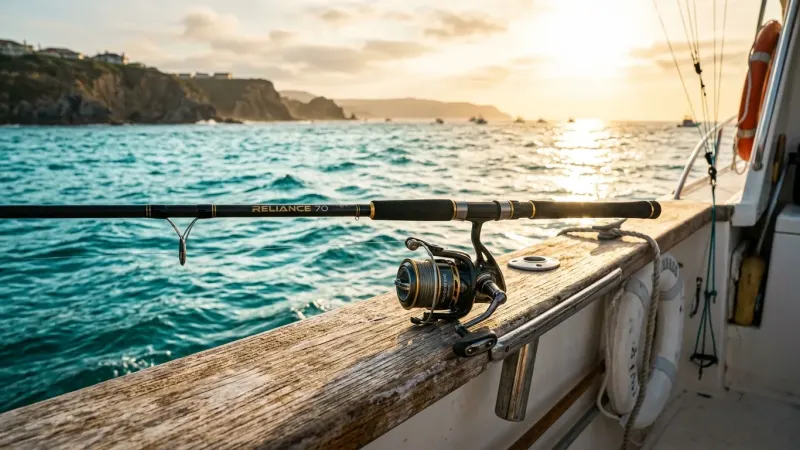
- Rod Holders & Storage: Ample, well-placed rod holders and secure storage for multiple setups.
- Smaller Livewells: Sufficient for a day’s worth of bait.
- Electronics: Good GPS/chartplotter and medium-depth fishfinder are standard. Radar is rarely needed.
Real Boat Examples: Carolina Skiff, Maverick HPX, Pathfinder Bay Boat, Gheenoe, smaller Boston Whaler Montauks.
Keeping it Simple: Inshore Maintenance
Maintenance is generally less intensive than for offshore vessels:
- Regular Washdowns: Critical after every saltwater use to prevent salt buildup and corrosion.
- Engine Flushing: Always flush the outboard with fresh water after use.
- Seasonal Checks: Battery, trailer, and basic engine service as per manufacturer recommendations.
- Sail Care & Storage: Not applicable here, as these are powerboats.
Offshore vs. Inshore: The Head-to-Head
Here’s a quick comparison to highlight the core differences:
- Water Conditions: Offshore (rough, deep, open ocean) vs. Inshore (calm, shallow, protected waters).
- Target Species: Offshore (pelagics like tuna, marlin) vs. Inshore (bottom fish, redfish, snook, trout).
- Range & Endurance: Offshore (long trips, significant fuel capacity) vs. Inshore (shorter trips, less fuel).
- Comfort & Amenities: Offshore (more creature comforts, often cabins) vs. Inshore (minimalist, open layouts).
- Cost: Offshore boats generally have higher purchase prices, fuel consumption, and maintenance costs due to size and complexity.
- Trailering: Inshore boats are typically much easier to trailer and launch, offering greater flexibility.
Making Your Choice: Finding Your Perfect Fishing Partner
So, how do you decide? It boils down to your personal fishing style, location, and aspirations:
- Assess Your Primary Fishing Grounds: Where do you most often fish? Is it miles offshore, or within sight of land?
- Consider Your Target Species: Are you dreaming of big game, or prefer casting in the shallows for local favorites?
- Evaluate Your Crew & Comfort: Will you have a dedicated fishing crew or solo trips? Do you need a head and cabin, or is an open deck fine?
- Budget Reality: Be honest about your budget for purchase, fuel, maintenance, storage, and insurance. Offshore boats escalate quickly in all these areas.
- Test Drive Both: Whenever possible, get on the water in both types of boats. Experience the ride, the space, and the feel for yourself.
A boat is more than just transportation; it’s an extension of your passion. Whether you choose a rugged offshore beast or an agile inshore stealth machine, the right vessel will unlock countless days of adventure, unforgettable catches, and stories that will last a lifetime. Don’t rush your decision. Talk to experienced boat owners, visit local marinas, and consult with a trusted yacht broker. Your next great fishing story starts with choosing the right boat!