


The Oyster 575: A Legacy of Bluewater Excellence
For decades, the name Oyster has been synonymous with luxury, robustness, and unmatched bluewater cruising capability. When you hear “Oyster Yacht,” it immediately conjures images of elegant lines, supreme comfort, and a vessel truly designed to take you anywhere on the planet, safely and in style. Among their esteemed fleet, the Oyster 575 stands out as a particularly well-balanced and highly sought-after model, bridging the gap between smaller, more agile cruisers and larger, crewed superyachts.
Table Of Content
- The Oyster 575: A Legacy of Bluewater Excellence
- Unpacking the Oyster 575: Detailed Specifications and Design Philosophy
- Key Specifications at a Glance
- Construction and Hull Design
- Deck Layout and Ergonomics
- Interior Layouts and Craftsmanship
- Mastering the Seas: Sailing Performance and Handling Characteristics
- Performance in Varied Conditions
- Ease of Handling for Short-Handed Crews
- Comfort and Motion at Sea
- Safety Features
- Buying, Owning, and Maintaining Your Oyster 575: Practical Insights
- Market Snapshot: Oyster 575 Price & Availability
- Pre-Purchase Inspection & Common Considerations
- Ownership Costs & Maintenance Regimen
- Customization and Upgrades
- Is the Oyster 575 the Right Bluewater Dream for You?
Introduced by Oyster Yachts, the 575 quickly carved out its niche as a versatile, go-anywhere cruiser perfect for couples or families dreaming of extended voyages. It’s a yacht that doesn’t just promise adventure; it delivers it with an unwavering commitment to quality and thoughtful design. From the moment you step aboard, you understand that this isn’t merely a boat; it’s a meticulously crafted home on the water, engineered for the rigors of ocean passages while providing an unparalleled level of comfort at anchor.
My own experiences, having sailed aboard and brokered many Oysters over the years, confirm their legendary status. There’s a particular feeling of solidity and confidence that comes with an Oyster, especially when the weather turns. It’s a yacht that inspires trust, allowing you to focus on the joy of the journey rather than the worries of the vessel. The 575, in particular, hits a sweet spot, offering substantial volume and capability without becoming overwhelming for a short-handed crew.
Unpacking the Oyster 575: Detailed Specifications and Design Philosophy
To truly appreciate the Oyster 575, we need to delve into its core specifications and the design philosophy that underpins them. Every dimension, every system, is a testament to Oyster’s commitment to building yachts that excel in demanding offshore conditions while pampering their occupants.
Key Specifications at a Glance:
- Length Overall (LOA): 17.5 meters (57 feet 5 inches) – A generous length that provides excellent waterline for speed and comfortable motion at sea.
- Length Waterline (LWL): 15.15 meters (49 feet 8 inches) – Contributing to its impressive speed potential and tracking ability.
- Beam: 5.0 meters (16 feet 5 inches) – A wide beam, carried well aft, allows for spacious interiors and a stable sailing platform.
- Draft: 2.5 meters (8 feet 2 inches) with the standard deep keel. Some models were offered with a shoal keel option at approximately 2.0 meters (6 feet 7 inches) for improved access to shallower anchorages, though the deep keel offers superior upwind performance.
- Displacement: Approximately 27,000 kg (59,525 lbs) – This substantial displacement is a key indicator of its robust construction and ability to carry stores for long voyages.
- Ballast: Around 9,000 kg (19,841 lbs) – A high ballast-to-displacement ratio ensures exceptional stability and righting moment.
- Sail Area: Roughly 170 m² (1,830 sq ft) for the standard sloop rig, varying slightly with cutter rig configurations or optional larger genoas. The generous sail plan ensures good performance in light airs.
- Rigging: Typically a cutter rig or sloop rig. The cutter rig, with its additional staysail, offers versatility for heavy weather and excellent balance.
- Engine: Most commonly fitted with a powerful 150 HP (e.g., Volvo Penta D3-150) diesel engine, providing ample power for motoring against currents or in calms, and efficient charging of house batteries.
- Fuel Capacity: Typically 1,000 liters (264 US gallons) – Providing an impressive range under power.
- Water Capacity: Approximately 950 liters (251 US gallons) – Essential for extended periods away from marinas, often supplemented by watermakers.
Construction and Hull Design:
The Oyster 575 boasts a robust, hand-laid GRP hull with an advanced laminate specification, including an outer layer of Vinylester resin for osmosis resistance. The hull features a solid laminate below the waterline and a balsa-cored topsides for stiffness and insulation. This construction method, combined with a fully encapsulated lead keel (integral to the hull on many models) and a skeg-hung rudder, ensures immense strength and directional stability—critical attributes for a yacht venturing into remote oceans. The deck is typically balsa-cored GRP, providing strength and insulation, often finished with exquisite laid teak decking.
Deck Layout and Ergonomics:
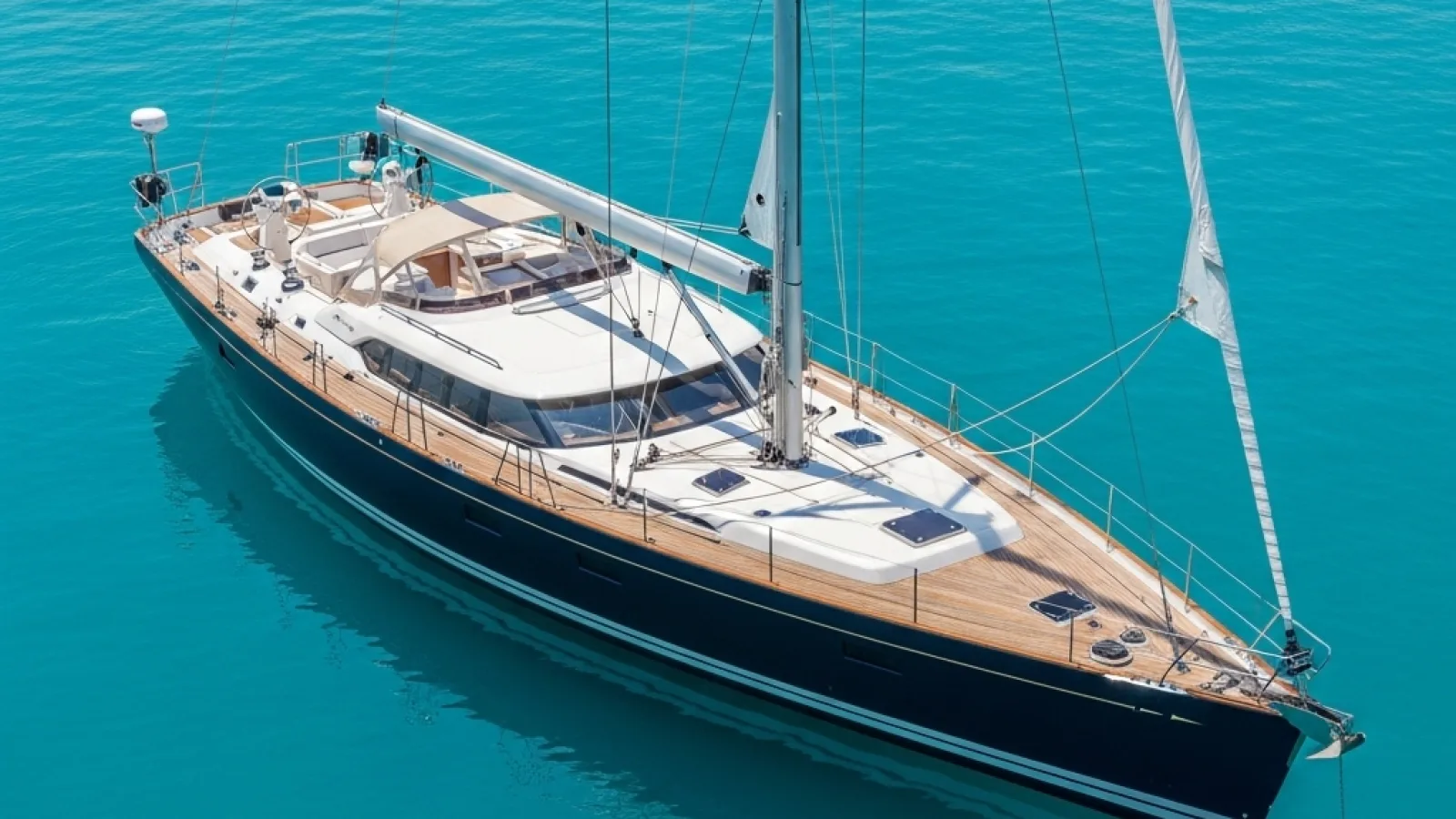
On deck, the 575 offers a large, well-protected center cockpit, a hallmark of Oyster design. This elevated position provides excellent visibility and a dry, secure space during passages. Twin helms are common, offering redundancy and optimal steering positions for different conditions. The aft deck typically features dedicated storage for a tender, often with a davit or a hydraulic passerelle that doubles as a crane. All primary sail controls are typically led back to the cockpit, often equipped with electric winches, making short-handed sailing remarkably manageable.
Interior Layouts and Craftsmanship:
Below deck, the Oyster 575 truly shines. While layouts can vary based on owner customization, common configurations include three or four cabins, often with a luxurious owner’s stateroom aft, featuring an en-suite head. A spacious saloon is typically located amidships, offering comfortable seating, a large dining table, and abundant natural light from the signature Oyster deck saloon windows. The galley is invariably well-appointed and sea-kindly, designed for safe cooking underway, while the navigation station provides a dedicated command center for electronics and passage planning. The joinery, typically in solid timber like teak or cherry, is of an exceptionally high standard, showcasing the finest British craftsmanship.
Mastering the Seas: Sailing Performance and Handling Characteristics
Beyond the numbers, how does the Oyster 575 actually perform when the sails are up and the horizon stretches endlessly before you? This is where the design truly comes alive, offering a blend of exhilarating performance and steadfast reliability that seasoned cruisers demand.
Performance in Varied Conditions:
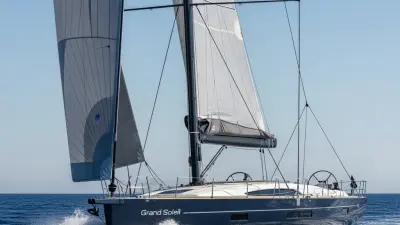
The Oyster 575, with its deep keel and powerful sail plan, is a remarkably capable performer. Upwind, it tracks beautifully, holding its course with minimal helm input, even in a chop. The high ballast ratio contributes to a stiff and powerful motion, allowing it to punch through waves rather than slam. Downwind, particularly with a well-trimmed spinnaker or gennaker, the 575 can cover impressive daily runs, gliding effortlessly across ocean swells. It’s not a racing yacht, but it’s certainly no slouch, offering comfortable cruising speeds that allow for timely passages.
Ease of Handling for Short-Handed Crews:
One of the 575’s greatest strengths is its ability to be sailed and managed by a couple, or even single-handed, once the systems are mastered. Modern Oysters are equipped with an array of hydraulic and electric systems designed to minimize physical effort. Electric primary winches, hydraulic in-mast or in-boom furling for the mainsail, and electric headsail furling are common features. These systems transform the task of sail handling from a strenuous chore into a smooth, push-button operation. I recall one delivery where we encountered an unexpected squall, and thanks to the hydraulic furling, we were able to reef the main quickly and safely from the cockpit, maintaining full control.
Comfort and Motion at Sea:
The substantial displacement and deep, stable hull form of the Oyster 575 translate into an incredibly comfortable motion at sea. Unlike lighter, flatter-bottomed yachts that can hobby-horse or roll excessively, the 575 slices through waves with a dignified grace. Inside, the well-insulated hull and solid joinery minimize noise, creating a tranquil environment even when conditions outside are boisterous. This comfort is paramount on long passages, reducing fatigue and making the journey far more enjoyable for everyone aboard.
Safety Features:
Safety is not an afterthought on an Oyster; it’s engineered into every aspect. Watertight bulkheads, robust seacocks, comprehensive electrical systems with redundancy, and high-quality rigging are standard. The center cockpit design is inherently safer, keeping the crew protected from waves and providing a secure working environment. Emergency steering systems, liferaft storage, and well-thought-out safety equipment lockers further enhance peace of mind when venturing far offshore.
Buying, Owning, and Maintaining Your Oyster 575: Practical Insights
Acquiring an Oyster 575 is a significant investment, but it’s one that typically holds its value well and provides years of unparalleled enjoyment. However, like any luxury item, ownership comes with its own set of considerations.
Market Snapshot: Oyster 575 Price & Availability
When the Oyster 575 was in production, new models often commanded prices well north of $2 million, sometimes approaching $3 million depending on customization, extensive options, and VAT considerations. Today, as a pre-owned yacht, the Oyster 575 continues to be a premium vessel. A well-maintained Oyster 575 for sale typically ranges between $1.2 million and $1.8 million, though exceptional examples with recent refits and upgrades can sometimes fetch more.
The availability of Oyster 575s on the brokerage market can fluctuate. They are popular among active cruisers, so listings often appear in major yachting hubs like the Mediterranean, Caribbean, and the East Coast of the United States. Finding “the one” often requires patience and working with experienced yacht brokers who specialize in bluewater cruisers. Factors influencing the price include the yacht’s age, overall condition, engine hours, sail inventory, electronics package, and any recent major upgrades or refits.
Pre-Purchase Inspection & Common Considerations:
Before making an offer, a comprehensive pre-purchase survey by a qualified marine surveyor specializing in GRP yachts of this caliber is absolutely essential. This should include a hull survey (looking for signs of osmosis, impacts, or structural issues), a rigging inspection (standing and running rigging, mast, boom, furling systems), and a thorough engine and generator survey (oil samples, compression tests, general condition). All systems—electrical, plumbing, HVAC, watermaker, navigation electronics—must be meticulously checked. Pay close attention to the condition of the teak decks, as these can be a significant refurbishment cost if badly worn or neglected. Older electronics, while functional, may be nearing obsolescence and could require significant investment to update to modern standards.
One common area to scrutinize is the condition of the interior joinery. While Oyster’s craftsmanship is superb, years of tropical sun or improper care can lead to fading or varnish degradation. Similarly, check for any signs of water ingress around deck fittings, windows, or portlights, as these can be minor issues that lead to bigger problems if left unaddressed. Always ensure all maintenance records are available and up-to-date; a yacht with a documented history of professional care is always a better investment.
Ownership Costs & Maintenance Regimen:
Owning an Oyster 575 is a commitment, both in terms of time and finances. Annual running costs can easily amount to 5-10% of the yacht’s value, or more if major systems require overhaul or replacement. These costs include dockage fees (which for a 57-foot yacht can be substantial), insurance premiums (often requiring specific offshore cruising endorsements), haul-outs for antifouling and anode replacement, engine and generator servicing, sail maintenance or replacement, and general repairs. Budgeting for unexpected expenses is also critical, as even minor issues on a yacht of this complexity can be costly to resolve.
A rigorous maintenance schedule is paramount to preserving the yacht’s value and ensuring its reliability. This includes daily checks during passages, weekly inspections, monthly system checks, and annual professional servicing of all major components. For instance, the standing rigging typically has a lifespan of 10-15 years, and its replacement is a significant but necessary expense. Investing in professional crew or dedicated yacht management can greatly simplify ownership, especially for those with busy schedules, ensuring the yacht remains in peak condition.
Customization and Upgrades:
Many Oyster owners personalize their yachts extensively, and the 575 offers a fantastic platform for this. Common upgrades include updating navigation electronics (multifunction displays, radar, autopilot), enhancing communication systems (Starlink, satellite phones), improving energy generation (solar panels, hydrogenerators), installing new sails, or performing cosmetic refits of the interior fabrics and finishes. These upgrades not only enhance the cruising experience but can also increase the yacht’s market appeal when it comes time to sell.
Is the Oyster 575 the Right Bluewater Dream for You?
The Oyster 575 embodies a unique blend of luxury, performance, and bulletproof construction, making it an enduring benchmark in the bluewater cruising category. For the discerning sailor who prioritizes comfort, safety, and the ability to confidently explore the most remote corners of the globe, the 575 presents a compelling proposition.
It’s the ideal vessel for a couple seeking to circumnavigate or embark on extended voyages, offering ample space for guests or professional crew when needed, yet remaining manageable for short-handed sailing. While the initial purchase price and ongoing maintenance costs are substantial, the value proposition lies in its exceptional build quality, strong resale market, and the sheer joy and confidence it inspires. If your sailing dreams involve crossing oceans, living comfortably at anchor in exotic locales, and doing so aboard a yacht that feels like a true extension of your home, then the Oyster 575 should be at the very top of your list.
Ultimately, choosing an Oyster 575 isn’t just about buying a yacht; it’s about investing in a lifestyle, a community, and a legacy of adventure. It’s a yacht that truly empowers you to answer the call of the open sea with unwavering confidence and style.