


The Unsung Hero Beneath Your Hull: Why Your Propeller Matters
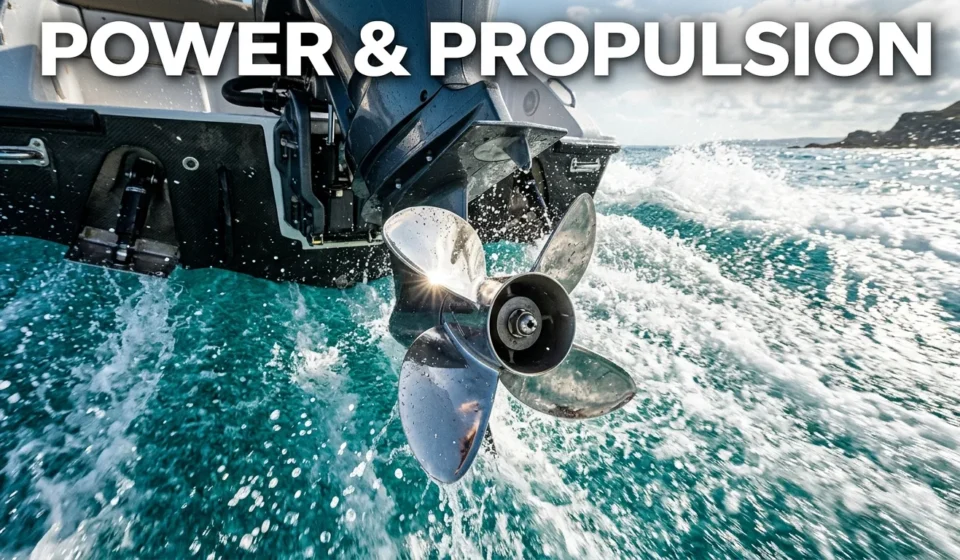
As a seasoned boater, I’ve seen countless discussions about engines, hull designs, and electronics. But honestly, one of the most critical components for your power boat’s performance often gets overlooked: the propeller. It’s the unsung hero, the piece of equipment that translates all that horsepower into actual forward motion. Think of it like the tires on a high-performance car – you can have the most powerful engine in the world, but if your tires aren’t right, you’re just spinning your wheels, literally!
Table Of Content
- The Unsung Hero Beneath Your Hull: Why Your Propeller Matters
- Propeller Basics: Pitch, Diameter, and Blades, Oh My!
- Diameter: The Prop’s “Footprint”
- Pitch: The Heart of Performance
- Number of Blades: More Isn’t Always Merrier
- Propeller Material: Durability Meets Performance
- Matching the Prop to Your Power Boat: A Balancing Act
- Understanding Your Boat and Engine
- The WOT RPM Test: Your Best Friend
- Calculating Prop Slip: Unmasking Inefficiency
- Fine-Tuning for Perfection: Beyond the Basics
- Cup and Rake: Subtle but Significant
- Ventilation and Cavitation: Foes of Performance
- The “Sweet Spot” and Trial and Error
- The Right Prop, The Right Ride
A properly matched propeller doesn’t just get you from point A to point B; it optimizes your entire boating experience. We’re talking about better acceleration, higher top speeds, improved fuel efficiency, and even superior boat handling. On the flip side, the wrong propeller can lead to sluggish performance, excessive fuel consumption, engine strain, and a generally frustrating day on the water. So, if you’re looking to truly unlock your power boat’s potential, paying close attention to your prop is non-negotiable.
Propeller Basics: Pitch, Diameter, and Blades, Oh My!
Before we dive into selection, let’s get acquainted with the fundamental characteristics of a propeller. Understanding these terms is the first step towards making an informed decision. Don’t worry, it’s not rocket science, just good old marine mechanics!
Diameter: The Prop’s “Footprint”
The propeller diameter is simply the measurement of the circle the blades make when they rotate. It’s usually the first number you see when a prop is described (e.g., 14×19). A larger diameter generally means more blade area, which can provide more thrust, especially for heavier boats or those that need to move a lot of water at lower speeds. However, there’s a limit; too large a diameter can cause excessive drag and stress on your engine. The ideal diameter is determined by your engine’s gear ratio and the clearance around your prop shaft and skeg.
Pitch: The Heart of Performance
Now, let’s talk about propeller pitch – this is arguably the most critical factor. Pitch is the theoretical distance, in inches, that a propeller would move forward in one complete revolution if it were moving through a soft solid, like a screw through wood. For instance, a 19-pitch prop would ideally move 19 inches forward with each rotation. In reality, due to “slip” (which we’ll touch on later), it never achieves this theoretical distance.
Pitch directly impacts your engine’s RPM (revolutions per minute). A higher pitch prop is like a higher gear in a car; it moves you further per revolution, leading to potentially higher top speeds but slower acceleration and lower RPMs at wide-open throttle (WOT). Conversely, a lower pitch prop is like a lower gear; it allows your engine to rev higher, providing quicker acceleration and better hole shot, but with a lower potential top speed. For example, imagine this situation: you’re trying to tow a heavy tube or multiple skiers with a prop that’s too high in pitch. Your engine will struggle to reach its optimal RPM range, feeling sluggish and straining. Drop down a couple of inches in pitch, and suddenly you’ll feel that instant torque and pull, getting your skiers up quickly and smoothly. That’s the power of pitch!
Number of Blades: More Isn’t Always Merrier
Propellers typically come with two, three, four, or even five blades. Each configuration offers different characteristics:
- 2-Blade: Less common on power boats today, primarily found on smaller outboards or some racing applications. Offers minimal drag but can cause more vibration.
- 3-Blade: The most common choice for general power boat applications. It offers a good balance of speed, acceleration, and fuel efficiency. It’s a great all-rounder for many recreational boats.
- 4-Blade: Provides excellent hole shot, strong mid-range performance, and reduced vibration. It often shines on boats that carry heavy loads, tow water-skiers, or need to maintain plane at lower speeds. While it might sacrifice a little top-end speed compared to a 3-blade, the enhanced grip and smooth ride are often worth it.
- 5-Blade: Even better grip and smoother operation than a 4-blade, often used on high-performance boats, stern drives, or applications where cavitation is a concern. You’ll definitely trade some top speed for this incredible bite and smooth operation.
Propeller Material: Durability Meets Performance
The material of your propeller plays a significant role in its durability, cost, and even performance:
- Aluminum: The most common and affordable option. Great for general recreational use, easy to repair, and designed to sacrifice itself (break a blade) before damaging your lower unit in a hard impact. Good for lower horsepower engines.
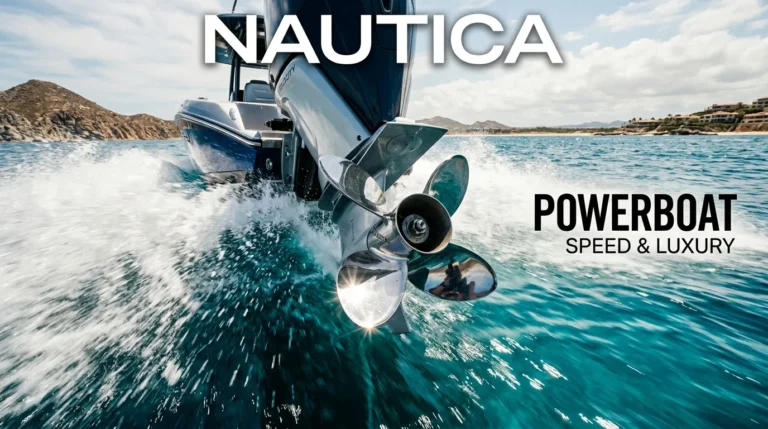
- Stainless Steel: Much stronger and more durable than aluminum. Stainless steel props can be made thinner, allowing for more efficient blade designs that often translate to better performance, higher top speeds, and improved fuel economy. They handle impacts better but are more expensive and can transfer more shock to your drivetrain if you hit something hard. In my opinion, for serious performance and longevity, stainless steel is the way to go for most larger power boats.
- Bronze/Nibral: Typically found on larger inboard vessels. These materials are very strong, corrosion-resistant, and can be repaired. They are heavier and generally more expensive than stainless steel but offer excellent longevity and smooth operation.
Matching the Prop to Your Power Boat: A Balancing Act
Now that you know the components, how do you put it all together? Choosing the right prop is a balancing act, a careful negotiation between your boat, your engine, and how you intend to use it.
Understanding Your Boat and Engine
First, you need to know your engine’s manufacturer-recommended wide-open throttle (WOT) RPM range. This is the sweet spot where your engine is designed to operate most efficiently and safely at full throttle. You’ll find this in your engine’s owner’s manual. Your boat’s hull type (displacement, semi-displacement, planing) and its typical load also play crucial roles. A heavy fishing boat loaded with gear will need a different prop than a light, fast runabout.
The WOT RPM Test: Your Best Friend
This is where the rubber meets the road – or rather, the prop meets the water. To truly find the right propeller, you need to perform a WOT RPM test. Load your boat as you would on a typical outing (full fuel, gear, usual passengers). Head out to calm waters and run your boat at wide-open throttle. Check your tachometer and see what RPM your engine is achieving. Compare this number to your engine’s recommended WOT RPM range.
- If your WOT RPM is too high: Your engine is over-revving. This means your propeller pitch is too low. You’ll need to increase the pitch (e.g., from 19 to 21). Each inch of pitch generally changes your WOT RPM by about 150-200 RPM.
- If your WOT RPM is too low: Your engine is lugging. Your propeller pitch is too high. You need to decrease the pitch (e.g., from 21 to 19). This will allow your engine to reach its optimal operating range, reducing strain and improving performance.
Finding that perfect prop means your engine can hit the middle or upper end of its recommended WOT RPM range. This ensures your engine is working efficiently without being overstressed or under-utilized.
Calculating Prop Slip: Unmasking Inefficiency
Propeller slip is the difference between the theoretical distance your prop should travel in one revolution (based on its pitch) and the actual distance it moves through the water. Some slip is normal and necessary for a prop to generate thrust, but excessive slip indicates inefficiency. Calculating slip involves a bit of math, using your engine RPM, gear ratio, prop pitch, and GPS speed. Honestly, this can get a little technical, so if you’re venturing into optimizing slip, it’s often a good idea to consult a marine professional or a reputable prop shop. They have the tools and experience to pinpoint exactly where you might be losing efficiency.
Fine-Tuning for Perfection: Beyond the Basics
Beyond the primary factors of diameter, pitch, and number of blades, there are other subtle design elements that can further refine your boat’s performance.
Cup and Rake: Subtle but Significant
- Cup: This is a small, curved lip on the trailing edge of the propeller blade. A cupped prop acts like a paddle with a slightly deeper scoop. It helps the propeller grip the water better, reducing ventilation (air drawn into the prop) and cavitation (water vaporizing around the prop). This can lead to improved hole shot, better fuel economy, and the ability to trim the engine higher for more bow lift and top speed. However, it effectively increases the pitch, so you might need to drop an inch or two in pitch if you move to a heavily cupped prop.
- Rake: This refers to the angle of the blade relative to the propeller hub. A prop with positive rake angles the blades back towards the boat, which can help lift the bow of the boat, reducing wetted surface and increasing top speed. Negative rake is less common but can be used to keep the bow down for better visibility in some applications.
Ventilation and Cavitation: Foes of Performance
You might encounter these terms when discussing propeller issues. Ventilation occurs when air from the surface or exhaust gases are drawn into the propeller, causing it to lose its grip on the water, similar to spinning tires on ice. This often happens when turning sharply, running in rough water, or having the engine trimmed too high. Cavitation is more serious; it’s the formation and collapse of vapor bubbles on the propeller blade surface due to extreme pressure differences. This literally eats away at your propeller over time, causing pitting and damage, and significantly reduces efficiency. Both ventilation and cavitation can be symptoms of an improperly matched propeller or incorrect engine mounting height. Let me add something here: don’t confuse a little bit of prop wash with actual cavitation; true cavitation often sounds like gravel crunching and will quickly destroy a prop.
The “Sweet Spot” and Trial and Error
Finding the perfect propeller is rarely a one-shot deal. It often involves a bit of trial and error, especially if you’re making significant changes to your boat or its usage. Based on my experience, it’s wise to start with the manufacturer’s recommendations and then make incremental adjustments, typically by changing pitch by 1-2 inches at a time, until you hit that sweet spot. Don’t be afraid to experiment, but always keep an eye on your WOT RPM to protect your engine. If you’re unsure, a visit to a local marine mechanic or a specialized propeller shop is invaluable. They often have demo props you can try before you buy, which is a fantastic service for dialing in that performance.
The Right Prop, The Right Ride
So, there you have it. Your propeller is far more than just a spinning piece of metal; it’s a finely engineered component that dictates how your power boat performs on the water. By understanding the basics of diameter, pitch, and blade count, and by carefully conducting your WOT RPM tests, you can dramatically improve your boat’s acceleration, top speed, and fuel efficiency. It’s an investment in your boating pleasure and the longevity of your engine.
Don’t settle for “good enough” performance. Take the time to understand your propeller, test different options if needed, and fine-tune your setup. You’ll be amazed at the difference it makes, transforming your time on the water into a smoother, more exhilarating, and more economical experience. Now get out there, enjoy the ride, and feel the power of propeller perfection!