


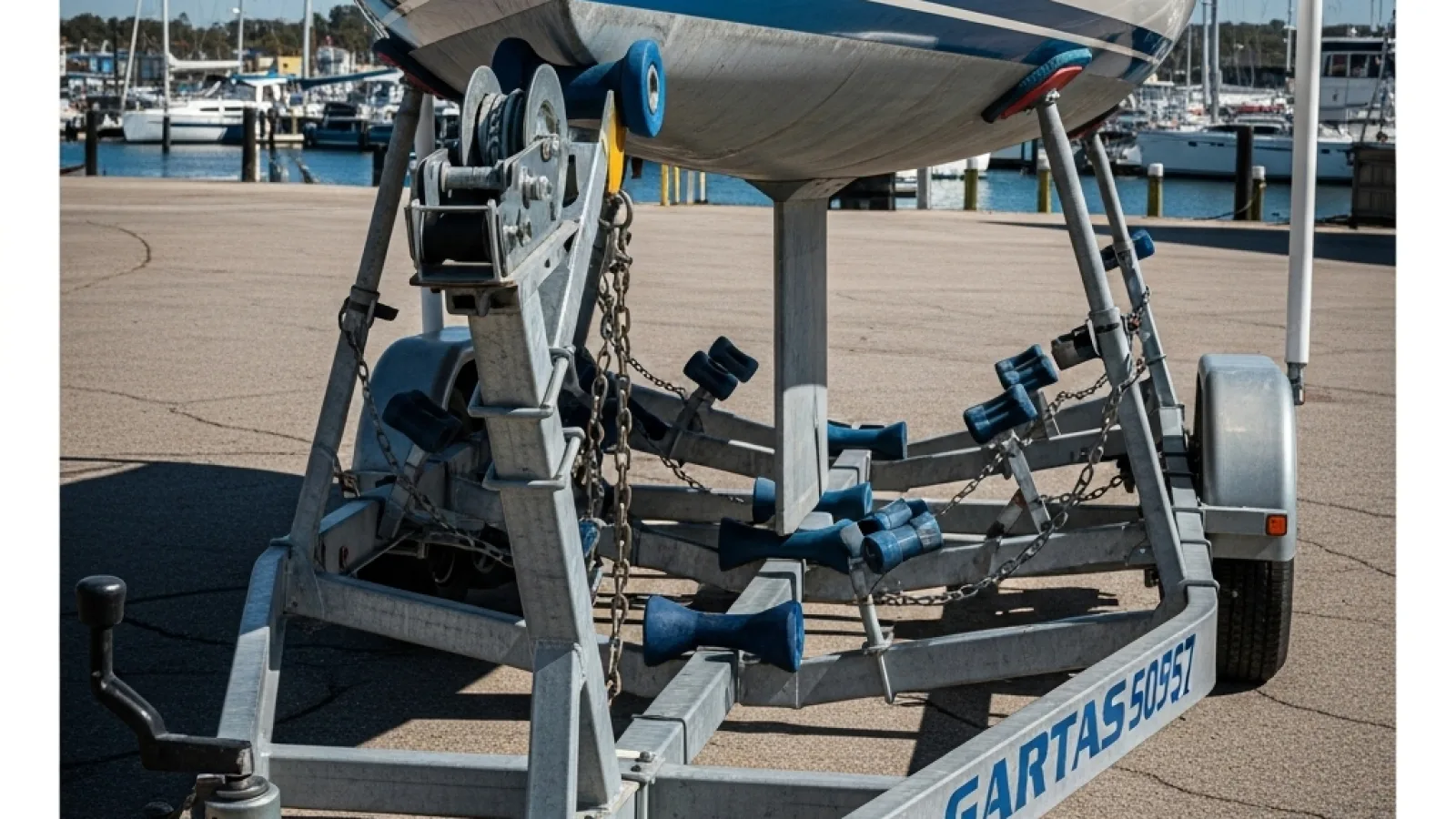

As a seasoned boater and someone who’s spent decades around marinas and boatyards, I can tell you that owning a sailboat opens up a world of adventure. But getting your beloved vessel from your driveway to the launch ramp, or even across state lines for that dream cruising ground, often hinges on one critical piece of equipment: a reliable sailboat trailer. It’s not just a collection of steel and wheels; it’s your key to flexibility, cost savings, and ultimately, more time on the water. Trust me, I’ve seen enough trailer mishaps to know that getting this right is paramount.
Table Of Content
- The Indispensable Role of a Sailboat Trailer: More Than Just Wheels
- Deciphering Sailboat Trailer Sizes & Capacity: The Golden Rules
- Understanding Your Sailboat’s Vital Statistics
- Trailer Capacity: Weight Ratings Explained
- Length and Bunk Configuration
- Key Features and Components: What Makes a Great Trailer?
- Materials and Construction: Durability Matters
- Axle Configuration and Brakes
- Suspension, Tires, and Wheels
- Winches, Bunks, Rollers, and Guides
- Setup Tips and Safe Towing Practices: Hit the Road with Confidence
- Preparing Your Sailboat for Transport
- Connecting and Balancing the Load
- Pre-Trip Checklist and On-Road Safety
- Navigating the Market: New, Used, and Specialized Trailers
- New vs. Used: Weighing Your Options
- Specialized Trailers: Keelboat and Custom Solutions
Whether you’re eyeing a zippy dinghy, a nimble day sailor, or a sturdy cruising yacht, the right trailer transforms your boating experience. No more being tied to one marina, no more hefty storage fees—just the freedom to explore new lakes, participate in distant regattas, or simply keep your boat safe and sound at home during the off-season. But how do you choose the right one? It’s more than just finding a “sail boat trailer for sale”; it’s about understanding the intricate dance between your boat’s unique characteristics and the trailer’s capabilities. Let’s dive in.
The Indispensable Role of a Sailboat Trailer: More Than Just Wheels
Think of your sailboat trailer as an extension of your vessel – a crucial link that connects your adventures on the water with your life on land. For many sailors, especially those with boats under 30 feet, a trailer isn’t a luxury; it’s a fundamental tool that unlocks possibilities. It offers unparalleled convenience, allowing you to launch at diverse locations, chase better winds, or explore different waterways without the commitment of a permanent slip.
Beyond convenience, there’s a significant financial advantage. Marina slip fees and dry storage can accumulate rapidly, often becoming one of the most substantial ongoing costs of boat ownership. By storing your sailboat at home on a trailer, you can drastically reduce these expenses, freeing up more of your budget for gear, maintenance, or even more sailing trips. Plus, having your boat accessible in your own yard simplifies maintenance tasks, winterization, and spring commissioning, making upkeep less of a chore and more of a hands-on project.
But perhaps the most underrated benefit is the safety and protection it offers. During the off-season, a properly stored boat on a trailer is less exposed to harsh weather elements, accidental damage from other vessels, or even vandalism that can sometimes occur in a crowded marina. A well-fitted trailer cradles your boat securely, distributing its weight evenly and minimizing stress points, which is vital for preserving its hull integrity and overall longevity. It’s an investment that pays dividends in peace of mind and extended boating enjoyment.
Deciphering Sailboat Trailer Sizes & Capacity: The Golden Rules
Getting the right fit for your sailboat trailer isn’t just about avoiding a ticket; it’s about ensuring safety, preventing damage to your boat, and making towing a smooth experience. This is where many first-time buyers go wrong, so let’s break down the critical factors: your boat’s vital statistics and the trailer’s capacity ratings.
Understanding Your Sailboat’s Vital Statistics
Before you even glance at a trailer, you need to know your sailboat intimately. Don’t guess; find your boat’s exact specifications from the manufacturer’s manual or a reputable marine database. The crucial numbers you’ll need are:
- Length Overall (LOA): This is the length from the tip of the bow to the stern. Your trailer should ideally be sized so the boat doesn’t overhang excessively, both for legal reasons and for proper support.
- Beam: The widest point of your boat. This dictates the width of the trailer and the spacing of the bunks or rollers.
- Dry Weight: This is the boat’s weight without fuel, water, gear, or people. This is the absolute minimum you’ll consider for trailer capacity. Always err on the side of caution.
- Draft: Especially for keelboats, the draft (how deep the keel extends below the waterline) is crucial. A sailboat trailer for a keelboat needs a deep enough keel well or a low enough frame to accommodate the keel without damaging it or raising the boat too high off the ground, which can make launching difficult and increase overall towing height.
Armed with these figures, you can start narrowing down your options. For instance, a 27-foot sailboat trailer for sale will be specifically engineered to handle the length and often the deeper draft of vessels in that size range, a far cry from a trailer designed for a smaller, lighter dinghy.
Trailer Capacity: Weight Ratings Explained
This is arguably the most critical factor. Every trailer has a maximum weight it can safely carry, known as its Gross Vehicle Weight Rating (GVWR). The GVWR includes the weight of the trailer itself (its “curb weight”) plus the maximum cargo it can carry. You also have Gross Axle Weight Ratings (GAWR), which specify the maximum weight each axle can support. Here’s a simple rule of thumb I always tell my clients: Your trailer’s GVWR should exceed your boat’s fully loaded weight by at least 15-20%.
Why the buffer? Because your “dry weight” doesn’t account for everything. When you load your sailboat onto the trailer, you’re also adding the weight of a full fuel tank (gasoline weighs about 6 lbs/gallon, diesel about 7 lbs/gallon), full water tanks (8.3 lbs/gallon), any gear you leave onboard (sails, anchors, safety equipment, tools), and even the weight of the mast if it’s transported on the trailer. This can easily add hundreds, if not thousands, of pounds. Overloading a trailer is a recipe for disaster: blown tires, overheated bearings, brake failure, and structural damage to the trailer or even your towing vehicle. Always calculate your fully loaded weight diligently and choose a trailer that comfortably exceeds it.
Length and Bunk Configuration
The length of the trailer frame and the adjustability of its bunks (or rollers) are vital for proper boat support. Your sailboat’s hull needs to be evenly supported along its length, particularly where structural bulkheads are located. Insufficient support can lead to hull deformation, stress cracks, or even keel damage, especially during long hauls over bumpy roads. Look for trailers with adjustable bunks that can be custom-fitted to your hull’s unique shape, ensuring the weight is distributed optimally. For keelboats, the keel itself must rest securely in a dedicated keel bunk or channel, taking the primary vertical load, while the side bunks provide stability.
Key Features and Components: What Makes a Great Trailer?
Once you understand the fundamental sizing and capacity requirements, it’s time to look at the individual components that contribute to a trailer’s overall quality, durability, and ease of use. These choices can significantly impact your towing experience and the longevity of your investment.
Materials and Construction: Durability Matters
Trailer frames are typically constructed from either galvanized steel or aluminum, each with distinct advantages. Galvanized steel trailers are known for their strength and cost-effectiveness. The hot-dip galvanization process coats the steel in zinc, offering excellent corrosion resistance, especially crucial if you’re frequently launching in saltwater. However, they are heavier than aluminum and, if the galvanized coating is compromised, the underlying steel can rust.
Aluminum trailers are lighter, which translates to easier towing and potentially better fuel economy for your tow vehicle. They offer superior corrosion resistance, making them a premium choice for saltwater environments. While generally more expensive upfront, their longevity and reduced maintenance in harsh conditions often justify the cost. Look for robust frame members, strong welds, and high-quality fasteners regardless of the material. A well-built trailer will have a sturdy tongue and cross-members that show no signs of flex under load.
Axle Configuration and Brakes
The number of axles directly correlates with the trailer’s weight capacity and stability. Single-axle trailers are suitable for lighter sailboats, typically under 2,500 lbs GVWR. They are more maneuverable but offer less stability and redundancy. If a tire blows, you’re in trouble. Tandem-axle trailers (two axles) are the workhorses for most mid-sized sailboats, offering significantly greater weight capacity, enhanced stability, and a safety net if one tire fails. For very large or heavy sailboats, triple-axle trailers provide maximum capacity and stability, though they are less common and more challenging to maneuver.
Brakes are non-negotiable for heavier trailers. Most jurisdictions require brakes on trailers exceeding a certain GVWR (often 1,500 lbs to 3,000 lbs, check your local laws). Common types include surge brakes, which activate when the tow vehicle slows, and electric brakes, which require a controller in the tow vehicle. Hydraulic disc brakes offer superior stopping power and are becoming more common on higher-end trailers. Ensure the brakes are properly sized for your loaded trailer weight and are regularly inspected and maintained, especially after saltwater exposure.
Suspension, Tires, and Wheels
The suspension system contributes significantly to how smoothly your boat rides. Leaf spring suspensions are common, durable, and relatively inexpensive, but can be stiffer. Torsion axles, often found on higher-end trailers, offer independent suspension for each wheel, providing a smoother ride for your boat and better tracking for the trailer. This can be particularly beneficial for delicate instruments or fiberglass hulls.
Tires are your trailer’s only contact with the road, so don’t skimp here. Always use “ST” (Special Trailer) tires, which are designed for heavier loads and lower speeds than passenger car tires. Check the load rating (ply rating) to ensure they can handle your fully loaded weight. Maintain proper tire pressure—underinflation is a leading cause of tire failure. And never, ever travel without a spare tire that is properly inflated and accessible. I’ve been stranded roadside too many times to emphasize this enough!
Winches, Bunks, Rollers, and Guides
The system for loading and unloading your sailboat is crucial for ease and safety. A good winch should be rated for at least 150% of your boat’s bow weight and operate smoothly. Consider a two-speed winch for heavier boats, offering a faster retrieve and a slower, more powerful pull. Bunks provide excellent hull support by distributing weight over a large area, making them ideal for fiberglass hulls. They need to be carpeted or padded to prevent scratching. Rollers allow for easier launch and retrieval, especially in shallower water, but provide point loading which can be detrimental to some hull types; ensure they are properly adjusted and don’t create pressure points. Finally, adjustable side guide-ons are invaluable for aligning your boat correctly during loading, especially in windy conditions or strong currents.
Setup Tips and Safe Towing Practices: Hit the Road with Confidence
Even with the perfect trailer, poor setup or sloppy towing can lead to disaster. Getting your boat properly situated and secured on the trailer, and understanding how to tow it safely, are critical skills every trailer sailor needs to master. This isn’t just about avoiding a roadside breakdown; it’s about protecting your investment and ensuring the safety of everyone on the road.
Preparing Your Sailboat for Transport
Before you even think about hitting the highway, your sailboat needs to be prepped for the journey. Start by removing or securely stowing all loose items from the deck and cockpit—fenders, lines, sails, life jackets, and anything that could fly off. For larger sailboats, the mast and boom often need to be lowered and secured to the boat, typically with mast supports at the bow and stern. Ensure all rigging is bundled tightly and protected from chafing. Drain your bilge and any water tanks to reduce unnecessary weight and prevent water sloshing during transit. Finally, check all clearances; measure your boat on the trailer to know your total height, width, and length, especially for bridges or tunnels.
Connecting and Balancing the Load
Connecting your trailer to your tow vehicle requires precision. Ensure your hitch ball matches the coupler size on the trailer (e.g., 2-inch or 2 5/16-inch) and is securely latched. Always cross your safety chains under the tongue to create a cradle in case of coupler separation. Connect your trailer lights wiring harness and test all lights: running lights, brake lights, and turn signals. The most crucial setup aspect is achieving proper tongue weight – the downward force the trailer tongue exerts on your hitch. It should typically be 10-15% of the total loaded trailer weight. Too little tongue weight can cause dangerous swaying (fishtailing), while too much can overload your tow vehicle’s suspension and steering. You can adjust tongue weight by moving the boat slightly forward or backward on the trailer, or by repositioning heavy gear.
Pre-Trip Checklist and On-Road Safety
Before every trip, perform a thorough pre-trip inspection. Check your trailer tires for proper inflation (refer to the sidewall for max PSI), tread wear, and any signs of damage. Inspect all lug nuts for tightness. Test your trailer brakes and ensure they are working effectively. Verify that all hull straps and tie-downs are snug and secure—never rely solely on the winch strap. Check that the mast is firmly supported and tied down, and that no lines are dangling. Once on the road, remember you’re driving a much longer and heavier combination. Allow significantly more stopping distance, make wider turns to avoid curb strikes, and maintain a conservative speed. Be extra vigilant for crosswinds and uneven road surfaces. I’ve seen too many otherwise well-prepared sailors overlook these simple steps, only to face preventable issues miles down the road.
Navigating the Market: New, Used, and Specialized Trailers
The journey to finding the ideal sailboat trailer often involves weighing various market options. Should you invest in a brand-new model, seek out a pre-owned bargain, or perhaps require a custom-built solution for a unique vessel? Each path has its own set of considerations, impacting budget, features, and peace of mind.
New vs. Used: Weighing Your Options
Purchasing a new sailboat trailer offers numerous advantages. You get the latest designs, often with improved corrosion resistance, better braking systems, and advanced suspension. New trailers come with a manufacturer’s warranty, providing peace of mind against defects, and you can often customize features like bunk configuration, color, and specific accessories (e.g., spare tire mounts, guide poles). While the initial sail boat trailer price is higher, you’re investing in reliability and a longer expected lifespan with proper maintenance. Reputable manufacturers like Load Rite, Continental, and Venture Trailers offer a wide range of models tailored for various sailboat types.
A used sailboat trailer for sale can represent significant savings, sometimes thousands of dollars compared to a new model. This is particularly appealing for budget-conscious sailors or those with older, less common boat models that might not perfectly fit standard new trailers. However, the savings come with increased risk. Thorough inspection is paramount: look for rust (especially on steel frames), worn tires, cracked or bent frame members, damaged wiring, seized bearings, and functionality of brakes and lights. A pre-purchase inspection by a qualified marine mechanic or trailer shop is highly recommended. A well-maintained used trailer can be an excellent value, but a neglected one can quickly become a money pit.
Specialized Trailers: Keelboat and Custom Solutions
Some sailboats, particularly those with deep keels, swing keels, or unique hull shapes, require specialized trailer designs. For example, a “27 sailboat trailer for sale” often implies a robust, tandem- or even triple-axle trailer with a deep keel well to accommodate the significant draft of a 27-foot cruising sailboat. These trailers are typically reinforced to support the concentrated weight of a lead or iron keel and often feature more substantial bunks to cradle the hull effectively.
For large keelboats, or boats that are frequently launched and retrieved, hydraulic trailers are a game-changer. These trailers incorporate a hydraulic system that can raise and lower the boat, making launching and retrieving incredibly easy, often allowing you to float the boat off and on in much shallower water than a conventional bunk trailer. While significantly more expensive, the convenience and reduced stress on both boat and owner can be invaluable for active sailors. Custom-built trailers are also an option for truly unique vessels, ensuring a perfect fit and optimal support, albeit at a premium price point. Discussing your specific needs with a specialized trailer manufacturer can unlock solutions you might not find off-the-shelf.