


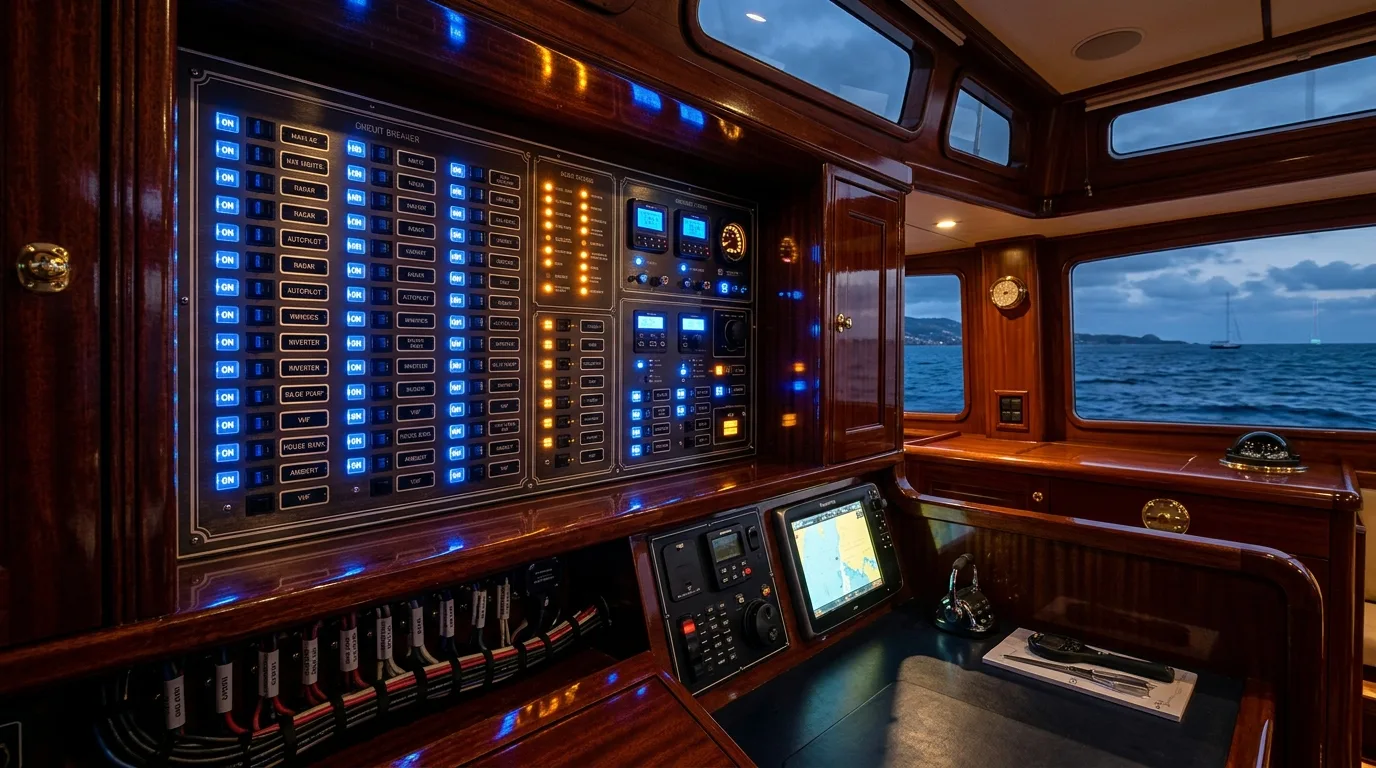

Hello, fellow adventurers and dreamers! As someone who’s spent decades on the water, helping countless people find their perfect vessel and learn the ropes, I can tell you this: a sailboat is far more than just a hull and sails. Beneath the deck, a complex network of systems hums quietly, making your journey comfortable, safe, and truly enjoyable. Understanding these vital systems – your engine, plumbing, and electrical – isn’t just for mechanics; it’s for every skipper who wants to embrace the freedom of the open water with confidence. Let’s dive in!
Table Of Content
- The Reliable Heartbeat: Sailboat Engines & Propulsion
- Key Components & Their Functions
- Actionable Maintenance & Troubleshooting
- Navigating Comfort: Plumbing & Fresh/Waste Water Systems
- Fresh Water & Beyond
- Waste Water Systems: Black & Gray
- Comparison of Marine Head Types
- Bilge Pumping Systems: Your Last Line of Defense
- The Nerve Center: Sailboat Electrical Systems
- DC Systems: The Lifeblood of Your Boat (12V/24V)
- AC Systems: Bringing Shore Power Onboard (120V/240V)
- Actionable Maintenance & Safety
- Essential Electrical Safety Tips
- Beyond the Basics: Why Understanding is Your Best Tool
The Reliable Heartbeat: Sailboat Engines & Propulsion
While the whisper of the wind in your sails and the efficient cut of your keel through the water are the very essence of sailing, your auxiliary engine is undeniably its reliable heartbeat. This mechanical marvel is your indispensable partner for maneuvering in crowded marinas, pushing through calm seas to meet a schedule, or powering off a lee shore when the wind decides to play games. Many seasoned sailors will tell you that a well-maintained engine isn’t just a convenience; it’s a critical safety device, offering peace of mind when Mother Nature throws a curveball.
Most sailboats, from a nimble Catalina 30 day sailer to a robust Beneteau Oceanis series cruiser, rely on an inboard diesel engine. These engines are celebrated for their compactness, incredible fuel efficiency – often burning less than a gallon per hour on a typical cruising speed – and legendary durability. I’ve personally seen Yanmars and Volvo Pentas log thousands of hours with proper care, enduring conditions that would make other engines falter. Some smaller vessels might utilize a transom-mounted outboard engine for simplicity and accessibility, while many modern designs feature a saildrive – an innovative leg unit that integrates the engine, gearbox, and propeller into a single housing mounted under the hull, offering reduced vibration and improved hydrodynamics.
Key Components & Their Functions
To truly understand your engine, think of it as a collection of interconnected systems, each vital to its operation. First, the fuel system, comprising the tank, fuel lines, primary and secondary filters (critical for preventing diesel bug and particulate contamination), and the fuel pump, which delivers fuel to the injectors. Next, the cooling system, typically a raw water cooling system combined with a closed freshwater loop, featuring a raw water intake, strainer, impeller, heat exchanger, and thermostat to maintain optimal engine temperature. Thirdly, the exhaust system, which safely expels hot gases and cooling water overboard, usually incorporating a waterlock and muffler to reduce noise and prevent backflow. Finally, the transmission and propulsion system, including the gearbox, propeller shaft (or saildrive leg), and the propeller itself – which could be a fixed, folding, or feathering type, each offering different performance characteristics under power and sail.
Actionable Maintenance & Troubleshooting
Proactive maintenance is the cornerstone of engine reliability. Before every outing, make it a ritual to check your engine oil and coolant levels; low levels are an invitation to disaster. Annually, or every 100-200 engine hours (whichever comes first), perform an oil and filter change, replace your fuel filters, and inspect the raw water impeller. I once watched a beautiful 45-foot catamaran nearly drift onto a reef in the Bahamas because of a neglected impeller – a stark reminder that a few minutes of preventative care can avert a major catastrophe. Keep spare fuel filters and a spare impeller on board, and importantly, know how to change them!
Beyond routine checks, understanding basic troubleshooting can save your voyage. Is your engine overheating? Check the raw water strainer first for debris, then the impeller. Is it failing to start? Investigate fuel supply (is the tank full, are filters clogged?) or battery charge. When winterizing, ensure the engine is properly flushed with freshwater and antifreeze, following your engine manual meticulously. This small investment of time will prevent costly repairs and ensure your engine fires up reliably come springtime.
Navigating Comfort: Plumbing & Fresh/Waste Water Systems
Imagine dropping anchor in a secluded cove, the sun setting, and the gentle rocking of your Lagoon catamaran or Hunter 33 cruiser providing the perfect lullaby. This idyllic scene is made complete by the modern comforts afforded by your boat’s plumbing systems: fresh water for that essential morning coffee, a refreshing hot shower after a swim, and a functioning head (marine toilet). These systems elevate your onboard experience from mere survival to true enjoyment, making longer voyages and remote anchorages genuinely comfortable.
Fresh Water & Beyond
Your fresh water system typically begins with one or more tanks, usually made of plastic or stainless steel, carefully positioned to maintain boat trim. These tanks feed a pressurized pump system that delivers water to various outlets: galley faucets, showerheads, and perhaps a deck washdown. Many boats also include a hot water heater, often heated by the engine’s cooling system while underway, by shore power when docked, or even by a dedicated propane or electric heater. For conservation, especially on longer cruises, some sailors opt for manual foot pumps, which allow precise water usage and eliminate reliance on electricity. Maintaining this system involves regularly cleaning and sanitizing your tanks to prevent bacterial growth and inspecting all hoses for leaks, kinks, or signs of wear, especially during your annual haul-out when the boat is easily accessible.
Waste Water Systems: Black & Gray
Managing waste water on board is crucial for environmental stewardship and hygiene. Black water, or sewage from the head, is a highly regulated aspect of boating. It’s pumped into a holding tank, where it’s stored until it can be legally discharged – either at a marina pump-out station or, where permissible and appropriate, far offshore (typically three miles or more offshore in federal waters, depending on local regulations). Modern marine heads vary from simple manual pump models to electric macerating units. A common mistake is using household toilet paper, which can quickly clog the system; always opt for marine-specific, rapidly dissolving paper. Many boats also incorporate a Y-valve to switch between holding tank and direct overboard discharge, but remember, the “Y-valve” should be secured in the “holding tank” position in waters where direct discharge is prohibited.
Gray water, from sinks and showers, is generally less regulated. On many boats, it drains directly overboard. However, some larger or more environmentally conscious vessels collect gray water in a sump tank, which is then pumped overboard or into a dedicated gray water holding tank, particularly in sensitive areas. Regardless of the system, inspecting hoses for leaks and ensuring proper ventilation for tanks (especially holding tanks) is essential to prevent odors and potential environmental issues.
Comparison of Marine Head Types
Selecting the right marine head for your vessel depends on factors like budget, space, and personal preference for maintenance versus convenience.
| Feature | Manual Head | Electric Head | Composting Head |
|---|---|---|---|
| Cost | Lowest | Medium | Highest |
| Power Usage | None (user-powered) | Significant (for macerator pump) | Minimal (for fan, if any) |
| Plumbing Complexity | Simple (inlet/outlet hoses) | Medium (water inlet, outlet, electrical) | Minimal (no through-hulls for waste) |
| Holding Tank Req. | Yes (for black water) | Yes (for black water) | No (solids compost, liquids evaporated/collected) |
| Maintenance | Pump assembly, joker valve replacement | Macerator blades, motor, hoses | Emptying compost, managing liquids |
| Odor Potential | Medium (if not flushed properly) | Medium (if not flushed properly) | Low (if well-maintained and ventilated) |
Bilge Pumping Systems: Your Last Line of Defense
Perhaps the most critical plumbing system for safety is your bilge pump setup. Water ingress, whether from a leaking stuffing box, a failed through-hull, or a catastrophic collision, is a constant threat. Every boat should have at least one reliable electric bilge pump, ideally with an automatic float switch. Larger vessels or those engaged in offshore cruising often have multiple electric pumps – a primary, smaller capacity pump for nuisance water, and a high-capacity pump for emergencies. Additionally, a robust manual bilge pump, operable from the cockpit or a secure location, is absolutely mandatory. I’ve heard countless stories where a manual pump kept a boat afloat long enough for repairs to be made or assistance to arrive. Test your bilge pumps regularly – a quick flip of the switch or a few strokes of the handle can literally mean the difference between staying afloat and sinking. When winterizing, drain all tanks and plumbing lines thoroughly, then flush with non-toxic antifreeze to prevent freezing and cracking.
The Nerve Center: Sailboat Electrical Systems
From the glowing navigation lights guiding you through a dark channel to the hum of the refrigeration keeping your provisions fresh, the electrical system is truly the nervous system of your boat. Whether you’re aboard a classic Herreshoff design or a modern Jeanneau Sun Odyssey bluewater cruiser, a robust and well-understood electrical setup powers everything from your chartplotter and autopilot to cabin lights, communication gear, and entertainment, making modern cruising possible and comfortable.
DC Systems: The Lifeblood of Your Boat (12V/24V)
The heart of your boat’s electrical system lies in its batteries. You’ll typically find at least two distinct banks: a dedicated start battery (or bank) for the engine, designed for high current discharge over short periods, and house batteries (often a larger bank) for everything else – lights, fridge, instruments, autopilot, and electronics. Common battery types include traditional flooded lead-acid, maintenance-free AGM (Absorbed Glass Mat), Gel, and increasingly, advanced Lithium Iron Phosphate (LiFePO4) batteries, which offer higher energy density, faster charging, and longer cycle life, albeit at a higher initial cost. Sizing your house bank correctly is paramount, typically measured in amp-hours (Ah), and depends on your expected power consumption and cruising style.
Keeping these batteries topped up falls to various charging systems. Your engine’s alternator charges while underway, converting mechanical energy into electrical power. When docked, a shore power charger converts AC dockside electricity into DC to replenish your batteries. For off-grid autonomy, many boats now incorporate solar panels, quietly harnessing the sun’s energy via charge controllers, or wind generators, which can be particularly effective in windy anchorages. Larger vessels might also carry a dedicated diesel generator to provide AC power for heavy loads and charge batteries quickly.
AC Systems: Bringing Shore Power Onboard (120V/240V)
The AC system on your boat is designed to safely bring standard household-style electricity onboard, primarily when connected to shore power at a marina. This involves a shore power inlet, a main AC breaker panel, and usually an inverter that converts your DC battery power into AC power for running small appliances like blenders, microwaves, or laptops when you’re away from the dock. A crucial component for safety and corrosion prevention is an isolation transformer or galvanic isolator, which protects your boat from stray electrical currents that can lead to rapid galvanic corrosion of underwater metals. Always ensure your AC system is installed by a qualified marine electrician to comply with ABYC (American Boat and Yacht Council) standards, as improper wiring can be extremely dangerous.
Actionable Maintenance & Safety
Electrical systems demand respect and regular attention. Start by routinely checking battery terminals for corrosion; keep them clean, tight, and apply dielectric grease to protect them. Monitor battery voltage and charge levels, especially if you’re cruising off-grid; a dedicated battery monitor that tracks amp-hours in/out is an invaluable investment. Regularly inspect all wiring for chafe, damage, or signs of overheating, particularly in high-vibration areas like the engine compartment. Ensure your DC panel breakers are clearly labeled – an unlabeled breaker in an emergency is as good as no breaker at all. Always carry spare fuses for all your essential equipment, and know which fuse goes where. Finally, understand the fundamentals of your AC system, especially how to safely connect and disconnect shore power, and the purpose of your galvanic isolator or isolation transformer. Electrical fires are a significant risk on boats, so vigilance is key.
Essential Electrical Safety Tips
- Always use marine-grade wire and connectors: Designed to withstand the harsh marine environment.
- Maintain proper fusing and circuit breakers: Ensure circuits are protected against overcurrent.
- Isolate batteries when not in use: Use battery switches to prevent accidental discharge or short circuits.
- Never work on live circuits if possible: Disconnect power before making repairs.
- Be wary of “DIY” electrical fixes: Unless you are qualified, consult a marine electrician for complex issues.
- Install a galvanic isolator or isolation transformer: Protects your boat from stray current corrosion when on shore power.
- Have a fire extinguisher rated for electrical fires (Type C): Always accessible near electrical panels.
Beyond the Basics: Why Understanding is Your Best Tool
Knowing these systems isn’t just about technical prowess; it’s about profound peace of mind. When you truly grasp how your engine cools itself, how your head flushes, or why your batteries aren’t charging, you gain an incredible sense of independence. This empowers you to troubleshoot minor issues at sea, rather than relying on expensive marina technicians who might be days away. It transforms potential anxieties into manageable challenges, allowing you to embrace the freedom of the open water with unwavering confidence.
Beyond personal empowerment, understanding your boat’s systems is a critical aspect of safety for you and your crew. A minor leak in the fresh water system could be an annoyance, but a failing bilge pump during a sudden storm is a life-threatening emergency. Proactive maintenance, born from knowledge, prevents breakdowns and ensures your vessel is always ready for whatever the sea throws your way. Furthermore, a well-maintained boat with documented system knowledge commands a higher resale value, a testament to its care and reliability.
Ultimately, the satisfaction that comes from knowing your vessel inside and out is immeasurable. It’s the quiet confidence you feel when you cast off the lines, knowing you’ve done your checks, understanding the hum beneath the floorboards, and being prepared for anything. Whether you’re day sailing or embarking on a transatlantic voyage, truly demystifying your sailboat’s engine, plumbing, and electrical systems isn’t just a guide – it’s your blueprint for safer, more comfortable, and utterly enjoyable adventures on the water. Fair winds and following seas!