



Navigating the Waters of Used Boat Loans: An Overview
Dreaming of weekend escapes on the water, fishing at dawn, or simply cruising with loved ones under a wide-open sky? For many, the allure of boat ownership is powerful, a gateway to freedom and unforgettable experiences. However, the price tag of a brand-new vessel can often feel like a tidal wave, washing away those dreams before they even set sail. That’s precisely where the savvy option of a used boat loan comes into its own, transforming aspiration into a tangible reality.
Table Of Content
- Navigating the Waters of Used Boat Loans: An Overview
- The Compass of Approval: Key Requirements for Lenders
- Your Credit Score: The North Star of Financing
- Debt-to-Income Ratio: Keeping Your Financial Ship Trim
- Down Payment: Your Initial Investment
- The Boat Itself: Collateral and Valuation
- Charting Your Course: Finding the Best Loan and Lender
- Where to Drop Anchor: Types of Lenders
- Decoding Loan Terms: Rates, Fees, and Lengths
- The Power of Comparison Shopping: A Smart Strategy
- Smooth Sailing to Approval: Practical Advice and Pitfalls to Avoid
- Getting Your Ducks in a Row: Preparing Your Application
- The Boat Survey and Appraisal: Your Best Defense
- Common Mistakes and How to Steer Clear
From my decades in this industry, I’ve seen countless enthusiasts make their dreams come true with a pre-owned boat. It’s not just about the lower initial purchase price; it’s about smart financial planning that allows you to enjoy the boating lifestyle without overwhelming your budget. Whether your heart is set on a nimble fishing skiff, a graceful sailboat, or a comfortable family cruiser, understanding the mechanics of these loans is the first crucial step toward making a sound financial decision.
So, what exactly is a used boat loan? At its core, it’s a financing option specifically tailored for pre-owned vessels, much like an auto loan for a car. Lenders provide you with the necessary capital to buy your chosen boat, and you, in turn, repay that amount over a set period, plus interest. These loans are typically "secured," meaning the boat itself acts as collateral. This arrangement generally provides a lower interest rate and more favorable terms compared to "unsecured" loans, which are based solely on your creditworthiness. The key benefits are clear: a significantly lower entry cost than buying new, flexible repayment terms that can stretch from 10 to 20 years, and broad availability from a variety of financial institutions.
The Compass of Approval: Key Requirements for Lenders
Getting approved for a used boat loan isn’t rocket science, but it does require a clear understanding of what lenders are looking for. Think of it like preparing your boat for a long voyage: you need to ensure all systems are in order. Lenders assess several critical factors to gauge your ability and willingness to repay the loan. Let’s break down the essential requirements you’ll need to navigate.
Your Credit Score: The North Star of Financing
Your credit score is arguably the most influential factor in securing a favorable boat loan. It’s a numerical representation of your creditworthiness, reflecting your history of borrowing and repaying debt. Lenders use this score to quickly assess the risk associated with lending to you. Generally, a score of 680 or higher is considered "good" and will open doors to competitive rates. For the absolute best rates and terms, aiming for a score of 720 or above is ideal.
Before you even begin shopping for a boat, pull your credit report from all three major bureaus (Experian, Equifax, TransUnion). Review it carefully for any errors, which are surprisingly common, and dispute them immediately. Paying down existing debts, especially credit card balances, and avoiding new credit inquiries in the months leading up to your loan application can significantly boost your score. A higher score not only increases your chances of approval but also directly translates to lower interest rates, saving you thousands over the life of the loan.
Debt-to-Income Ratio: Keeping Your Financial Ship Trim
Beyond your credit score, lenders closely examine your debt-to-income (DTI) ratio. This metric compares your total monthly debt payments to your gross monthly income. It’s a crucial indicator of your ability to comfortably afford additional monthly payments, like a boat loan, without overstretching your finances. Most lenders prefer a DTI ratio of 43% or less, though some marine lenders might be slightly more flexible depending on other strong application factors.
To calculate your DTI, sum up all your monthly debt payments (mortgage/rent, car loans, credit card minimums, student loans, etc.) and divide that total by your gross monthly income before taxes. If your DTI is higher than desired, consider reducing existing debts or finding ways to increase your income before applying. Demonstrating a healthy balance between your earnings and obligations signals financial responsibility to lenders, making you a more attractive borrower.
Down Payment: Your Initial Investment
While it might be tempting to finance 100% of your used boat, making a significant down payment is always a wise move. It demonstrates your commitment to the purchase and reduces the lender’s risk, often leading to better loan terms and lower interest rates. For used boats, a typical down payment ranges from 10% to 20% of the purchase price. However, putting down more – say, 25% or even 30% – can really make your application shine.
A larger down payment also has a direct impact on your monthly payments and the total interest you’ll pay over the loan’s lifetime. It reduces the principal amount you need to borrow, thereby making your monthly obligations more manageable and accelerating your equity in the vessel. Furthermore, for older boats or those with unique characteristics, a more substantial down payment can sometimes offset perceived risks from the lender’s perspective.
The Boat Itself: Collateral and Valuation
Remember, most used boat loans are secured by the vessel you’re purchasing. This means the boat’s value and condition are critical to the lender. They need to ensure that if you were to default, the collateral would be sufficient to recoup their losses. Lenders will typically require a professional marine survey for older or more expensive used boats, often those over a certain age (e.g., 5-10 years) or exceeding a specific loan amount (e.g., $25,000-$50,000).
The survey provides an independent assessment of the boat’s condition, seaworthiness, and fair market value. It protects both you and the lender. Additionally, the boat’s age, make, model, and overall market desirability will influence its valuation and, consequently, the loan terms. Lenders are generally more comfortable financing well-maintained, popular models that hold their value better. Be prepared to provide detailed information about the vessel you intend to buy, including its year, make, model, engine hours, and any recent upgrades.
Charting Your Course: Finding the Best Loan and Lender
Once you understand the requirements, the next step is to find the right loan and lender. This isn’t a one-size-fits-all situation; what works for one boater might not be ideal for another. Your goal is to secure the most favorable terms that align with your financial situation and boating aspirations.
Where to Drop Anchor: Types of Lenders
The landscape of marine financing is diverse, offering several avenues for used boat loans. Each type of lender has its own advantages and disadvantages. Traditional banks, for instance, often offer competitive rates to their existing customers, leveraging established relationships. However, their lending criteria for boats might be stricter or less specialized than other options.
Credit unions, like the highly regarded Navy Federal Credit Union for military members and their families, are another excellent choice. They are member-owned, which often translates to lower interest rates and more flexible terms than commercial banks, coupled with a focus on personalized service. Then there are specialized marine lenders, companies that deal exclusively in boat and yacht financing. These experts have a deep understanding of the boating market, are often more flexible with boat types and ages, and can sometimes approve loans faster. Finally, don’t overlook marine dealerships, many of whom partner with various lenders to offer convenient financing directly at the point of sale. While convenient, always compare their rates with independent sources.
Decoding Loan Terms: Rates, Fees, and Lengths
Understanding the intricacies of loan terms is paramount to making an informed decision. The "interest rate" is what the lender charges you to borrow money, expressed as a percentage of the principal. However, the "Annual Percentage Rate" (APR) is the true cost of borrowing, as it includes the interest rate plus any additional fees, such as origination fees. Always compare APRs when shopping for loans, not just interest rates.
Loan lengths for used boats can vary significantly, commonly ranging from 10 to 20 years. Shorter terms, like 7-10 years, mean higher monthly payments but significantly less total interest paid over the life of the loan. Longer terms, such as 15 or 20 years, spread out your payments, making them lower and more manageable, especially for larger purchases. However, this convenience comes at the cost of paying substantially more interest over the long run. For example, a $50,000 loan at 7% over 10 years might cost around $19,000 in interest, while the same loan over 20 years could accrue closer to $42,000 in interest. It’s a balance between monthly affordability and total cost. Don’t forget to ask about any hidden fees, like application fees, documentation fees, or prepayment penalties, which can add unexpected costs.
The Power of Comparison Shopping: A Smart Strategy
Never settle for the first loan offer you receive. This is perhaps the most crucial piece of advice I can offer. Just like you wouldn’t buy the first boat you see without comparing others, you shouldn’t commit to financing without exploring multiple options. Reach out to at least three to five different lenders – a mix of banks, credit unions, and marine specialists. Obtain pre-qualification or pre-approval letters from each, as these give you a clear picture of the rates and terms you qualify for without impacting your credit score too severely (multiple inquiries within a short window, usually 14-45 days, often count as a single inquiry for credit scoring models).
When comparing offers, look beyond just the interest rate. Consider the APR, loan term, down payment requirements, any associated fees, and the flexibility of repayment options. Utilize online loan calculators to plug in different scenarios – varying loan amounts, interest rates, and terms – to see how they impact your estimated monthly payments and total interest. This proactive approach not only helps you find the best boat loan rates but also empowers you to negotiate effectively, potentially using one lender’s offer to get a better deal from another.
Smooth Sailing to Approval: Practical Advice and Pitfalls to Avoid
With your requirements understood and your lender options explored, it’s time to prepare for the final approach to approval. A well-organized application process, coupled with an awareness of common pitfalls, can make all the difference between a swift approval and unnecessary delays.
Getting Your Ducks in a Row: Preparing Your Application
Lenders will need a comprehensive picture of your financial health. Being prepared with all necessary documentation streamlines the application process significantly. Typically, you’ll need proof of identity (driver’s license, passport), proof of income (pay stubs, tax returns for the past two years, W-2s or 1099s), bank statements to show assets and cash flow, and possibly statements from other debts. If you’re self-employed, expect to provide more extensive financial records, including profit and loss statements.
Understanding the difference between pre-qualification and pre-approval is also key. Pre-qualification gives you an estimate of what you might borrow, based on basic financial information, and usually involves a "soft" credit pull that doesn’t affect your score. Pre-approval, on the other hand, involves a more thorough review, including a "hard" credit pull, and results in a conditional offer for a specific loan amount and terms. Getting pre-approved gives you significant leverage when negotiating the boat’s price, as it shows sellers you’re a serious and qualified buyer.
The Boat Survey and Appraisal: Your Best Defense
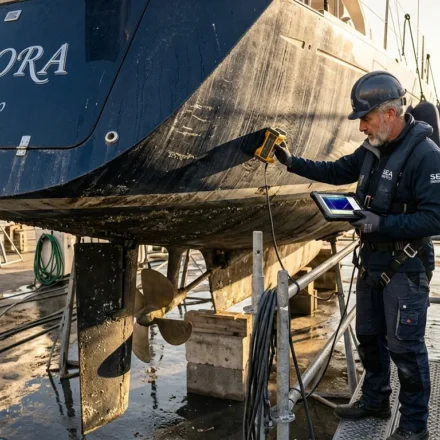
For any used boat purchase, especially those financed through a lender, a professional marine survey and appraisal are non-negotiable. This isn’t just a formality; it’s your best defense against unforeseen problems and a critical step in protecting your investment. A qualified marine surveyor will conduct a thorough inspection of the vessel’s hull, deck, engine, electrical systems, plumbing, safety equipment, and overall structural integrity. They’ll identify any existing issues, potential safety hazards, or areas requiring immediate attention.
The appraisal component of the survey will provide an unbiased valuation of the boat, ensuring you’re not paying more than its fair market value and that the lender is securing their loan against an accurately valued asset. From my experience, I once had a client who almost bought a beautiful classic sailboat, only for the survey to reveal significant hidden rot in the stringers that would have cost a fortune to repair. The survey saved them from a financial disaster and allowed them to walk away with their deposit, ultimately finding a much sounder vessel. Never skip this vital step.
Common Mistakes and How to Steer Clear
While the path to a used boat loan can be smooth, there are common pitfalls that can derail your application. One frequent mistake is applying for more boat than you can truly afford. Always budget not just for the loan payments, but also for insurance, docking fees, maintenance, fuel, and potential repairs. These ongoing costs can quickly add up and impact your ability to repay your loan.
Another error is failing to address credit issues before applying. If you know you have dings on your credit report, take steps to improve them beforehand rather than hoping the lender won’t notice. Lastly, avoid making large purchases or taking on new debt just before or during the loan application process. This can significantly alter your DTI ratio and impact your credit score, potentially leading to a denial or less favorable terms. Consistency and prudence with your finances during this period are paramount.
Securing a used boat loan is a manageable process when approached with preparation and a clear understanding of the requirements. By maintaining a strong credit profile, managing your debt, making a solid down payment, and diligently comparing lenders, you’ll be well on your way to getting approved and casting off for your next great adventure. Fair winds and following seas on your journey to boat ownership!