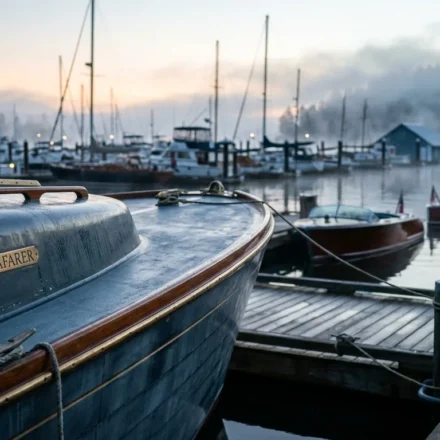


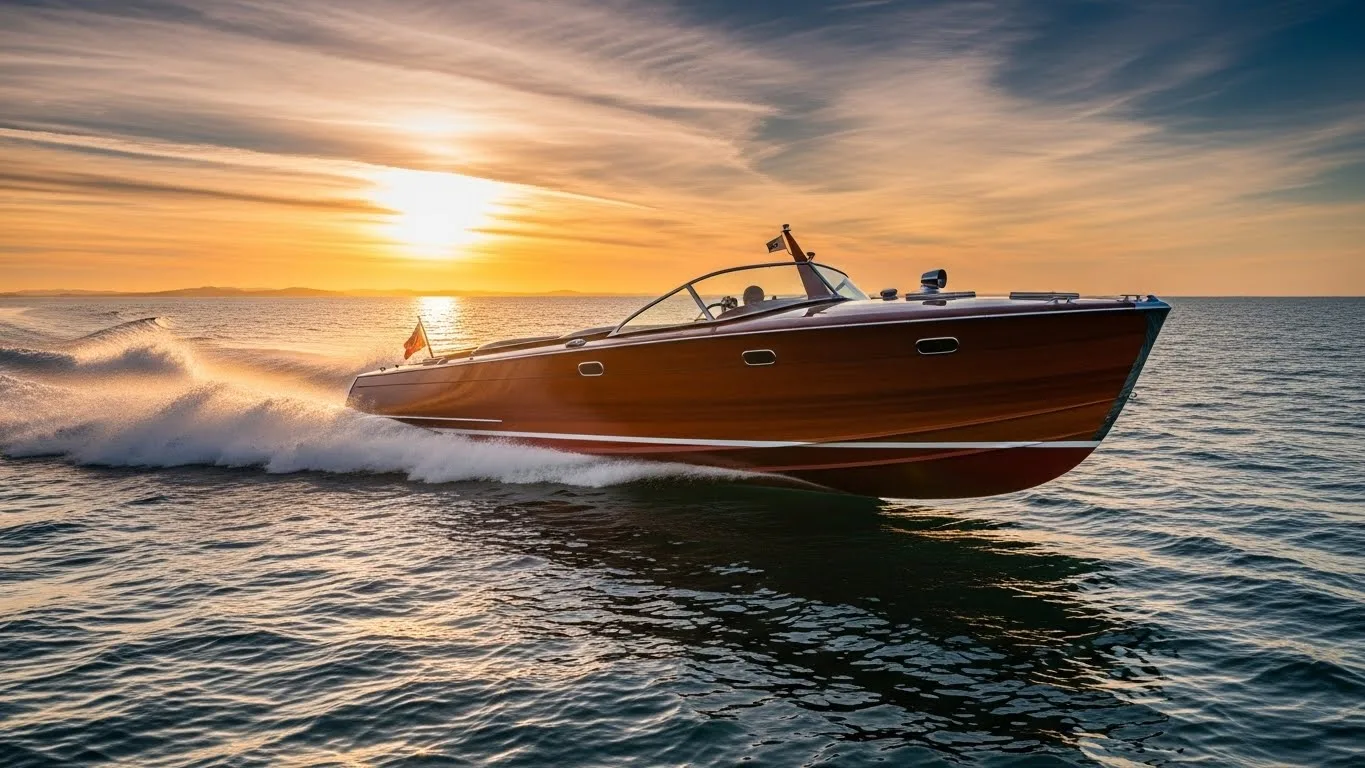

Ah, the Fairey Huntsman. Just the name conjures images of spray, speed, and undeniable elegance slicing through the waves. If you’re a classic boat enthusiast, or perhaps simply appreciate a vessel built with passion and groundbreaking engineering, then you’ve likely heard tales of this British icon. For decades, I’ve had the pleasure of seeing, selling, and even occasionally experiencing these magnificent machines, and let me tell you, their legend is well-earned. The Huntsman isn’t just a boat; it’s a statement, a piece of maritime history forged in the crucible of offshore racing and revolutionary construction.
Table Of Content
- The Legacy of Fairey Marine: Where Aviation Met the Sea
- The Hot-Moulded Revolution: A Hull Like No Other
- Birth of a Deep-V Legend: Design and Performance
- Models and Milestones: Huntsman 28 and 31
- On the Water: What It’s Like to Own and Drive a Huntsman
- The Unmistakable Ride: Sea-Keeping and Handling
- Practicality and Accommodation for the Modern Enthusiast
- The Quest for a Classic: Buying, Restoring, and Valuing a Fairey Huntsman
- Navigating the Market: What to Look For
- The Art of Restoration: A Labor of Love
- Maintaining the Legend: Long-Term Ownership
What makes the Huntsman so special, so captivating to this day? Is it the lineage from an aviation giant, the radical deep-V hull design, or perhaps the almost mystical “unsinkable” reputation whispered among owners? In this deep dive, we’ll peel back the layers of varnish and history to truly understand what makes the Fairey Huntsman an enduring legend, from its unique build to what it means to own one today.
The Legacy of Fairey Marine: Where Aviation Met the Sea
To truly appreciate the Fairey Huntsman, we must first journey back to its roots, not in a traditional boatyard, but within the hallowed halls of an aviation pioneer. Fairey Marine emerged from the venerable Fairey Aviation Company, a name synonymous with iconic aircraft like the Swordfish biplane and the Firefly fighter. Sir Charles Richard Fairey, the visionary behind the aviation empire, recognized an opportunity to apply advanced aircraft construction techniques to boat building in the post-war era, particularly to address the scarcity of traditional boat-building timber.
This cross-pollination of industries was nothing short of revolutionary. Imagine the precision engineering, the material science, and the structural integrity demanded by aircraft design being brought to bear on a motorboat. This unique heritage imbued Fairey boats, and especially the Huntsman, with a robustness and performance capability that was simply unparalleled by most of their contemporaries. It’s this aviation DNA that truly sets the Fairey Huntsman apart from its peers.
The Hot-Moulded Revolution: A Hull Like No Other
The cornerstone of Fairey Marine’s innovation, and indeed the Huntsman’s legend, was the “hot-moulded” construction method. This wasn’t just a different way to build; it was a paradigm shift. Instead of traditional planking, Fairey Marine utilized thin layers of Agba wood veneer, a lightweight yet incredibly strong African hardwood. These veneers, typically around 1.5mm thick, were laid diagonally, one over the other, over a male mould.
The magic happened next: under vacuum pressure, these layers were glued together using a phenolic resin adhesive and then “cooked” in a massive autoclave with heat and steam pressure. This process effectively laminated the veneers into a single, incredibly strong, and lightweight monocoque (single-shell) hull. Think of it like aircraft fuselage construction, but for the sea. This resulting hull was not only immensely strong and durable, capable of withstanding significant impacts, but also remarkably light for its rigidity, a critical factor for high-speed performance and exceptional sea-keeping abilities. It’s a testament to this method that many original Fairey hulls remain structurally sound decades later.
Birth of a Deep-V Legend: Design and Performance
While Fairey Marine had already established its prowess with successful sailing dinghies like the Firefly and Albacore using its hot-moulded technique, the late 1950s saw a pivotal move into powerboats. This transition was marked by a crucial design adoption: the deep-V hull. This revolutionary hull form, pioneered by American naval architect C. Raymond Hunt, was specifically engineered to cut through waves rather than pound over them, promising a smoother, drier, and faster ride in choppy conditions.
Fairey Marine initially licensed Hunt’s designs, but soon, a young, brilliant naval architect named Alan Burnard was brought on board. Burnard’s genius lay in his ability to take Hunt’s groundbreaking concepts and refine them, adapting them perfectly for the demanding conditions of British waters and the burgeoning offshore racing scene. The Huntsman, born from this collaboration and Burnard’s meticulous hand, became the epitome of this design philosophy, combining the hot-moulded hull’s strength with the deep-V’s unparalleled sea-keeping.
Models and Milestones: Huntsman 28 and 31
The Fairey Huntsman lineage primarily featured two iconic lengths, each leaving an indelible mark on maritime history. The first to arrive, and arguably the most prolific, was the Huntsman 28. Launched in 1960, approximately 119 units were built, quickly cementing its reputation in the brutal world of offshore powerboat racing, particularly the legendary Cowes-Torquay Race and the Round Britain Powerboat Race. Its success was immediate and undeniable, showcasing its incredible strength, speed, and ability to handle the roughest seas.
Here are some typical specifications for the Huntsman 28:
- LOA (Length Over All): 27 ft 11 in (8.5 m)
- Beam (Width): 8 ft 9 in (2.67 m)
- Draft: 2 ft 6 in (0.76 m)
- Displacement: Approx. 3.3 Tonnes
- Construction: Hot-moulded Agba wood, deep-V planing hull
- Power: Typically twin diesel engines (e.g., Perkins Sabre, Cummins, Ford Mermaid)
- Performance: Capable of cruising speeds around 26 knots, with maximum speeds often exceeding 30 knots.
Building on the success of the 28, the larger Huntsman 31 was introduced in 1967. Addressing feedback that the 28 could be “wet” in heavy seas, the 31 offered a drier ride and more spacious accommodations. Around 32 of these larger models were built, available in both a spacious open cockpit version and a more comfortable aft-cabin layout, catering to those who desired more extended cruising capabilities without sacrificing performance. It truly elevated the Huntsman from a pure racer to a highly capable express cruiser.
Typical specifications for the Huntsman 31:
- LOA (Length Over All): 31 ft 3 in (9.53 m)
- Beam (Width): 9 ft 8 in (2.95 m)
- Draft: 2 ft 6 in (0.76 m)
- Displacement: Approx. 5.1 Tonnes
- Layout: Cabin forward, or Cabin forward with Aft Cabin option. Both models offer simple overnight accommodation, a compact galley, and an enclosed heads, making them ideal express cruisers for weekend trips.
Both models, while differing in size and some amenities, share that unmistakable Fairey DNA: the distinctive reverse sheer, the perfectly proportioned lines, and the promise of exhilarating performance. Imagine tearing across the Solent, the twin diesels humming, the deep-V slicing through the chop, leaving lesser boats bobbing in your wake – that’s the Huntsman experience.
On the Water: What It’s Like to Own and Drive a Huntsman
So, what’s it really like to be at the helm of a Fairey Huntsman? This isn’t just a theoretical exercise; as a broker, I’ve had the immense privilege of seeing these boats in their element, and I can tell you, the experience is truly unique. It’s a visceral connection to power and the sea, wrapped in a package of classic elegance that few modern boats can replicate. The immediate impression is one of immense solidity and control, a feeling of confidence that only a well-engineered hull can impart.
Owners often speak with an almost reverent tone about their Huntsman’s capabilities, particularly its legendary sea-keeping. This isn’t just marketing fluff; it’s a genuine characteristic born from that deep-V hull and hot-moulded construction. You feel the boat cutting through the waves, rather than crashing down on them, which translates into a surprisingly dry and smooth ride, even when conditions turn less favorable. It’s a testament to Burnard’s design that a boat of this size and era can handle rough water with such aplomb.
The Unmistakable Ride: Sea-Keeping and Handling
The deep-V hull is the star here. Unlike shallower hulls that tend to pound uncomfortably when encountering chop, the Huntsman’s fine entry and deadrise aft allow it to slice through waves efficiently. This translates to a significantly more comfortable ride for passengers and less stress on the boat itself. You’ll find the steering responsive and direct, making the Huntsman a joy to maneuver, whether you’re docking in a busy marina or making high-speed turns offshore. The stability at speed is remarkable, instilling a profound sense of security even when the wind whips up and the seas get messy.
While often associated with high speeds, the Huntsman is equally at home cruising at more sedate paces. Its efficient hull form means it doesn’t need to be pushed hard to feel good, making it a versatile platform for anything from exhilarating coastal dashes to leisurely weekend explorations. Typical twin diesel setups provide ample power and range, allowing owners to embark on coastal passages with confidence, knowing their vessel can handle whatever the sea throws at it.
Practicality and Accommodation for the Modern Enthusiast
Despite their racing pedigree, both the Huntsman 28 and 31 were designed with practicality in mind for the discerning owner. The interiors, while compact by modern standards, are intelligently laid out to maximize space and functionality. You’ll typically find a cozy forward cabin offering simple overnight accommodation, a compact galley suitable for preparing basic meals, and an enclosed heads compartment. These features make them ideal express cruisers for weekend getaways, where the journey itself is as much a part of the experience as the destination.
Beyond the functional aspects, there’s the undeniable aesthetic appeal. The signature varnished mahogany exterior woodwork, gleaming chrome fittings, and classic lines evoke an era of undeniable glamour and craftsmanship. Owning a Huntsman isn’t just about having a boat; it’s about owning a piece of art, a living testament to a golden age of British marine engineering. It’s a vessel that turns heads in every marina, sparking conversations and admiration wherever it goes.
The Quest for a Classic: Buying, Restoring, and Valuing a Fairey Huntsman
So, you’re captivated by the legend and considering joining the exclusive club of Fairey Huntsman owners? Excellent choice! However, acquiring one of these iconic vessels is more than just a transaction; it’s an investment in history, craftsmanship, and a unique boating experience. The market for Fairey Huntsman boats is a fascinating one, highly reflective of the boat’s classic collectible status and the vast difference between a meticulously maintained example and one that has fallen into disrepair. Because of their British origin, the most active market, and often the benchmark for pricing, is found in the UK.
As a broker specializing in classic yachts, I can tell you that “condition, condition, condition” is paramount here. The price swings can be dramatic, influenced by everything from engine condition to the integrity of that famous hot-moulded hull. Don’t rush into a purchase; thorough due diligence is not just recommended, it’s absolutely essential.
Navigating the Market: What to Look For
When searching for a Fairey Huntsman for sale, you’ll generally find them falling into a few distinct categories, each with its own price point and implications:
- Project Boat (£15,000 – £25,000): These are typically hulls that require a full structural survey, major engine overhaul or replacement, and extensive cosmetic work. They represent a significant commitment of time and capital, ideal for the enthusiast with deep pockets, boatbuilding skills, or a very clear vision for a ground-up restoration.
- Usable Classic (£30,000 – £60,000): In this range, you can expect to find boats with sound hull structures and running engines, allowing you to get on the water relatively quickly. However, they will likely need continuous cosmetic upkeep, system modernization (electrics, plumbing), and perhaps an engine refresh or repower in the medium term.
- Concours / Restored (£80,000 – £120,000+): These are the jewels in the crown. They have typically undergone a full “nut and bolt” restoration, often featuring modern, reliable engine repowers (e.g., late-model Cummins or Yanmars), updated electronics, and high-end fit-outs. These boats command a premium, but offer peace of mind and immediate enjoyment, often having already depreciated from the initial restoration cost.
Key price determinants you absolutely must scrutinize include Engine Repower (modern diesels significantly boost value and usability), Hull Integrity (a solid, dry hull without delamination or significant rot is non-negotiable – get a professional survey!), and the retention of Original Features (the varnished mahogany, original chrome, and period details add immense value and authenticity).
The Art of Restoration: A Labor of Love
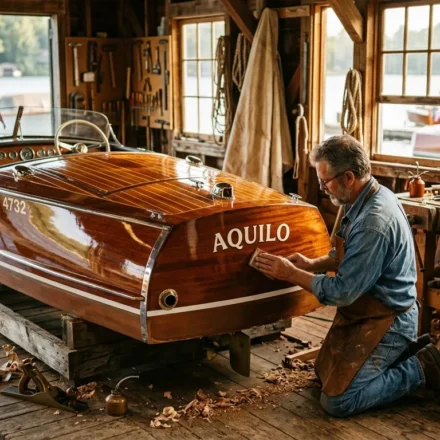
Restoring a Fairey Huntsman is not for the faint of heart, but it is an incredibly rewarding endeavor. The hot-moulded construction, while durable, requires specialized knowledge and techniques for repair. Any water ingress that leads to rot or delamination can be complex and costly to rectify. This is why a meticulous pre-purchase survey by an expert familiar with Fairey construction is your best friend. They can identify potential issues that might be hidden to the untrained eye.
Beyond the structural work, a full restoration often involves updating electrical systems, plumbing, navigation electronics, and cosmetic finishes. Many owners choose to repower with modern, more fuel-efficient, and reliable diesel engines, which, while a significant upfront cost, dramatically enhances the boat’s long-term usability and resale value. The ultimate goal is to blend modern reliability with classic charm, preserving the boat’s soul while ensuring it can be enjoyed for decades to come.
Maintaining the Legend: Long-Term Ownership
Owning a Fairey Huntsman is a commitment, but one that brings immense satisfaction. Regular maintenance, especially focused on preventing moisture ingress and protecting that exquisite timber, is crucial. Varnished surfaces need yearly attention, and all systems should be checked regularly. Joining the Fairey Owners Club is highly recommended; it’s a fantastic resource for shared knowledge, spare parts, and connecting with fellow enthusiasts who understand the unique joys and challenges of these vessels. They say a boat is a hole in the water you throw money into, but for a Huntsman, it’s an investment in a living legend, a piece of art that can transport you across the waves and back in time.
The Fairey Huntsman remains, without a doubt, one of the most remarkable powerboats ever built. It’s a testament to innovation, design genius, and a construction method that was truly ahead of its time. Whether you dream of owning one, or simply admire them from afar, the legend of the “Unsinkable Fairey” continues to inspire and captivate. Happy boating!