


Ahoy there, fellow mariners! As an old salt who’s spent decades on the water, selling hundreds of vessels and helping countless dreamers find their perfect boat, I can tell you one thing for certain: while a boat offers unparalleled freedom and unforgettable memories, your peace of mind truly comes from knowing you’re prepared. That’s why today, we’re diving deep into essential boating safety gear – because a well-equipped boat isn’t just about complying with regulations; it’s about protecting yourself, your loved ones, and your cherished vessel.
Table Of Content
- The Absolute Must-Haves: Legally Required & Smart to Have
- 1. Personal Flotation Devices (PFDs) – Your Lifeline
- 2. Visual Distress Signals (VDS) – Be Seen, Be Safe
- 3. Sound Producing Devices – Make Some Noise!
- 4. Fire Extinguishers – Fight Flames Fast
- 5. Navigation & Communication – Stay Connected & On Course
- 6. Anchoring & Mooring Gear – Hold Your Ground
- 7. First Aid Kit & Emergency Tools – Prepared for Anything
- 8. Bilge Pumps – Keep Her Dry
- Beyond the Basics: Enhancing Safety for Longer Voyages
- Maintenance & Readiness: Your Ongoing Commitment
- Your Next Steps: Get Out There, Safely!
Whether you’re a first-time owner of a nimble day sailer under 25 feet, an intermediate owner cruising the coast on a 30-40 foot cruiser like a Catalina 30 or a Jeanneau Sun Odyssey, or planning offshore passages on a bluewater vessel over 40 feet such as a Beneteau Oceanis or a robust Lagoon catamaran, safety is your first mate. Let’s get you squared away.
The Absolute Must-Haves: Legally Required & Smart to Have
Some items are legally mandated by authorities like the U.S. Coast Guard, while others are simply non-negotiable for smart seamanship. Let’s break down the core components:
1. Personal Flotation Devices (PFDs) – Your Lifeline
- What they are: PFDs, often called life jackets, are designed to keep you afloat. They come in various types (e.g., Type I for offshore, Type II for nearshore, Type III for general recreational use, and Type V for special activities).
- What you need: You must have at least one properly fitting, Coast Guard-approved PFD for every person on board. For children, make sure it fits snugly. For larger vessels like a Hunter 33 or a Boston Whaler, consider having a few extra Type I PFDs for unexpected guests or more challenging conditions. Inflatable PFDs are popular for comfort but require regular inspection and CO2 cartridge replacement.
2. Visual Distress Signals (VDS) – Be Seen, Be Safe
- What they are: Devices to signal for help visually, especially critical if you drift off course or encounter engine trouble. These include pyrotechnic flares (handheld, aerial) and non-pyrotechnic signals (flags, electric lights).
- What you need: Most boats need a combination of day and night signals. Pyrotechnic flares, like red handheld or parachute flares, are common but expire after 42 months. Always check expiration dates! For coastal cruising, an orange distress flag for day use and an electric distress light for night are excellent non-pyrotechnic alternatives.
3. Sound Producing Devices – Make Some Noise!
- What they are: Devices to signal your position or intentions, especially in fog or low visibility. This can be a whistle, horn, or bell.
- What you need: A simple mouth-operated whistle is required on smaller boats. Larger vessels, like a Beneteau Oceanis or a power cruiser, often require a compressed air horn or a bell, audible for at least half a mile.
4. Fire Extinguishers – Fight Flames Fast
- What they are: Portable devices to put out small fires. Marine fire extinguishers are typically "B" rated for flammable liquids like fuel or oil.
- What you need: The number and type depend on your boat’s length and engine configuration. Most recreational boats need at least one B-I type extinguisher. Vessels with enclosed engine compartments, like those sporting an inboard diesel from Yanmar or Volvo Penta, might need two or more. Always ensure they are easily accessible and regularly inspected.
5. Navigation & Communication – Stay Connected & On Course
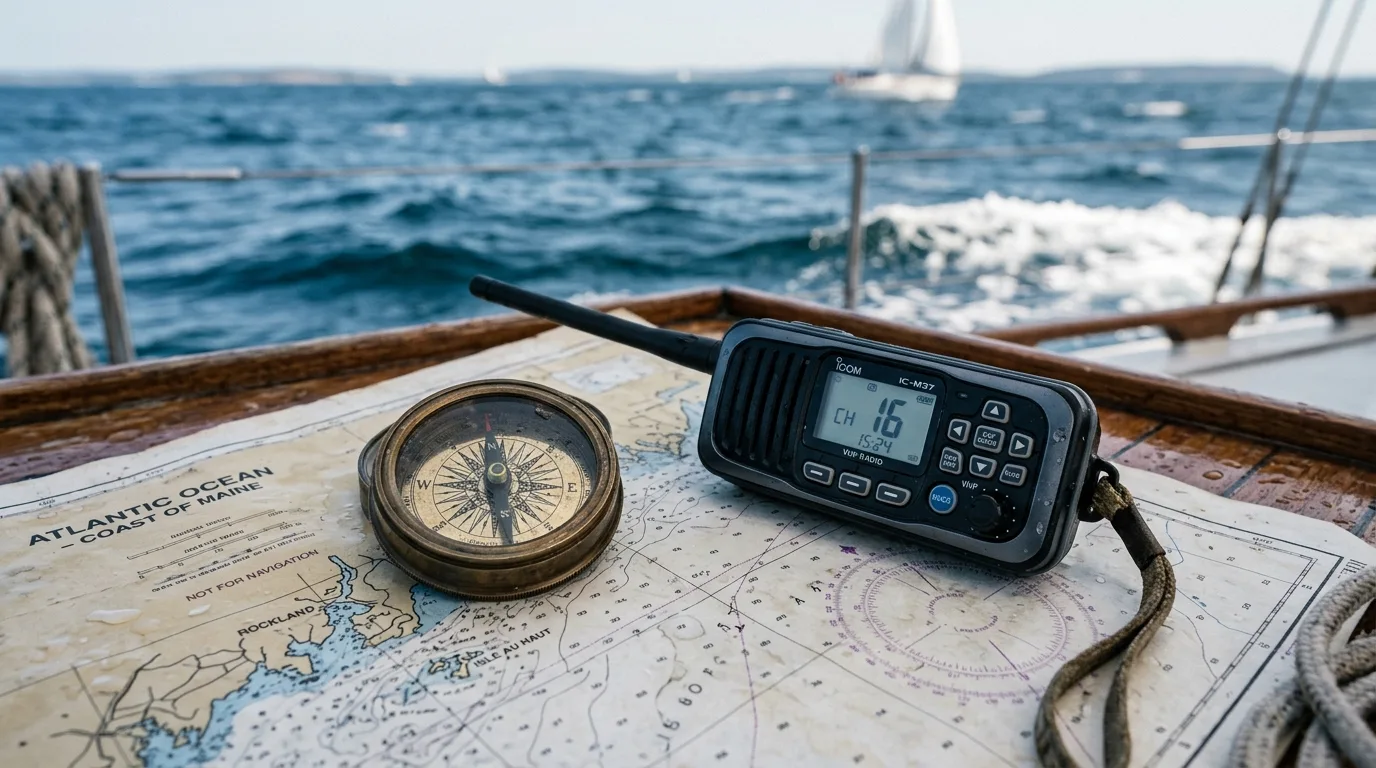
- VHF Radio: A Very High Frequency (VHF) radio is crucial for communicating with other boats and shore stations (Coast Guard, marinas). A fixed-mount VHF with Digital Selective Calling (DSC) is ideal for larger vessels, automatically sending your GPS position in an emergency. A handheld VHF is a great backup, especially on smaller boats like an Axopar 28 or for a dinghy.
- GPS & Charts: While not always legally required, a GPS unit (chartplotter) and up-to-date nautical charts (paper or electronic) are vital for safe navigation. For offshore passages, consider an EPIRB (Emergency Position Indicating Radio Beacon) or PLB (Personal Locator Beacon), which transmit your location to satellites in a life-threatening emergency.
6. Anchoring & Mooring Gear – Hold Your Ground
- What you need: A properly sized anchor (Danforth, CQR, Bruce are common types) with adequate rode (chain and line combination) is essential for anchoring or in case of engine failure. Don’t forget sturdy dock lines and fenders to protect your hull (fiberglass, aluminum, or wood) when docking.
7. First Aid Kit & Emergency Tools – Prepared for Anything
- First Aid Kit: A comprehensive, waterproof first aid kit is a must-have for treating minor injuries or stabilizing more serious ones until help arrives.
- Toolkit: A basic toolkit with wrenches, screwdrivers, duct tape, and spare parts (like impellers for your engine, whether an outboard or an inboard) can save a trip. On a sailboat, consider spare shackles, line, and sail repair tape for your sloop or ketch rig.
8. Bilge Pumps – Keep Her Dry
- What they are: Pumps to remove water from your boat’s bilge. Most boats have an automatic electric bilge pump, but a manual backup pump is crucial, especially on smaller vessels or for catastrophic leaks.
Beyond the Basics: Enhancing Safety for Longer Voyages
For those dreaming of coastal cruising or bluewater adventures, consider these additions:
- Life Raft: Essential for offshore sailing on vessels like a Jeanneau Sun Odyssey or a large trawler. Regularly serviced and easily deployable.
- Man Overboard (MOB) Recovery System: A horseshoe buoy, sling, or retrieval system is vital, particularly for sailboats with their higher freeboard.
- Satellite Phone/Communicator: For reliable communication beyond VHF range.
- Spare Parts & Fuel Filters: For your Yanmar, Volvo Penta, or outboard engines.
- Binoculars: For spotting aids to navigation or distant objects.
Maintenance & Readiness: Your Ongoing Commitment
Having the gear is one thing; keeping it ready is another. Integrate these into your regular boat maintenance schedule:
- Regular Checks: Inspect PFDs for tears, check fire extinguisher gauges, test bilge pumps, and verify VHF radio functionality.
- Expiration Dates: Always check flares, first aid kit contents, and inflatable PFD cartridges. Replace expired items immediately.
- Battery Life: Ensure all battery-operated devices (flashlights, handheld VHF, EPIRB/PLB) are charged or have fresh batteries.
- Annual Review: During your annual haul-out and bottom paint, or your spring commissioning, conduct a full safety gear inventory and function test.
Your Next Steps: Get Out There, Safely!
At boatandsailboat.com, we believe boating is about freedom, adventure, and making incredible memories. But those memories are best made when you’re confident and safe.
- Conduct an Inventory: Go through your vessel this week with this guide and ensure you have all the necessary gear. Replace or acquire anything missing.
- Brief Your Crew: Show everyone on board where the safety gear is located and how to use it. Practice a simple "man overboard" drill.
- Take a Course: Consider taking a certified boating safety course. It’s an investment that pays dividends in confidence and skill.
- Match Your Gear to Your Journey: A small electric outboard on a tender won’t need the same fire suppression as an inboard diesel, and a day sailer doesn’t need a life raft, but a bluewater cruiser absolutely does. Tailor your gear to your vessel and your planned adventures!
Being prepared isn’t just a checklist; it’s a mindset. It’s knowing that when you cast off the lines, you’re ready for whatever the sea may bring. So get your gear in order, feel that wind in your sails, hear the roar of your engine, and go make some incredible stories. Fair winds and following seas!