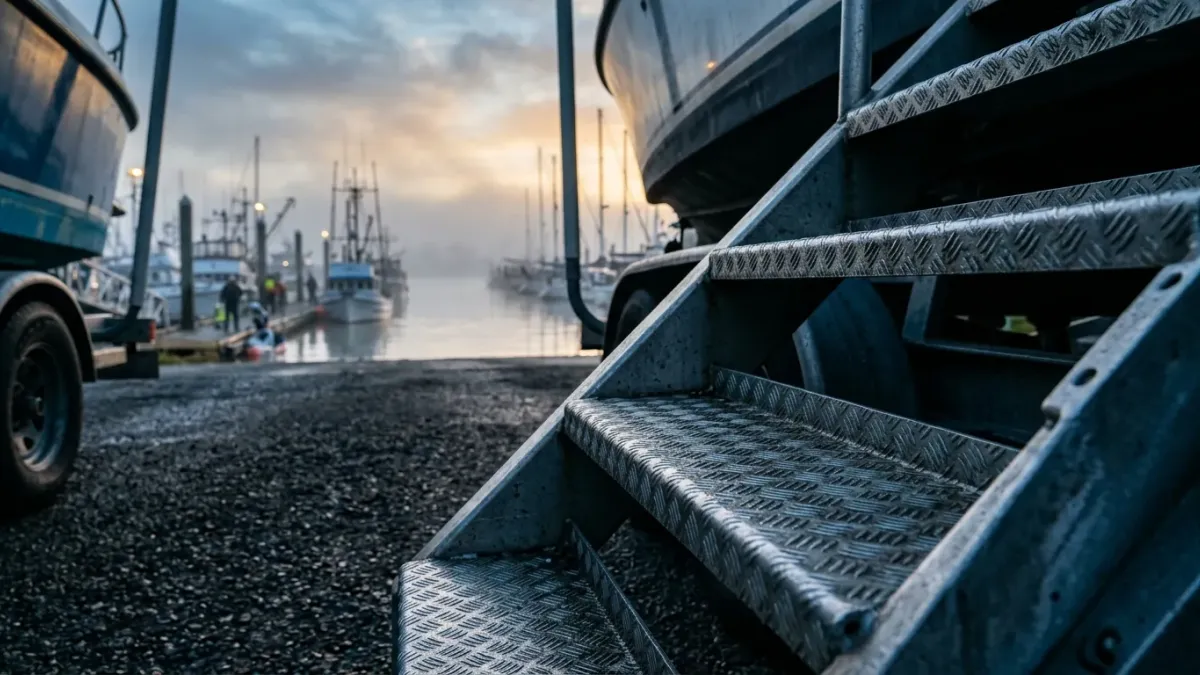
Quick answer: The best boat trailer steps feature high-grade aluminum or powder-coated steel construction, aggressive non-skid treads, and integrated grab poles for multi-point contact. For deep-V hulls or high-gunwale bass and walleye boats, factory-engineered step kits like Megaware FlexStep or Trick Step provide superior stability and precise height alignment compared to generic aftermarket pads.
Why Dedicated Boarding Steps Are Essential for Modern Boaters
Modern powerboats have grown significantly in size and freeboard over the past two decades. A typical 21-foot center console or multi-species walleye boat sitting on a tandem-axle trailer can easily position the bow eye 5 to 6 feet above the asphalt. Reaching over the bow to secure the winch strap or climbing inside to unpack
Integrating a step system dramatically reduces physical strain and minimizes slip-and-fall hazards. According to U.S. Coast Guard recreational boating safety reports, non-drowning injuries frequently occur before the vessel even hits the water, with slips on trailers and tow vehicles ranking high among ramp-related incidents. Having wide platforms with slip-resistant surfaces allows captains of any age or physical capability to board comfortably without placing unnatural force on knee joints or risking a fall onto the steel trailer frame below.
Furthermore, trailer steps streamline your workflow during solo launches. Instead of backing down, shimmying along the frame, and vaulting over the gunwale to unclip the bow safety chain, you can walk up a secure ladder structure, unhook the vessel, and step straight down onto the carpeted or SeaDek-lined deck. This level of efficiency keeps launch lines moving smoothly, earning you respect from fellow boaters waiting at busy marina ramps.
Key Types of Boat Trailer Steps and Design Options
Choosing the correct step architecture depends entirely on your hull shape, trailer configuration, and mounting availability on the bow winch post. Aftermarket options generally fall into three structural categories: bolt-on modular kits, trailer steps with integrated safety poles, and custom-welded aluminum assemblies built specifically for deep-V draft profiles.
Modular step kits remain the most accessible choice for most boat owners. These packages feature heavy-gauge square steel or tubular aluminum brackets that clamp around standard 3x3-inch or 3x4-inch trailer tongues using heavy-duty U-bolts. Popular aftermarket designs allow independent angle and height adjustments for each step tread, ensuring you can tailor the stair pitch to clear electric trolling motors, bow anchors, or spare tire mounts without binding.
For boaters owning deep-V fiberglass hulls—such as those manufactured by Lund, Ranger, or Nitro—standard step height often falls short. Deep-V vessels ride higher off the ground to clear their steep deadrise angles, demanding three-step or four-step configurations with higher vertical rise. Selecting
On-the-water tip: Never mount your step assembly so far forward that it reduces your tow vehicle's turning clearance. During tight jackknife backing maneuvers, a step system protruding too far beyond the winch post can easily crush your truck’s rear bumper or tailgate. Always leave at least 12 inches of clearance between the rearmost corner of your vehicle and the leading edge of the lowest step.
Evaluating Materials: Aluminum vs. Powder-Coated Steel
The structural integrity of your trailer steps comes down to material science and surface treatments. Marine environments are notoriously harsh on metal components, exposing them to continuous vibration during highway transport, road salt during early-season launches, and aggressive brackish or saltwater immersion. Choosing the right metal ensures structural longevity and prevents premature structural failure.
High-grade 6061-T6 aluminum steps represent the gold standard for salt and brackish water trailering. Aluminum forms a natural oxide layer that resists atmospheric corrosion, and when paired with stainless steel hardware, it offers exceptional longevity without adding unnecessary tongue weight to your hitch receiver. A lighter tongue weight keeps your tow vehicle handling predictably while preventing excessive sag on rear leaf springs.
Powder-coated carbon steel systems, on the other hand, deliver raw structural strength and rigid feel underfoot at a lower price point. High-quality steel step manufacturers apply an e-coat primer under a thick polyester powder finish to resist chip damage from kicked-up highway gravel. However, if you routinely launch in saltwater environments, any small chip in the powder coating will allow rust to migrate beneath the finish, potentially weakening weld joints over time.
| Type | Best For | Key Features | Pros | Cons |
|---|---|---|---|---|
| Boat trailer steps DIY | Budget-conscious boaters | Customizable, low cost | Cheap, flexible | Requires skill, time |
| Easy Step boat trailer steps | Families, casual boaters | Pre-made, ergonomic design | Easy install, safe | Higher cost |
| Boat trailer steps kit | General use | Complete package, universal fit | Affordable, reliable | Less customizable |
| Boat trailer steps with pole | Safety-focused boaters | Added handrail support | Extra stability | Slightly bulkier |
| Boat trailer steps for deep V | Offshore anglers, tall hulls | Taller, reinforced design | Perfect for deep V hulls | More expensive |
| Aluminum boat trailer steps | Saltwater boaters | Lightweight, corrosion-resistant | Durable, sleek | Higher upfront cost |
Boat Trailer Step Specifications and Selection Matrix
To help narrow down the ideal boarding platform for your trailer layout, review the comparative technical specifications below before purchasing or fabricating hardware:
| Step System Type | Primary Material | Max Load Capacity | Best Suited For | Corrosion Resistance |
|---|---|---|---|---|
| Universal Bolt-On Kit | Powder-Coated Steel | 300 - 350 lbs | Bass boats, skiffs, runabouts | Moderate (Best for freshwater) |
| Multi-Step with Grab Pole | Structural Aluminum | 400 lbs | Deep-V hulls, center consoles | High (Excellent in saltwater) |
| Adjustable Flex-Steps | Anodized Aluminum | 300 lbs | Small utility boats, jon boats | High (UV & salt resistant) |
| Custom Welded Ladder | 316 Stainless / Marine Alum | 450+ lbs | Large offshore powerboats | Maximum (Professional grade) |
DIY Custom Builds vs. Commercial Step Kits
Handyman boaters often consider designing and fabricating custom steps using box tubing and basic welding tools. While a custom-fabricated setup permits absolute tailor-made fitment around specialized gear like dual anchor davits or forward-facing sonar transducers, it demands precise engineering. A failed weld or undersized mounting plate while stepping onto the bow can cause severe personal injury or damage your boat's gelcoat.
Commercial step kits undergo rigorous weight and stress testing to comply with marine manufacturing safety standards. Brands like Easy Step, Trick Step, and Megaware engineer their mounting hardware with high-tensile Grade 8 bolts, locknuts, and custom-molded mounting plates designed to handle shock loads experienced when trailering down uneven backroads. Furthermore, commercial units feature engineered powder-coating processes and pre-applied high-grip traction pads that survive years of harsh sunlight exposure.
If you choose to pursue a DIY build, stick to thick-walled square tubing (minimum 3/16-inch wall thickness for steel or 1/4-inch for aluminum). Incorporate continuous fillet welds rather than tack welds, and always install rubber-backed, marine-grade grip tape or molded rubber step pads across every tread surface. Ensure all fastener holes are deburred and treated with anti-seize compounds during assembly to prevent galvanic corrosion between dissimilar metals.
Installation Best Practices and Maintenance Guidelines
Installing a set of trailer boarding steps requires standard hand tools, a torque wrench, and roughly one to two hours of shop time. Begin by positioning your boat on a level driveway, fully winched and strapped down on the trailer frame as if ready for highway travel. Mount the main vertical support column directly to the trailer tongue or winch post upright, checking for clear passage of your winch handle when cranking under load.
Once you verify handle clearances and foot placement height, tighten all mounting bolts to the manufacturer's specified torque rating—typically between 45 and 60 ft-lbs for standard U-bolt assemblies. Apply thread-locking fluid (Blue Loctite) to non-locking fasteners to prevent hardware from backing out under road vibration. For users interested in improving overall trailering capability, read our detailed guide on
Long-term maintenance involves simple routine inspections prior to extended road trips. Periodically verify fastener tightness and inspect tread pads for wear or lifting edges. After launching in saltwater, thoroughly spray down the step assembly, fasteners, and grab pole attachment points with fresh water to remove salt deposits and prevent crevice corrosion under hardware heads.
Before heading out on your next boating excursion, measure your trailer tongue dimensions, evaluate your vessel's bow deck height, and invest in a dedicated step system tailored to your hull design. Upgrading to wide, non-skid steps with an integrated handrail eliminates ramp strain, keeps your crew safe, and allows you to focus on enjoying your time out on the water.
Frequently Asked Questions
Do boat trailer steps interfere with spare tire mounts or winches?
Most modern step systems are engineered specifically to clear standard winch posts and bow stops. However, you may need to relocate your spare tire mount slightly further back along the trailer tongue to clear the base plate of taller 3-step or 4-step assemblies.
Can I install trailer steps on a swing-away trailer tongue?
Yes, but you must mount the step base assembly behind the swing hinge on the main frame rails. Mounting steps directly onto the folding section can cause binder stress on the hinge pin and interfere with the tongue's folding radius when storing the trailer inside a standard garage.
Are trailer steps safe to use when the boat is in the garage?
Absolutely. In fact, boat owners frequently cite maintenance convenience in the garage—such as charging marine batteries, detailing fiberglass, or loading tackle—as one of the primary non-ramp benefits of installing dedicated boarding steps.
Sources
- U.S. Coast Guard Boating Safety Division
- National Marine Manufacturers Association (NMMA)
- Wikipedia: Boat Trailer Engineering Standards
Check Out Our Top Recommended Boat Gear on Amazon
Hand-picked sailing & boating essentials we actually recommend.
As an Amazon Associate, we earn from qualifying purchases.