

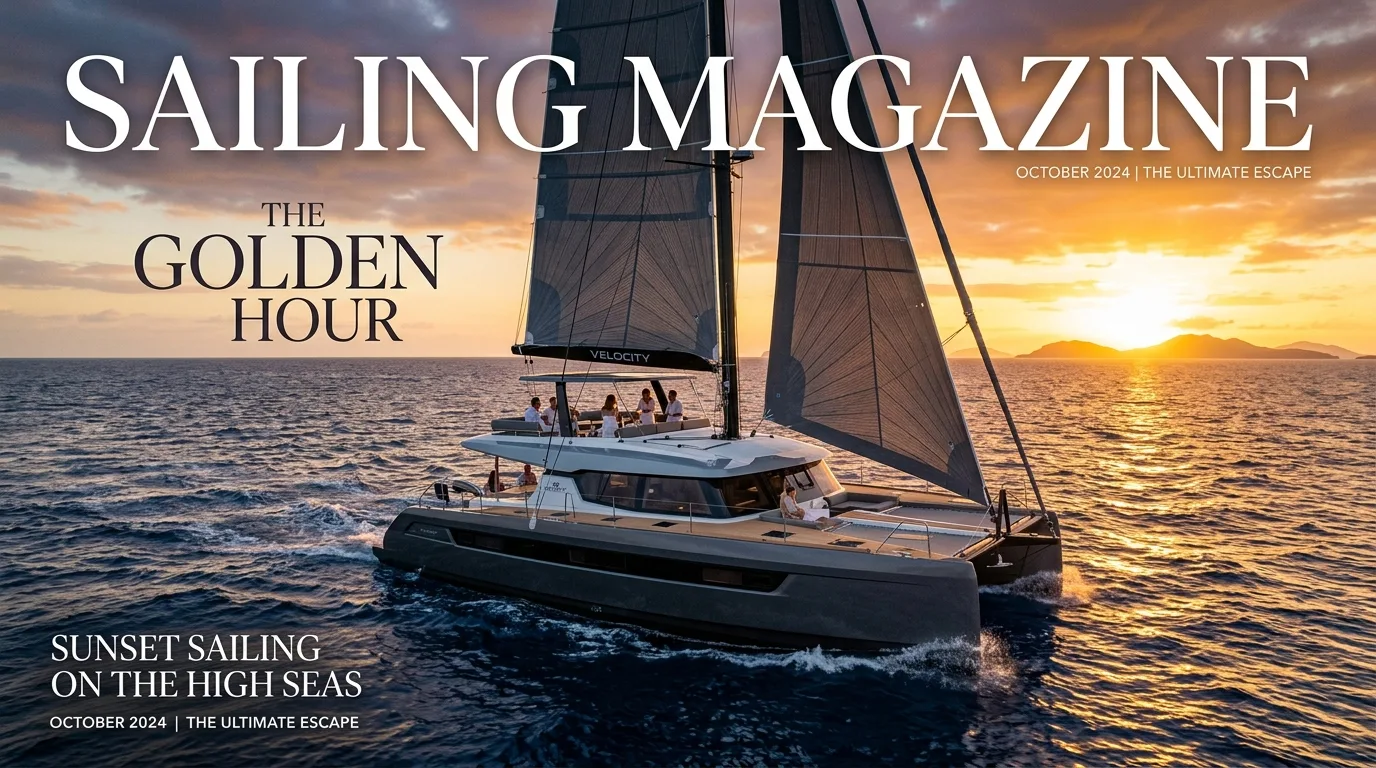

The Enduring Allure of the Cruising Catamaran: A Broker’s Perspective
In my decades navigating the ever-evolving world of boats, from the thrill of high-performance racing yachts to the serene majesty of classic wooden vessels, I’ve witnessed countless trends ebb and flow. Yet, few have left an impression as profound and lasting as the steady ascent of the cruising catamaran. What started as a niche choice has blossomed into a dominant force in the realm of long-distance voyaging, fundamentally redefining what sailors expect from their floating homes.
Table Of Content
- The Enduring Allure of the Cruising Catamaran: A Broker’s Perspective
- Unpacking the Triple Threat: Comfort, Stability, and Performance
- Comfort Afloat: Your Home on the Water
- Stability Redefined: Smooth Sailing, Less Seasickness
- Performance & Efficiency: Covering Miles with Ease
- Shallow Draft & Maneuverability: Unlocking Hidden Gems
- Beyond the Horizon: The Liveaboard Lifestyle & Extended Cruising
- Self-Sufficiency and Systems
- Social Spaces and Privacy
- Safety and Redundancy
- Navigating the Waters: Choosing Your Ideal Cruising Catamaran
- New vs. Pre-Owned: Weighing the Investment
- Key Considerations: Size, Layout, and Features
- The Importance of Survey and Sea Trial
- My Final Thoughts: Embracing the Multihull Dream
I recall a client, a seasoned monohull sailor, who was initially skeptical. He loved the heel, the feel of the boat digging in. But after a particularly rough passage on his monohull, his wife put her foot down: “No more seasickness, no more cramped quarters.” We looked at catamarans, and after a week-long charter, he was a convert. He told me, “It’s like someone finally designed a sailboat for living, not just for sailing.” This isn’t just a boat; it’s a floating haven, a statement of intent for those who prioritize expansive comfort, rock-solid stability, and the pure joy of exploring distant horizons without compromise.
From my vantage point as a yacht broker and marine enthusiast, I’ve witnessed firsthand how these twin-hulled marvels have opened up the world of extended cruising to a broader audience. Whether you’re dreaming of a sabbatical year exploring the Caribbean, a permanent liveaboard lifestyle in the Mediterranean, or even circumnavigating the globe, a cruising catamaran often emerges as the leading contender. Let’s delve deep into what makes these vessels so special and how you can navigate the journey to owning one.

Unpacking the Triple Threat: Comfort, Stability, and Performance
What truly sets a cruising catamaran apart in the minds of seasoned sailors and aspiring adventurers? It boils down to a fundamental redesign of the traditional sailing experience, addressing common pain points and elevating the journey to a new level of enjoyment. The twin-hull configuration isn’t just a design quirk; it’s the genesis of its unique advantages, creating a synergy of comfort, stability, and surprising performance.
Comfort Afloat: Your Home on the Water
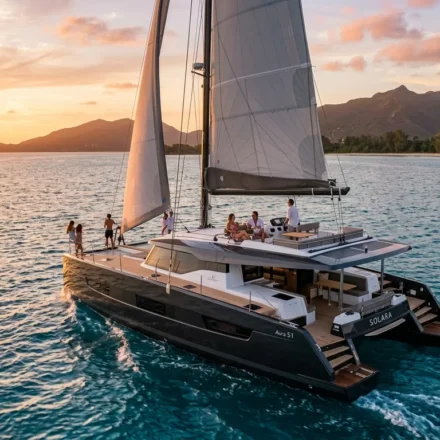
Imagine a sailboat where you don’t have to brace yourself every time the boat heels, where cocktails don’t slide off the table, and where you can walk around your living space as if you were in a spacious apartment. This is the reality on a cruising catamaran. With two hulls providing a broad platform, these vessels offer significantly more usable deck and interior space than a monohull of comparable length. For instance, a 45-foot catamaran can often boast interior volume comparable to a 60-foot monohull, making every square foot count.
You’ll typically find multiple private cabins, often with en-suite heads, offering unparalleled privacy for families or guests. The salon usually boasts panoramic views, bathed in natural light, creating an inviting social hub that often includes a large galley. Outdoor spaces are equally generous, featuring trampolines for sunbathing, large cockpits perfect for al-fresco dining, and often expansive flybridges on larger models. This abundance of space truly transforms the boat from a mere mode of transport into a genuine home on the water, making extended periods aboard not just tolerable, but genuinely luxurious.
Stability Redefined: Smooth Sailing, Less Seasickness
One of the most frequently cited benefits, particularly by those new to offshore sailing or prone to seasickness, is the catamaran’s inherent stability. Unlike a monohull that relies on a deep keel to counteract the heeling force of the wind, a catamaran uses its two widely separated hulls to resist rolling and heeling. This means a much flatter, more stable ride, even in choppy seas. I’ve often seen new cruisers perform the “mug test” – leaving a full mug of coffee on the salon table during a passage – something unthinkable on many monohulls.
For families with young children, or anyone who simply prefers a calmer motion, this stability is a game-changer. It allows for easier meal preparation, more comfortable sleep, and a generally less fatiguing experience on long passages. While no boat is entirely immune to motion, a catamaran significantly reduces the violent pitching and rolling that can quickly make a passage uncomfortable. This reduced motion directly translates to less fatigue, fewer bouts of seasickness, and ultimately, a more enjoyable and safer cruising experience for all on board. It’s a key reason why many long-distance voyagers choose catamarans – less fatigue means more enjoyment and safer operations.
Performance & Efficiency: Covering Miles with Ease
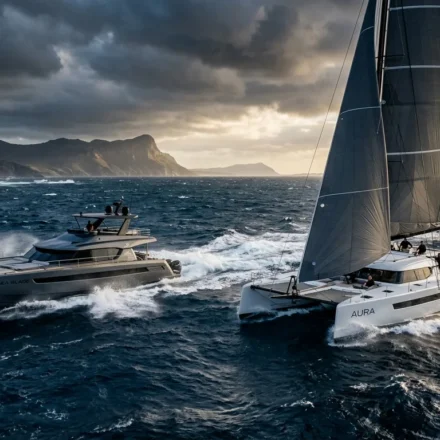
When it comes to covering vast ocean distances, a cruising catamaran brings a unique blend of efficiency and capability. While they may not point as high into the wind as some performance monohulls, their broader beam and shallower hulls often allow for faster average speeds on a reach, which is common in trade wind sailing. Many modern cruising cats can comfortably maintain average speeds of 8-10 knots, significantly reducing passage times and opening up tighter weather windows. This speed advantage means getting to your destination faster, or covering more ground in the same amount of time.
Beyond pure speed, their twin engines offer superior maneuverability in tight quarters, a distinct advantage when docking or navigating crowded anchorages. More importantly, the twin-engine configuration provides a critical layer of redundancy for offshore passages – a failure in one engine doesn’t leave you stranded. This reliability, combined with their ability to sail efficiently, makes them formidable vessels for serious long-distance cruising.
Shallow Draft & Maneuverability: Unlocking Hidden Gems
One of the most underestimated advantages of a cruising catamaran is its shallow draft. With typically less than 4-5 feet of draft, many catamarans can access protected anchorages and pristine bays that are entirely off-limits to deep-keeled monohulls. Imagine tucking into a serene cove just feet from the beach in the Bahamas, or confidently navigating the shallow coral reefs of the South Pacific – experiences often reserved for smaller, less comfortable vessels.
This ability to explore closer to shore greatly enhances the cruising experience, offering more diverse itineraries and a stronger connection with your surroundings. Coupled with the twin engines that allow for unparalleled control and the ability to spin the boat in its own length, catamarans provide both the freedom to explore remote locations and the confidence to handle challenging docking situations.
Beyond the Horizon: The Liveaboard Lifestyle & Extended Cruising
For many, a cruising catamaran isn’t just a vessel for a holiday; it’s a ticket to a complete lifestyle change, a self-sufficient mobile home capable of taking you anywhere. The design inherent in a multihull lends itself incredibly well to extended periods on board, transforming the dream of liveaboard sailing into a comfortable reality.
Self-Sufficiency and Systems
The expansive deck space on a catamaran is a boon for generating power. It’s common to see large arrays of solar panels, often exceeding 1000 watts, providing a significant portion of daily energy needs. This, combined with generous space for robust battery banks, watermakers, and often a generator, means you can truly untether yourself from marinas and embrace remote anchorages for extended periods. The ability to generate your own power, desalinate your own water, and store weeks of provisions transforms a boat into a truly self-sustaining mobile home.
Large storage lockers and ample tankage for fuel and water further enhance self-sufficiency. This capacity for provisions and critical systems means less frequent trips to shore for supplies, allowing you to truly immerse yourself in the cruising lifestyle, whether it’s exploring uninhabited islands or simply enjoying the tranquility of a secluded bay.
Social Spaces and Privacy
The catamaran’s layout excels at balancing communal living with personal privacy. The central salon and cockpit offer magnificent spaces for dining, entertaining, and socializing, often accommodating larger groups comfortably. Yet, with sleeping cabins typically located in separate hulls, often with their own heads and showers, privacy is abundant. This “apartments in a building” layout is invaluable for families with teenagers, multiple couples cruising together, or when hosting guests, allowing everyone to have their own retreat.
I’ve witnessed firsthand how this design fosters harmony on long voyages. A couple can enjoy quiet time in their hull while others gather in the salon, or one person can be working at a desk while others are relaxing on the trampoline. This spatial separation reduces friction and enhances the overall enjoyment of living aboard for extended periods, making it feel less like a cramped boat and more like a spacious home.
Safety and Redundancy
Safety is paramount when cruising offshore, and catamarans offer several inherent advantages. As mentioned, the twin engines provide vital redundancy, ensuring propulsion even if one engine fails. Furthermore, many modern catamarans are built with compartmentalized hulls, meaning that if one section is breached, the flooding is contained, maintaining buoyancy and stability. The shallow draft also means they can often be beached or anchored closer to shore in an emergency, offering a safer refuge.
The broad, stable platform makes movement on deck safer, especially in rougher conditions, reducing the risk of falls. Moreover, the robust davit systems common on catamarans allow for carrying a substantial dinghy, an essential safety and exploration tool, easily launched and retrieved. These cumulative features contribute to a heightened sense of security and preparedness, vital for any serious long-distance sailor.
Navigating the Waters: Choosing Your Ideal Cruising Catamaran
So, the dream is set – a cruising catamaran is calling your name. But how do you turn that dream into a reality? The market for these vessels is vibrant and diverse, offering a range of options to suit various budgets and cruising ambitions. As a broker, I often guide clients through this intricate process, ensuring they find a vessel that truly aligns with their vision and practical needs.
New vs. Pre-Owned: Weighing the Investment
The first major decision often revolves around whether to buy new or pre-owned. A brand-new catamaran offers the allure of customization, the latest technology, and a full factory warranty. You get to choose every finish, every upgrade, and start with a blank slate. However, this comes with a higher initial cost and the steepest depreciation occurring in the first few years.
Conversely, a pre-owned catamaran can offer significant value. A well-maintained 3-5 year old catamaran might be 30-40% less than a new equivalent, often coming with many desirable upgrades already installed by experienced owners, such as extensive solar, watermakers, or enhanced navigation electronics. While you might inherit some wear and tear, the savings can be substantial, allowing more budget for cruising itself. It’s about finding the sweet spot between budget, desired features, and immediate availability.
Key Considerations: Size, Layout, and Features
When selecting a catamaran, size matters, but not just in terms of length. Consider your anticipated crew size: a couple might find a 38-40 foot catamaran perfectly spacious, while a family or those planning to entertain guests frequently might lean towards a 45-foot or larger model. The layout is equally crucial. An “owner’s version” dedicates an entire hull to a master suite, offering unparalleled privacy and space, whereas a “charter version” typically features more symmetrical cabins, ideal for maximizing guest capacity.
Beyond size and layout, a crucial step is to list your must-have features. Is air conditioning essential for your cruising grounds? Do you need a robust solar array for off-grid living? What level of navigation electronics do you require? Thinking through these specifics will help narrow down the vast market and ensure the chosen vessel truly supports your cruising aspirations. Remember, adding major systems post-purchase can be costly and time-consuming.
The Importance of Survey and Sea Trial
Regardless of whether you choose new or pre-owned, a comprehensive survey and sea trial are non-negotiable steps. For a pre-owned vessel, hire a reputable surveyor with extensive multihull experience. They will meticulously inspect the hulls, rigging, engines, electrical systems, and plumbing, identifying any hidden issues that could become costly problems down the line. This isn’t just a suggestion; it’s your absolute best defense against unforeseen issues and a critical step in making an informed purchase.
The sea trial is your opportunity to experience the boat under sail and power. Test all systems under load: sails, engines, generators, navigation equipment. Pay attention to how the boat handles in various conditions, listen for unusual noises, and observe its motion. This hands-on experience, combined with the professional survey, provides a complete picture of the vessel’s condition and suitability for your cruising dreams.
My Final Thoughts: Embracing the Multihull Dream
The cruising catamaran, with its expansive comfort, unwavering stability, and efficient long-distance capabilities, truly represents a paradigm shift in the world of sailing. It’s no longer merely an alternative; for many, it has become the preferred platform for exploring the world’s oceans in unparalleled comfort. From the tranquility of a stable anchorage to the excitement of a fast passage, these vessels deliver an experience that redefines the joy of cruising.
My personal belief, forged over decades in this industry, is that the appeal of the catamaran lies in its ability to blend the adventurous spirit of sailing with the practical comforts of home. It removes many of the traditional barriers to extended cruising, making the dream accessible and enjoyable for a wider demographic. If the idea of expansive comfort, unwavering stability, and the freedom to explore far-flung destinations resonates with your soul, then a cruising catamaran might just be your perfect vessel.
Embarking on the journey to find your ideal catamaran is an exciting one. Do your research, talk to experienced owners, and consider consulting a knowledgeable yacht broker who can guide you through the intricacies of the market. The world is vast, and with a cruising catamaran, the horizons are truly limitless.