Overview of the Dufour 3800
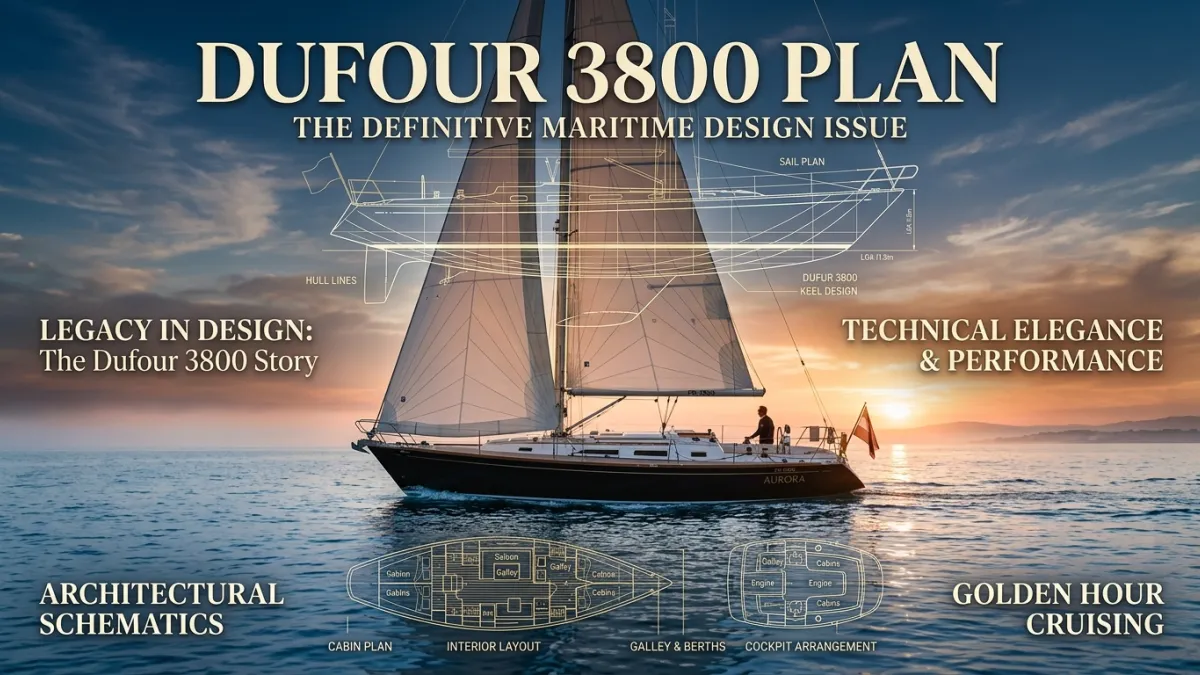
Introduced in 1981 and produced until 1986, the Dufour 3800 remains one of the most respected 30-foot cruiser-racers from the French shipyard Dufour Yachts. Designed by the renowned naval architect Germain Frers, the model earned its name not from its length, but from its approximate displacement of 3,800 kg (8,377 lbs). Over 300 units were built during its production run, making it a popular choice on the secondhand market for sailors seeking balanced performance, robust GRP construction, and a sensible interior layout.
Interior Dufour 3800 Plan and Layout
The interior layout of the Dufour 3800 maximizes space efficiently for a vessel with an overall length of 9.30 meters (30.5 feet) and a beam of 3.25 meters (10.66 feet). Dufour offered both standard accommodations and a slightly modified Club version, but the core floor plan focuses on practical offshore usability.
- Forward Cabin: Features a traditional V-berth with an infill option to create a double bed, accompanied by overhead shelving and under-berth storage.
- Head/Bathroom: Located between the main salon and forward cabin, extending across the beam. It features a marine toilet to port and a washbasin with hanging locker storage to starboard.
- Main Salon: Designed with two opposing settee berths flanking a central drop-leaf table. The port settee often converts into a double berth, while the starboard settee serves as a comfortable single berth.
- Galley: Positioned to port near the companionway for optimal ventilation. It includes a two-burner stove with oven, a deep icebox or converted fridge unit, and a single stainless steel sink.
- Chart Table & Quarter Berth: Positioned to starboard facing forward, featuring a full-sized chart desk with instrument panels. Directly behind the navigation station lies a spacious aft quarter berth.
Dufour 3800 Technical Specifications
According to original manufacturer documentation and broker specifications, key dimensions for the Dufour 3800 include:
| Specification | Measurement |
|---|---|
| Length Overall (LOA) | 9.30 m / 30.51 ft |
| Waterline Length (LWL) | 7.50 m / 24.60 ft |
| Beam | 3.25 m / 10.66 ft |
| Standard Draft (Fin Keel) | 1.70 m / 5.58 ft |
| Shallow Draft Keel | 1.35 m / 4.43 ft |
| Displacement | 3,800 kg / 8,377 lbs |
| Ballast (Cast Iron) | 1,700 kg / 3,747 lbs |
| Sail Area (Main + Genoa) | Approx. 48 sq m / 516 sq ft |
| Original Auxiliary Power | Volvo Penta MD7B (17 HP) or Bukh 20 HP |
Sailing Performance and Handling
Thanks to the hull design by Germain Frers, the Dufour 3800 boasts strong upwind performance and predictable motion in a seaway. With a ballast ratio close to 45%, the boat is remarkably stiff and handles moderate to heavy conditions smoothly. The moderate beam allows for decent speed downwind, while the fin keel and skeg-hung rudder provide excellent tracking control and responsiveness at the tiller (or wheel on modified editions).
Pros and Cons of the Dufour 3800
Pros
- Sturdy Construction: Hand-laid solid fiberglass hull with reinforced keel floors.
- Excellent Sea Keeping: High ballast ratio provides stability and comfort in rough water.
- Smart Interior: The floor plan provides sleeping berths for up to 6 people without feeling excessively cramped.
- Affordable Classic: Excellent value for money in the entry-level secondhand cruiser market.
Cons
- Aging Engine Units: Original Volvo Penta or Bukh engines are reaching the end of their service lives if not already replaced.
- Deck Moisture: Older sandwich decks can develop soft spots around chainplates or stanchion bases if re-bedding was neglected.
- Iron Keel Maintenance: Cast iron keels require regular anti-corrosion treatments to prevent rusting.
Key Considerations When Buying a Dufour 3800
When surveying a pre-owned Dufour 3800, marine inspectors recommend paying close attention to specific age-related areas. Check the hull bottom for signs of gelcoat blistering (osmosis), inspect the keel-to-hull joint for rust weeping ("Dufour smile"), and assess the standing rigging if it is older than 10 years. Upgrading older wiring, plumbing, and replacing original auxiliary engines with modern marine diesels (such as a Beta Marine or Yanmar 20 HP) drastically enhances reliability and resale value.
Frequently Asked Questions
Is the Dufour 3800 suitable for solo sailing?
Yes. With lines led back to the cockpit, a manageable sail area, and a steady track thanks to the skeg-hung rudder, single-handed or shorthanded sailing is straightforward on a Dufour 3800.
What is the difference between the standard and shallow draft versions?
The standard fin keel draws 1.70 meters and delivers superior upwind pointing ability. The shallow draft version draws 1.35 meters, allowing access to skinnier waters and tidal estuaries at the cost of slightly more leeway when beating upwind.