

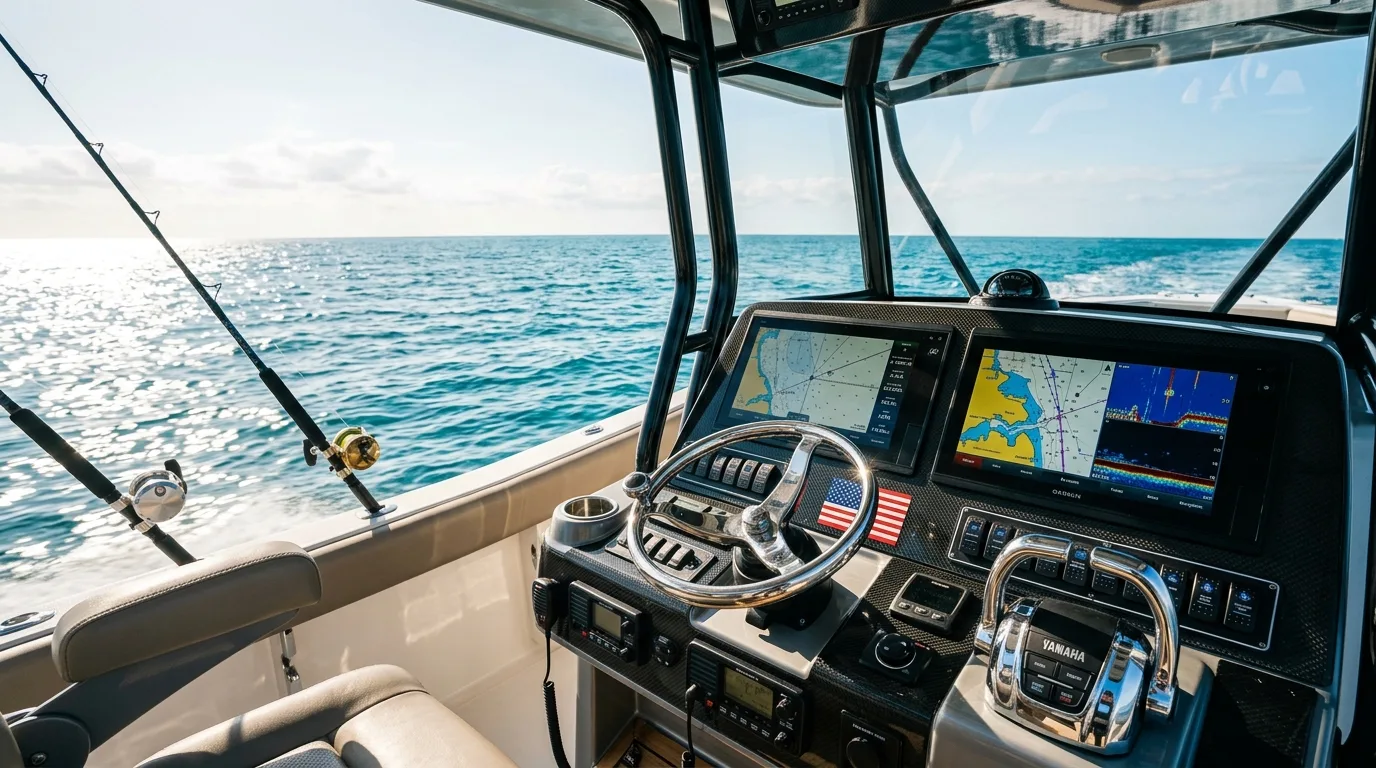

Ah, the call of the open ocean! There’s nothing quite like the thrill of a saltwater fishing adventure, whether you’re chasing snapper in the bay or battling a marlin far offshore. As a seasoned captain and boat broker, I’ve seen countless anglers, from first-timers to grizzled veterans, outfit their vessels. And I can tell you, the right gear doesn’t just make your trip more enjoyable; it makes it safer and far more successful. Think of your boat as your tackle box on the water – it needs to be stocked with purpose.
Table Of Content
- The Foundation: Navigation & Communication
- Finding the Fish: Advanced Electronics
- The Angler’s Arsenal: Specialized Fishing Gear
- Safety First: Never Compromise
- Powering Your Pursuit: Engine & Electrical Basics
- Keeping Your Investment Pristine: Maintenance & Care
- Your Next Step: Match the Gear to Your Dream
So, let’s talk about equipping your saltwater fishing boat, transforming it from a simple vessel into a finely tuned fishing machine ready for anything the sea throws your way.
The Foundation: Navigation & Communication
Before you even think about rods and reels, you need to know where you’re going and how to get help if you need it. These are non-negotiables for any boat, especially one heading into open water.
- GPS/Chartplotter: This is your eyes on the water. A GPS (Global Positioning System) device uses satellite signals to pinpoint your boat’s exact location, while a Chartplotter displays this position on an electronic marine chart. Brands like Garmin, Raymarine, Simrad, and Lowrance offer powerful units that integrate navigation, sonar, and radar. For smaller boats (under 25 ft) like a Boston Whaler Montauk or Carolina Skiff, a combo unit with a 7-9 inch screen is usually sufficient for coastal fishing. For larger offshore vessels (30-40 ft+) like a Grady-White Canyon or a Contender, dual large-screen displays (12-16 inches) are common, offering redundancy and more viewing area for complex charts and sonar data.
- VHF Radio: Your lifeline. A VHF (Very High Frequency) radio is essential for communicating with other boats, marinas, and the Coast Guard. Make sure it’s properly installed and you know how to use it, especially the Digital Selective Calling (DSC) feature, which transmits your boat’s identity and position in an emergency.
- Radar (for offshore): If you venture offshore, especially in foggy conditions or at night, radar is invaluable. It helps you detect other vessels, land, and even rain squalls, giving you crucial situational awareness.
Finding the Fish: Advanced Electronics
This is where the magic happens for anglers. Modern fish-finding technology is astounding.
- Fishfinder/Sonar: A Fishfinder uses sonar (Sound Navigation and Ranging) technology to send sound waves into the water and interpret the echoes to display fish, structure, and bottom contours on your screen.
- CHIRP Sonar: Look for units with CHIRP (Compressed High-Intensity Radiated Pulse) technology. Unlike traditional sonar, CHIRP transmits a range of frequencies, providing much clearer, higher-resolution images of fish and structure.
- Side-Scan & Down-Scan Imaging: These advanced sonar technologies (e.g., Garmin Panoptix, Humminbird MEGA Imaging) offer photo-like views of what’s to the sides and directly below your boat, helping you pinpoint bait schools and hidden structures that hold fish.
- Autopilot: For long runs to the fishing grounds, an autopilot system can steer your boat, freeing you up to prepare tackle or just enjoy the ride.
The Angler’s Arsenal: Specialized Fishing Gear
Now for the fun stuff – the actual tools of the trade!
- Rod Holders: You can never have too many. Flush-mount, rail-mount, and rocket launchers (vertical holders on a T-top or arch) are all crucial for trolling, storing extra rods, and keeping your deck organized.
- Outriggers: For serious offshore trolling, outriggers are long poles extending from the sides of your boat, allowing you to spread multiple fishing lines over a wider area, mimicking a school of baitfish. They are common on larger center consoles and sportfish yachts.
- Livewell: A must-have for keeping baitfish or even smaller catch alive and healthy. A good livewell will have a strong pump, proper aeration, and circulation. Larger offshore boats often feature multiple livewells, sometimes even plumbed with seawater intake and drains.
- Tackle Storage: Integrated tackle centers, dedicated drawers, and accessible compartments keep your lures, hooks, and tools organized and ready.
- Gaffs and Nets: Essential for safely landing larger fish. Have a variety of sizes and types onboard.
- Cutting Board/Bait Prep Station: A dedicated area for cutting bait and filleting fish keeps your deck clean and hygienic.
- Coolers/Fish Boxes: Insulated coolers are crucial for keeping your catch fresh on ice. Many larger boats have built-in, insulated fish boxes that drain overboard.
- Washdown System: A raw water washdown pump with a hose attachment is invaluable for rinsing blood and scales off the deck, keeping your boat clean and preventing corrosion.
Safety First: Never Compromise
No matter how big or small your boat, safety equipment is paramount. Don’t leave the dock without it!
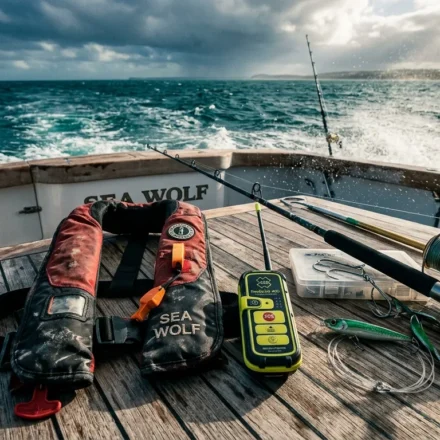
- Personal Flotation Devices (PFDs): Also known as life jackets. You need one for every person on board, and they must be readily accessible.
- Flares & Visual Distress Signals: Required by the Coast Guard, these help signal for help in an emergency.
- First-Aid Kit: A comprehensive kit for treating injuries, from small cuts to more serious accidents.
- Anchor & Rode: An appropriate anchor for your boat size and local bottom conditions, with sufficient chain and rope (rode), is essential for holding position or in an emergency.
- Bilge Pump: An electric pump used to remove water from the lowest part of the boat’s hull (the bilge). Most boats have multiple, and a high-capacity automatic pump is critical.
- Fire Extinguishers: Properly rated and easily accessible.
- EPIRB/PLB (Emergency Position Indicating Radio Beacon/Personal Locator Beacon): For offshore trips, these devices transmit a distress signal and your location to search and rescue services.
Powering Your Pursuit: Engine & Electrical Basics
Your propulsion system and electrical setup are the heart of your fishing machine.
- Outboard Engines: Most smaller and mid-sized Saltwater Fishing Boats (like Axopar 28s or smaller center consoles) rely on powerful, reliable outboard engines from brands like Yamaha, Mercury, Suzuki, or Honda. For larger boats, dual or even triple outboards are common.
- Inboard Diesel Engines: Larger sportfishing yachts (40 ft+) often utilize robust inboard diesel engines from manufacturers such as Yanmar or Volvo Penta, offering greater range and torque.
- Battery System: A robust dual-battery system (starting and house) is critical, with a reliable charging system to power all your electronics.
- Trolling Motor: For inshore and nearshore anglers, a bow-mounted electric trolling motor (e.g., Minn Kota, MotorGuide) with GPS spot-lock technology is a game-changer for stealthy approaches and holding position without anchoring.
Keeping Your Investment Pristine: Maintenance & Care
Your gear is only as good as its upkeep. Regular maintenance ensures reliability when you need it most.
- Electronics Care: Keep screens clean, protect units from direct sun when not in use, and ensure all connections are watertight and corrosion-free.
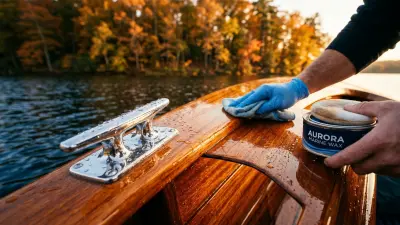
- Washdowns: After every saltwater trip, thoroughly wash down your boat and flush your engines with fresh water to prevent salt corrosion.
- Engine Service: Follow manufacturer recommendations for engine service (typically every 100-200 hours), including oil changes, fuel filter replacements, and checking anodes.
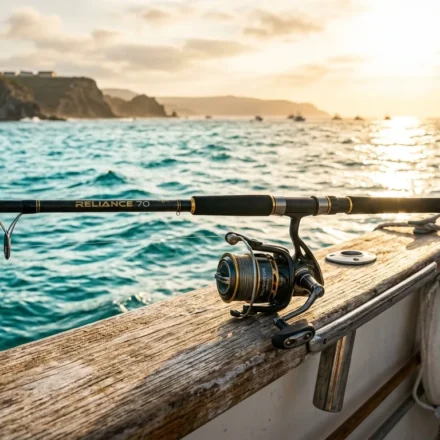
- Tackle & Rod Care: Rinse all rods, reels, and tackle with fresh water after each use.
- Battery Checks: Regularly inspect battery terminals for corrosion and ensure batteries are fully charged.
Your Next Step: Match the Gear to Your Dream
The key is to match your equipment to your boating style and fishing aspirations. Are you planning:
- Coastal Day Trips (under 25 ft boats): Focus on essential navigation, a basic fishfinder, plenty of rod holders, and all safety gear. Brands like Boston Whaler and Carolina Skiff are perfect for this.
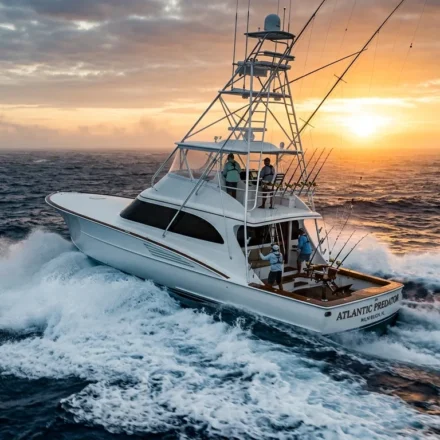
- Offshore Adventures (30-40 ft+ boats): Invest in advanced electronics (radar, CHIRP, side-scan), multiple livewells, outriggers, and robust safety redundancies like an EPIRB. This is the domain of vessels like a Yellowfin or larger Beneteau Barracuda.
- Family Cruising & Fishing (multi-purpose boats): You’ll want a balance of comfort features and fishing amenities. Look at walkarounds or dual consoles from builders like Grady-White, which offer versatility.
Equipping your saltwater fishing boat is an exciting journey. It’s about building confidence, extending your range, and maximizing your success on the water. Every piece of gear, every electronic device, is an investment in your safety, your enjoyment, and the memories you’ll create. So, take your time, research your options, and outfit your vessel not just for fishing, but for the freedom, adventure, and incredible stories that await you on the magnificent blue horizon.
===SON