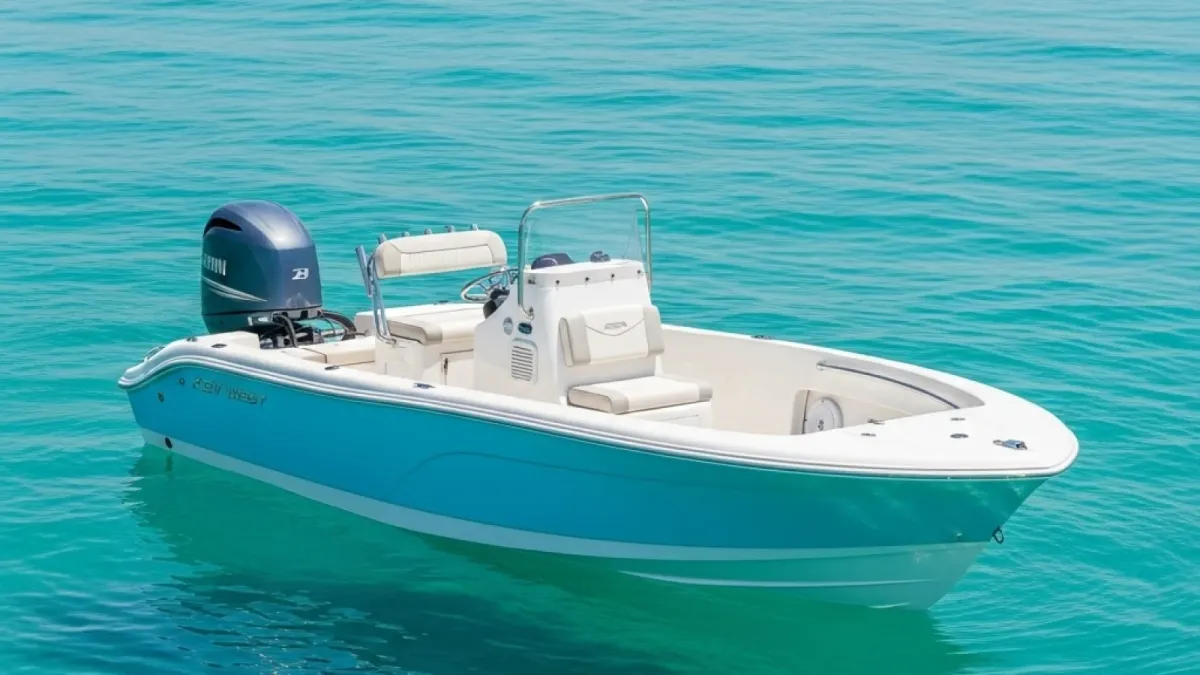
Quick answer: The Key West 1720 Sportsman is a 17-foot-2-inch center console featuring a 10-inch draft, 1,150-pound dry weight, and maximum 90 HP engine rating. Renowned for its unsinkable no-rot composite construction and efficient 35-gallon fuel system, it serves as one of the most cost-effective and dependable Inshore fishing platforms ever produced.
Engineering, Hull Design, and Core Construction
Understanding what makes the 1720 Sportsman stand out requires a look beneath the gelcoat. Unlike legacy skiffs from the 1980s and early 1990s that relied on wood core stringers and plywood deck reinforcement, Key West employs a completely wood-free construction philosophy. The fiberglass inner liner is backed by a closed-cell foam-injected fiberglass stringer system. This method bonds the hull, deck, and stringers into a single rigid structure while providing upright flotation that meets and exceeds United States Coast Guard standards.
The hull geometry utilizes a modified-V entry with a 15-degree deadrise at the transom. This design balance is intentional: a deep-V hull might cushion rough offshore chop better, but it demands significantly more draft and horse power. The 15-degree deadrise delivers exceptional stability when anchored or drifting on the flats, maintaining a draft of just 10 inches with the outboard trimmed up. Consequently, anglers can pole or use a trolling motor through skinny marshland without risking bottom strike on oyster bars or sandbars.
Weight distribution on a 17-foot vessel is critical to ride quality and hole-shot performance. Key West positioned the 35-gallon aluminum fuel tank along the centerline, low in the hull between the console and the aft livewell. This central ballast keeps the bow resting at an optimal angle whether you are running solo or carrying a full crew of five passengers. Combined with a self-bailing cockpit design with scuppers, water draining off the casting decks exits overboard quickly rather than pooling in the bilge.
Cockpit Layout, Deck Ergonomics, and Standard Features
Despite its modest 6-foot-10-inch beam, the layout of the 1720 Sportsman prioritizes open deck space and efficient movement around the console. The bow area features a raised casting platform that conceals a built-in anchor locker and dry gear storage underneath. This elevated foredeck provides excellent line-of-sight when sight-casting for redfish, snook, or speckled trout. Optional cushion sets can convert the forward deck into a comfortable seating lounge for family cruising days.
The helm console is simple, intuitive, and remarkably functional. It features a tinted acrylic windshield protected by a sturdy stainless steel grab rail, offering secure handholds for passengers standing alongside the helm in choppy water. Below the steering wheel—which typically connects to a BayStar hydraulic steering system—the dash offers enough flush-mount surface area for modern 7-inch or 9-inch chartplotters and fishfinders from brands like Simrad or Garmin, along with standard engine gauges and rocker switches.
On-the-water tip: When repowering or buying a used 1720, pay close attention to propeller pitch and shaft length. The 1720 uses a 20-inch transom height; pairing a modern four-stroke 90 HP outboard with a 3-blade stainless steel prop (such as a 13.25 x 17 pitch) yields the ideal balance of immediate hole shot in skinny water and efficient mid-range cruising around 28 to 32 mph.
Seating and livewell arrangements are thoughtfully integrated into the working spaces. The primary helm seat is a classic flip-flop cooler helm bench with an insulated cooler underneath, allowing the captain to face forward while running or pivot aft while drift-fishing. In front of the console sits a cushioned jump seat built over a secondary storage box or livewell, while an aerated livewell comes integrated in the aft deck along with easy access hatches to the dual-battery switch, bilge pump, and raw-water washdown pump.
Technical Specifications Overview
To evaluate how the Key West 1720 Sportsman compares against other boats in the 17-foot center console class, examining precise numerical specifications is essential. Below is the full official specifications table for the hull and standard hardware configuration.
| Specification / Dimension | Measurement / Standard Value |
|---|---|
| Length Overall (LOA) | 17 feet 2 inches (5.23 m) |
| Beam (Width) | 6 feet 10 inches (2.08 m) |
| Draft (Engine Up) | 10 inches (0.25 m) |
| Deadrise at Transom | 15 Degrees |
| Dry Hull Weight (Approx.) | 1,150 lbs (521 kg) |
| Fuel Tank Capacity | 35 US Gallons (132 Liters) |
| Maximum Horsepower Rating | 90 HP (Select models rated to 115 HP) |
| Recommended Power Range | 70 HP to 90 HP Outboard |
| Transom Height | 20 Inches |
| Passenger Capacity | 5 Persons or 1,200 lbs total capacity |
| Hull Construction Type | No-Wood Fiberglass / Closed-Cell Foam Injection |
On-the-Water Performance, Power Options, and Real Fuel Efficiency
The performance profile of the 1720 Sportsman varies based on outboard selection, but it excels across the standard 70 HP to 90 HP power range. Equipped with a Yamaha F90 or Mercury 90 FourStroke, the hull pops on plane in under three seconds with minimal bow rise. Top speed typically reaches between 38 and 42 mph depending on load, fuel, and water conditions. For anglers focused purely on fuel economy, a 70 HP engine comfortably cruises at 22 to 25 mph while burning less than 3.5 gallons per hour (GPH).
Handling in coastal estuaries and open bays is remarkably dry for a 17-foot boat, thanks to flared bow gunwales that push spray outward rather than back into the cockpit. While its 15-degree deadrise will feel firm in steep 2-to-3-foot chop, throttling back and trimming the outboard down allows the bow entry to slice through small waves cleanly. It handles tight turns at speed without sliding or cavitation, making it an easy vessel for beginner captains to master.
Trailering and storage are two areas where the 1720 truly shines. With a dry hull weight of just 1,150 pounds, the total towing weight—including a single-axle aluminum trailer, full 35-gallon fuel load, outboard motor, and fishing gear—hovers around 2,400 to 2,600 pounds. This means standard crossover SUVs, light trucks, and midsize mid-duty vehicles can tow the vessel comfortably. Furthermore, its modest overall footprint fits into standard residential garages when equipped with a swing-away trailer tongue.
Who Should Buy the Key West 1720 Sportsman?
Selecting the right boat comes down to matching hull design with your primary boating activities. The Key West 1720 Sportsman represents a sweet spot for several distinct types of boaters who want maximum utility without breaking the bank or dealing with complicated vessel systems.
- Inshore Anglers: Fishermen targeting redfish, flounder, speckled trout, or stripers in skinny marshlands, tidal rivers, and shallow flats will appreciate the true 10-inch draft and quiet hull dampening.
- First-Time Boat Owners: The simple electrical layout, single outboard engine, unsinkable foam hull, and modest trailering weight make learning boat maintenance and handling stress-free.
- Families & Sandbar Enthusiasts: With seating for five, an integrated swim platform with boarding ladder, and ample space for coolers and water toys, it transitions easily from fishing trip to family beach day.
- Solo Captains: Launching, retrieving, and docking a 17-foot center console on a single-axle trailer can easily be performed by one person without assistance.
If your primary goal is running 30 miles offshore into steep ocean swells, a deeper 21-to-23-foot hull with a 21-degree deadrise would be a better fit. However, for 90% of inshore, coastal bay, river, and lake boating activities, the 1720 Sportsman delivers maximum fun and reliability with minimal overhead costs.
Frequently Asked Questions
What is the maximum engine size for a Key West 1720 Sportsman?
Most model years of the Key West 1720 Sportsman carry an official Coast Guard maximum power rating of 90 HP, which provides a top speed around 40 mph. Some specific vintage years were rated up to 115 HP, but a modern 90 HP four-stroke outboard is universally considered the ideal power match for speed, weight balance, and fuel economy.
Can the Key West 1720 go offshore?
The 1720 Sportsman is primarily designed for inshore waters, bays, estuaries, and calm lakes. While it can handle nearshore reefs or calm ocean inlets on flat days (1 to 2 foot seas or less), its 15-degree deadrise and 17-foot length are not designed for rough offshore sea conditions.
Is the Key West 1720 really unsinkable?
Yes. Key West builds the 1720 using a high-density closed-cell foam injection system between the hull and deck liner. This foam provides upright, level flotation that keeps the vessel afloat even if the cockpit completely fills with water.
How much shallow water can the Key West 1720 navigate?
With the outboard engine trimmed up, the boat drafts approximately 10 inches of water. This shallow draft allows anglers to operate in shallow estuaries, backwater channels, and flats where larger deep-V boats cannot go.
Recommendation
For buyers seeking an affordable, durable, and highly versatile center console, prioritizing a well-maintained Key West 1720 Sportsman powered by a modern 70 HP or 90 HP four-stroke outboard is one of the smartest investments in small-boat ownership. Before purchasing, schedule a water test to evaluate trim tab responsiveness and verify that the fuel system fittings and scuppers function properly under load.
Sources
- Key West Boats Official Site
- United States Coast Guard Boating Safety Division
- Yamaha Outboards Performance Bulletins
Check Out Our Top Recommended Boat Gear on Amazon
Hand-picked sailing & boating essentials we actually recommend.
As an Amazon Associate, we earn from qualifying purchases.