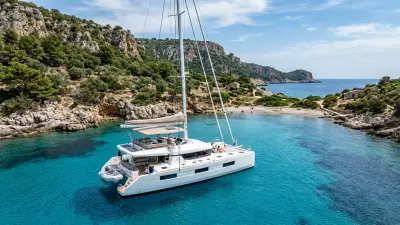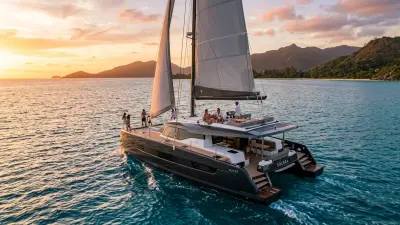
Modern sailing catamarans deliver unmatched initial stability, low fuel consumption, and expansive living spaces across a wide beam—typically 20 to 30 feet—making them the ideal choice for long-distance cruising and peaceful ocean passages. Operating at average cruising speeds of 6 to 9 knots under sail, a sailing catamaran offers virtually unlimited range compared to a power catamaran, which trades wind reliance for higher cruising speeds between 15 and 24 knots at the cost of significantly higher fuel burn. Choosing between a sailing catamaran and a power catamaran ultimately hinges on whether your priority is zero-emissions ocean transit and low operational expenses, or predictable travel times and maximum internal volume.
Key Advantages of the Sailing Catamaran Architecture
The core appeal of a sailing catamaran stems from its dual-hull design connected by a wide deck structure. Unlike traditional monohull sailboats that heel significantly under sail, catamarans rarely heel more than 5 to 10 degrees. This upright stance drastically reduces crew fatigue, minimizes seasickness, and allows everyday activities—such as cooking in the galley or working at the nav station—to occur comfortably while underway.
From an engineering perspective, twin hulls create a very shallow draft—often between 3.5 feet (1.1 meters) and 4.5 feet (1.4 meters). This enables cruising sailors to access shallow anchorages, tropical coves, and delicate reef systems off-limits to deep-keel monohulls. Furthermore, having engine rooms isolated in each aft hull compartment keeps noise, vibration, and diesel fumes far away from the primary living quarters in the main salon.
Performance Evaluation: Sailing Catamaran vs. Power Catamaran
When evaluating performance, the distinction between sail and power multihulls comes down to hull shape, displacement, and propulsion efficiency. Sailing catamarans feature low-drag, narrower hulls designed to glide smoothly through windward waves. Modern production models like the Fountaine Pajot Elba 45 or Lagoon 46 carry generous sail area-to-displacement ratios, allowing them to match or exceed wind speed in moderate breezes.
Conversely, a power catamaran replaces the mast, standing rigging, and heavy sail-handling hardware with larger twin diesel engines (typically 150 hp to 400 hp each, compared to 40 hp to 80 hp on sailing models). Because power catamarans do not require a rig for propulsion, designers can extend the bridge deck further forward, increasing interior volume by up to 30% compared to a sailing cat of equal length.
| Feature / Metric | Sailing Catamaran | Power Catamaran |
|---|---|---|
| Cruising Speed | 6–9 knots (Sail/Engine) | 14–22 knots (Engine) |
| Average Fuel Efficiency | 0.8–1.5 gal/hr (at 7 knots under power) | 8.0–25.0 gal/hr (at 18 knots under power) |
| Max Range | Unlimited (Wind Dependent) | 350–800 Nautical Miles |
| Bridge Clearance | High (65–85+ ft mast height) | Low (15–25 ft, ideal for low bridges) |
| Interior Living Space | Generous salon & expansive cockpit | Maximum volume (full-beam forward spaces) |
| Maintenance Focus | Standing rigging, sails, winches, small engines | High-horsepower engines, drives, generator hours |
Layout, Comfort, and Deck Space Configuration
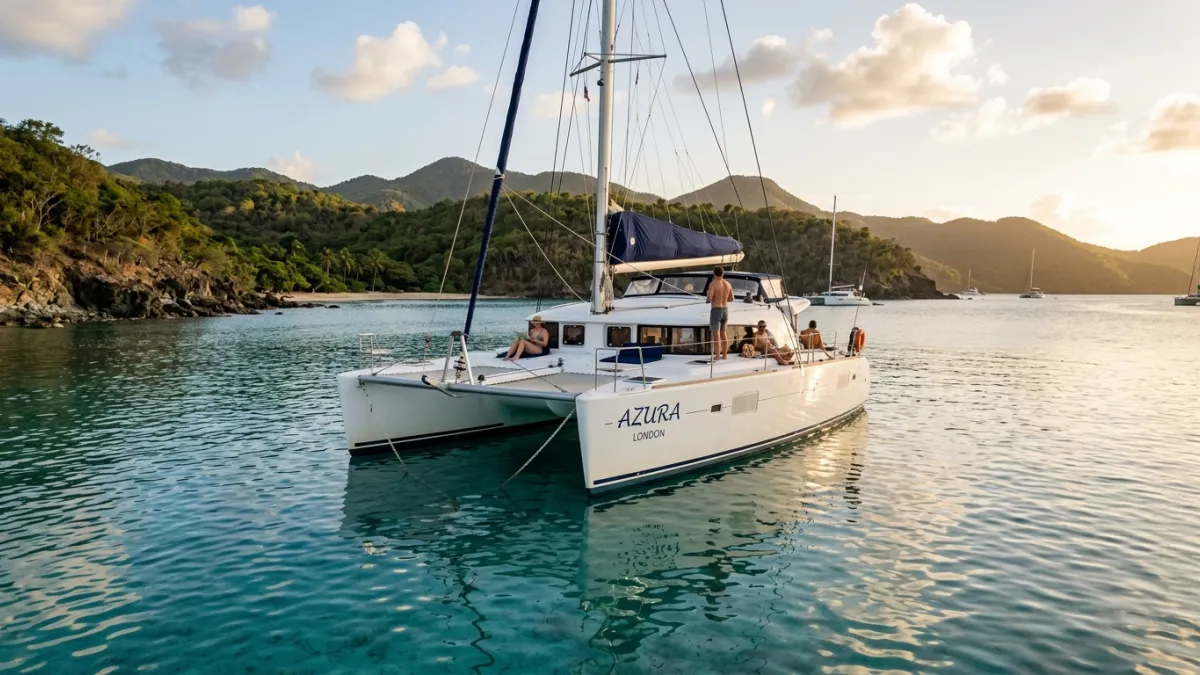
Step aboard a 45-foot sailing catamaran and you will immediately notice the seamless connection between the aft cockpit and the main salon. Modern marine architects utilize flush threshold sliding glass doors to create an open-concept indoor/outdoor living salon. On deck, forward trampolines provide an iconic lounging area where breezes can flow freely beneath the boat, keeping the vessel cool at anchor.
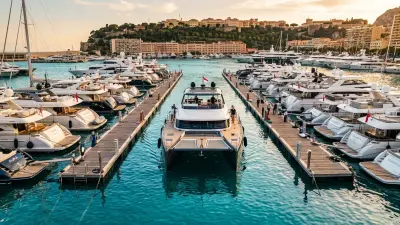
Power catamarans frequently replace these forward trampolines with solid foredecks, creating dedicated forward cockpits with sunbeds or dining tables. For families or charter groups focused on entertainment rather than active sail trimming, power cats offer an unmatched expanse of flat deck space. However, the absence of sails means power catamarans roll slightly more in beam seas when anchored, as they lack the dampening effect created by a raised mainsail.
Ownership Costs: Purchase Price, Maintenance, and Fuel
Acquisition and running costs differ substantially over a 5-to-10-year ownership cycle. While new build prices for popular 45-to-50-foot models (such as the Lagoon 50 or Fountaine Pajot Aura 51) generally range between €650,000 and €1,300,000 depending on options, operational budgets diverge quickly once launched:
- Fuel Expense: A sailing catamaran crossing 4,000 nautical miles annually uses very little fuel when wind conditions are favorable. In contrast, running a power catamaran the same distance at fast cruising speeds can generate fuel bills exceeding $15,000 to $25,000 per year.
- Rigging & Sails: Sailing multihulls require sail replacement every 7 to 10 years and standing rigging replacement every 10 to 12 years. This major refit cycle can cost $20,000 to $40,000.
- Engine Service: Power cats accumulate engine hours much faster, requiring frequent oil changes, heat exchanger flushes, drive maintenance, and eventual major overhauls on large diesel engines.
Pros and Cons: Which Multihull Fits Your Cruising Style?
Sailing Catamaran Pros & Cons
- Pro: Silent, eco-friendly passage making powered by the wind.
- Pro: Excellent resale value due to high global demand among blue-water cruisers.
- Pro: Low fuel burn and extended ocean-crossing range.
- Con: Sail handling requires physical effort and navigation skills.
- Con: Air draft (mast height) restricts passage under fixed low bridges.
Power Catamaran Pros & Cons
- Pro: Fast cruising speeds reduce transit times between island destinations.
- Pro: Simpler helm operation—no lines, winches, or sail trimming needed.
- Pro: Unrivaled usable square footage on both main deck and flybridge.
- Con: Significant fuel consumption at elevated speeds.
- Con: Limited passage-making range without carrying auxiliary fuel bladders.
Final Verdict: How to Choose
If your ideal voyage involves quiet passages, ocean crossings, and the rewarding craft of trimming sails to nature's breeze, a sailing catamaran remains the premier platform for long-distance adventure. However, if your target destination involves fixed schedules, weekend hops between island archipelagos, or maximizing comfort for non-sailing guests, a power catamaran provides the speed, space, and straightforward navigation needed to get the absolute most out of your time on the water.
Frequently Asked Questions
Is a sailing catamaran harder to dock than a power catamaran?
No. Both sailing and power catamarans feature widely spaced twin engines set far apart in each hull. By working the throttles in opposite directions (one engine forward, one in reverse), both types of catamarans can spin 360 degrees within their own length without using the rudder, making docking remarkably manageable.
Can a sailing catamaran cross an ocean?
Yes. Sailing catamarans are routinely sailed across the Atlantic and Pacific oceans. Their ability to carry trade wind sails for weeks without consuming fuel makes them ideal ocean passages platforms, provided they are properly equipped with offshore safety gear and storm sails.
Do power catamarans handle rough seas well?
Power catamarans handle head seas exceptionally well because their twin narrow hulls slice through waves rather than pounding like a traditional flat-bottom monohull powerboat. However, in large rolling beam seas, they can experience a quick motion known as "snap roll," which is usually dampened on sailing models by the weight and windage of the rig.
Sources
- Fountaine Pajot Official Site
- Lagoon Catamarans Official Site
- European Yacht Brokers Industry Analysis