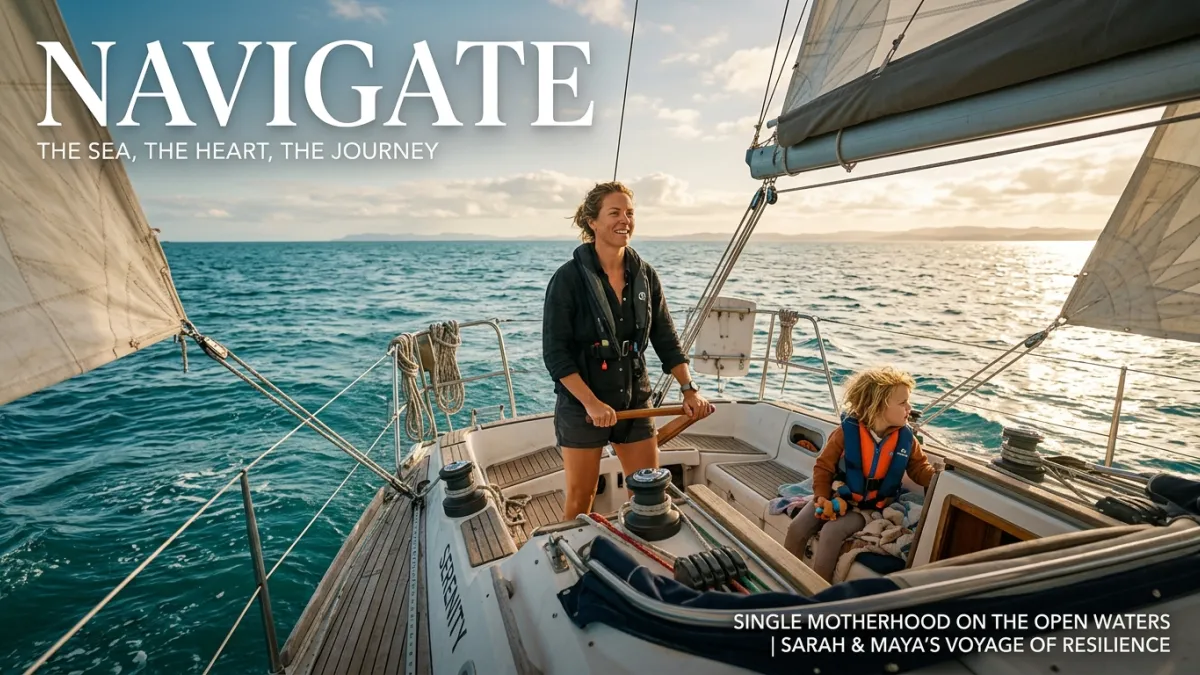
Skippered family trips require meticulous planning, but taking your kids out on the water as a solo parent presents a unique set of challenges. When you are both the sole adult on deck and the primary caregiver, handling dock lines while keeping an eye on your children demands efficient systems, strict safety protocols, and smart boat management. Here is how to handle your vessel safely while ensuring your kids have a memorable, stress-free time on the water.
1. Optimize Your Rigging for Shorthanded Operation
When sailing without another adult, your boat must be set up so you rarely need to leave the safety of the cockpit. Lines led aft to the cockpit allow you to hoist, reef, and drop sails without stepping onto the side decks while your kids are unattended.
- Roller Furling Headsails: Furling foresails allow you to reduce sail area in seconds without leaving the helm.
- Single-Line Reefing: Ensure your mainsail has reefing lines led directly to cockpit winches so you can depower quickly if wind speeds rise above 15 knots.
- Autopilot or Tiller Pilot: An electronic autopilot is non-negotiable for a single parent. It acts as your extra deckhand, holding the vessel into the wind while you manage lines, tend to a child, or secure dock lines.
2. Non-Negotiable Child Safety Gear and Protocols
Safety rules on board must be strict and non-negotiable. Establishing clear physical boundaries prevents accidents before they happen.
Life Jackets and Harnesses
Children under 13 should wear a properly fitted USCG-approved Type I or Type II PFD (Personal Flotation Device) at all times when on deck or in the cockpit. Choose models with a built-in lifting handle on the back and a crotch strap to prevent the PFD from slipping over their head in the water. For night passages or conditions over 4 Beaufort, clip children into jacklines using a dedicated tether and harness.
Safety Mesh and Secure Zones
Installing lifeline netting (safety mesh) around the perimeter of your boat’s stanchions adds a critical barrier against slips. Additionally, designate the companionway steps and main cabin as "safe zones" where younger kids must remain during active maneuvers like docking, tacking, or anchoring.
Equipment Setup Checklist for Solo Parents
| Gear / System | Recommended Specification | Operational Purpose |
|---|---|---|
3. Simplifying Docking and Anchoring Maneuvers
Docking is often the most stressful phase for a single parent. Reduce anxiety by simplifying your approach and prepping hardware ahead of time.
- Rig Fenders and Lines Early: Set out fenders and bow/stern lines on both sides before entering the marina fairway while your vessel is steady under engine power.
- Use Midship Springs First: Step off the boat with a midship spring line first. Securing this single line allows the engine's low-idle forward thrust to hold the boat against the dock while you secure the bow and stern lines.
- Anchor with an Electric Windlass: Drop anchor using a wireless windlass remote from the helm so you can keep one hand on the controls and eyes on your children.
4. Keeping Kids Engaged and Comfortable
Boredom or seasickness can quickly derail a day trip. Keep passages short—ideally 2 to 4 hours maximum—and involve older kids in navigation by assigning simple tasks like spotting navigation buoys or steering under supervision. Pack seasickness bands or pediatric dimenhydrinate (if approved by your pediatrician), plenty of non-messy snacks, and keep sun protection easily accessible in the cockpit.
Frequently Asked Questions
What is the safest boat size for a single parent sailing with young children?
A sailboat between 28 and 35 feet is generally ideal. Vessels in this size range offer enough stability and cabin comfort for children while keeping sail areas, anchor gear, and dock line loads light enough for one adult to manage manually if mechanical systems fail.
How do I handle an emergency if I fall ill or get injured on board?
Install a fixed VHF radio with Digital Selective Calling (DSC) connected to GPS at the companionway. Teach children how to press and hold the red DISTRESS button for 5 seconds to broadcast your exact location to the Coast Guard and nearby vessels. Pre-program speed-dial buttons on your mobile phone for marine rescue services.