Disclosure: As an Amazon Associate, we earn from qualifying purchases.
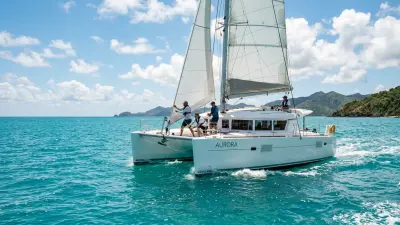
Having spent more than thirty years walking marina docks, managing charter fleets, and delivering yachts across blue-water routes, I have watched the multihull revolution shift from an eccentric fringe movement into the absolute epicenter of modern leisure boating. Walk along the docks of any major international boat show today, from Annapolis to Cannes, and you will see multihulls commanding prime real estate and drawing endless crowds. Boaters who grew up swearing by deep-keeled monohulls are increasingly handing over their keys after stepping aboard a modern double-hulled vessel for the first time. The shift is not driven by marketing hyperbole or passing design trends; it stems from fundamentally superior physics regarding deck geometry, living volume, and hydrodynamic efficiency.
Quick answer: By spreading their displacement across two slender hulls separated by a wide beam, catamarans deliver initial form stability that eliminates up to 80% of roll motion, provide over 60% more usable living area than monohulls of equal length, and reach faster off-wind speeds without the drag of heavy lead ballasted keels.
Form Stability: Why Two Hulls Change Everything on the Water
To understand why a catamaran behaves so differently from a traditional single-hulled boat, you have to look at the basic physics of marine architecture. A conventional monohull relies almost entirely on "ballast stability." It uses a heavy lead or iron keel—often weighing anywhere from 25% to 40% of the vessel's total displacement—hanging several feet below the waterline. As wind tilts the boat, the keel acts as a pendulum pulling it back upright. This design requires the boat to heel over, frequently at uncomfortable angles of 15 to 25 degrees, just to generate its counter-righting moment. In contrast, a catamaran derives its righting moment from "form stability," spreading its buoyancy far outward across twin hulls wide apart from one another.
This structural breadth fundamentally alters every single moment you spend on board. On a 45-foot catamaran with a 26-foot beam, the platform stays essentially level whether you are ghosting along in a light breeze or anchored in a bay subject to a annoying side swell. For anyone who has ever wrestled with rolling anchorages where coffee mugs slide off tables and sleep is constantly interrupted, the steady footings of a multihull are nothing short of revolutionary. This flat-sailing characteristic dramatically reduces physical fatigue during long passages because your core muscles are not constantly compensating for a swinging deck.
Beyond simple physical comfort, this level platform drastically lowers the occurrence of seasickness among crew members and family guests. Vestibular disruption in human ears is triggered primarily by erratic, multi-axis rolling motions rather than predictable linear acceleration. By filtering out the rhythmic roll-and-pitch dynamic inherent to round-bottomed single hulls, multihulls allow beginner sailors and veteran cruisers alike to cook meals, navigate at the chart table, and walk across the deck with natural confidence. Marine surveys consistently show that crew fatigue and motion discomfort are primary reasons boat owners give up long-distance cruising; form stability addresses both problems at their root cause.
Unmatched Living Space and Onboard Ergonomics
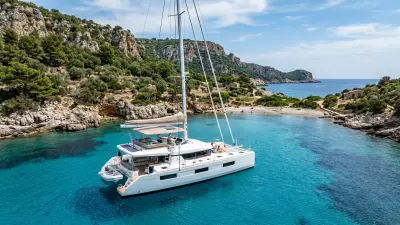
If stability gets boaters onto a catamaran, the shear volumetric capacity is what keeps them there permanently. In a conventional monohull, living space is buried deep down within a tapered hull tube, forcing crew members to descend steep companionway stairs into dark subterranean cabins. Catamarans invert this architecture completely by shifting the primary living quarters onto a wide bridge deck elevated well above the waterline. This creates a single-level indoor/outdoor salon and cockpit area that rivals luxury land-based waterfront apartments in both usable square footage and natural lighting.
Bridge Deck Saloons and Seamless Cockpit Flow
Trampoline Mesh Comfort: Marine Trampoline Deck Lounger

Modern catamaran builders like Lagoon, Fountaine Pajot, Leopard, and Bali have perfected the concept of open-concept nautical living. Sliding glass doors open up completely to join the aft cockpit and main salon into one continuous entertaining footprint. Panoramic 360-degree glass windows wrap around the salon, offering uninterrupted views of the anchorage while letting natural sunlight flood the space. Rather than isolating the cook down in an enclosed galley below decks, the galley on a multihull is integrated directly into the main living zone, allowing whoever is preparing dinner or brewing morning coffee to remain fully engaged with guests sitting in the cockpit or at the nav station.
On-the-water tip: When maneuvering a wide-beam catamaran into a tight marina slip under crosswinds, ignore the steering wheel entirely. Lock your rudder dead ahead and control your dock approach using only the twin engine throttles; pushing one lever forward while pulling the other back pivots the vessel smoothly in its own length without unwanted forward momentum.
Private Hull Layouts and Storage Capacity
Moving below into the hulls reveals another major ergonomic advantage: complete spatial separation between living zones. In an owner’s configuration (often referred to as a "3-cabin master layout"), an entire hull is dedicated to a master suite featuring an island queen bed, a dedicated desk or dressing area, and an expansive bathroom with a separate walk-in shower. The opposite hull houses two generous guest cabins, each equipped with its own private head. This structural layout provides an unprecedented level of acoustic and visual privacy for extended family voyages or charter outings, making living aboard for months at a time feel remarkably unconfined.

Storage capacity on a wide-beam catamaran is equally impressive. Deep foredeck lockers embedded ahead of the bridge deck can easily swallow large fenders, rolled-up inflatable tenders, scuba tanks, stand-up paddleboards, and spare anchor rode without cluttering living spaces. Furthermore, because weight distribution is spread across two long hulls, designers can integrate massive water making systems, large lithium battery banks, and high-capacity solar arrays on hardtops without degrading interior living space or forcing uncomfortable design compromises.
Modern Catamaran Performance: Debunking the Speed Myth
There remains a persistent myth in traditional sailing circles that cruising catamarans are slow, heavy, and unable to sail effectively. While early production multihulls from the 1970s suffered from undersized rigs and excessive structural weight, contemporary multihull engineering has completely rewritten that narrative. Modern cruising catamarans routinely log 200 to 250 nautical-mile days on ocean passages—speeds that typical monohulls of similar length can only dream of reaching under ideal conditions.
Hydrodynamics, Wetted Surface, and Sail-to-Displacement Ratios
The speed secret of a catamaran lies in its narrow hull entry and lack of parasitic ballast weight. A typical 45-foot monohull must push a broad, bulbous hull through the water while carrying 7,000 to 10,000 pounds of dead lead ballast in its keel just to stay upright. A 45-foot catamaran, by contrast, relies on long, slender hulls with very high length-to-beam ratios on each individual hull tube. This slender geometry creates far less wave-making resistance as water flows along the surface, allowing the vessel to glide through the water with remarkably low hydrodynamic drag.
High-Load Line Control: Spinlock EA Double Rope Clutch

When sailing off the wind on a reach or downwind run, catamarans convert wind power into forward motion far more efficiently than displacement monohulls. Lacking a heavy keel that locks them to a strict theoretical hull speed, lightweight or performance-oriented catamarans (such as those built by Nautitech, HH Catamarans, or Outremer) can easily transition into semi-planing or surfing modes, pushing speedometers into the 12 to 18-knot range in moderate breezes. Even comfort-focused production cruisers maintain elevated average speeds because they sail completely flat, allowing sails to operate at optimal aerodynamic angles of attack without spilling wind over a heavily heeled rig.
Power Catamarans: Fuel Efficiency and Twin Engine Maneuverability
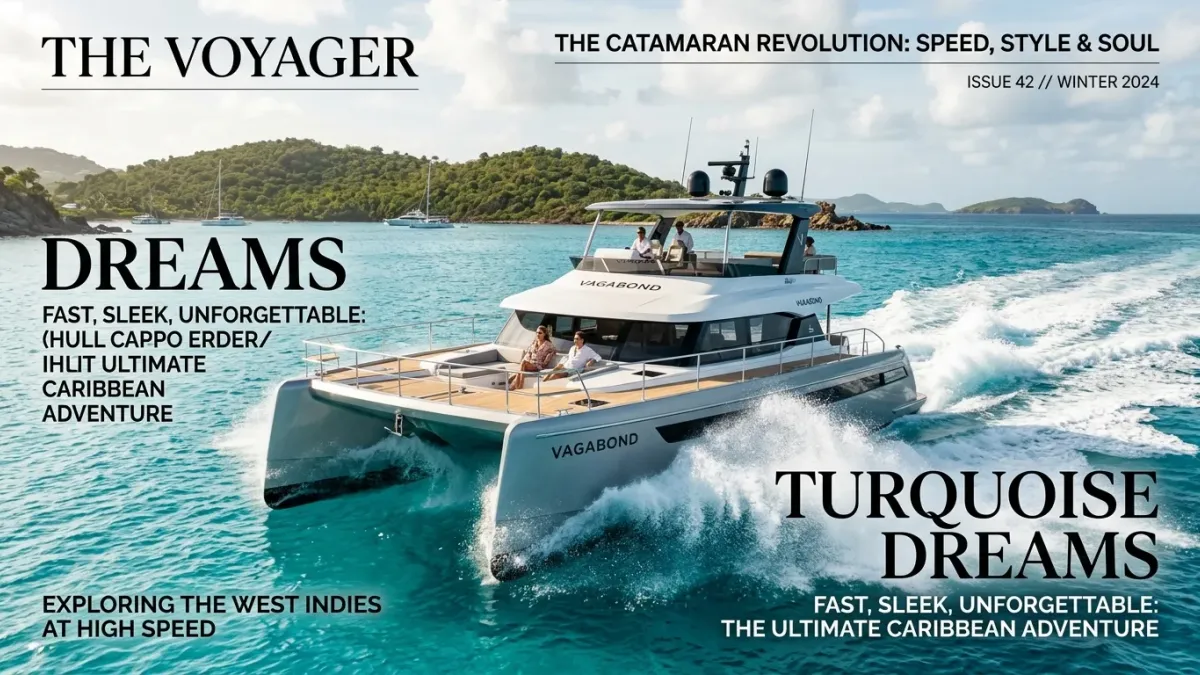
The performance benefits of twin hulls apply just as strongly to powerboats as they do to sail-driven vessels. Power catamarans have exploded in popularity across both recreational fishing and luxury motor yacht markets because their low-drag hulls require significantly less horsepower to achieve cruising speeds compared to deep-V monohulls. A motor catamaran running twin 300 hp diesel engines can often match or exceed the speed and range of a single-hull motor yacht burning double the fuel through massive twin 600 hp powerplants.
Additionally, having twin engines mounted far apart in separate hulls—often 18 to 22 feet away from each other—provides maneuvering capability that makes bow thrusters practically redundant. By putting one engine in forward and the other in reverse, a captain can rotate a 50-foot catamaran 360 degrees within its own footprint. This differential thrust gives boaters incredible control when docking in tight marinas or fighting tricky cross-currents at fuel docks.
Side-by-Side Comparison: Catamaran vs. Monohull Specifications
To clearly illustrate how these architectural differences play out in real specifications, let us compare a representative mid-size cruising catamaran against a benchmark mid-size cruising monohull of similar length overall (LOA).
| Specification Feature | 45ft Cruising Catamaran (e.g., Leopard 45) | 45ft Cruising Monohull (e.g., Beneteau Oceanis 46.1) |
|---|---|---|
| Length Overall (LOA) | 45 ft 0 in (13.72 m) | 47 ft 1 in (14.35 m) |
| Beam (Width) | 24 ft 2 in (7.36 m) | 14 ft 9 in (4.50 m) |
| Draft (Depth) | 4 ft 10 in (1.48 m) | 5 ft 9 in to 7 ft 8 in (1.75–2.35 m) |
| Light Displacement | 31,900 lbs (14,470 kg) | 23,300 lbs (10,570 kg) |
| Keel Ballast Weight | 0 lbs (0 kg — Form Stability) | 6,000 to 7,500 lbs (2,700–3,400 kg) |
| Engine Power Configuration | Twin 45 hp or 57 hp Inboard Diesels | Single 57 hp or 80 hp Inboard Diesel |
| Sailing Angle of Heel | 2° to 5° max (Flat) | 15° to 25° under full sail |
| Shallow Anchorage Access | Exceptional (Accesses 5 ft shoals easily) | Restricted (Requires deeper draft water) |
As shown in the data table above, the catamaran's shallow draft opens up entire cruising grounds—such as the Bahamas, the Florida Keys, or coastal estuaries—that are completely inaccessible to deep-draft monohulls. Furthermore, while the catamaran carries a higher initial displacement due to double hull construction, its ultra-wide beam eliminates the need for thousands of pounds of deadweight ballast metal, preserving its light-waterline efficiency.
If your ultimate goal is coastal exploration, family comfort, and stress-free island hopping where entertaining space, level sailing, and shallow anchorage access take priority, a 40-to-48-foot production catamaran is without question the smartest investment you can make. Your first practical step should be booking a week-long bareboat charter on a multihull in a reliable destination like the British Virgin Islands or the Ionian Sea, allowing you to experience the form stability and expansive bridge deck living firsthand before committing to a purchase.
Drag-Reduction Hull Care: Star brite Ultimate Hull Cleaner

Frequently Asked Questions
Are catamarans safer than monohulls in heavy offshore weather?
Yes, catamarans offer exceptional ultimate safety offshore. Because they do not carry heavy ballast keels, a structurally intact fiberglass or composite catamaran is virtually unsinkable even if breached. They also present a far larger, more stable platform that reduces crew physical exhaustion during storms. However, captains must actively reduce sail area early in high winds because multihulls do not heel over to automatically spill excess wind pressure like monohulls do.
Do catamarans cost significantly more to slip and maintain in marinas?
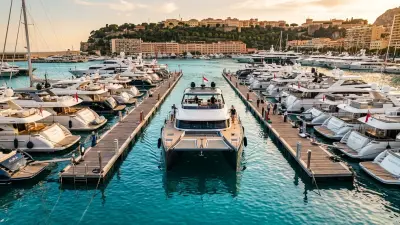
marina slip fees for catamarans are typically higher—often charged at 1.5 times the standard linear foot rate—due to their extra wide beam taking up double dock space. Haul-out costs can also be higher because they require specialized wide haul-out travelifts or marine railways. However, many owners offset these costs by spending far more time comfortably sitting at anchor in shallow, free anchorages where deep monohulls cannot safely park.
How well do catamarans sail upwind into high wind and waves?
Modern catamarans sail quite well upwind, typically tracking efficiently at true wind angles between 42 and 48 degrees. While deep-keeled monohulls can point a few degrees closer to the wind, modern multihulls equipped with daggerboards or efficient low-profile keels make up for slightly wider tacking angles with higher overall speed through the water, resulting in comparable Velocity Made Good (VMG) toward upwind destinations.
Sources
- The Catamaran Company Official Research & Specs
- United States Coast Guard Navigation Standards
- Wikipedia: Catamaran Design Principles
Check Out Our Top Recommended Boat Gear on Amazon
Hand-picked sailing & boating essentials we actually recommend.
As an Amazon Associate, we earn from qualifying purchases.